







How does the coffee bean process shape Honduran barrel-aged flavor?
Honduras, Central America's largest coffee producer, has drawn attention for barrel-fermented lots such as Sherry and Litchi Orchid. The article reviews terroir and flavor across six Honduran growing regions, covers varieties including Caturra, Catuai, and Pacas, and details the barrel technique used at Sweet Orange Estate, where beans take on whiskey-like aromas, vanilla cream sweetness, and chocolate and honey notes.
The coffee bean process behind these lots relies on controlled fermentation rather than a single origin characteristic. Beans from different coffee farm elevations and regions still taste distinct, but barrel aging pushes the cup toward alcoholic and dessert-like flavors with little pronounced acidity or bitterness. Front Street Coffee adds brewing parameters and tasting notes for two popular single-origin beans from the country.
Honduras, as the largest coffee-producing country in Central America, has rapidly gained popularity in recent years thanks to its Sherry and Litchi Orchid coffees processed with the barrel fermentation method. This article will systematically review the terroir characteristics and flavor profiles of Honduras's six major coffee-producing regions, explain in detail the characteristics of major varieties such as Caturra, Catuai, and Pacas, and provide an in-depth introduction to the barrel-processing technique at Sweet Orange Estate (Mocha Estate). At the same time, Front Street Coffee will share the brewing parameters and flavor descriptions of two popular beans, Sherry and Litchi Orchid, to give you a comprehensive understanding of the unique charm of this emerging specialty coffee-producing country.
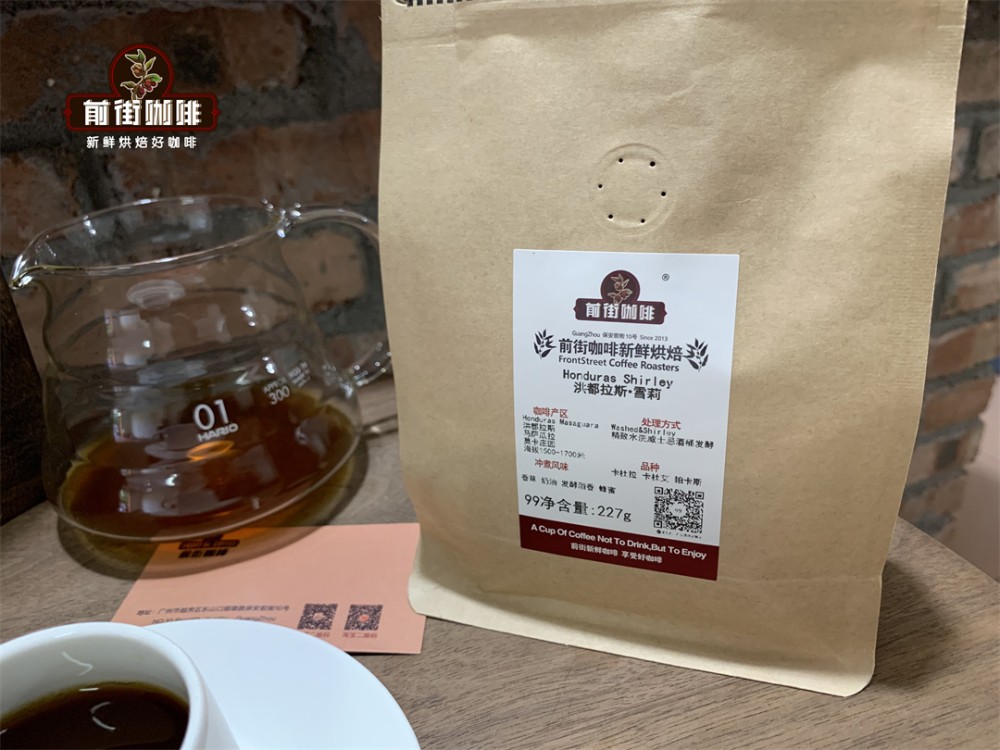
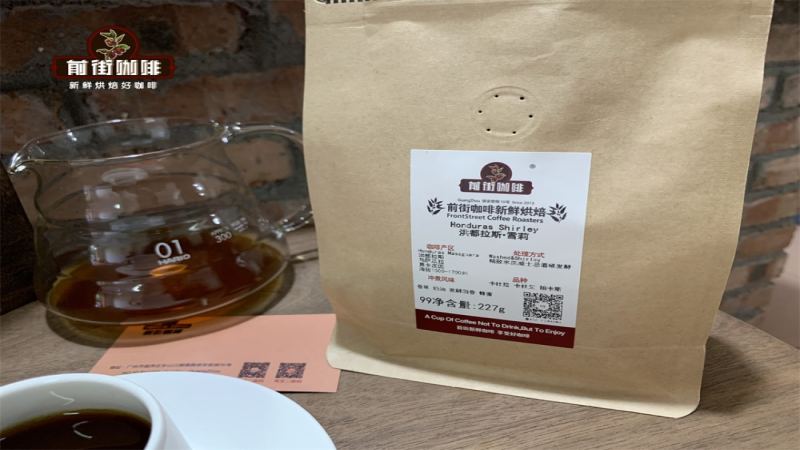
Coffee beans from different origins often present distinct regional flavors, and Honduran coffee was initially not particularly prominent in the specialty coffee circle. The turning point came after the emergence of Sherry coffee and Litchi Orchid coffee processed with the barrel method, when the name Honduras truly entered the public eye. Coffee was originally just a crop, but after special processing procedures it could surprisingly bring out alcoholic aromas, a characteristic that led many wine lovers to become fascinated with coffee as well.
The first time I hand-brewed Sherry coffee, I could catch the rich vanilla cream sweetness from a distance, and after drinking it, the whiskey-like alcoholic charm lingered in the mouth for a long time, while the aftertaste presented honey-like sweetness and chocolate tones. This bean has neither obvious acidity nor bitterness, and it is also one of Front Street's best-selling single-origin coffees.
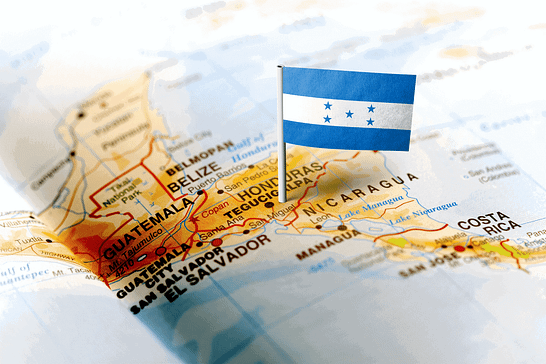
Honduras is located in northern Central America, with the Caribbean Sea to the north, the Gulf of Fonseca of the Pacific Ocean to the south, Nicaragua and El Salvador to the southeast, and Guatemala to the west. Its terrain is mainly mountainous and plateau. The country covers an area of 112,492 square kilometers, with a coastline of about 1,033 kilometers. Apart from the coastal plains, almost the entire territory is mountainous, with the highest peak in the northwest reaching 3,000 meters above sea level, and the south also exceeding 2,400 meters. Major rivers include the Coco River, the Patuca River, and the Ulúa River. These rivers, originating in the inland mountains, crisscross the land and flow toward the two oceans respectively. Numerous basins and river valleys have formed between the mountain ranges, among which the larger basins are Sula and Lepaguare, and the main river valleys are Comayagua and Jamastran.
Coastal islands are widely distributed, with the important ones being the Bay Islands and the Tigre Islands in the Gulf of Fonseca. Honduras's terrain is complex and diverse, and its climate types vary accordingly. The coastal plains of Central America have a tropical rainforest climate, with an average annual temperature of 31°C; the mountains have a subtropical forest climate, with an average annual temperature of 23°C. The rainy season is from June to November each year, with moderate temperatures and sufficient rainfall, which is very suitable for coffee cultivation. However, due to the lack of convenient transportation facilities between production areas and ports, Honduras's coffee industry started relatively late.
Honduras has a national coffee planting area of 280,000 hectares, mainly small farms, with most coffee plantations less than 3.5 hectares. These small farms contribute 60% of the country's coffee production. Because the planting areas are mostly located in mountainous regions, the picking work is entirely done by hand, followed by careful processing to ensure higher-quality coffee beans. Honduras harvests about three million bags of coffee each year, with abundant production and excellent quality, and it is now one of the world's top ten coffee exporting countries.
Main coffee-producing regions of Honduras
Honduras is now the largest coffee-producing country in Central America. Its production areas can be roughly divided into six: Copan, Montecillos, Agalta, Opalaca, Comayagua, and El Paraiso.
[Copan]
The Copan production area is located in western Honduras, adjacent to Guatemala. The average altitude is between 1,000 and 1,500 meters, with high air humidity and obvious temperature differences between day and night, with the lowest temperature dropping to 11.5°C.
[Montecillos]
The planting areas in the Montecillos production region have an average altitude of between 1,200 and 1,600 meters, and nighttime temperatures are relatively low. These conditions are very conducive to the slow ripening of coffee cherries, thereby giving the final product better sweetness. Coffee from this region has fruity aromas such as citrus, peach, and apricot, as well as caramel-like sweetness and a smooth mouthfeel.
[Agalta]
The Agalta production area is located in southeastern Honduras, with a climate that leans more toward the typical tropical type, and planting altitudes of between 1,100 and 1,400 meters. Agalta's coffee displays flavors of tropical fruit and chocolate, with lower acidity and caramel sweetness.
[Opalaca]
The Opalaca production area is adjacent to the Copan production area. Common coffee varieties in this region include Bourbon, Catuai, and Typica, with planting altitudes of between 1,100 and 1,500 meters. Opalaca's coffee has a more complex layering, more refined acidity, and a more balanced aftertaste.
[Comayagua]
Comayagua is located in central Honduras, and in 2016 this region's coffee production ranked first in the country. Comayagua's coffee has citrus acidity and a creamy mouthfeel.
[El Paraiso]
The El Paraiso production area is in southern Honduras, bordering Nicaragua. Planting altitudes are between 1,000 and 1,400 meters, and local temperatures are relatively high, ranging from 16°C to 22.5°C. El Paraiso is Honduras's largest and oldest production area.
Mocha Estate
Mocha Estate is located in the southern part of the Jesús de Otoro valley in Marcala, Honduras, surrounded by mountains and hills. The local economy is supported by coffee cultivation, while the corresponding areas in the valley develop basic grain cultivation and livestock farming. This area has an average altitude of 853 meters, with high-altitude zones reaching over 1,500 meters. Front Street's Sherry coffee and Litchi Orchid coffee both come from Mocha Estate.
The shape of Honduran coffee beans:
Honduran coffee beans are relatively large, uniform in size, even in color, and glossy. To facilitate harvesting, farmers prune coffee trees to a height of no more than 150 centimeters, because if the trees grow too tall they must be picked with the help of ladders, which is not only time-consuming and labor-intensive but may also damage the tree by bending the branches. Because each fruit ripens at a different time, ensuring coffee bean quality depends on hand-picking, followed by selecting the ripe fruits. For coffee cherries on the same branch, picking often has to continue for several weeks before it is fully completed.
Honduran coffee bean varieties
The vast majority of coffee grown in Honduras is Arabica, mainly Bourbon, Caturra, Catuai, Typica, and Pacas and their derived varieties.
[Caturra]
Caturra is a natural mutation of Bourbon, discovered between 1915 and 1918 on an estate in Minas Gerais, Brazil. Caturra plants are relatively short, so they can be planted more densely. This variety was introduced to Guatemala in the 1940s and then spread from Guatemala to Costa Rica, Honduras, and Panama.
[Catuai]
Catuai is a variety developed by the Agricultural Research Institute of São Paulo, Brazil, by crossing Mundo Novo with Caturra. Catuai plants are even shorter and can be planted at higher density, but they are more susceptible to pest damage.
[Pacas]
The Pacas variety was discovered in 1949 on a farm of the Pacas family in the Santa Ana region of El Salvador. In 1960, the Salvadoran Coffee Research Institute (ISIC) launched a Pacas pedigree selection program, that is, selecting individual plants through successive generations. Honduras's IHCAFE introduced and began planting Pacas in 1974. Pacas is also a natural mutation of Bourbon. Similar to Caturra, the plant is relatively short, but Pacas has higher yield and better quality.
Honduran coffee bean processing methods
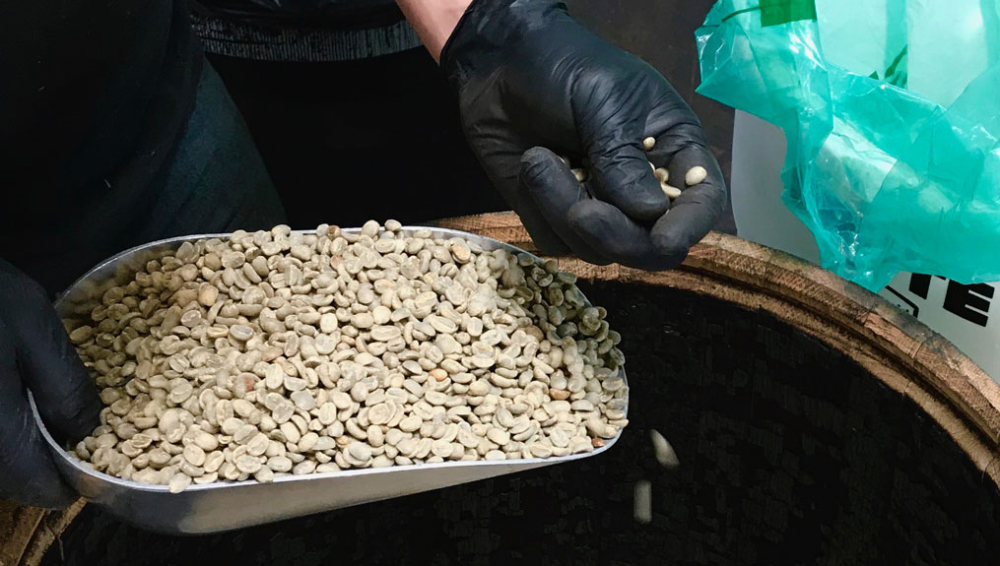
There is a direct connection between coffee flavor and processing method. Front Street's Honduran coffee and Litchi Orchid coffee both use the barrel processing method, with the difference being that Sherry coffee uses whiskey barrels, while Litchi Orchid coffee uses brandy barrels. Before the emergence of the barrel fermentation processing method, Honduran coffee beans were mostly washed. Coffee farmers first pour the picked coffee cherries into a large water tank. Underdeveloped, inferior beans float to the surface, while ripe, plump fruits sink to the bottom. At this point, the defective fruits floating on the surface are removed.
Next, a pulping machine is used to remove the outer skin and pulp of the coffee fruit. At this stage, the coffee beans still have a slippery layer of mucilage attached to their surface. The coffee beans with mucilage are placed in a fermentation tank for 16 to 36 hours, during which microorganisms break down the mucilage. After fermentation is complete, the residual mucilage on the coffee beans is rinsed off with plenty of clean water. They are then placed into barrels that have previously aged sherry or rum, fermented at low temperature (about 15 to 20°C) for 30 to 40 days, and then shade-dried.
Front Street's brewing parameters for Honduran coffee:
To highlight the alcoholic aroma and fruity notes of Honduran coffee, Front Street uses a medium-light roast. When brewing, it is recommended to use a V60 dripper, with a coffee-to-water ratio of 1:15, medium grind (about the size of coarse granulated sugar / 80% passing through a Chinese No. 20 standard sieve), and a water temperature of 91°C.
Use staged extraction. First, bloom with water at twice the amount of coffee grounds, that is, 30 grams of water for a 30-second bloom. The purpose of blooming is to allow the coffee grounds to release internal carbon dioxide, thereby making subsequent extraction more stable. Pour in a thin stream in circles until 125 grams, then pause for a stage, continue pouring until 225 grams and stop. After the water in the dripper has completely dripped through, remove the dripper. Timing starts from the beginning of pouring, and the extraction time is 2 minutes 00 seconds. Finally, swirl the entire cup of coffee to mix it evenly, then pour it into a cup to taste.
[Front Street Sherry Coffee Flavor Characteristics] It smells of vanilla and cream, and on the palate has flavors of whiskey, berries, almonds, and dark chocolate, with a maple syrup sweetness in the aftertaste.
[Front Street Litchi Orchid Coffee Flavor Characteristics] Cream, dark chocolate, honey, lychee, brandy. The mouthfeel is relatively full-bodied, with obvious sweetness, and as the temperature changes, the alcoholic taste becomes evident when slurping.
Front Street coffee brewing suggestions:
Regarding coffee brewing, Front Street has always believed that the freshness of coffee beans has a great impact on flavor expression, so all coffee beans sent out by Front Street Coffee are within 5 days after roasting. Front Street's roasting principle is "freshly roasted good coffee," so that every customer who places an order receives the freshest possible coffee. The resting period for coffee is about 4 to 7 days, so when customers receive it, it is exactly at its optimal flavor period.
For friends who need ground coffee, Front Street warmly reminds you: once coffee beans are ground in advance, they no longer need to rest, because during transportation the pressure generated by carbon dioxide inside the package can also make the coffee flavor rounder, so you can brew a cup immediately after receiving the ground coffee. However, ground coffee needs to be brewed as soon as possible, because after contact with air it oxidizes quickly, the flavor also dissipates faster, and the coffee will not perform as well. Therefore, Front Street recommends buying whole beans and grinding fresh for each brew, so that you can better taste the coffee's flavor.
With the promotion of specialty coffee, more and more processing methods have emerged, such as honey processing, anaerobic processing, wine fermentation, and so on. They all originate from the most basic washed and natural processing. But Front Street believes that only coffee beans processed with the washed method can better showcase the local coffee flavor, so most of Front Street's daily-drink beans are washed. For example: Colombia's Huila coffee, Costa Rica's Tarrazu coffee, Ethiopia's washed Yirgacheffe coffee, Guatemala's Huehuetenango coffee, Panama's Boquete Geisha coffee, etc. Front Street's daily-drink beans showcase the coffee flavors of various producing countries, with very high cost performance! They are very worth choosing for coffee friends!
For professional coffee knowledge exchange and more coffee bean information, please follow Coffee Workshop (WeChat public account: cafe_style)
For more specialty coffee beans, please add the private WeChat of Front Street Coffee (FrontStreet Coffee), WeChat ID: qjcoffeex
The above content is compiled by CoffeeHunters, a coffee news website.


