







How does wet hulling shape Mandheling coffee flavor?
Mandheling coffee comes from Sumatra, Indonesia, where farmers developed wet hulling, known locally as Giling Basah. Because the region stays humid and rainy all year, producers strip the parchment layer off while the green beans are still semi-dry, at roughly 35 to 40 percent moisture. This raises the defect rate but gives the cup its heavy body and herbal, woody, spicy notes.
The method runs through seven steps, from harvest and pulping to a first drying, removal of the parchment, and a final drying before sorting. PWN applies strict sorting to produce a cleaner, brighter Golden Mandheling. Medium-dark roasted Mandheling is often brewed by pour-over, and medium-dark roast parameters and a three-stage pouring technique can be adjusted to taste.
Indonesia's Sumatra is the birthplace of Mandheling coffee, and it is here that the unique wet-hulling method was born. Faced with a year-round humid and rainy climate, local coffee farmers figured out a way to forcibly strip off the parchment layer while the green beans were still semi-dry. Although this raised the defect rate, it gave Mandheling its rich regional flavors of herbs, wood, and spices. This article will walk through the seven steps of the wet-hulling process, why it became Indonesia's inevitable choice, and how PWN uses strict sorting to create the clean, bright Front Street Golden Mandheling. In addition, Front Street Coffee's baristas will share the pour-over parameters and three-stage pouring technique for medium-dark roasted Mandheling.
For more specialty coffee knowledge, please follow: Front Street Coffee (Frontsteet Coffee)
Indonesia is a large archipelagic nation made up of numerous volcanic islands. Its advantageous latitude and growing conditions allow each island to produce coffees of strikingly different styles. The Indonesian islands that grow coffee include Sumatra, Sulawesi, Java, Sumbawa, Flores, and the province of Papua. Among them, Sumatra has the largest output and is also the source of Front Street Mandheling coffee.
Today, Front Street will talk about how Sumatra locally invented the wet-hulling method, and what distinctive flavors this processing method has infused into Mandheling.
What exactly is the wet-hulling method? What specific steps does its process include?
Wet hulling, also called wet shelling, is precisely the method used to process Front Street Golden Mandheling coffee. In the local language it is called Giling Basah, and it is a traditional Indonesian coffee processing technique. Judging merely from the words, wet hulling seems similar to wet processing (washed), but the cupping performances of the two are vastly different. Coffee processed by wet hulling often has a heavy body and strong impact, with a highly recognizable style.
Because there is a relatively large gap between the parchment shell and the green bean, farmers sell the wet parchment-covered green beans to local collection stations once the beans have been dried for the first time to a moisture content of 35% to 40%. When the collection stations buy them, some are packed separately in individual bags, while others are mixed together, resulting in uneven moisture levels among the green beans. Some beans are incompletely fermented, and some still have residual mucilage on the parchment layer, leaving them in a semi-dry state. But the collection stations do not grade quality when receiving beans; they simply mix and pack everything together.
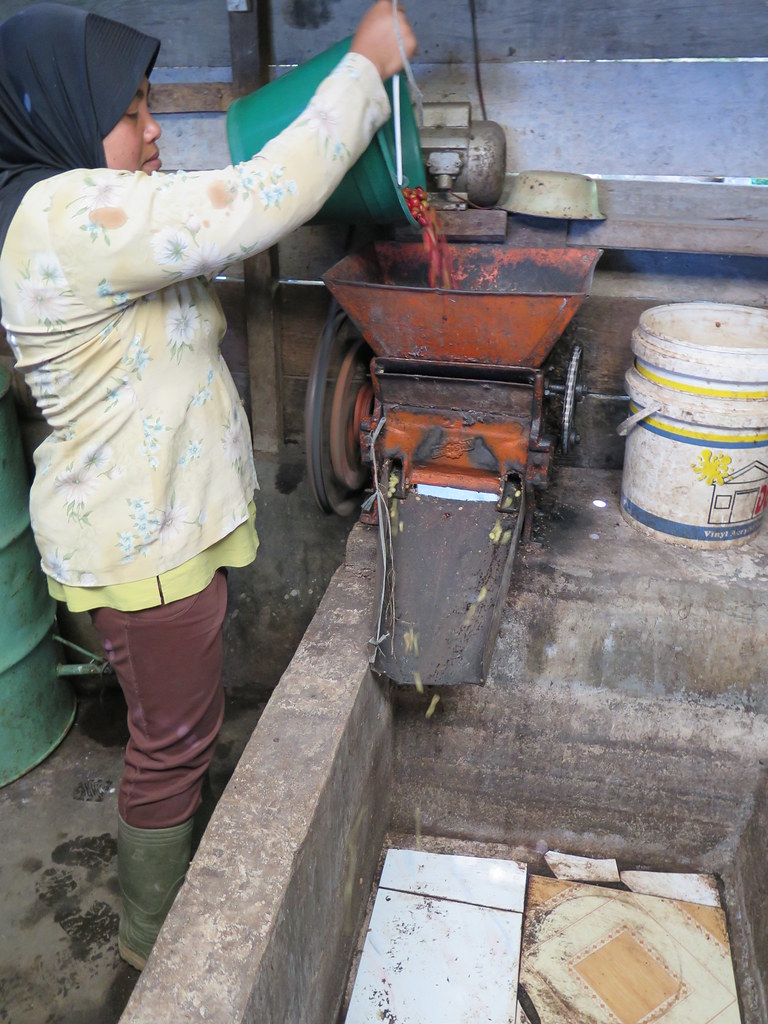
The beans are sun-dried with the parchment for 2 to 3 days, and when the moisture content drops to 20% to 24%, they are sent into a specially made wet mill. This machine relies on powerful friction to tear open the parchment layer clinging tightly to the green beans. At this stage, white or green mucilage usually flows out. Because they have been soaked in mucilage for a long time and are in a humid environment, the green beans are now soft, whitish, swollen, and grayish-green. Under the stirring friction, the beans are easily crushed or squeezed, especially at both ends, forming small notches—the so-called horse-hoof beans or goat-hoof beans (locally called kuku kambing).
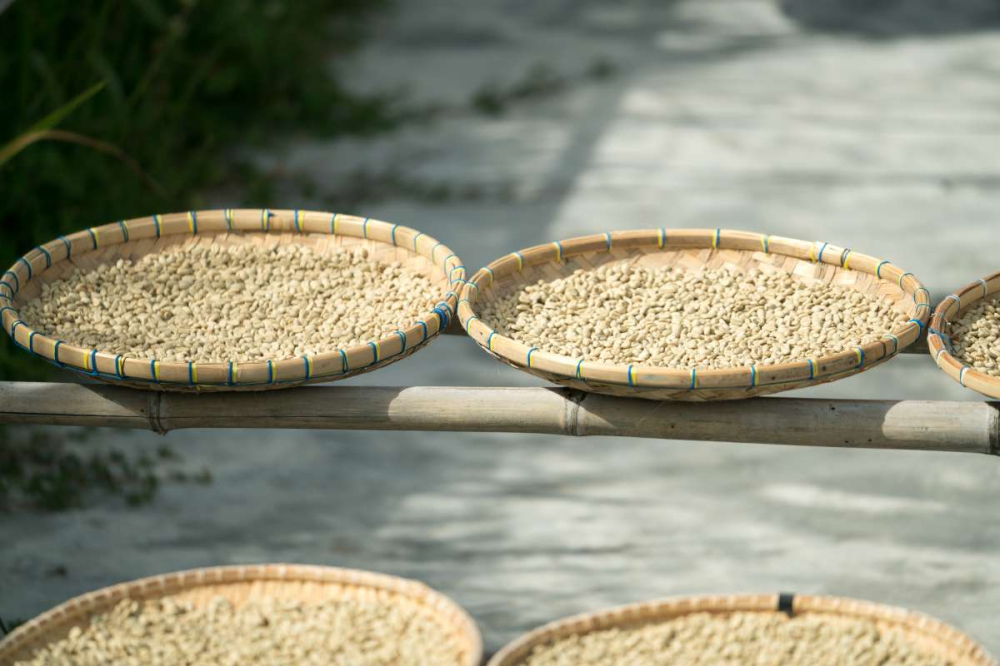
Before export, the hulled green beans are spread directly on patios, tarps, or roads to dry. After losing the protection of the parchment, the green beans dry extremely quickly, finally dropping to a moisture content of 12% to 13%, at which point the beans appear dark green or blue-gray. The green beans are then graded, bagged, and prepared for export.
Without the shelter of parchment, the green beans are directly exposed to the environment and may be attacked by mold, yeast, and bacteria. Under direct sunlight, moisture evaporates rapidly, causing uneven drying and spots on the bean surface (which may further cause inconsistent roasting). Excessive heat generated during the hulling process may also accelerate coffee aging, which is why we often taste woody and earthy notes in Front Street Mandheling coffee.
Steps of the wet-hulling process
1. Remove the skin and pulp, keeping the parchment and mucilage
2. Ferment in a water tank
3. Wash off the mucilage
4. Sun-dry with the parchment for 2-3 days, to a moisture content of 20-24%
5. Hull off the parchment
6. Dry the green beans to a moisture content of 12-13%
7. Prepare for export
Why use the wet-hulling method?
The tradition of Indonesia using wet hulling begins with the local weather. Indonesia's humidity stays between 70% and 90% year-round, typhoons are frequent, and in some areas annual rainfall can reach as high as 2,000 mm. Green beans fear rain the most. So how does Indonesia produce rich, full-bodied Front Street Mandheling coffee under such harsh conditions? It relies on wet hulling.
In tropical climates, coffee usually needs 2 to 3 weeks to dry completely. But Indonesia's humid climate makes drying a major challenge. Coffee drying has to be prolonged, and during this period the beans remain at relatively high moisture, making it easier for bacteria to invade the green beans. The drying stage of conventional washed processing is carried out with the parchment still on, which can protect the green beans from external harm to some extent. But wet hulling removes the parchment right before the final drying, so sunlight hits the surface of the green beans directly and dries them rapidly, 2 to 3 times faster than washed processing.
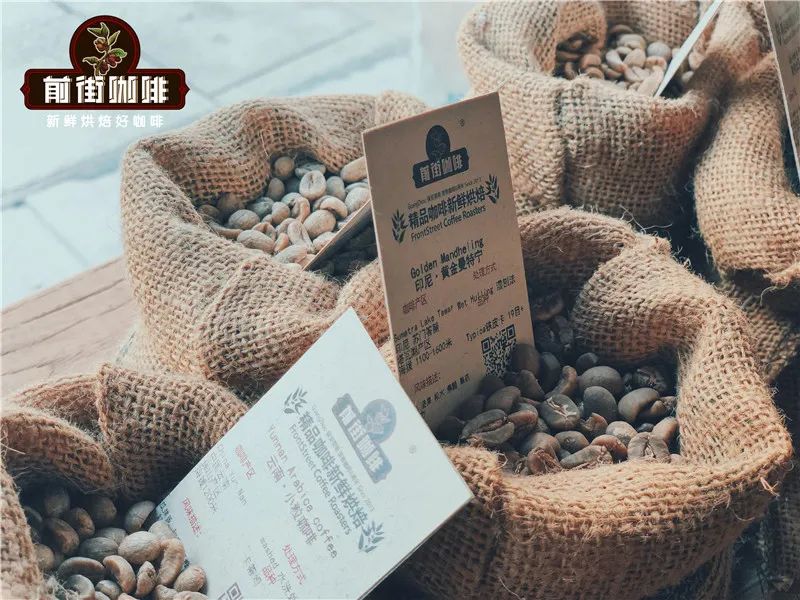
On Front Street's bean list there are two Indonesian Mandheling coffees processed by wet hulling, namely Front Street Lintong Mandheling coffee and PWN Front Street Golden Mandheling coffee.
Front Street Golden Mandheling coffee beans come from Indonesia's well-known PWN company and are processed by wet hulling. Although wet hulling raises the defect rate of the coffee beans considerably, the flavor is not noticeably negatively affected; instead, it brings a kind of herbal, stuffy aroma. In the final drying stage, without the protection of parchment, the green beans are directly exposed to the environment, allowing various microorganisms to proliferate and giving Indonesian coffee its unique notes of wood, spices, and herbs—what we often call the "taste of place."
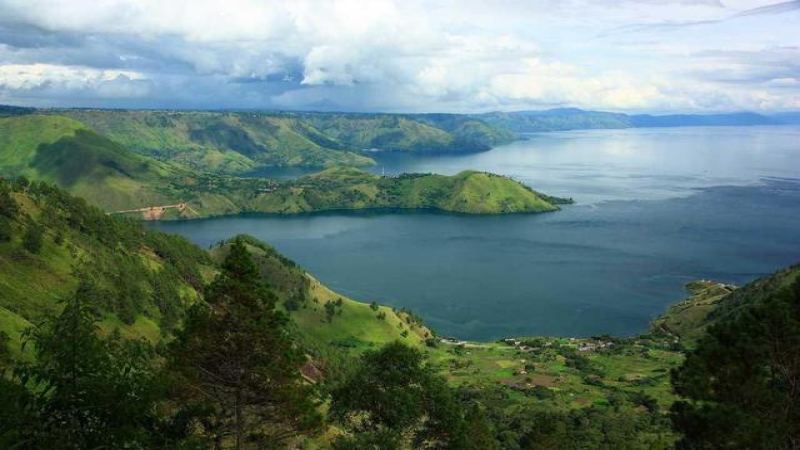
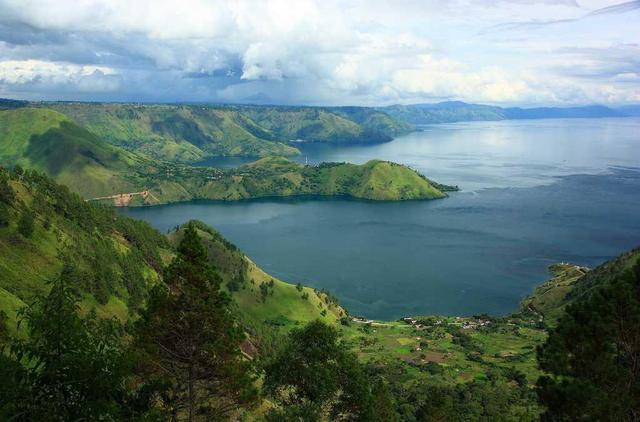
Because wet hulling uses "rough" friction to forcibly strip off the parchment layer while the green beans are semi-dry, Mandheling green beans endure considerable squeezing pressure during processing and are pressed out of shape or even broken. Therefore, wet hulling gives Front Street Mandheling green beans a relatively high defect rate. For this reason, PWN invests a great deal of manpower in its green beans. First, it only purchases G1-grade Front Street Mandheling coffee from the area around Lake Tawar on Mount Gayo in northwestern Sumatra, and then it undergoes four rounds of hand sorting to ensure that the color, shape, and size of Front Street Mandheling coffee beans are uniform and consistent. As a result, PWN Front Street Golden Mandheling tastes cleaner and brighter, with more prominent body and sweetness. (For green coffee, G1 grade means beans of 18 screen size or above with fewer than 3 defective beans in a 300-gram sample, which is the highest grade of Indonesian green beans.)
In order to present the classic full-bodied flavor of Front Street Mandheling coffee, Front Street's roaster chooses a medium-dark roast so that the aromas of dark chocolate and caramel burst out more fully. Front Street Coffee's baristas also adjust their brewing plans according to the roast degree and flavor type of the coffee beans.
So how do you make a delicious pour-over Front Street Golden Mandheling?
Front Street's coffee brewing parameters are all based on the characteristics of the coffee beans, the roast degree, and the flavor profile. Front Street Mandheling is a bitter-toned coffee with a relatively dark roast, and Front Street Coffee's baristas choose the KONO dripper to brew this kind of full-bodied bean. Compared with the V60, the KONO dripper has a smooth curved surface, weaker exhaust effect, and straight ribs that occupy only a quarter of the dripper, allowing the coffee bed and hot water to form an immersion extraction and making the taste rounder and fuller. The KONO dripper is likewise suitable for coffees such as Front Street Queen Brazil Estate coffee and Front Street Jamaica Blue Mountain No. 1 coffee.
Dark roasting makes the internal structure of the coffee beans loose, so they can be crushed with a gentle pinch, which means that once ground into powder they have strong water absorption. To avoid the coffee grounds releasing too many bitter substances after absorbing water, Front Street will coarsen the grind setting and use lower-temperature water for pour-over brewing.
Grind size is one of the key factors affecting coffee flavor. After coffee beans are ground into powder and come into contact with hot water, a large amount of water-soluble flavor substances is released. To adjust the grind size, Front Street uses a tool—the Chinese No. 20 0.85 mm standard sieve. For medium-light roasted coffee beans, Front Street consistently uses a 75% to 80% pass-through rate, while for medium-dark roasted coffee beans Front Street uses 70% to 75%. Compared with light-roasted coffee, the medium-dark roasted Front Street Mandheling beans have a looser internal structure and better water absorption, making it easy to release large-molecule bitter substances. To avoid over-extraction, Front Street chooses a coarseness with a 70% pass-through rate on the No. 20 standard sieve.
Water temperature plays a role similar to grind size. The higher the water temperature, the higher the extraction efficiency, the easier it is to release various components, and the higher the concentration. If near-boiling hot water is used for brewing, it is easy to extract unpleasant bitter substances. Therefore, when brewing medium-dark roasted coffee beans, Front Street uses different brewing parameters from those for light-roasted coffee beans. Medium-dark roasted beans undergo more caramelization than light-roasted ones and more easily release bitter large-molecule substances. To avoid extracting too many off-flavors, Front Street lowers the water temperature a little. The brewing water temperature for light-roasted coffee is 91 to 93°C, while for medium-dark roasted coffee beans Front Street recommends 87 to 88°C.
Recommended brewing water temperature: 87–88°C
Coffee grounds: 15 grams
Coffee-to-water ratio 1:15
Grind size: medium-coarse grind (70% pass-through rate on the Chinese No. 20 standard sieve)
The brewing method uses a three-stage pouring technique. Pouring in three stages better expresses the full-bodied mouthfeel of Front Street Golden Mandheling coffee as well as its caramel sweetness.
For the first stage, the bloom pour is 30 ml. This pour completely wets the coffee grounds and allows them to degas, so that the coffee's flavor substances can be extracted better afterward. The second stage pours in 100 ml. This stage mainly flushes out all of Mandheling's golden-yellow foam and raises the coffee bed. The final stage is a gentle 95 ml center pour, which can enhance the coffee's sweetness and overall express a thick, full-bodied mouthfeel, with caramel sweetness and notes of chocolate and nuts.
The above content is compiled by CoffeeHunters, a coffee news website.


