







How do siphon and pour-over coffee brewing methods differ?
Siphon and pour-over are two common specialty coffee brewing methods that share origin flavors but differ in extraction principle and filter medium. Pour-over uses paper filtration, giving a clean, layered cup, while siphon relies mainly on immersion with cloth filtration, yielding a full-bodied, balanced mouthfeel. The choice shapes clarity versus weight more than it changes the bean itself.
Pour-over traces back to the late seventeenth century, when an Englishman named BIGGIN built a flannel-filter device; the French later introduced metal filters, and Europe moved toward industrial coffee machines while the pour-over approach matured in Japan. Siphon brewers, often called siphon pots, do not use the siphon principle but use steam from heated water and thermal expansion and contraction. Front Street Yemen Mocha brewed both ways shows the contrast.
Pour-over and siphon are two common specialty coffee brewing methods. Although both can showcase a coffee's origin flavors, their extraction principles and filtration media differ, so the final cup emphasizes different aspects of mouthfeel. This article systematically compares siphon and pour-over brewers from historical origins, brewing principles, and operational parameters to actual tasting. Pour-over uses paper filtration, giving a clean flavor with rich layers; siphon relies mainly on immersion and uses cloth filtration, yielding a full-bodied, balanced mouthfeel. The article also uses Front Street Yemen Mocha brewed both ways, using specific parameters and flavor descriptions to help coffee lovers more intuitively understand the differences and find a brewing style that suits them.
| Pour-over Coffee
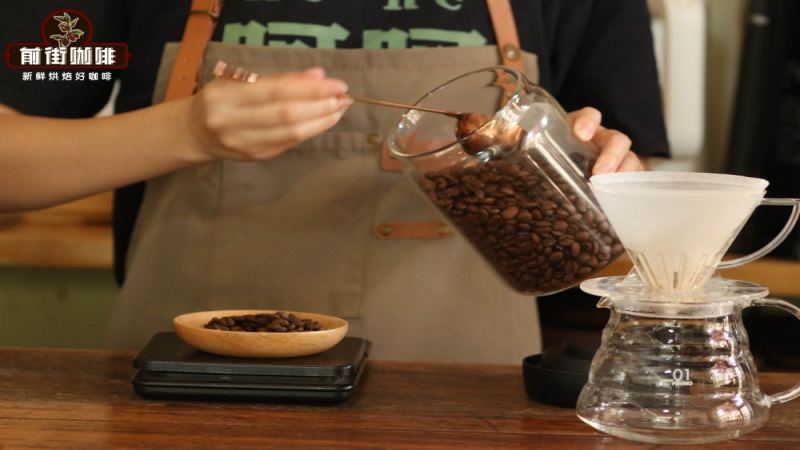
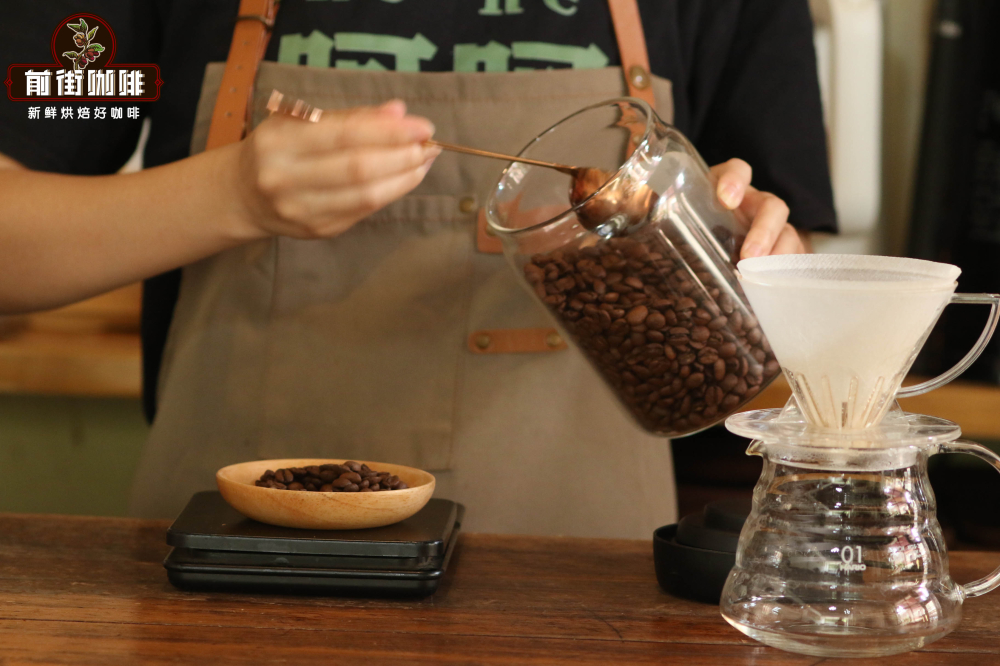
Pour-over coffee is a filtered extraction method, and its prototype can be traced back to the late seventeenth century. An Englishman named BIGGIN invented a flannel-filter coffee device. At the time, coffee had just been introduced to England, and the popular method was still Turkish-style immersion. Although the English loved drinking coffee, they found it hard to accept the coarse mouthfeel caused by coffee grounds. BIGGIN's invention thus became an early prototype of pour-over filtration. By the early eighteenth century, the French had also introduced metal filters, but most people still preferred BIGGIN-style flannel filtration. After that, Europe gradually shifted to industrial coffee machines, while this kind of pour-over device was preserved in Japan and developed into the pour-over system we know today.
Because pour-over mainly uses paper filtration, it places relatively high demands on pouring technique, water temperature, and grind size. The paper filter can effectively intercept fines and oils, so the brewed coffee liquid is clear and bright, and the flavor expression is cleaner.
| Siphon Coffee
The siphon brewer (Syphon) is often called a "siphon pot" or "siphon-style" in everyday speech. It is a coffee brewing method that is simple to operate and stable in results, and it is also one of the common brewing methods in many cafés. Although the name contains "siphon," it does not actually rely on the siphon principle. Instead, it uses steam produced after water is heated and completes extraction through thermal expansion and contraction and pressure changes.
Siphon coffee makers are especially common in Taiwan and Japan. It is said that the earliest version was invented by the Scottish shipbuilder Robed Napier. A similar design also appeared in Germany in 1830. It was later continuously improved in France and England, eventually forming today's structure with upper and lower chambers that operate by heating and atmospheric pressure: when heated, hot water is pushed into the upper chamber, and after the heat is turned off, the coffee liquid filters back into the lower chamber. The whole process combines immersion and filtration and is visually very performative, as if the operator were conducting an experiment.
Brewing coffee with a siphon often gives people an impression of sophistication and professionalism, looking like precise operation in a laboratory. The core of its extraction lies in pressure difference: first heat the water in the lower chamber to boiling, then insert the upper chamber. Because steam in the lower chamber creates high pressure, the hot water rises into the upper chamber under the pressure difference and mixes with the coffee grounds for immersion extraction; after extraction ends, remove the heat source, the pressure in the lower chamber drops rapidly, and a return flow forms between the upper and lower chambers, so the coffee liquid returns to the lower chamber.
The siphon brewer mainly uses immersion extraction, so the brewed coffee is generally more balanced and fuller in body. It usually uses cloth filtration. Unlike paper filters, cloth retains some oils, so a thin sheen of oil can often be seen on the surface of the coffee liquid, and it feels smoother on the palate.
So what are the characteristics of the coffees made by these two brewing methods? We selected [Front Street Yemen Mocha] and made one pot each with pour-over and siphon.
Pour-over parameters: V60 dripper, grind size BG 5R (80% passing rate on China standard No. 20 sieve), water temperature 90°C, coffee-to-water ratio 1:15, timing starts from blooming, total time 2 minutes 01 second.
Technique: first bloom with 26 grams of water for 30 seconds, then pour in stages when the water reaches 125 grams. After the water level drops and the coffee bed gradually appears, continue pouring to 226 grams to finish. When the water level drops again and is about to expose the coffee bed, remove the dripper.
Siphon parameters: grind size BG 6A (55% passing rate on China standard No. 20 sieve), water temperature 87°C, coffee-to-water ratio 1:13, timing starts when the coffee grounds are added, total time 1 minute 10 seconds.
Technique: after the water rises into the upper chamber, pour in the coffee grounds. After adding the grounds, stir twice in a cross pattern. After 35 seconds, stir five times in a circular motion. After 50 seconds, remove the heat source and wipe the lower chamber with a half-wet cloth to encourage the coffee liquid to return.
The pour-over-brewed Front Street Colombia Pink Bourbon has a bright yet soft grape-like acidity on the palate, with a dark chocolate finish in the aftertaste and relatively rich overall layers.
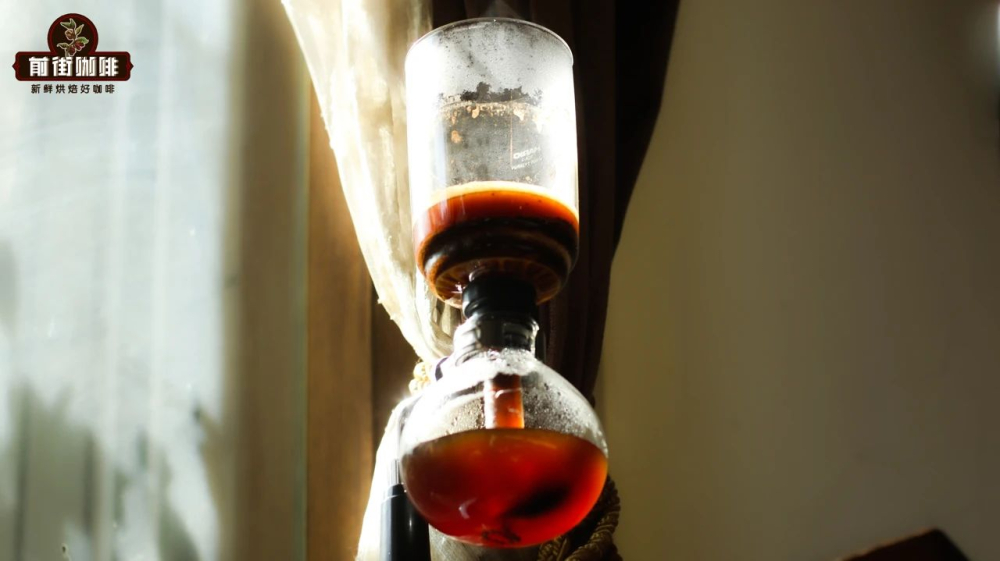
The siphon-brewed Front Street Pink Bourbon has a relatively full body, with clear and balanced flavors, soft and rounded fruit acidity, aromas of grapes and red berries on the palate, obvious dark chocolate notes, and a long caramel sweet aftertaste.
Front Street believes that the biggest difference between pour-over and siphon is mainly reflected in body and balance. Coffee brewed with a siphon has a fuller body and is more balanced overall; pour-over coffee may have the edge in flavor layering. As for which tastes better, it still depends on personal preference. It is all up to individual taste.
The above content is compiled by CoffeeHunters, a coffee news website.


