







Why does Panama Geisha coffee taste so distinct?
Panama Geisha coffee is known for layered floral and fruity aromas, tropical fruit sweetness, and a delicate, soft acidity. The variety was first identified in 1931 in Ethiopia's Geisha forest, then traveled through Kenya, Uganda, Tanzania, and Costa Rica before reaching Panama in 1970. Hacienda La Esmeralda separated it from other varieties in 2003 and won the BOP competition in 2004.
That competition result pushed Geisha into the spotlight and reshaped how the industry judges flavor potential. Roast level matters greatly for these geisha coffee beans: light and medium roasts now carry the complexity that dark roasting once masked. Hacienda La Esmeralda grades its lots as Red Label and Green Label, and Front Street Coffee's brewing parameters help bring out the variety's sweetness and aroma.
In the world of specialty coffee, Geisha is undoubtedly a highly sought-after star variety. With its full and rich floral and fruity aroma, layered tropical fruit sweetness, and delicate, soft acidity, it has conquered the taste buds of countless coffee lovers. This article will take you through Geisha's legendary journey from the forests of Ethiopia to becoming a champion in Panama, explain the grade differences between Hacienda La Esmeralda's Red Label and Green Label, and share Front Street Coffee's Geisha brewing parameters and techniques to help you fully appreciate the elegant charm of this top-tier variety.
Coffee liquid contains diverse taste layers such as acidity, sweetness, bitterness, and saltiness, and to make a cup of coffee present a harmonious balance between acidity and bitterness, the roasting stage plays a decisive role. Early coffee was almost uniformly dark roasted, but as time passed, the third wave of coffee swept in, and the landscape of specialty coffee underwent earth-shaking changes. Dark-colored beans were no longer regarded as synonymous with quality, and light roasts and medium roasts gradually took the mainstream position. The most representative examples of this are Front Street. Yirgacheffe and Front Street. Geisha.
Geisha is pronounced the same as "geisha" in Japanese, so it is also nicknamed "geisha coffee." Compared with Blue Mountain coffee, Hawaiian coffee, and Mandheling coffee, Geisha has fuller and more varied floral and fruity notes, with intense tropical-fruit-like sweetness unfolding layer by layer. In the eyes of coffee professionals and enthusiasts, Geisha fully deserves the title of "goddess" — her bright and complex floral and fruity aroma, high sweetness woven from multiple fruits, and meticulous, delicate soft acidity have captivated countless people.
This variety was first discovered in 1931 in the Geisha forest of Ethiopia. It was subsequently sent to a coffee research institution in Kenya, introduced to Uganda and Tanzania in 1936, brought to Costa Rica in 1953, and then arrived in Panama in 1970. At first, Geisha did not attract much attention until Panama Geisha Hacienda La Esmeralda separated it from other varieties in 2003 and won the BOP competition in 2004, after which Geisha truly entered the public eye.
Although Geisha's flavor is exquisite and enchanting, this elegant expression depends on specific growing conditions. This variety is extremely demanding about its growing environment and needs to be planted in areas with higher altitude, cloud cover or protection from abundant shade trees, and fertile soil. Geisha cultivated at high altitude has distinct floral aromas and refined, elegant fruity acidity, and it is precisely this outstanding flavor characteristic that made it quickly become popular worldwide.
After becoming famous, the Geisha variety received attention from coffee-producing countries around the world, and they introduced and cultivated it one after another. However, to get a delicious cup of Geisha coffee, it must be grown in high-altitude areas, where there is a large temperature difference between day and night, where it is warm year-round without frost, and preferably near volcanoes so that the soil can provide nutrient-rich matter for Geisha coffee trees.
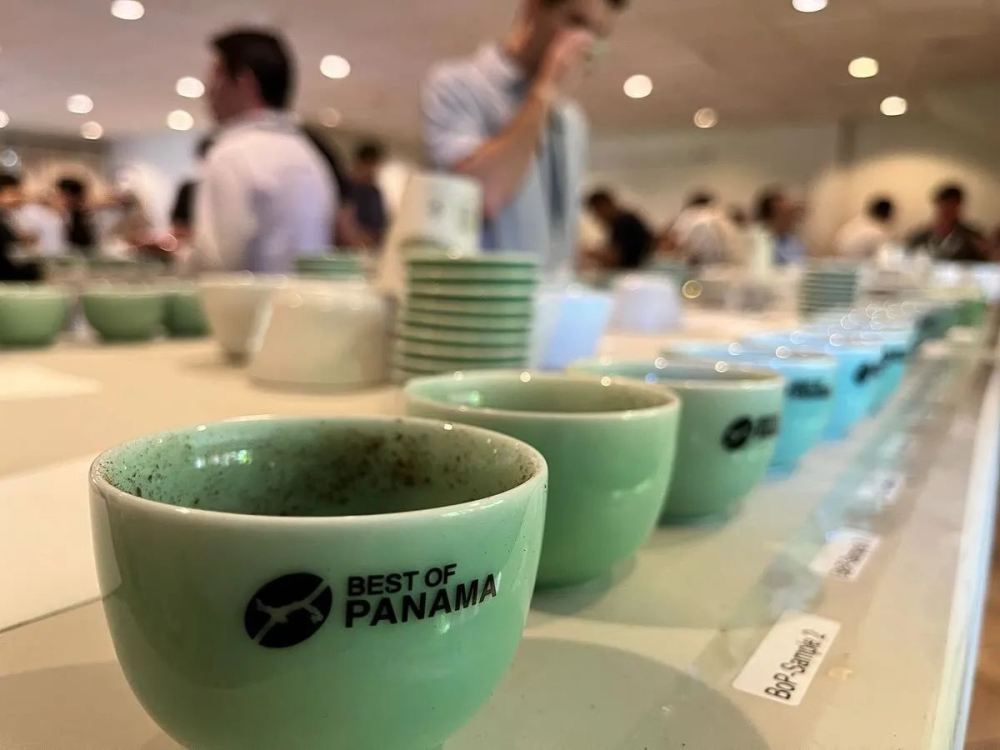
Geisha rose to fame because of Panama. Before 2004, almost no one knew the name "Geisha." When Hacienda La Esmeralda planted this variety that year, it did not separate it but mixed it with other coffee trees. Later, the estate found that Geisha's flavor was quite stunning, so it selected it out for separate processing and won the BOP championship in 2004, and the name Geisha spread throughout the world. For this reason, Front Street regards the flavor of Panama Geisha as the most authentic Geisha flavor, and Hacienda La Esmeralda's Geisha as the representative of classic top-tier Geisha.
Hacienda La Esmeralda's current Geisha product line mainly includes Esmeralda Red Label and Esmeralda Green Label. Red Label is the Esmeralda Special grade (including auction lots), produced from high-altitude Geisha above 1,700 meters, with a cupping score required to reach 91 points, and it can be traced back to specific plot information. Front Street. Esmeralda Red Label Geisha is also very suitable as a fine gift for relatives and friends.
Front Street. Green Label corresponds to Private Collection, a blended harvest Geisha grown at high altitude, with a cupping score required to be above 90 points, making it a top-tier Geisha with relatively high cost performance.
If you are trying this famous coffee bean for the first time, you might choose Front Street. Panama Boquete Washed Geisha. This bean comes from the same producing region as the major estates, and its refined washed processing combined with a medium-light roast gives it clean and bright flavors of white flowers, honeydew, green tea, and grapefruit. Compared with the high prices of Geisha from major estates, it is mainly positioned as an entry-level option and is very suitable for beginners as the first touchstone for experiencing Geisha's charm.
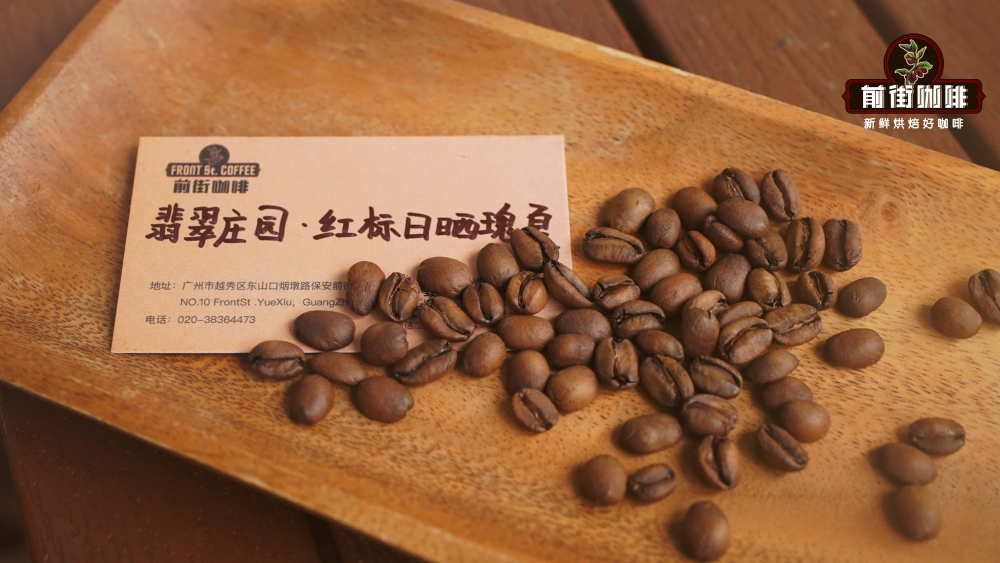
Front Street believes that to present the classic "Geisha flavor," more floral aroma and acidity must be retained. Therefore, Front Street's Geisha coffee beans are all light roasted, and the roasting curves are adjusted accordingly for different processing methods and flavor differences.
So how should this elegantly flavored Panama Geisha coffee bean be brewed to taste good? The Geisha coffee beans sold by Front Street Coffee are all light roasted to preserve their high-quality acidity and elegant aroma. Coffee beans grown at high altitude are usually harder in texture, so during brewing you can use a medium-fine grind and pair it with relatively high-temperature mountain spring water.
When Front Street Coffee brews Geisha daily, it uses the following dripper and brewing parameters: V60 dripper, 15g coffee grounds, a 1:15 coffee-to-water ratio, 91°C Nongfu Spring water, and coffee grounds controlled to the size of fine granulated sugar (medium-fine, with an 80% passing rate on the Chinese No. 20 standard sieve).
Use a three-pour brewing method: after starting the timer, pour water for the first time to 30g and let it bloom for 30 seconds; then in the second stage, pour in a circular motion with a small stream of water to 125g, and after the water level in the coffee bed drops by half, continue pouring, again in a circular motion with a small stream of water, to 225g. After all dripping is complete, control the total extraction time to about 2 minutes 10 seconds to 2 minutes 20 seconds.
The above content is compiled by CoffeeHunters, a coffee news website.


