







How Do You Keep Moka Pots Brewing a Mellow Cup?
Moka pot problems usually trace back to four variables: dose, water level, grind size and heat. Fill the filter basket level without tamping, keep water below the safety valve, use a grind slightly finer than drip, and set the flame low so extraction stays steady. Poor flow, sour or bitter cups and thin crema are the faults this troubleshooting covers.
Modern moka pots are mostly stainless steel and work on induction, while older aluminum models need an open flame. The compact 2-3 cup size is the most common. Heat builds steam pressure in the lower chamber, pushing water up through the grounds into the upper chamber. Knowing how long does it take moka pot to brew helps you judge whether the flow is running too fast or too slow.
The moka pot is a common tool for many coffee lovers to brew espresso at home, but during operation they often encounter problems such as poor flow, coffee that tastes too bitter or too sour, or almost no crema. This article focuses on the practical use of the moka pot, outlining the complete process from material selection, heating methods, extraction parameters, to post-brew cleaning, and provides troubleshooting ideas for common faults. It also incorporates the production experience of Front Street Coffee to explain the coordination points among coffee dose, water amount, grind size, and heat level, helping readers make a cup of moka pot coffee with a mellow taste more consistently.
Front Street believes that the moka pot is one of the most stable methods for brewing coffee. As long as the following points are met, you can make a decent cup of coffee:
1. An appropriate amount of coffee grounds and drinking water
2. A safe heating method
3. A grind size suitable for moka pot coffee extraction
4. Mastery of the optimal brewing time
5. Reasonable adjustment of extraction strength
Early moka pots were mostly made of aluminum alloy and could only be used on an open flame. Today, products on the market are mainly made of stainless steel and can be placed directly on an induction cooker to complete extraction. When purchasing, you can also choose different capacities based on the number of drinkers, among which the compact 2–3 cup size is the most common.
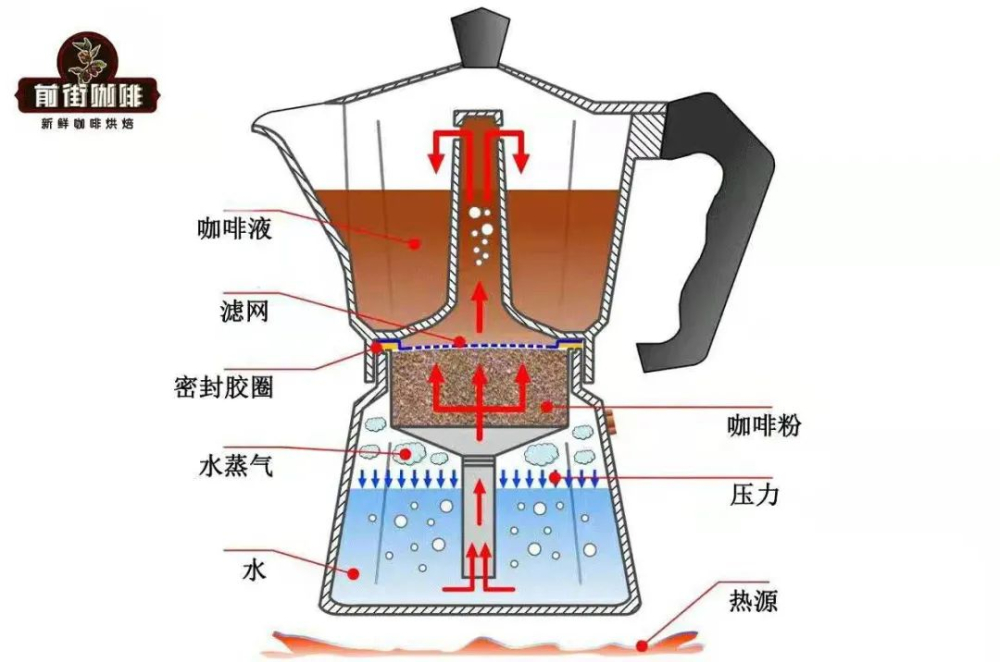
By observing the body structure, you can see that the moka pot is divided into upper and lower parts, with three core components: the upper chamber that holds the coffee liquid, the filter basket that holds the coffee grounds, and the lower chamber that holds water. During extraction, the heat source first heats the water in the lower chamber, generating steam pressure. When the pressure builds up to a certain level, the hot water is pushed upward, passes through the coffee grounds, carries out soluble aromatic substances, and continues to rise, finally producing a rich and mellow coffee liquid. When drinking, simply dilute with water or add milk according to personal preference.
Before starting extraction, you need to prepare a bag of coffee beans at their optimal drinking period, a gas stove or induction cooker for heating, a grinder for grinding coffee beans, clean water, and an anti-scald towel.
What to use to heat a moka pot: Besides a gas stove or induction cooker, an open flame is also feasible, but Front Street needs to remind you that you must use low heat throughout and be careful of burns.
What coffee beans are suitable for a moka pot: In order to present moka pot coffee crema, Front Street's classic espresso blend is used here (Brazilian coffee + Indonesian Mandheling coffee + Vietnamese coffee). This coffee uses a medium-dark roast, and the extracted strong coffee has a thick mouthfeel, suitable for adding milk to make a latte. The electric ceramic stove is used for heating, and the grinder is the EK43s used for store production.
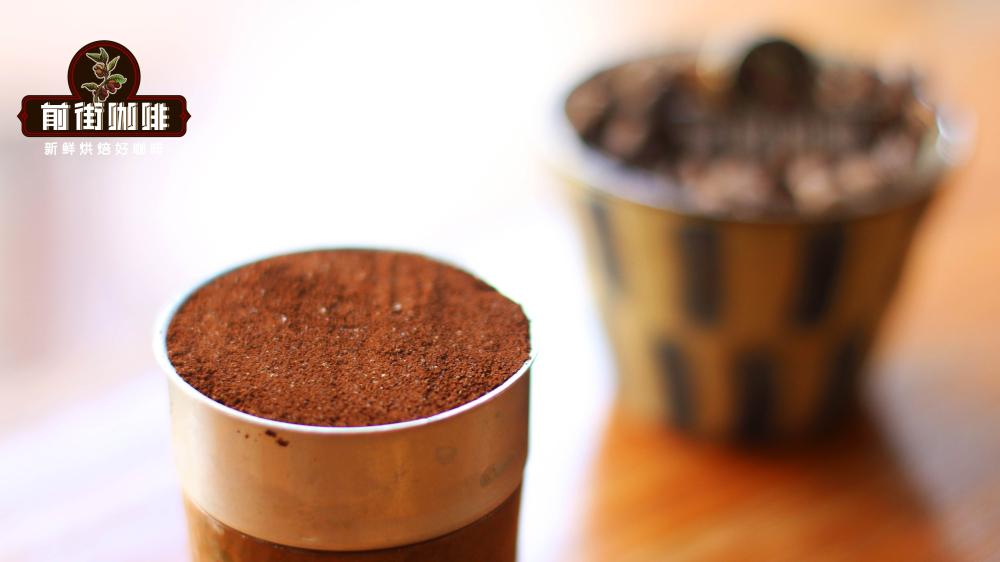
How much coffee powder does a moka pot use at one time: It is generally recommended to fill the moka pot's filter basket. Because if you only fill it halfway, the resistance of water passing through the coffee will be smaller, so the extracted coffee taste will easily become weaker and not as rich when drinking. So it is not that it must be filled to the top, but that when it is not filled, the coffee made may not taste as good. After filling, just level the surface of the coffee grounds with your finger. Note that if the coffee powder used is too fine, it is best not to tamp it, because this will increase the resistance of the filter basket and make it even harder for hot water to pass through.
Extraction time for moka pot coffee: Usually, brewing coffee with a moka pot takes 3–5 minutes from the start of heating to the end. The specific time depends on the coarseness of the coffee powder and the amount used. The coarser the grind, the faster the coffee liquid rises, and the shorter the time; the more powder, the longer the time required.
How much water to add to a moka pot: After preparing the coffee powder, the second step is to add an appropriate amount of warm hot water to the lower chamber. This is because hot water can shorten the time needed to bring the water to a boil, allowing us to get a cup of moka pot coffee faster! Just make sure the water level does not exceed the pressure relief valve. Front Street uses a double-serving single-valve moka pot, and finally poured in 130 ml.
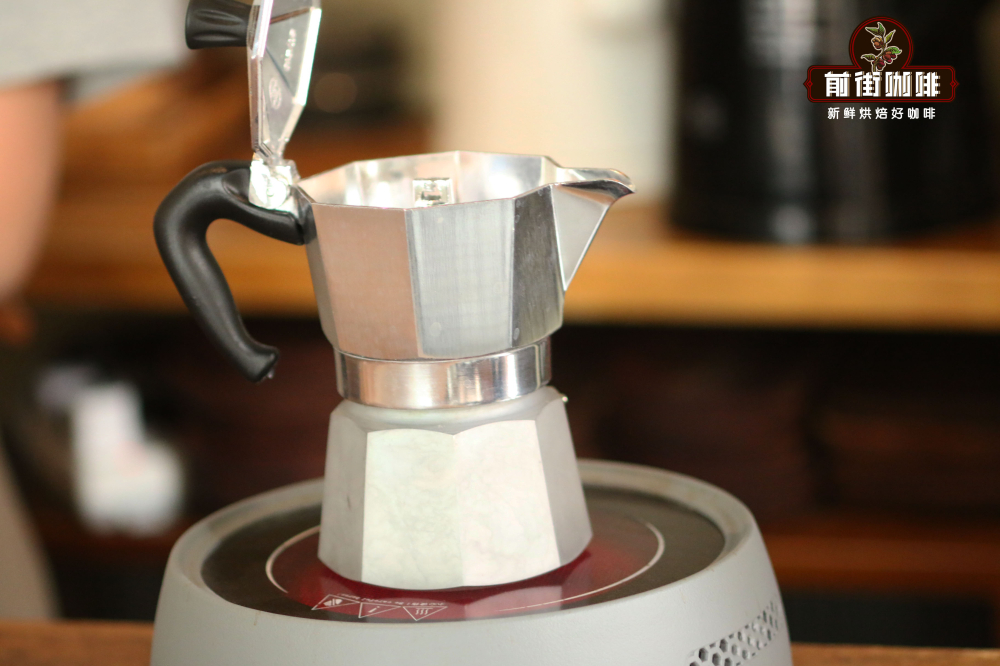
Tighten the upper chamber and lower chamber: In this step, note that if hot water has been added, it is best to use a wet cloth for insulation to avoid burns.
Place on the heat source and start brewing: There is not much to say about this point. Just place the moka pot on a heat source that can conduct heat and heat it.
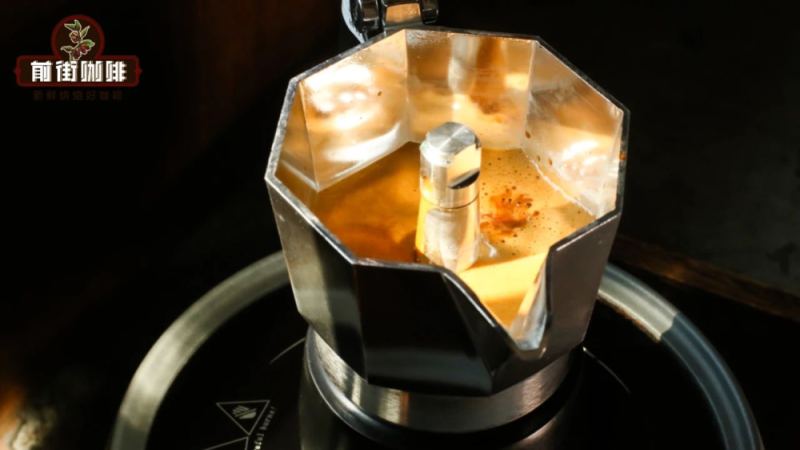
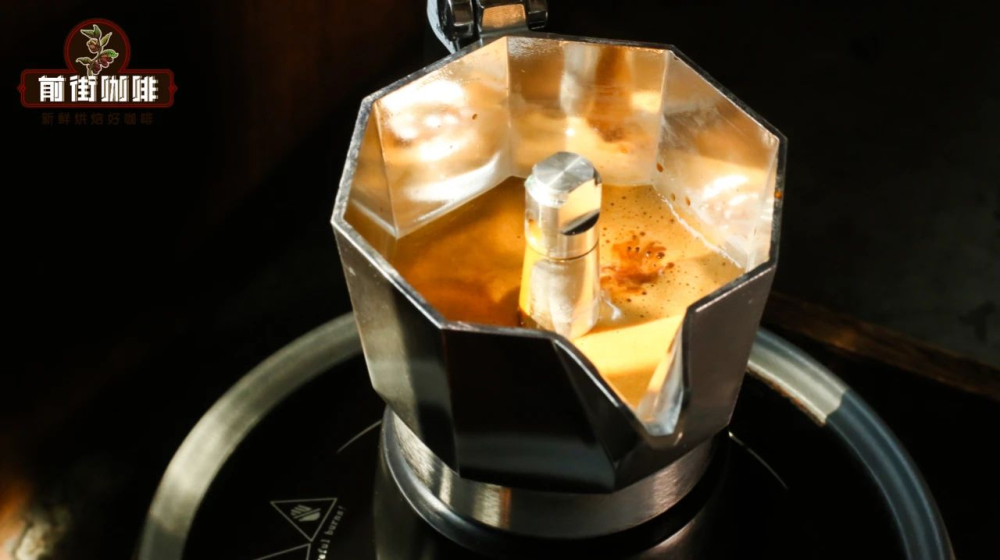
Turn to low heat and wait for the coffee liquid to seep out: When we brew until the moka pot makes a clear sound, it means that the hot water, driven by steam, is about to overflow with coffee substances. At this point, we need to lower the heat. Otherwise, high heat will continuously produce steam, increase pressure, and then because the pressure is too strong, the hot water will flow out faster, unable to extract enough coffee substances, and finally make the entire cup of coffee taste bland and weak. So when the coffee liquid is about to overflow, it is best to lower the heat.
Stop heating and wait for extraction to finish: When the coffee liquid has come out halfway, we should turn off the heat source, because the residual heat inside the moka pot is already enough to "urge" out the remaining hot water.
Taste the coffee: When the moka pot stops releasing liquid, we can pour out the coffee liquid and taste it!
Cleaning and maintenance of the moka pot: Since moka pots are mostly made of aluminum and stainless steel, long-term use makes them prone to oxidation and blackening, so Front Street suggests that after each extraction, first clean out the coffee grounds, then disassemble each part, rinse them clean with water, and finally dry them before reassembling and storing them. This can avoid rapid aging of the moka pot and also allow us to extract more smoothly.
Moka pot coffee is too bitter or too sour: Usually, properly extracted moka pot coffee will have a relatively strong coffee aroma and a balanced taste. If there is a strong bitter or sour taste, it means the coffee is over-extracted or under-extracted. If the coffee is too bitter, Front Street suggests adjusting to a coarser grind or reducing the amount of powder, thereby shortening the extraction time; if the coffee is too sour, Front Street believes you might as well adjust to a finer grind, or add a bit more coffee powder and tamp it firmly.
Water does not come up in the moka pot: If the moka pot cannot release liquid even after brewing for a long time, and the water was filled too full when adding it, then we had better stop extraction. Because this can easily create a risk of the moka pot exploding. There are many situations that can cause the moka pot to fail to release liquid: too fine a grind, too much powder, too firm tamping, and so on. These operations greatly increase the resistance of the coffee puck, leaving very few and very small gaps for water to flow through, which is why even after brewing for a long time, the coffee liquid still cannot come out.
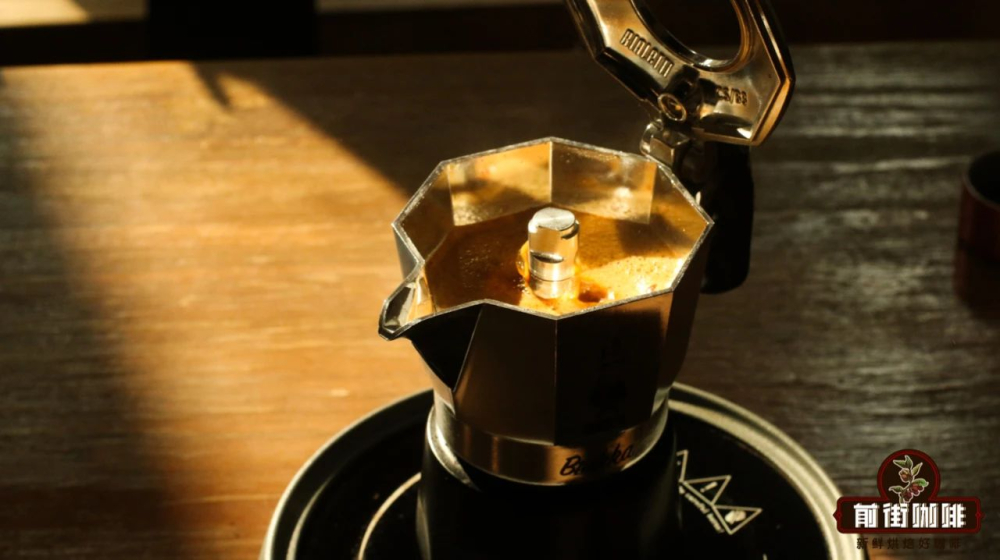
Moka pot coffee liquid has no crema: If the moka pot coffee you extract has almost no bubbles at all, then it may be that the coffee beans are roasted too light and are not suitable for moka pot extraction. In addition, the moka pot failing to produce crema may also be due to too coarse a grind, or the coffee beans not being fresh or the use of pre-ground powder for extraction.
For more specialty coffee knowledge, please follow: Frontsteet Coffee
The above content is compiled by CoffeeHunters, a coffee news website.


