







How Are the Geisha Coffee Grades at La Esmeralda Split?
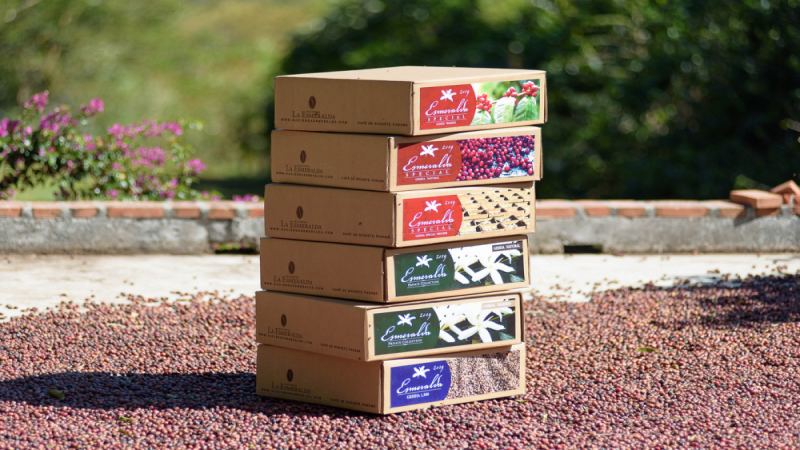
Panama's Hacienda La Esmeralda separates its Geisha coffee into Red, Green and Blue labels by growing altitude. Red Label comes from the highest plot, while Blue Label sits at the lowest of the three, and that gap in elevation is the basis of the estate's own quality-control system rather than a flavor style chosen at the mill.
The estate acts as both the discoverer of the Geisha variety's flavor and a promoter of its market. Because these geisha coffee beans sit at the top of the quality range, the usual advice is to build a basic understanding of other coffees first and taste the labels progressively, so the differences in acidity, aroma and body stay readable in the cup.
Panama's Hacienda La Esmeralda Geisha coffee beans have always been the focus of the specialty coffee world, but the differences between Red Label, Green Label, and Blue Label often confuse enthusiasts. This article, from the perspective of Front Street Coffee, systematically sorts out Hacienda La Esmeralda's Geisha grading system, three major production plots, processing methods, and roasting recommendations, and compares in detail the flavor performance and brewing parameters of the three grades. Whether you are a beginner just encountering Geisha or an experienced player wanting to understand Hacienda La Esmeralda's quality control system in depth, you can gain a clear cognitive framework from it.
When it comes to the Geisha coffee beans produced by Panama's Hacienda La Esmeralda, Front Street is often asked the same question by customers in the shop: what exactly is the difference between Red Label, Green Label, and Blue Label? Ultimately, these three grades are divided according to growing altitude. The plot for Red Label has the highest altitude, while Blue Label is relatively the lowest.
Hacienda La Esmeralda plays a dual role with the Geisha variety: it is both a discoverer of flavor and a promoter of the market. From the Geisha product lines it has successively launched, one can sense the estate's investment in Geisha and its strict control over quality. When it comes to Hacienda La Esmeralda's capability in quality control, Front Street Coffee believes one must mention its self-created grading system—using the three levels Red Label, Green Label, and Blue Label to distinguish Geisha coffee beans.
Front Street Coffee's bean list has always included these three grades of Hacienda La Esmeralda Geisha, but Front Street Coffee usually does not proactively recommend Geisha to customers unless they explicitly ask for it. This is not because Front Street thinks Hacienda La Esmeralda's Geisha is not good enough. On the contrary, precisely because its quality ranks among the best Geishas in the world, Front Street is more cautious. Among the customers who come to Front Street, some are even trying pour-over coffee for the first time. If they start with the very top category, later when they drink other coffees they may find them bland and tasteless. Front Street Coffee prefers to suggest that customers taste progressively, first building a basic understanding of coffee flavors, and then slowly appreciating the diversity and richness of the coffee world.
Panama Coffee-Producing Regions
Coffee in Panama cannot be separated from the favor of climate. This country borders Costa Rica and Colombia. Its east-west topography causes cold air currents to pass through the central mountain range and converge in areas above 6,500 meters in altitude, thereby forming a unique microclimate around Boquete and Piedra de Candela, with temperatures and rainfall suitable for plant growth. This microclimate area is precisely Panama's main coffee-producing region. In addition, the surrounding land in this region is rich in nutrients, and the fertile soil provides ideal growing conditions for coffee, also giving rise to a large number of coffees with unique styles and outstanding quality.
In addition to natural conditions, there is another key factor in Panama coffee receiving global attention. Front Street Coffee feels that Panama's coffee industry seemed to develop with a silver spoon from the end of the 20th century onward. At that time, the United States was building the canal in Panama and once independently controlled the area. A large number of American elites came south, both for work needs and to seek business opportunities. Hacienda La Esmeralda was precisely a witness born in this wave of elites.
Panama's main coffee-producing regions are three: Boquete, Volcan, and Renacimiento. Hacienda La Esmeralda is located in the Boquete production region. Boquete is a town in Chiriqui Province, located near the border between Panama and Costa Rica, adjacent to the famous Baru Volcano, with beautiful scenery and deep, fertile soil. Its climate and soil conditions are very suitable for producing high-quality coffee. The microclimate possessed by the Boquete highlands is an irreplicable core resource for the specialty coffee of this production region.
Hacienda La Esmeralda
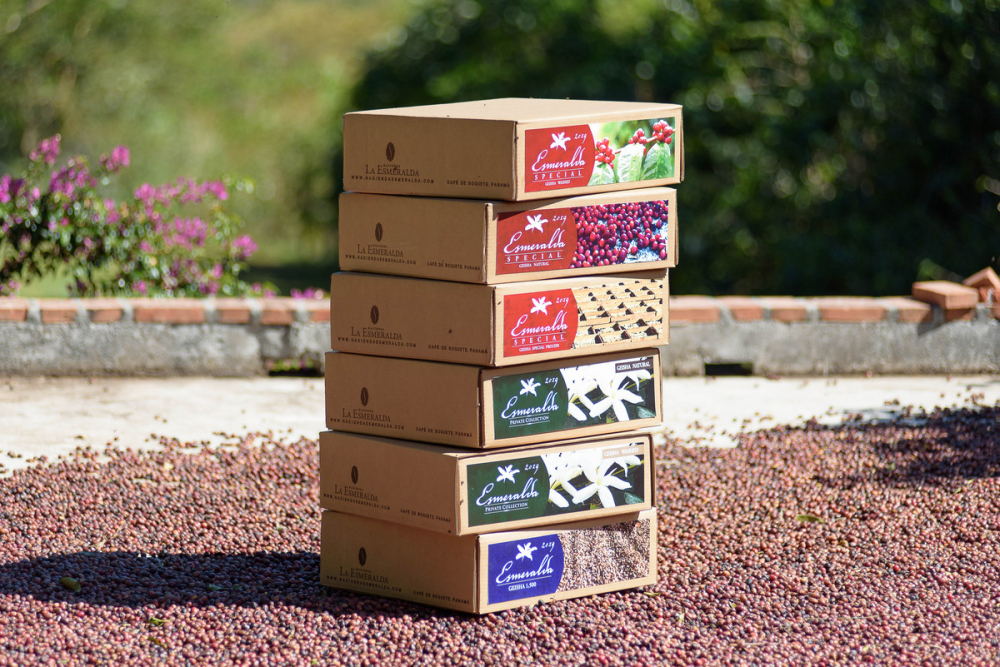
In 1964, American banker Rudolph Peterson retired and moved to Panama, buying Hacienda La Esmeralda in Boquete, initially mainly operating dairy farming. Later, his son Price gave up his career as a doctor to help his father manage the farm, and in 1987 introduced two coffee varieties, Caturra and Catuai. In 1994, he also established a washed processing plant, and from then on had his own coffee processing facilities.
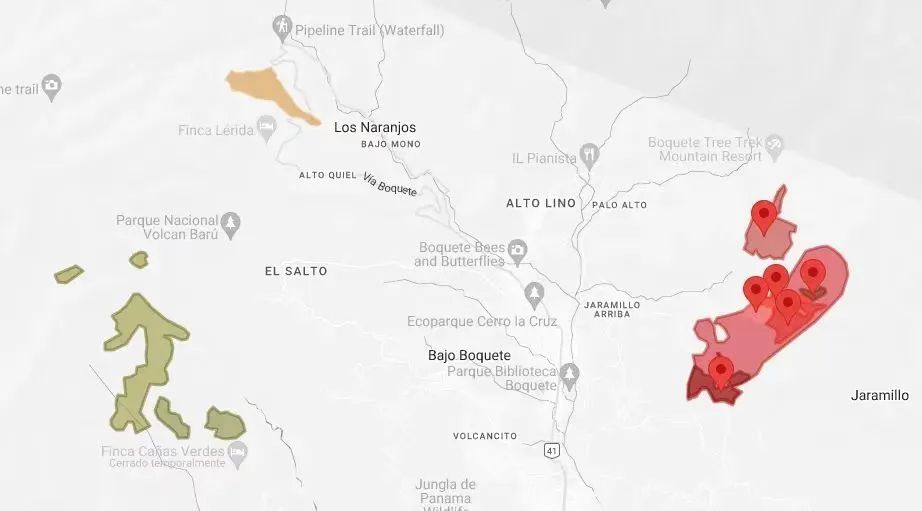
At present, Hacienda La Esmeralda mainly has three estates cultivating the Geisha variety: El Velo, Cañas Verdes, and Jaramillo. In 1996, the estate bought the nearby Jaramillo, which had a superior geographical environment and excellent flavor in its original coffee varieties. El Velo was acquired by Hacienda La Esmeralda in 2012. Front Street Coffee believes that Hacienda La Esmeralda's continuous acquisition of estates with excellent output and higher altitudes was a very original decision at the time, and it was precisely this step that allowed it to gain a firm foothold in the coffee industry.
Among them, Jaramillo estate is precisely the plot where the Geisha variety was planted. Due to scarce production, the previous estate owner initially used it only as a windbreak tree, and only after the acquisition was its extraordinary flavor discovered. Front Street Coffee feels that this is exactly the charm of Geisha—the harsher the growing environment, the more outstanding the flavor expression.
Although Hacienda La Esmeralda discovered coffee beans with flavor potential from the beginning, in order to achieve precision, it cupped different areas within the estate one by one, and then determined planting plots according to altitude. Precisely because of this, today we have the well-known Geisha grades Red Label, Green Label, and Blue Label, all based on altitude as the grading criterion. Front Street Coffee will elaborate on this part in detail below.
In 2004, Hacienda La Esmeralda participated in the Panama green bean competition BOP and won the championship, stunning the world from then on. Later, expert appraisal revealed that the coffee bean belonged to the Ethiopian Geisha variety. After that, the Peterson family devoted most of its energy to infrastructure construction to support excellent lot separation and fine processing.
Plot Division of Hacienda La Esmeralda's Geisha Variety
High-quality Geisha mainly comes from two estate plots, Jaramillo and Cañas Verdes.
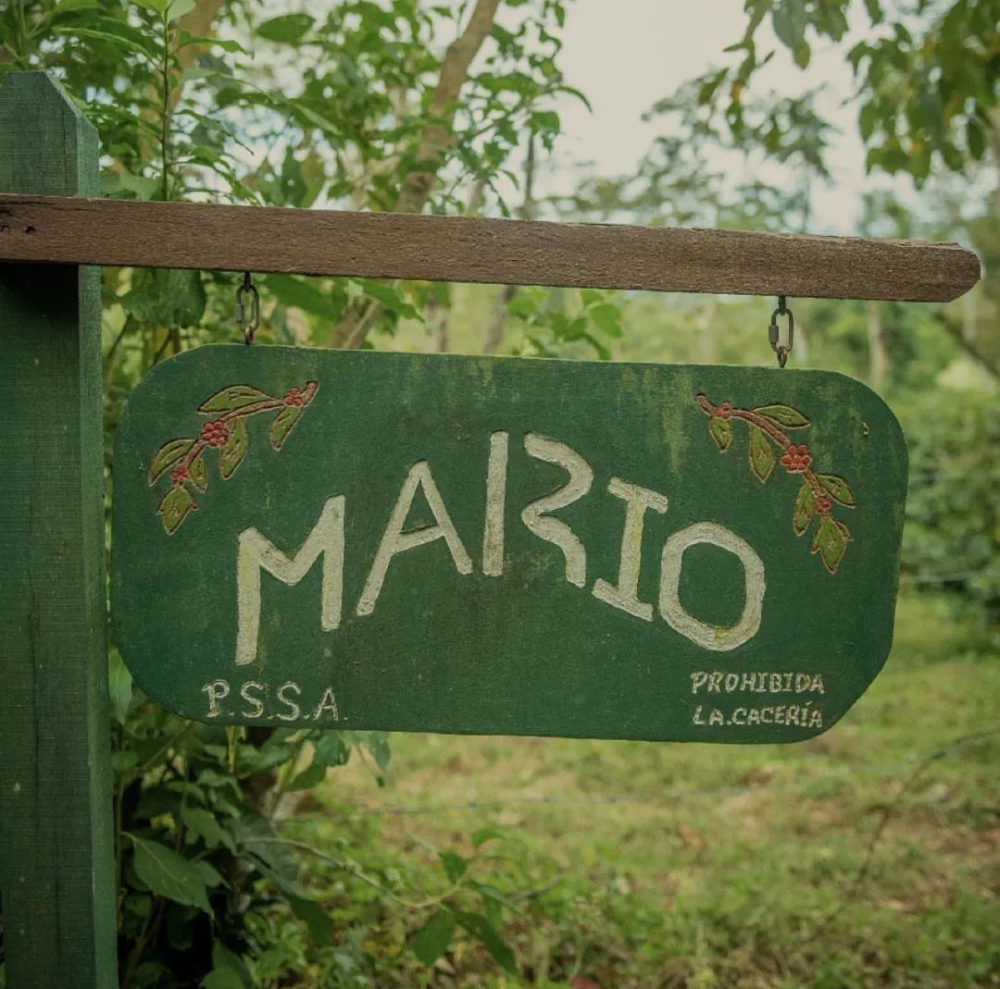
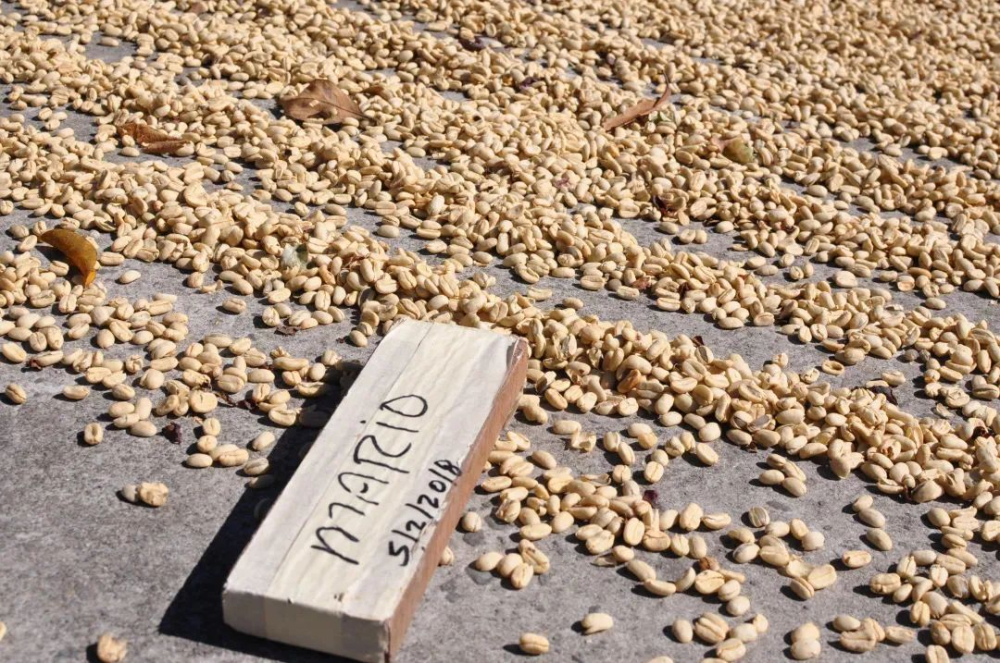
Jaramillo has annual rainfall of 4000 ml, average daytime temperature of 19-25°C, average nighttime temperature of 11-15°C, and average altitude of 1600-1700 m. The Jaramillo plot is subdivided into 5 small plots: Mario, Noria, Reina, Bosque, and Buenos Aires.
Cañas Verdes has annual rainfall of 3500 ml, average daytime temperature of 16-23°C, average nighttime temperature of 10-15°C, and average altitude of 1600-1800 m. Cañas Verdes includes a total of 9 small plots: Lino, Coronado, Fundador, Leon, Montaña, Trapiche, Chinta, Cabaña, and Tumaco.
El Velo is the most recently purchased plot of Hacienda La Esmeralda, with an average altitude of 1700-1900 m. In addition to cultivating Geisha and Catuai, this plot also has a small number of other exotic varieties, such as Laurina, Pacamara, Mocha, and SL28. El Velo is divided into a total of 7 small plots: Guabo, Porton, Durazno, Higueron, Higo, Buena Vista, and Aguila.
Geisha Red Label, Green Label, Blue Label
Front Street Coffee believes that Hacienda La Esmeralda's biggest difference from other estates in marketing strategy is that it divides five major brands according to cupping performance as well as cultivated varieties and plots. Among them, the Geisha variety occupies three: Esmeralda Special, Private Collection, and Geisha 1500. The Catuai variety has two brands: Diamond Mountain grows and Palmyra.
Red Label Geisha
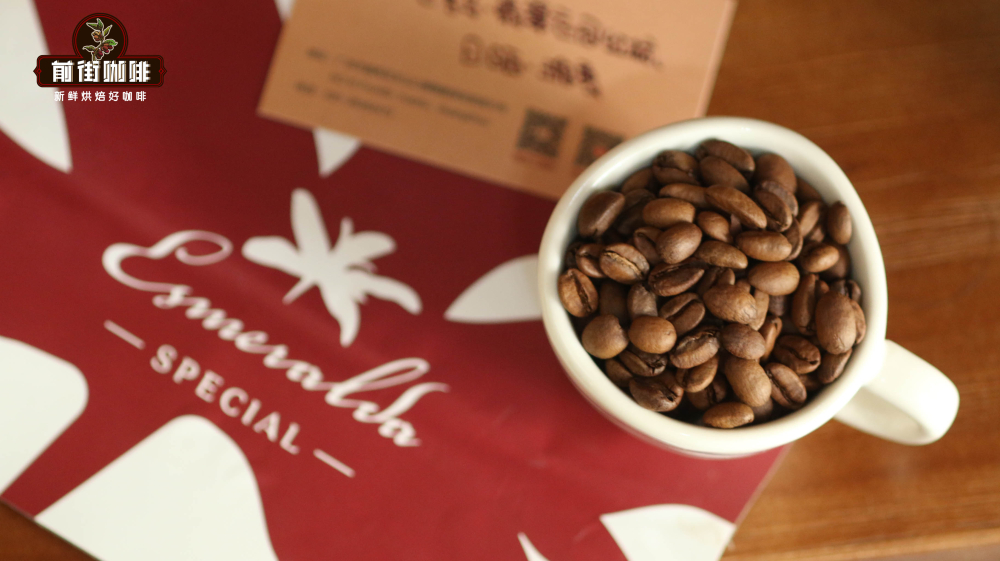
The Geisha produced under Esmeralda Special is what everyone often calls Red Label. It uses Geisha beans grown at an altitude of 1600-1800 meters with a cupping score above 90, produced from the two production regions Jaramillo and Cañas Verdes.
In the independent auction held by Hacienda La Esmeralda itself, only the Geisha lots put up for bidding from the divided plots are auction Red Label. Customers often ask whether auction Red Label tastes better or ordinary Red Label tastes better. In fact, non-auction Red Label and auction Red Label come from the same plot; the only difference is whether they participated in the auction. Front Street Coffee believes there is no need to insist on the auction level. First, the price is indeed relatively high; second, if you just want to try it, Red Label is already a very good choice. This grade of Geisha uses natural or washed processing, and its flavor carries a special and bright floral aroma and citrus notes.
Green Label Geisha
Private Collection, commonly known as Green Label, is not an independent competition lot. It is a Geisha variety that does not participate in auctions after cultivation but still has excellent quality. It uses micro-lots blended from beans grown at an altitude of 1600-1800 meters and produced from different plots such as Jaramillo and Cañas Verdes.
People often ask what the difference is between Red Label and Green Label. Front Street Coffee gives the most easily understood answer: Red Label can be traced back to a specific small plot, while Green Label is a blend and cannot be traced. Because it uses a blended-bean model and does not make detailed plot labels, sometimes Green Label and Red Label can have a very high flavor similarity, but the next output may differ again. Front Street Coffee feels that drinking Green Label is like buying a lottery ticket—perhaps the lot you drink this time happens to taste like Red Label.
Although Green Label is not as high a grade as Red Label, it still carries the classic flavors of Geisha: floral aroma, fruity notes, citrus-like acidity, and a thick, juicy mouthfeel. Green Label Geisha is also processed either washed or natural.
Blue Label Geisha
The brand Geisha 1500 is the Blue Label Geisha we commonly see. It uses blended beans grown at an altitude of 1400-1500 meters and produced from three different plots: Jaramillo, Cañas Verdes, and El Velo. Its flavor carries faint floral notes, fruity acidity, and sweetness, with a less thick mouthfeel. Blue Label Geisha is only washed processed.
Roasting Recommendations
When roasting these three different grades of Geisha coffee beans, Front Street's main idea is to highlight Geisha's rich floral aroma and bright, varied fruity acidity, so it uses a light roast approach. However, Front Street also takes into account that each grade has a different growing environment, so it also makes corresponding adjustments in roasting details.
[Red Label Geisha]
Charge at a drum temperature of 150°C, heat power 120, airflow opening 3; turning point at 1'36", when the drum temperature is 140°C open the airflow to 4, heat power unchanged; when the drum temperature is 147.6°C the bean surface turns yellow, the grassy smell completely disappears, and it enters the dehydration stage. When the drum temperature reaches 150°C, adjust the heat power to 100, airflow unchanged;
At 7'38", the bean surface shows ugly wrinkles and dark streaks, and the toast smell clearly turns into coffee aroma, which can be defined as the prelude to first crack. At this time, listen clearly for the sound of the first crack point. At 8'10" first crack begins, open the airflow to 4, develop for 1'28 after first crack, and drop at 189.5°C.
[Green Label Geisha]
Charge at a drum temperature of 160°C, heat power 110, airflow opening 3; turning point at 1'28", when the drum temperature is 140°C open the airflow to 3.5, heat power unchanged; when the drum temperature is 153.3°C the bean surface turns yellow, the grassy smell completely disappears, and it enters the dehydration stage. When the drum temperature reaches 161°C, adjust the heat power to 90, airflow unchanged;
At 6'54", the bean surface shows ugly wrinkles and dark streaks, and the toast smell clearly turns into coffee aroma, which can be defined as the prelude to first crack. At this time, listen clearly for the sound of the first crack point. At 7'50" first crack begins, open the airflow to 4, develop for 1'20 after first crack, and drop at 192.5°C.
[Blue Label Geisha]
Charge temperature 180°C, turning yellow point 5'20", 151.6°C, first crack point 8'30", 181.8°C, develop for 1'28'' after first crack, remove from the roaster at 190°C.
Cupping Flavor
[Red Label Geisha]
Dry aroma: jasmine, citrus
Wet aroma: citrus, lemon, honey
Palate: lemon, honey, berries, orange peel, mango, cream, citrus, tea-like note
[Green Label Geisha]
Dry aroma: jasmine, ginger flower
Wet aroma: lemon, sweet orange
Palate: lemon, sweet orange, honey, cream, almond, tea-like note
[Blue Label Geisha]
Dry aroma: floral, citrus
Wet aroma: citrus, lemon
Palate: citrus, lemon, honey, nuts, tea-like note
How Front Street Brews Geisha Coffee
Front Street Coffee's brewing recommendations for Hacienda La Esmeralda Red Label, Green Label, and Blue Label Geisha:
The brewing parameters Front Street Coffee recommends are: Hario V60 dripper, 90°C water temperature, 15 g dose, 1:15 coffee-to-water ratio, grind size BG#4Q (80% passing through a Chinese standard No. 20 sieve).
Front Street takes into account that these Geisha beans are all light roasts. Light-roasted beans have a lower extraction rate of coffee substances than dark-roasted beans. Therefore, in order to ensure that the Geisha flavors can be fully extracted, it uses a higher water temperature for brewing and also chooses a finer grind size.
For grinding, Front Street determines it through sieving. According to the grinding recommendations provided by the Specialty Coffee Association of America SCA for pour-over coffee, and combining this with practical verification, Front Street uses different grind sizes to brew, and the resulting cups all show obvious differences. Moreover, the grind size for each coffee bean will differ somewhat. This is the significance of sieving.
If you do not have a sieve at home, Front Street Coffee suggests judging by observing the flow rate: if the flow is too fast, the grind is coarse; if the flow is too slow, the grind is fine.
[Brewing Method]
Front Street Coffee uses staged extraction, also called three-stage brewing: use 30 g of water for a 30-second bloom, pour in a small stream in circles until 125 g for the first stage, and when the water level is about to expose the coffee bed continue pouring until 225 g and stop pouring. When the water level is about to expose the coffee bed, remove the dripper. (Start timing from the beginning of the bloom.) The extraction time is 2'00".
Flavor Description
[Red Label] Bright rose and citrus aromas, brown rice, berries, apricot, complex fruit, honey, a thick juicy mouthfeel, rich flavor layers, and obvious sweetness.
[Green Label] Rich jasmine aroma, high sweetness, citrus, berries, juicy mouthfeel, cream, green tea, orange peel, cantaloupe. The overall flavor layers are rich, with a lasting floral and citrus finish.
[Blue Label] Floral aroma, with a soft acidity of lemon and grapefruit on the palate, honey sweetness in the middle, and oolong tea note and brown sugar sweetness in the finish. The mouthfeel is relatively clean and bright.
For more specialty coffee beans, please add the private WeChat Front Street Coffee, WeChat ID: kaixinguoguo0925
The above content is compiled by CoffeeHunters, a coffee news website.


