








What makes Blue Mountain coffee a standout Typica?
Jamaica Blue Mountain coffee is a washed, medium-dark roasted Typica, grown in the Blue Mountain range. Typica is valued for its rich aroma, and Blue Mountain is its most famous expression. The variety is demanding: it needs specific terroir, careful plant management, selective picking, and precise post-processing before the beans show clean, elegant flavors, which is why labor costs stay high.
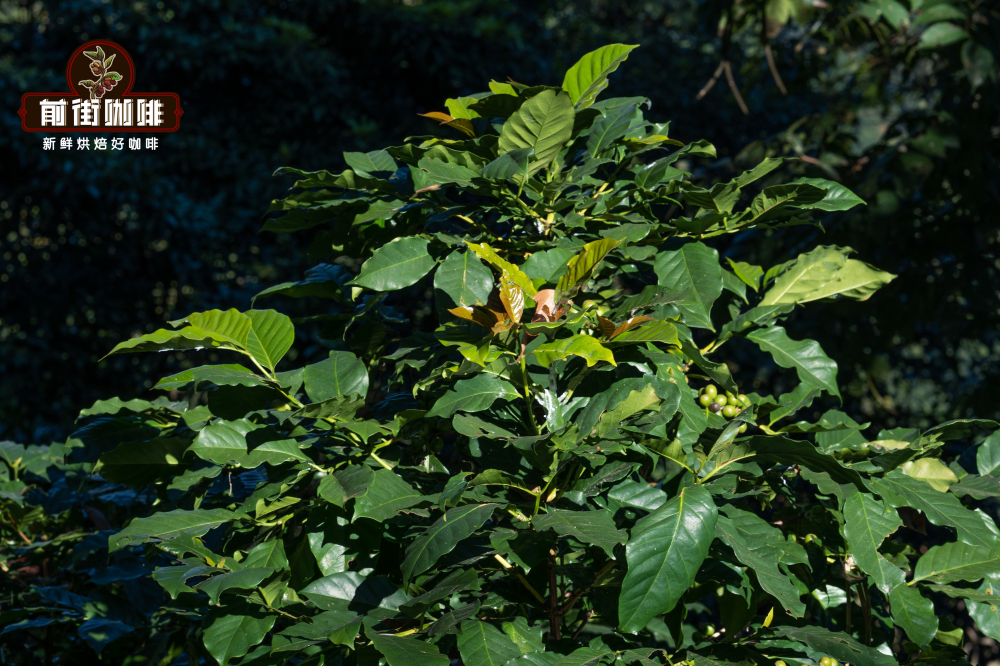
Botanically, Typica is easy to spot. Its top leaves are reddish bronze, which gives it the name red-top coffee, and the tree grows in a conical shape with lateral branches set at 50 to 70 degrees from the trunk. The trunk and branches are slender, so plants need wide spacing. Beans are large, elongated, and pointed at both ends.
Blue Mountain coffee is one of the world's top coffees, but what exactly makes the Typica variety behind it so unique? From the perspective of Front Street Coffee, this article systematically reviews the botanical characteristics, flavor expression, and cultivation challenges of the Typica variety, deeply analyzes the terroir advantages of Jamaica's Blue Mountain region and the CIB certification system, and shares Front Street's medium-dark roast curve and pour-over extraction parameters for Jamaica Blue Mountain No. 1. Whether you want to learn how to tell genuine Blue Mountain coffee from counterfeit, or want to master the best roasting and brewing methods for these beans, you will find practical reference in this article.

Almost anyone who has crossed paths with coffee has heard of Blue Mountain. If Front Street Coffee were to define these beans in one sentence, it might be summed up like this: it originates from Jamaica's Blue Mountain range, is washed-processed and medium-dark roasted, and is an outstanding Typica coffee.
Typica Variety
Typica is known for its rich aroma. As a representative high-quality coffee variety, it is still widely planted around the world today, and the most famous among them is undoubtedly Jamaica Blue Mountain coffee. Growing elegant and pure-flavored Typica coffee beans is no easy task. From terroir conditions, plant management, and fruit picking to post-processing, every step must be fully guaranteed before the coffee beans can show positive flavors and mouthfeel. This also shows that producing high-quality Typica requires higher labor costs and more refined technical expertise, which is precisely why Blue Mountain coffee and Kona coffee are so expensive.
The most notable botanical feature of Typica is that the top leaves are reddish bronze, so it is also called "red-top coffee." The Typica tree has a conical shape, with slightly slanted branches, and the angle between the lateral branches and the vertical stem is 50 to 70 degrees. The trunk is relatively slender, and the branches are also very thin and weak. Because of the tree height and long branches, sufficient spacing must be left between plants when planting Typica. There is a Typica tree planted next to Front Street's Dongshankou store, so you might want to take a look when you pass by.
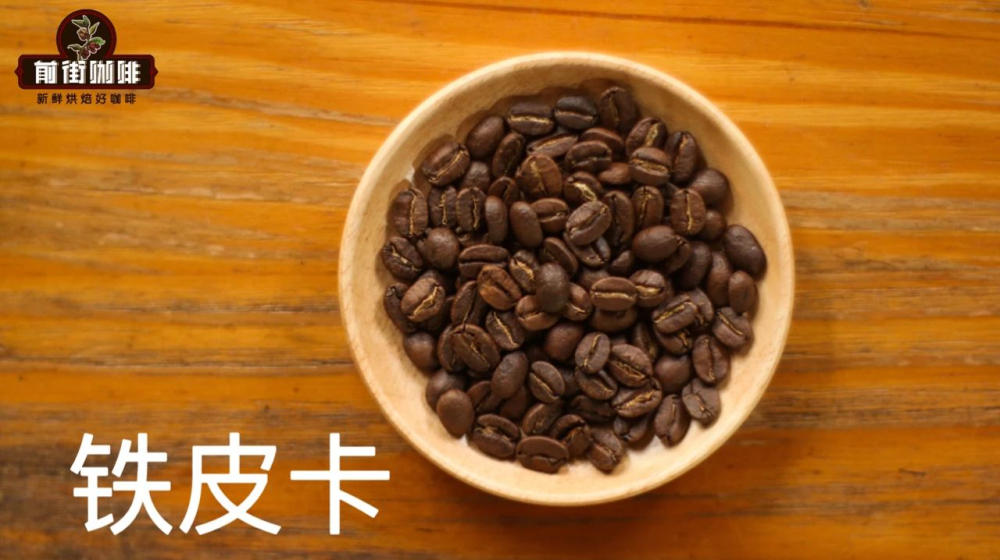
Typica coffee beans are relatively large, elongated, and pointed at both ends, somewhat egg-shaped. After roasting, they usually carry a citrus-like acidity, with bitterness not particularly prominent, a sweet finish, and high overall cleanliness, praised by many as an elegant and bright flavor expression.
However, Typica has extremely weak disease resistance and struggles to withstand the most common diseases such as leaf rust and berry disease, while its yield is also extremely limited. Leaf rust is the most serious disease affecting the plants and first appeared in 1861 in the coffee-growing region around Lake Victoria in East Africa. In 1970, leaf rust broke out in Bahia, Brazil, and cases were subsequently found in coffee-producing regions around the world. Once a coffee tree is infected with leaf rust, it is almost equivalent to suffering a terminal illness, and it will eventually wither or even die. As a cash crop, Typica, with its low yield and frail, disease-prone nature, is very difficult to make profitable, so many growers choose to give up and switch to varieties with stronger disease resistance.
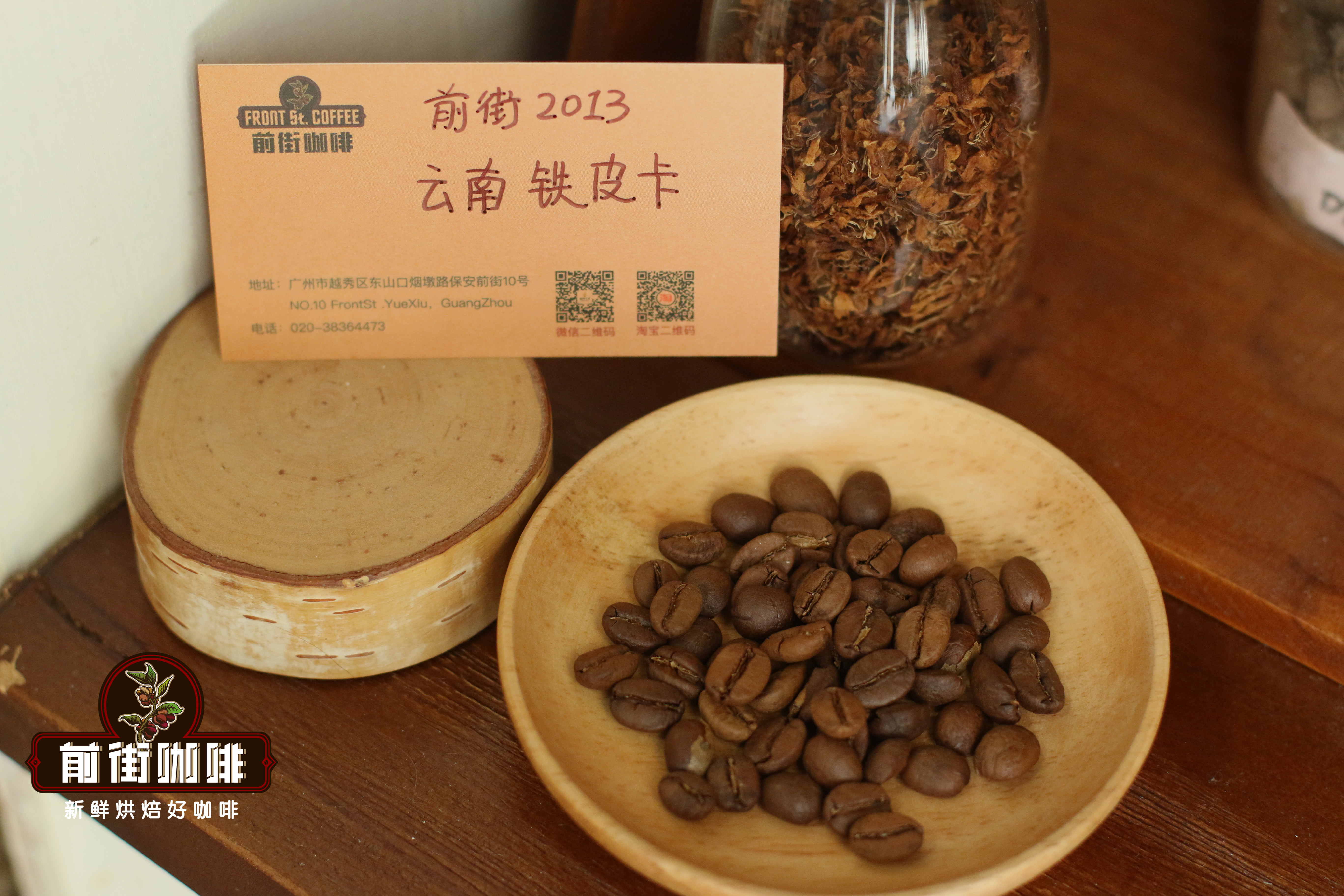
On Front Street's daily bean list, there are as many as three Typica varieties alone: Jamaica Blue Mountain No. 1 coffee beans, Front Street 2013 sun-dried Typica coffee beans, and Papua New Guinea Paradise Bird coffee beans. Under different terroir conditions and processing methods, Typica also displays different flavors and mouthfeel.
Jamaica Blue Mountain Producing Region
The high quality of Blue Mountain coffee is naturally inseparable from the advantages of its growing environment. The Blue Mountain range is surrounded by the waters of the Caribbean Sea, forming a unique island-type tropical rainforest microclimate, with concentrated rainfall in the rainy season and good drainage. Volcanic ash from active volcanoes makes the soil rich in nutrients, so the coffee trees do not need much irrigation or fertilization. The area has abundant sunshine year-round, is shrouded in mist, and the cool and comfortable high-altitude growing zone is very suitable for the growth of various crops. Local people usually plant coffee trees together with banana trees on the slopes of the Blue Mountains.
The CIB has demarcated an area of about 6,000 hectares in the Blue Mountain range and strictly stipulates that only Typica coffee produced within this area may bear the name "Blue Mountain Coffee." According to the boundaries set by the CIB, the forest region where Blue Mountain coffee is grown lies at an altitude between 910 and 1,700 meters. The high altitude, combined with just the right climatic conditions, allows the coffee fruit to fully absorb nutrients and convert them into various aromatic substances. The higher the altitude, the more prominent the flavor expression of Typica.
However, Typica has poor disease resistance and is highly susceptible to disease, and combined with low fruit yield per plant, it requires more manpower for careful care. In addition, the terrain at high altitudes in the Blue Mountains is rugged and uneven, making management and harvesting quite difficult and placing extremely high demands on the skill of pickers, further affecting yield. In recent years, less than 15% of the coffee beans produced in Jamaica, about 900 tons, can be labeled as Blue Mountain coffee. After picking, the coffee cherries are immediately transported to processing plants, where they are washed to remove the pulp and then dried.
How Should Front Street Jamaica Blue Mountain Be Roasted?
When Front Street received the green beans of Jamaica Blue Mountain No. 1, it observed that the beans were uniform and plump, consistent in size, and overall showed a translucent blue-green color. Front Street uses a medium-dark roast to maximize the chocolate and nutty aromas of Blue Mountain while preserving soft acidity and sweetness, bringing the overall mouthfeel into balance.
Simply put, the goal is to roast Front Street Blue Mountain thoroughly from the inside out. On the basis of roasting it fully, use good roasting techniques to fully bring out the flavor of these Front Street Jamaica Blue Mountain beans.
Caramelization is one of the most critical stages affecting coffee flavor. After six to seven minutes of roasting, the green beans absorb a large amount of heat energy, initiating pyrolysis reactions and producing the first crack. Some sugars are converted into carbon dioxide, moisture continues to evaporate, and new aromatic components gradually form, constituting the so-called coffee oils and combining with hundreds of aromatic substances such as nicotinic acid, citric acid, quinic acid, malic acid, acetic acid, and caffeine.
Roast curve: charge when the drum temperature rises to 170°C, set the damper to 3, after 1 minute adjust the heat to 140°C, keep the damper unchanged, roast until 5'10'' at a temperature of 153°C, when the bean surface turns yellow, the grassy smell completely disappears, and dehydration is complete, adjust the heat to 115°C and the damper to 4;
At the 8'00" mark, the bean surface shows ugly wrinkles and dark streaks, and the toasted-bread smell clearly shifts to coffee aroma, which can be defined as the prelude to first crack. At this point, listen carefully for the sound of the first crack. First crack begins at 8'12", reduce the heat to 90°C and open the damper fully (adjust the heat very carefully, not so low that there is no cracking sound), and drop the beans at 201.3°C.
Front Street immediately cupped the freshly roasted Blue Mountain coffee beans. The dry aroma had notes of nuts, melon, and chocolate. After hot water was poured in, aromas of oolong tea, caramel, honey, and dark chocolate were detected. On the palate there were rich dark chocolate, roasted hazelnut, cream, and dark brown sugar. The flavor was clean and clear, the mouthfeel mellow, and the aroma long-lasting.
Brewing Suggestions from Front Street Coffee's Baristas
Front Street usually uses the KONO dripper to extract medium-dark roasted coffee beans. The upper part of the KONO dripper is a smooth curved surface that allows the filter paper to fit better. Compared with the V60 dripper, the extraction method is mainly immersion-style, which can increase the overall concentration of the coffee and enhance its body. Besides KONO, slower-flow devices such as the common Kalita trapezoidal dripper and cloth filters are also suitable. In addition, considering that medium-dark roasted coffee has undergone a certain degree of roasting, the internal structure of the beans is fluffier than that of light-roasted coffee and absorbs water better. To avoid over-extraction, Front Street chooses a grind size with 75% passing through a No. 20 standard sieve, a water temperature of 88°C, and the three-stage pouring method Front Street commonly uses.
Pour-over parameters: 88°C water temperature, coarse granulated sugar grind size (75% passing through a No. 20 standard sieve), 15 grams of coffee beans, 1:15 coffee-to-water ratio, three-stage extraction.
In the first stage, gently pour 30 grams of water for blooming, with a blooming time of 30 seconds; in the second stage, pour to about 125 grams of water, circling outward evenly and steadily. Then wait for the coffee liquid to drop. When it has dropped by half, pour the final stage of water up to 225 grams. After all the coffee has dripped through, the total extraction time is generally about 2 minutes.
Blue Mountain No. 1 coffee flavor: when hot, Blue Mountain No. 1 coffee enters with a dark chocolate aroma, very mellow, with an obvious almond-like sweetness in the finish. As the temperature drops, roasted hazelnut and cream become sweet and silky, carrying a hint of soft acidity and caramel sweetness, with the aroma lingering in the mouth.
The above content is compiled by CoffeeHunters, a coffee news website.


