







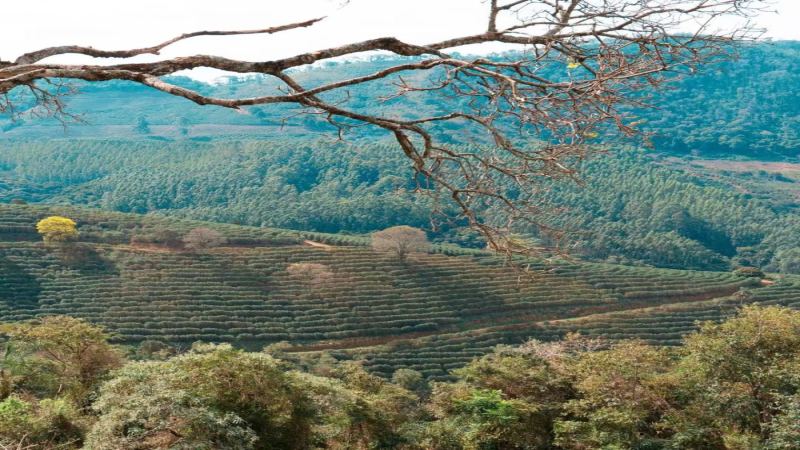
Why do Brazil's coffee producing regions shape the cup?
Brazil is the largest coffee producer, holding about one third of global output, and the second-largest consumer. Coffee arrived from French Guiana in 1729. Most farms sit below 1,200 meters in the central and southern states, where flat land and a humid climate yield smooth, low-acid beans with nutty and chocolatey notes rather than the bright acidity of higher altitudes.
The Tijuco Preto Estate in Minas Gerais grows Bourbon coffee processed with the pulped natural PWP method, giving a balanced cup. Brazil's grading system and main coffee producing regions vary in altitude, variety, and processing, so the same country can deliver quite different flavor profiles. Expect a brazil santos coffee taste that leans sweet, nutty, and mild.
As the world's largest coffee producer, Brazil is known for its smooth, low-acid coffee with nutty and chocolatey notes. This article starts from the history and geographical conditions of Brazilian coffee, and takes an in-depth look at the semi-washed Bourbon coffee beans from Tijuco Preto Estate in Minas Gerais, covering the estate's background, the PWP processing flow, and cupping performance, while also providing Front Street Coffee's brewing parameter recommendations. At the same time, it sorts out Brazil's main producing regions, varieties, and grading system, helping coffee lovers fully understand the diverse face of Brazilian specialty coffee and providing a reference for everyday bean selection and brewing.
FrontStreet Coffee's stores and Tmall shop currently carry more than thirty coffee beans, each with a different flavor profile. Guests often ask how to choose, and FrontStreet Coffee usually divides recommendations into two categories: more acidic or more full-bodied, then gives suggestions based on the guest's preference. When it comes to representatives of nutty and chocolatey flavors, Brazilian coffee is naturally unavoidable. Brazil is the world's largest coffee producer and the second-largest consumer. So what is the origin of Brazilian coffee? What are its main producing regions and well-known estates? How is it processed? Which varieties are grown? And what is its grading system like?
The Origin of Brazilian Coffee
In 1729, coffee was introduced to Brazil from French Guiana. Although careful cultivation, improved processing methods, and better growing techniques can improve coffee quality to a certain extent, Brazil's natural conditions still lag behind those regions that produce top-quality coffee—the soil conditions are acceptable and the climate is humid, but the altitude is clearly insufficient.
Brazil ranks first in the world in coffee production, accounting for about one-third of global output, with production mainly concentrated in the central and southern states. The areas suitable for growing coffee are relatively flat, and the vast majority of coffee farms are located below 1,200 meters in altitude, with no tall trees providing shade. During harvest, ripe and unripe cherries are picked together, so strictly speaking it does not fall into the specialty coffee category. Brazilian coffee is generally medium in quality, with few extremely high-grade lots; the beans are relatively soft and clearly do not tolerate heat well during roasting. Among varieties, Santos is relatively famous, named after its export port, Santos. Brazilian beans have a neutral character and can be drunk as a single origin (though somewhat monotonous), and are also often blended with beans from other origins into composite coffees, generally regarded as an indispensable part of blended recipes.
Geographical Conditions
Brazilian coffee is mostly grown in flat areas. To adapt to this environment, Brazilian estate owners cultivated improved Arabica tree varieties decades ago that do not require high altitudes or shade, and can be planted on plains or grasslands directly exposed to sunlight, which is completely different from the traditional high-altitude shaded cultivation method.
The altitude of Brazilian coffee farms is mostly only a few hundred meters, and coffee is even planted on flat land without issue. This sun-exposed cultivation method makes the coffee cherries grow faster, with insufficient flavor development, and the density of the beans—that is, their hardness—is also less ideal than that of highland beans. The fruity acidity is noticeably low, and the flavor tends toward monotony. Coastal Rio coffee even has an iodine taste and salty taste, believed to be the result of some kind of microbial action, but even when grown in the same soil, this flavor does not necessarily appear every year. Most coffee lovers do not appreciate this taste; only a few Middle Eastern countries, because they are accustomed to brewing coffee with sugar, find Rio coffee's flavor expression especially suitable.
Brazilian Coffee Processing Methods
Brazilian coffee includes natural, semi-washed, and washed processing methods at the same time; the specific choice is determined by the dry and humid conditions of farms in each producing region, so as to present the best flavor of each region, making it very diverse.
But why do most people still think that Brazil is mainly natural-processed?
The key is that before 1990, almost all parts of Brazil used rough natural processing, which easily gave green beans earthy and woody flavors. As a result, the quality of Brazilian green beans was poor, and its image suffered a serious blow.
After 1990, Brazil developed the semi-washed method, which not only shortened working time, increased fruity aroma and sweetness, but also reduced the chance of coffee beans picking up off-flavors. The quality improvement was obvious, and it is very suitable for brewing as single-origin coffee.
Front Street Brazil Tijuco Preto Semi-Washed Coffee
Origin: Brazil
Region: Carmo De Minas, Minas Gerais
Farm: Tijuco Preto
Coffee Variety: Bourbon
Altitude: 1,140 meters
Green Bean Processing Method: Semi-Washed
Coffee Flavor: Sweet, with notes of stone fruit, lime peel, and cooking chocolate.
Dry Aroma: Red wine aroma, nuts, sweet aroma, spices, slight floral notes, bell pepper
Wet Aroma: Sandalwood, red wine aroma, mango, passion fruit, wheat aroma, nuts, hawthorn
Slurping: Elegant passion fruit juice, oily and viscous, bell pepper aroma, pepper, fruity sweetness in the aftertaste, spicy stimulation, smoky aroma, after the coffee cools the oiliness is obvious and the sweet aftertaste has ripe fruit acidity and aroma
How does Front Street Brazil Minas Tijuco Preto Estate Semi-Washed coffee taste?
Tijuco Preto Estate is located in southern Minas at an altitude of 1,140 meters. It is an excellent estate that placed seventh in the 2005 coffee competition and grows the traditional Bourbon variety. The estate does not use mechanical harvesting, but instead hand-picks ripe coffee cherries to avoid uneven ripeness. Using the semi-washed method, the parchment (thin-film) coffee beans are dried in the sun on the drying patio until the moisture content drops below 11%. Compared with other Brazilian beans, Tijuco Preto's beans have a firmer structure, and the roasting curve is broader and more flexible, making the coffee's flavor layers richer, with fruit aromas surpassing cocoa and chocolate aromas. Because it overcomes the shortcomings of Brazilian beans being relatively soft and intolerant of heat, the coffee from Tijuco Preto Estate has no unpleasant burnt-bitterness that stings the throat, while still maintaining a warm, sweet, pleasant taste.
Since 1999, the Brazilian specialty coffee competition has been held for seven years. This grand event in the global coffee world is called the Brazil Cup of Excellence® Competition. This competition initiated by Brazil has had a profound impact on the specialty coffee world. Countries in Central America successively held national coffee competitions, and South American countries and even Ethiopia in Africa followed the trend, joining the competition and the online public bidding model. It has brought opportunities for direct dialogue between producers and bean buyers, and through cupping evaluations it jointly promotes the development of specialty coffee, such as variety research, production improvements, and the impact of various processing methods on taste and quality.
Taking the 2005 Brazil national COE competition as an example, many winning estates had refined semi-washed processing models, and even boldly introduced lower-yield but higher-quality cultivated varieties.
Although Tijuco Preto Estate is at a high altitude, the terrain of the coffee-growing area is quite gentle, and the surrounding scenery is beautiful. Within the estate there are also primary forests, mountain springs, and waterfalls, and great care is taken to protect the environment and wildlife. Of the 346-hectare property, only 70 hectares are used to grow coffee. In order to seek better flavor and meet customers' demand for specialty Brazilian beans, the estate grows a very diverse range of varieties, including MUNDO NOVO, ACAI, CATUAi, ICATU, and YELLOW BOURBON (the famous Yellow Bourbon variety). Below are the outer bag of Fazenda Tijuco Preto's green beans and its famous semi-washed processed green beans:
Fazenda Tijuco Preto's harvesting and processing system is quite meticulous. The model they developed is called the PWP semi-washed process (PWP stands for: picked, washed, pulped). Many Brazilian estates use mechanical harvesting, while the hand-picking method used by Central American specialty estates, one cherry at a time, is relatively rare in Brazil. This estate performs water soaking and washing on the day of harvest, then immediately removes the skin and pulp, and then moves the beans to raised beds for natural sun drying—these three steps at TIJUCO PRETO Estate are called the PWP processing method.
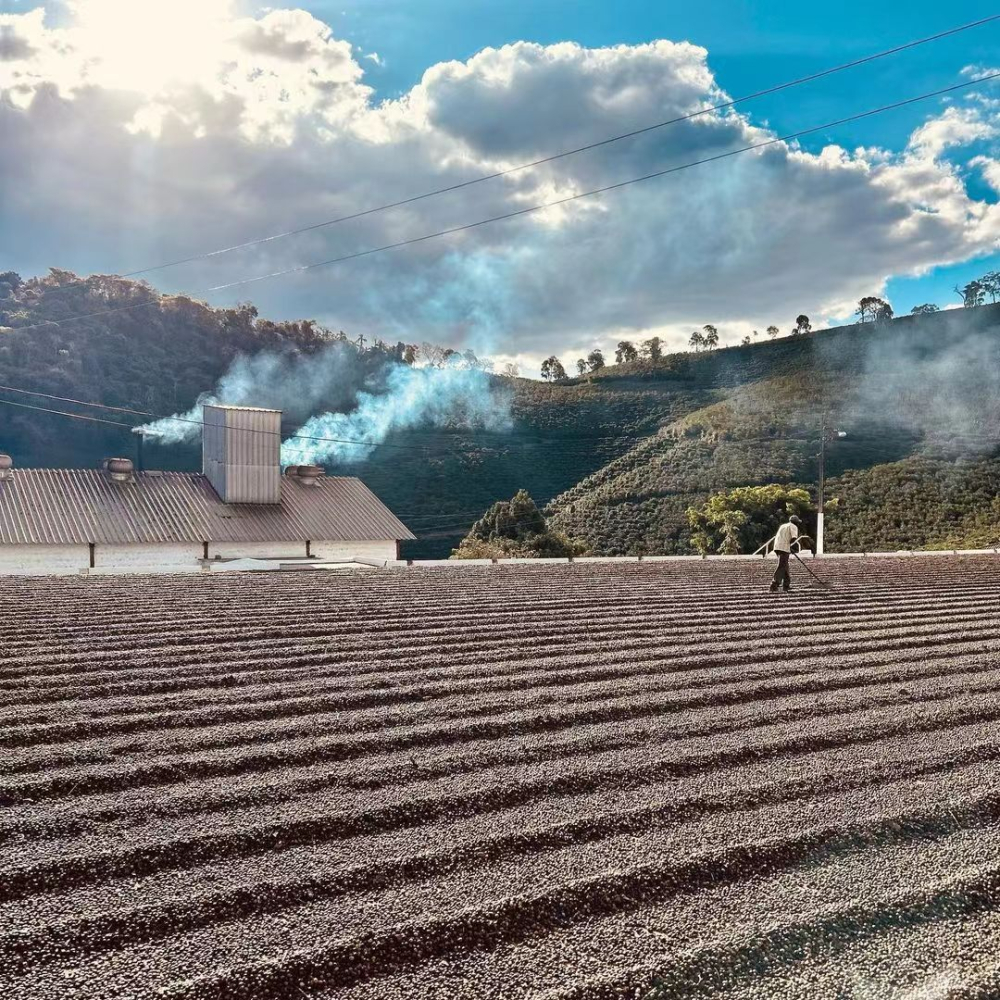
The processed parchment green beans are sun-dried on patios starting from the second day, turned an average of 20 times per day, until the moisture content drops to 11%... after that they are sent into storage to rest for 60 days.
When these parchment beans are ready for export, four dry-processing steps are then carried out: hulling, bean sorting, grading, and packaging. Inspecting this batch of green beans from Orsir, one can indeed find that it is a typical semi-washed Brazilian specialty coffee. The estate's award record is quite brilliant: on behalf of COCARIVE (Cooperativa dos Cafeicultores de Carmo de Minas, namely the coffee growers' cooperative of the Carmo de Minas region), it won the silver medal in the natural Arabica coffee group held by France's IVPA, as well as seventh place in the 2005 Brazil national competition (7th Winning farm of 2005 Brazil Cup of Excellence® Competition).
Brazilian Semi-Washed Processing Method (Honey Processing Method)
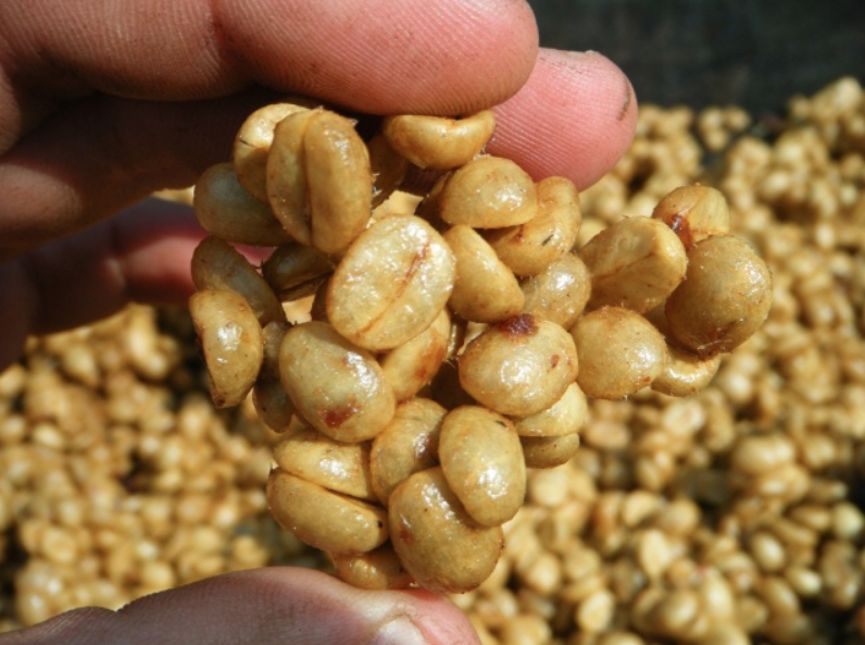
The semi-washed method is an improved version of the natural method. Its main difference from the natural method is that before sun drying, the outer skin and pulp are first removed, and drying is carried out directly while retaining the mucilage layer. Costa Rica's quite famous honey processing method can also be considered a semi-washed method.
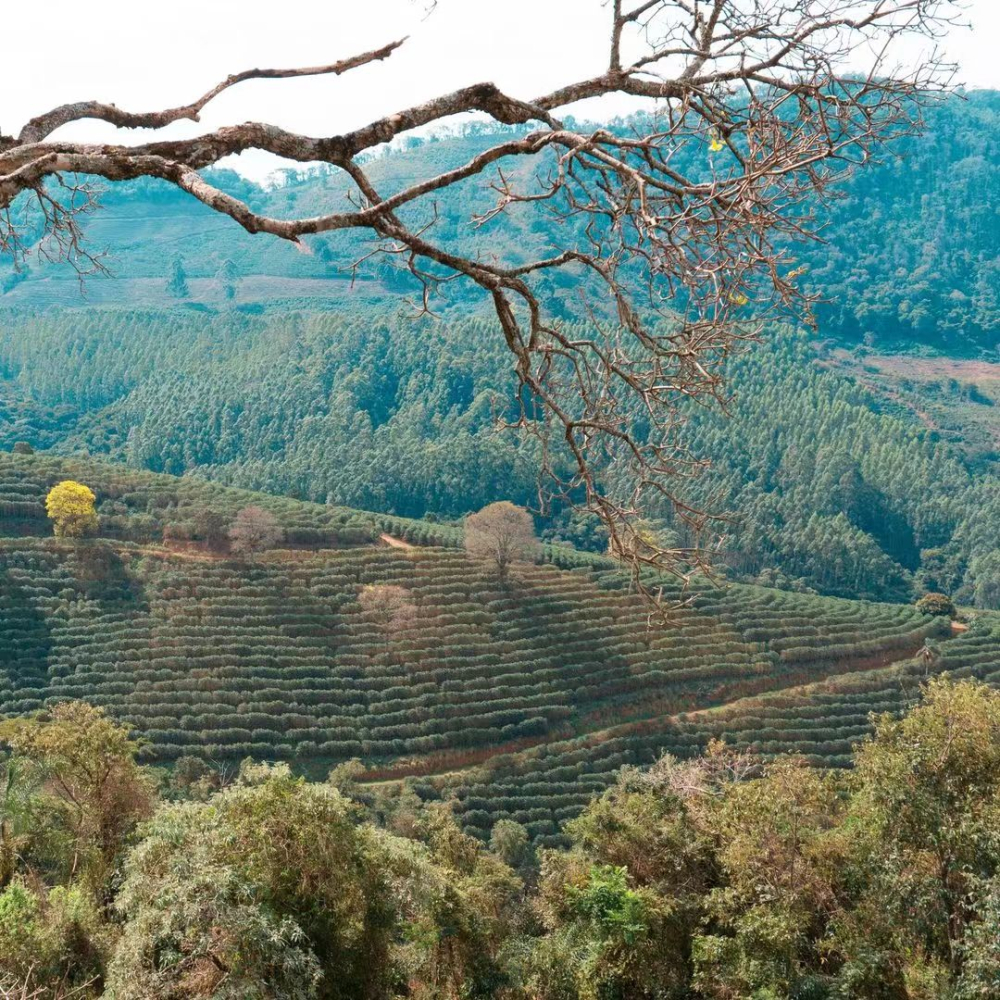
Processing Steps
1. Remove floating beans (same as the natural method)
Pour the coffee cherries into a large water tank. Underdeveloped, inferior beans will float to the surface, while ripe, plump cherries will sink to the bottom. At this point, scoop out the floating beans on the surface, and the step of removing floating beans is complete.
2. Remove skin and pulp (same as the washed method)
Using a pulping machine, remove the outer skin and pulp of the coffee cherries, leaving the mucilage, parchment, and silver skin.
3. Sun Drying
Spread the coffee beans with mucilage on the drying patio and dry them directly in the sun until the moisture content drops to 10~14%.
4. Remove mucilage and parchment
Use a special machine to remove the mucilage and parchment, and the processing steps are complete.
Advantages
1. It is an improved method of the natural method. Because the pulp is removed at the beginning, there is no problem with mold.
2. It does not require large amounts of clean water, so the cost is lower.
Disadvantages
The processing steps can be said to be the most complex and labor-intensive of all methods.
Flavor
Honey-processed coffee beans have better flavor, with balanced acidity and sweetness, and like the natural method, because they have undergone sun drying, the aroma of the coffee beans themselves is also amplified, with a rich, full body.
Coffee Varieties Grown in Brazil
Brazil grows a wide variety of coffee varieties, including both Arabica and Robusta. Smoothness, low acidity, slight sweetness, and balance are the main characteristics of Brazilian Arabica coffee. Although Brazilian coffee is generally considered to lack outstanding flavor characteristics, Brazilian coffee beans are the best choice for blended coffee. If one wants to make an elegant yet affordable blended coffee, Brazilian coffee is a very good supporting element. Using Brazilian coffee can balance other varieties with strong flavors, such as the well-known Mamba coffee and Geba coffee, both of which use Brazilian coffee as the best choice. At the same time, Brazil is also one of the most widely used espresso blend components.
Brazil currently mainly grows Red Bourbon, Yellow Bourbon, Mundo Novo, and Catuai, while Caturra, Acaia, Obata, Aramosa, and Laurina are also cultivated and studied. The Campinas Agricultural Research Institute in São Paulo is Brazil's famous coffee variety improvement base. The world's most widely planted Catimor is the masterpiece of Portuguese and Brazilian scientists.
Brazilian Coffee Grading and Producing Regions
Strictly Soft: Sul de Minas, Cerrado, Mogiana, Chapada Diamantina in Bahia.
Soft: Bahia, the southeastern mountain forest region of Minas, Paraná, central-western São Paulo, and the mountainous areas of Espírito Santo.
Softtish: eastern and northeastern Minas.
Hardish: low-altitude areas of Paraná, Espírito Santo.
Rioy: flatlands of Espírito Santo, lower-lying areas of southeastern Minas.
Coffee Producing Regions
Brazil's main producing regions are Minas Gerais, Sao Paulo, Bahia, and Espirito Santo; these four places account for 90% of national exports. The commonly seen Santos and Mogiana come from São Paulo. Cerrado and Sul de Minas in Minas Gerais, because of their higher altitudes, produce more specialty Brazilian coffee beans. Cerrado is located west of Minas Gerais and is a flat plateau at an altitude of 750–1,200 m.
Sul de Minas is a hilly area at an altitude of 700 m–1,200 m and is Brazil's earliest coffee-producing region. Due to rising labor costs, most is now mechanically harvested, and it is also the earliest commercially developed coffee region, with many large exporters located there. The Bahia producing region in northern Brazil mainly produces washed Brazilian coffee, while the Espírito Santo producing region near the coast is the main export area for Brazil's Robusta varieties.
São Paulo State
Mogiana / Mogiana
This area is very close to southern Minas. Coffee is planted among shrubs, grasslands, and other vegetation. There are many farming families in this region; some use traditional large-farm operating methods, while others adopt small-scale modern operations. Modern technology combined with mountain coffee-growing culture has produced the highest-quality green coffee beans.
Front Street Brazil Queen Estate
Region: Mogiana
Estate Name: Queen Estate (Fazenda Rainha)
Owner: Regina Helena Mello de Carvalho Dias, belonging to the Carvalho Dias family
Variety: Yellow Bourbon, Yellow Bourbon
Processing Method: Natural processing
Altitude: 1,400–1,950 m
Roasting Analysis
The green beans have a solid texture and good flavor expression, with slight orange peel and spice notes. The green bean moisture content is 9.9%.
This Front Street Brazil Queen Estate coffee bean has a relatively low moisture content, which gives the beans a strong heat-absorbing capacity. Therefore, FrontStreet Coffee's roasting plan is to charge the beans at 200°C, then use high heat and a small damper to speed up dehydration. After the dehydration stage ends, open the damper to medium and use medium heat for the Maillard reaction, without making the time too rushed, and drop the beans near the end of first crack.
FrontStreet Coffee test-roasted four times in total, and finally chose the interval between 1 minute 45 seconds and 2 minutes after the end of first crack as the best. The taste has obvious sweetness, but it is not dull sweetness; in the background there is a faint lemon aroma, which is more prominent in the wet aroma stage, and in the latter part there is a clear dark chocolate note. The overall impression is relatively round, showing Brazilian characteristics while still retaining liveliness.
Brewing Parameters
Dripper: Hario V60
Water Temperature: 86-88°C
Coffee-to-Water Ratio: 1:15
Grind Size: Medium grind
Brewing Method
For the first pour, use 30 grams of water for blooming, with a blooming time of about 30 seconds. For the second pour, pour in stages up to 125 grams of water. When the water level drops and is about to expose the coffee bed, continue with the third pour up to 225 grams to finish. When the water level drops and is about to expose the coffee bed, remove the dripper. (Start timing from the beginning of blooming.) The extraction time is 2'00".
Flavor Description
The bean character is sweet and clean. Using the semi-washed method makes the acidity slightly brighter, but it combines well with the sweetness, and some even have tropical fruit aromas; the aroma spreading all around during brewing is especially appealing. The fresh sweetness of sugarcane juice, black tea, a smooth fruity sweetness, obvious nutty flavor, balanced and smooth acidity, very weak and clean bitterness, rich chocolate aroma and nutty flavor, with a bright, refreshing taste and a smooth, delicate mouthfeel.
Central-West / Garea, Marilia and Piraju
Coffee bean cultivation in this region is generally a combination of large estates and traditional production lines. Although it seems that production is declining, in reality they are pursuing the production of higher-quality green beans.
Paraná / Norte Pionerio do Parane
This state was once Brazil's largest producing region and currently has its own unique production technology.
After discovering a decline in yields per unit area in coffee groves, producers in Paraná created a new type of "closed planting system." At present, a large number of coffee trees and seedlings per hectare can better withstand cold winds while also ensuring more regular output.
Bahia / Bahia
Bahia / Atlantico Baiano: mainly produces Robusta beans on large farms.
Chapada / Planaltoda Bahia: This region is located in central Bahia and mainly produces hand-sorted Arabica coffee, primarily using the washed processing method.
Cerrado da Bahia / Cerrado da Bahia: This region is located in western Bahia and is generally considered the newest Brazilian coffee-growing area. Modern technologies for irrigation and harvesting are widely used in this region.
Espirito Santo / Espirito Santo
This state is mainly divided into two regions: in the north, both large and small estates grow Robusta beans; in the south, typical mountain-grown coffee is produced, generally in relatively small quantities. Both washed and natural methods are used in this region.
Minas Gerais Minas Gerais
Sul de Minas / Sul de Minas
A small-estate region, producing about 8–10 million bags of coffee grown along the mountains. Suitable altitude, undulating terrain, and a climate favorable for coffee cultivation, with concentrated rainfall in the months when the cherries need to grow and dry weather in the months when harvesting is needed.
FrontStreet Coffee · Brazil Red Bourbon
Region: Sul de Minas producing region
Variety: Red Bourbon, Red Bourbon
Processing Method: Semi-washed processing
Altitude: 1,000 m
Brewing Parameters
Dripper: KONO
Water Temperature: 88-90°C
Coffee-to-Water Ratio: 1:15
Grind Size: Medium grind
For coffee beans with a darker roast, in order to highlight the coffee's full-bodied feel, FrontStreet Coffee chooses the Kono dripper for brewing. The characteristic of the Kono dripper is that it has an immersion function, which can use immersion to extract more coffee substances and enhance the full-bodied mouthfeel. Because it has few ribs and they are located at the lower end, the filter paper can fit closely against the dripper to restrict airflow, thereby slowing the flow rate and increasing the contact time between water and coffee. It is suitable for brewing medium-dark roasted coffee beans such as Front Street Brazil Queen Estate and Front Street Golden Mandheling.
Brewing Method
For the first pour, use 30 grams of water for blooming, with a blooming time of about 30 seconds. For the second pour, pour in stages up to 125 grams of water. When the water level drops and is about to expose the coffee bed, continue with the third pour up to 225 grams to finish. When the water level drops and is about to expose the coffee bed, remove the dripper. (Start timing from the beginning of blooming.) The extraction time is 2 minutes.
Flavor Description
Overall flavors of nuts, chocolate, cream, peanut, caramel, fruity acidity, and sucrose.
Cerrado / Cerrado Mineiro
Growing coffee in the Cerrado (also called Savanna) is a victory for Brazilian coffee technology. More and more large coffee plantations in the Cerrado use high technology in production, though this is the case in very few areas. The plateau climate has four distinct seasons, the cherries ripen steadily, and there is absolutely no rainfall during the harvest season. Savanna coffee generally uses the natural processing method, which is also a current processing trend.
Chapada de Minas / Chapada de Minas
In the north of Minas Gerais state, the area is very small, but the green bean quality is world-class.
Matas de Minas / Matas de Minas
A very large area with a highly diverse ecosystem, and also Brazil's oldest coffee-growing region. Its highest-altitude areas are the best areas for processing coffee.
Rondônia / Rondônia
Located in Brazil's western Amazon rainforest region, adjacent to Bolivia, this region mainly produces Robusta coffee.
Rio de Janeiro / Rio de Janeiro
Mainly grows Arabica. Compared with other producing regions, it has excellent port transportation advantages.
For more specialty coffee beans, please add the private WeChat of FrontStreet Coffee. WeChat ID: kaixinguoguo0925
The above content is compiled by CoffeeHunters, a coffee news website.


