







Is Blue Mountain Coffee Bitter When Hand-Brewed?
Authentic blue mountain coffee comes from Jamaica's Blue Mountains, where volcanic soil, humidity and near-constant fog and rain produce a balanced cup. Only four administrative districts are certified by the Jamaica Coffee Board; products labeled Blue Mountain flavor or Blue Mountain blend are not the real thing. Clifton Mount Estate is one of the surviving old estates and holds Rainforest Alliance certification.
Blue Mountain No. 1 is not sharply bitter. Its sweet-sour-bitter balance depends on roast level and pour-over parameters, so water temperature, grind and ratio determine how much bitterness reaches the cup. The mountains rise above 2,000 meters with average rainfall near 1,980 millimeters and temperatures around 27 degrees, but land above 1,700 meters is a nature reserve.
Jamaican Blue Mountain coffee comes from the Blue Mountains on a Caribbean island. Its volcanic soil and year-round misty, rainy climate have created a world-renowned balanced flavor. Coffee labeled "Blue Mountain flavor" or "Blue Mountain blend" on the market is not authentic Blue Mountain coffee. Only four administrative districts are truly certified by the Jamaica Coffee Board, and Clifton Mount Estate is one of the ancient origins still in operation today, as well as the only Blue Mountain estate currently holding Rainforest Alliance certification. The Blue Mountain No. 1 coffee beans currently sold by Front Street Coffee come from Clifton Estate. This article will analyze the bitterness of Blue Mountain No. 1 and the source of its sweet-sour-bitter balance from origin certification, estate background, roasting and extraction approach, and specific pour-over parameters, and provide Front Street's complete brewing method and flavor description, helping coffee lovers understand this classic coffee more comprehensively.
For professional coffee knowledge exchange and more coffee bean information, please follow Coffee Workshop (WeChat public account: cafe_style)
For more specialty coffee beans, please add the private WeChat of Front Street Coffee: qjcoffeex
Authentic Blue Mountain coffee refers to coffee beans grown in Jamaica's Blue Mountains. Compared with many other origins, its price is slightly higher, but not outrageously expensive. By contrast, the many products on the market advertised as Blue Mountain flavor, Blue Mountain flavor coffee, Blue Mountain taste coffee, or Blue Mountain blend coffee are not truly authentic Blue Mountain coffee.
Blue Mountain Coffee Brands
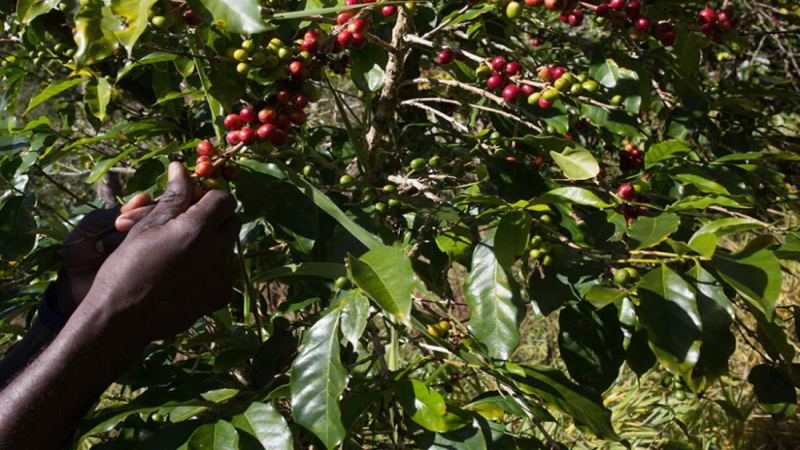
Jamaica is an island country located in the Caribbean Sea, and the Blue Mountains are the highest mountain range on the island, with the main peak reaching 2,256 meters above sea level. This area lies within the coffee-growing belt, with fertile volcanic soil, clean and pollution-free air, relatively high humidity, and fog and rain throughout the year. The average annual rainfall is about 1,980 millimeters, and the temperature remains around 27 degrees. It is precisely these natural conditions that have produced the world-famous Jamaican Blue Mountain coffee.
Although the mountain range exceeds 2,000 meters in altitude, areas above 1,700 meters are designated as a nature reserve, so Blue Mountain coffee is actually grown between 910 and 1,700 meters. The authentic Blue Mountain coffee-producing areas certified by the Jamaica Coffee Board include four administrative districts: St. Andrew, St. Thomas, St. Mary, and Portland.
These areas contain numerous coffee estates and farms. At present, one of the best-performing coffee plantations in the Blue Mountain region is Clifton Mount Estate. It is an ancient coffee origin in Jamaica that is still operating normally today, and it is also the only farm in Jamaica to have obtained Rainforest Alliance certification.
The coffee cultivation and production history of Clifton Farm can be traced back to the mid-eighteenth century, around 1750. The average altitude of the farm's cultivation and processing areas is 1,310.64 meters. Sufficient altitude, gentle afternoon mist and cloud cover providing forest shade, abundant sunlight, and mineral-rich soil together provide a good growing environment for coffee trees and also allow the coffee cherries to have a longer maturation period.
The Blue Mountain No. 1 coffee beans currently sold by Front Street Coffee all come from Clifton Estate. The reason for choosing to offer Blue Mountain coffee is that it possesses a balance difficult for coffee beans from other origins to replicate. It is a good coffee with a rich, mellow aroma and a harmonious balance of acidity, sweetness, and bitterness.
Is Blue Mountain Coffee Bitter?
As long as it is roasted properly and extracted reasonably, Blue Mountain coffee tastes mellow, clean, and balanced. Although it has bitterness, its sweet aftertaste is quite good. Everyone perceives bitterness differently. As long as there is no scorched bitterness or astringent bitterness, it is normal for medium-dark roasted coffee beans to have a bittersweet quality.
In order to highlight the nutty character of Blue Mountain coffee with its balance of acidity, sweetness, and bitterness, while restoring a more classic Blue Mountain flavor, Front Street selected several medium and dark roasting curves. After cupping comparisons, it was confirmed that a medium-dark roast better highlights chocolate-like sweet aroma and also retains slight fruity acidity, making the coffee's overall layering richer.
The darker the roast level, the faster coffee substances dissolve. To avoid over-extraction, Front Street chose to extract with a lower water temperature and paired it with a slower-flow Kono dripper, aiming to extract as much of the coffee substances as possible under low-temperature conditions.
The following are Front Street Coffee's in-store extraction parameters and pouring technique: Kono dripper, 88°C water temperature, 1:15 coffee-to-water ratio, 15g coffee dose, grind size (70-75% passing through a No. 20 standard sieve).
Three-stage pouring steps: first bloom with 30g of water for 30 seconds; in the first stage, pour in a circular motion with a small stream until 125g, then stop; when the liquid level drops to the point where the coffee bed is about to be exposed, continue with the second stage and pour until 225g, then stop extraction. The total extraction time, including blooming, is 2 minutes 00 seconds.
Front Street Coffee's pour-over Blue Mountain No. 1 flavor profile: rich black chocolate and nutty flavors, creamy and smooth mouthfeel, with a balance of acidity, sweetness, and bitterness.
The above content is compiled by CoffeeHunters, a coffee news website.


