







What Shapes the Flavor of Kenya Coffee?
Kenya coffee is Arabica grown in high-altitude conditions that give it bright acidity, vinous and floral notes, a full body, and small, plump beans. The SL28 and SL34 varieties, government promotion, an auction system, a unique grading standard, and a 72-hour washed fermentation process together built that identity. Core producing regions include Nyeri, Kirinyaga, and Murang'a.
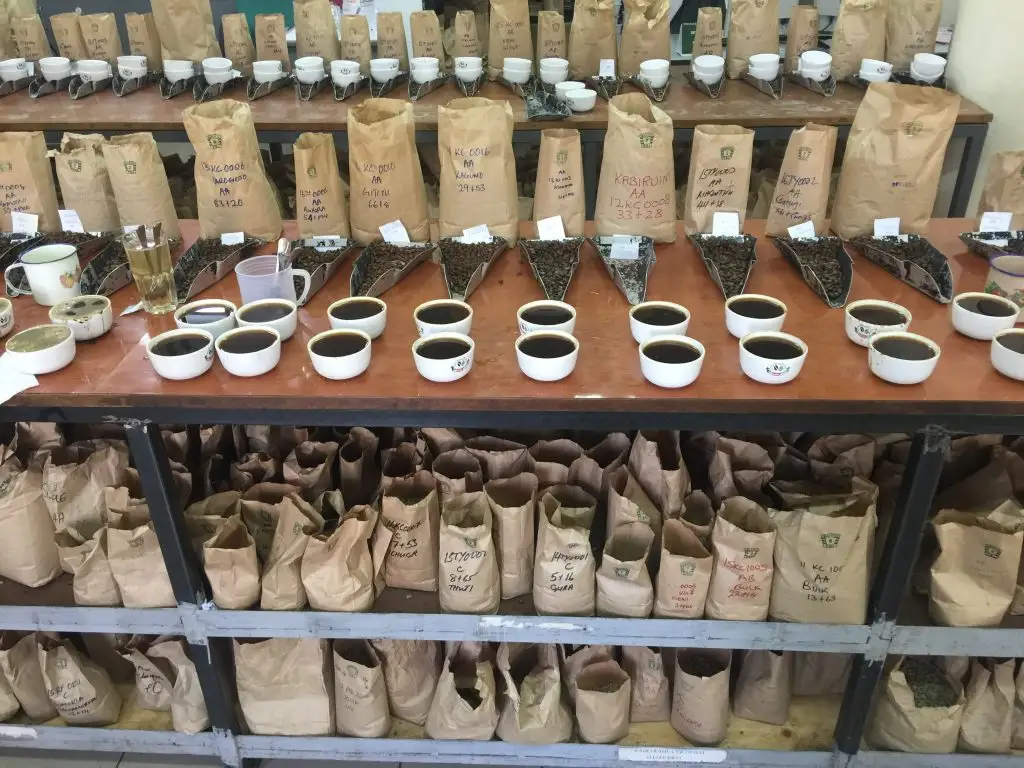
Dormans Estate, founded in 1950, is one of the country's largest producers, selecting beans from designated smallholder farms in the Nairobi highlands through hand-picking and sun-drying. Its appraisers cup roughly 1,500 cups each week, and only the top-performing lots move on to blending and roasting. The grading system and auction structure keep quality consistent across the Kenya coffee supply chain.
Kenya, with its exceptional climate conditions and continuously refined industry system, has cultivated Arabica coffee with distinct flavors and outstanding quality. This article starts with Dormans Estate, Kenya's largest coffee producer, and systematically traces the rise of Kenyan coffee—including the SL28/SL34 breeding mechanism, government promotion, the auction system, unique grading standards, and the 72-hour washed fermentation process—while also providing an in-depth analysis of core producing regions such as Nyeri, Kirinyaga, and Murang'a. At the same time, it presents the brewing method and flavor review of Front Street Coffee's Kenya Asali (Little Tomato), offering coffee enthusiasts a complete picture of Kenyan specialty coffee.
For more specialty coffee knowledge, please follow: Front Street Coffee (Frontsteet Coffee)
Kenya possesses an innate and unique climate condition, and it is this land that allows high-quality Arabica coffee to flourish. The coffee beans here fully absorb the essence of the coffee cherry, with bright acidity, combining vinous notes and floral aromas, a full body, and small yet plump beans. Combined with processing methods that blend tradition and modernization, Kenyan coffee has developed an unmistakable identity that is deeply sought after by coffee lovers. Taking Front Street Coffee as an example, Kenyan beans have long been on many people's regular staple list. Whenever they want to taste berry or little tomato-like acidity, they will brew a cup and savor it slowly, which speaks volumes about its appeal.
Kenya's Dormans Estate was founded in 1950 and is one of the largest coffee producers in the country. Dormans has long supplied high-quality Kenyan coffee to the international market and enjoys an outstanding reputation, even earning the title of King of African Coffee for its excellent quality. Dormans Estate selects coffee beans from designated smallholder farms in the Nairobi highlands, where the high-altitude pure climate combines with natural organic cultivation methods, with fully hand-picked harvesting and natural sun-drying, and strict classification and collection according to seasonal changes and mountain altitudes. The estate's appraisers must taste about 1,500 cups of coffee each week, and only the best-performing beans can enter the blending and roasting stages, ultimately becoming premium coffee products presented to consumers. Dormans Estate's products bring together the excellent qualities of Kenyan coffee and fully demonstrate the outstanding standard for which the country's coffee is renowned worldwide.
Next, Front Street will provide a detailed introduction to knowledge about Kenyan producing regions.
The outstanding Front Street Kenyan coffee has a rich aroma, is full-bodied, carries fruit notes, and offers a rich and complete flavor profile. Kenyan coffee presents an astonishing fruit flavor, with notes of blackberry and grapefruit experienced when drinking, making it a favorite among many seasoned coffee enthusiasts.
Kenya is located in eastern Africa, adjacent to Ethiopia, the birthplace of coffee. The country did not introduce coffee until close to the 20th century, during which coffee had almost traveled the entire globe before returning to Africa. However, Front Street Coffee believes that although Kenyan coffee started late, it developed extremely quickly. During the period of British colonial rule, both the establishment of the breeding mechanism and the determination of the grading system pushed Kenyan coffee beans toward the specialty coffee market. Kenyan specialty coffee now enjoys global renown, and Front Street Coffee summarizes the reasons into the following aspects:
1. Establishment of the breeding mechanism. In 1883, the British introduced coffee to Kenya from Réunion Island. In 1922, Kenya established Scott Labs (from which SL28 and SL34 got their names), dedicated to coffee cultivation research. Over the following decade or so, the lab selected SL28 and SL34, suitable for local cultivation, from 42 coffee varieties, laying a solid foundation for the coffee industry.
2. Government emphasis. In 1931, the Kenya Planters Co-operative Union and the Kenya National Coffee Board were established one after another, guiding the development of the coffee industry from both the civil and national levels. In 1937, the Nairobi Coffee Exchange was established, and Kenya's coffee auction system was launched.
3. Determination of the grading system. Kenya classifies grades based on coffee bean size and cupping results. According to bean size, shape, and hardness, from high to low, the grades are AA or AA+, AB, PB, C, E, TT, and T. For AA and AB green beans, a special grading based on cupping results was also introduced (not officially recognized by the Kenyan state, but established by exporters), from high to low: TOP, PLUS (+), and FAQ.
4. The K72 processing method. The unique acidity of Kenyan specialty coffee is inseparable from its excellent processing method. Conventional washed processing selects highly ripe cherries, removes the skin and pulp, then places them in a tank to soak and ferment to remove mucilage, a process that generally does not exceed 36 hours, but fermentation in Kenya can last up to 72 hours. After that, the beans are dried until the moisture content drops to 12%. Front Street believes that Kenya's distinctive washed processing method better allows the coffee beans to display bright acidity and a full juicy feel.
[Kenya Coffee Grading System] AA Plus (AA+): AA grade with particularly excellent cup quality (flavor, mouthfeel). AA bean size: Screen Size 17-18. AB bean size: Screen Size 15-16, accounting for most of production. C bean size: smaller than AB. TT: from AA and AB grade beans, lighter-weight beans blown out by an airflow separator. T: from C grade beans, lighter-weight beans blown out by an airflow separator. E Elephant Bean: large mutant beans formed by two beans merged into one, also called Elephant ear. PB Peaberry: classified by appearance, unrelated to flavor or weight.
For green coffee beans in the AA and AB grades, a special grading based on cupping results has been added (not officially recognized by the Kenyan state, but established by exporters), from high to low: TOP, PLUS (+), and FAQ. The flavor grade of Front Street Coffee's Kenya Asali on its bean list reaches the TOP level. However, as mentioned earlier, this is not an officially recognized grading system, and among the several Kenyan regional coffees Front Street Coffee has purchased, not every one carries a flavor grade, so there is no need to dwell too much on this. Generally, once beans reach the AA and AB grades, their flavor is already, by default, regarded as very high quality.
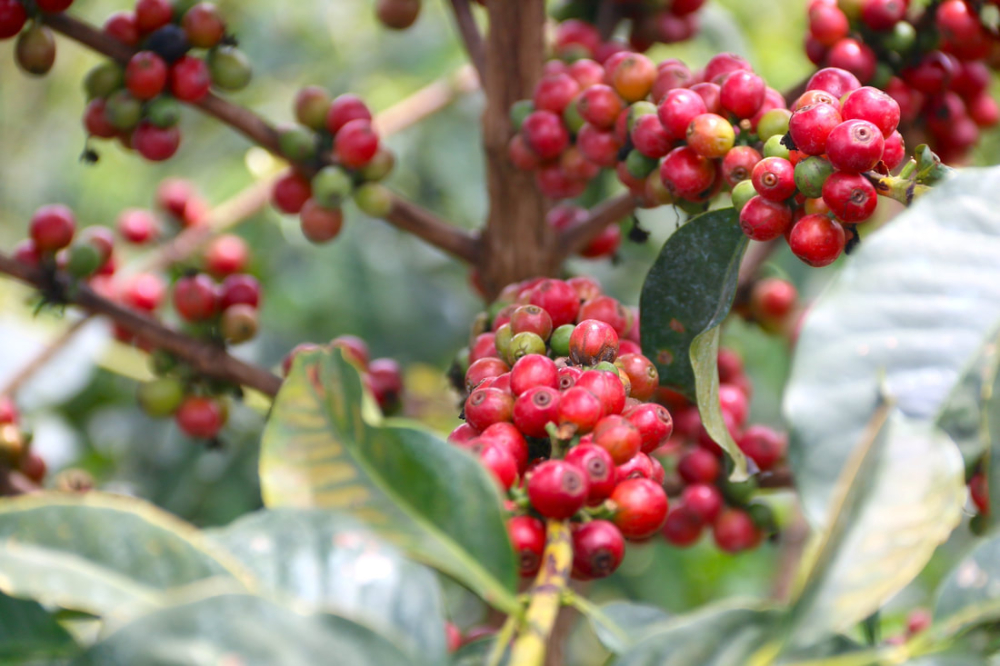
[Kenyan Coffee Producing Regions] Kenya's coffee-producing regions are mainly distributed in the central and western areas. The main coffee-producing regions in the central area include Kiambu, Nyeri, Kirinyaga, Muranga, Embu, Machakos, Ruiru, and Thika; in the western area are Kisii and the Bungoma region located on Mt. Elgon.
Front Street Coffee updates the coffee-producing regions on its bean list at regular intervals, and Kenya is no exception. Last month, Front Street Coffee purchased a batch of Kenyan coffee beans from different coffee-producing regions. Through tasting across multiple stages including roasting, cupping, and pour-over, it can be found that each producing region has its own distinct characteristics. The specialty coffee-producing regions mainly come from the following areas: Nyeri, Kirinyaga, and Murang'a.
Nyeri
The Nyeri producing region is located in central Kenya and is home to the extinct volcano Mount Kenya. The red soil of this area nurtures Kenya's finest coffee. Agriculture is extremely important in this region, and coffee is its most important crop. In the Nyeri producing region, cooperative societies composed of smallholder farmers are more common than large estates. Altitude: 1,200 to 2,300 meters Harvest period: October to December (main crop season), June to August (secondary crop season) Varieties: SL-28, SL-34, Ruriu11, Batian.
Muranga The Muranga producing region belongs to Central Province, and this area has about 100,000 coffee farmers. This inland producing region was the settlement choice of the first missionaries because the Portuguese prohibited them from living in the coastal areas. This is also another producing region that benefits from volcanic soil, and the number of smallholder coffee farmers also exceeds that of estates. Altitude: 1,350 to 1,950 meters Harvest period: October to December (main crop season), June to August (secondary crop season) Varieties: SL-28, SL-34, Ruiru11, Batian
Kirinyaga The Kirinyaga producing region is located on the slopes of Mount Kenya, adjacent to the Nyeri producing region. It is world-renowned for coffee with intense flavor, rich layers, and a solid body, and together with the Nyeri producing region is widely recognized as one of Kenya's two best producing regions at present. Most producers in this area are smallholder coffee farmers who join cooperatives, and the cooperatives play a coordinating role by providing wet mills, while the coffee farmers send the coffee cherries to the cooperative's processing plant for processing. Altitude: 1,300 to 1,900 meters Harvest period: October to December (main crop season), June to August (secondary crop season) Varieties: SL-28, SL-34, Ruiru11, Batian.
[Front Street Kenya Little Tomato Coffee Beans]
Producing region: Thika, Kenya
Processing plant: Asali Processing Plant
Processing method: Washed processing
Altitude: 1,550–1,750 meters
Varieties: SL28 & SL34
Front Street Coffee recommends pour-over as the extraction method
Brewing recipe
Coffee dose: 15 grams; Coffee-to-water ratio: 1:15; Water temperature: 89–92°C; Time: 2 minutes; Grind: EK43S#10
Bloom with 30 grams of water for 30 to 35 seconds, then pour to 125 grams, at around 1 minute. When the water level drops halfway, pour the remaining water, finishing the pour at around 1 minute 30 seconds to 1 minute 40 seconds. Once filtration is complete at two minutes, remove the dripper.
Flavor description: pronounced berries, dark cocoa, syrupy, medium-high acidity, medium bitterness, clean, medium finish.
The above content is compiled by CoffeeHunters, a coffee news website.


