








Where Do Panama Geisha Coffee Beans Come From?
Panama Geisha coffee beans trace back to the primitive forests of southwestern Ethiopia. A British botanical researcher collected disease-resistant varieties on Geisha Mountain in 1931, and the seeds were sent to Kitale, Kenya, under the names Geisha and Abyssinian. Kenya later passed young plants to Uganda and Tanzania, and after more than a decade the variety reached Costa Rica and eventually Panama.
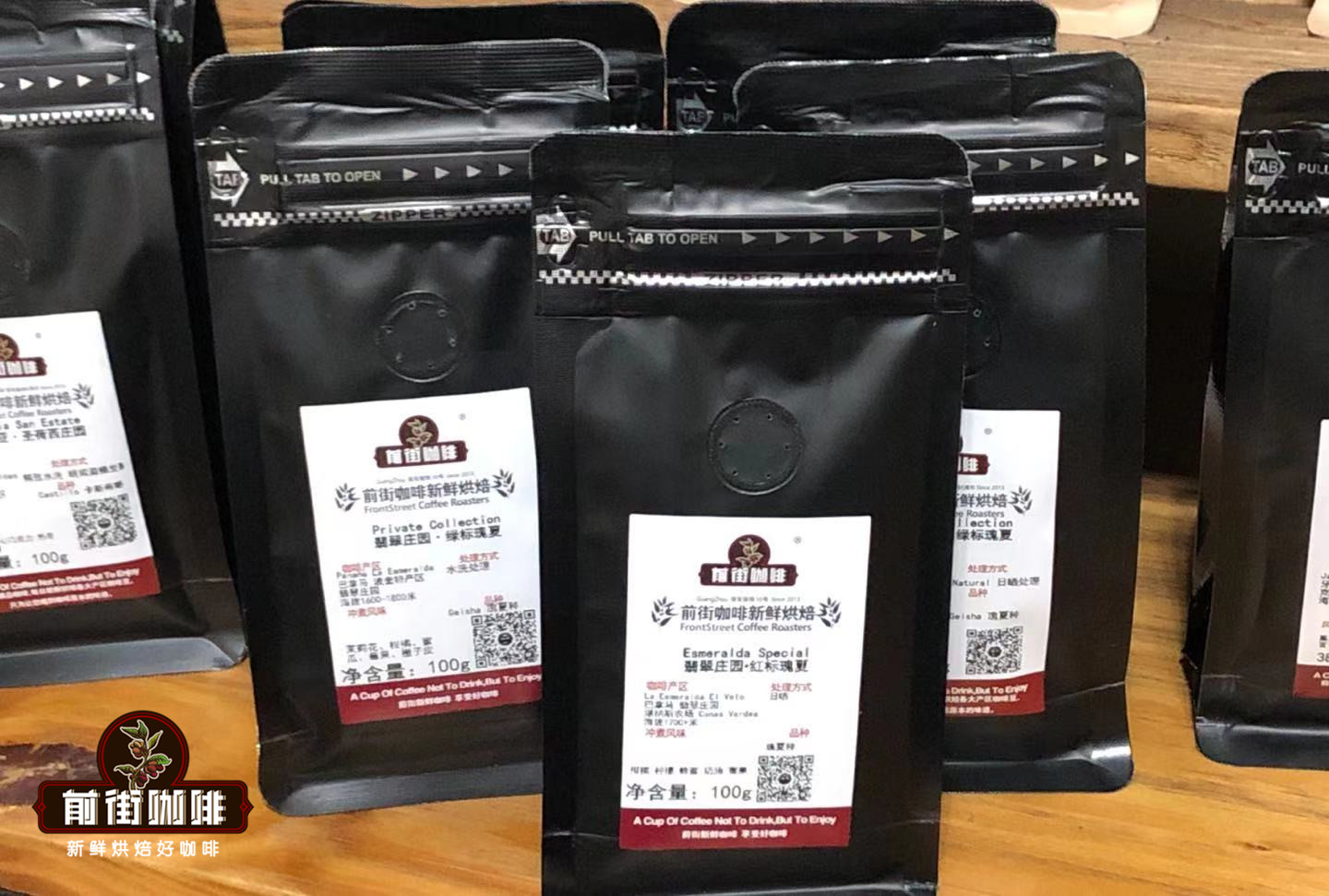
Hacienda La Esmeralda sells its Geisha under Red, Green and Blue labels, five products across three grades. The grades differ in bean appearance, dry and wet aroma, and in the cup, which carries floral and citrus notes. Brewing parameters and a staged extraction method are given to bring out those aromatics.
Geisha coffee beans, with their enchanting floral aroma and citrus notes, have become a highly sought-after variety in the specialty coffee world. But do you know where Panama's Geisha actually comes from? Why does it have such a long, pointed bean shape? And what are the differences between Hacienda La Esmeralda's Red Label, Green Label, and Blue Label? In this article, Front Street Coffee will take you through Geisha's migration path from the wild forests of Ethiopia to Panama's Hacienda La Esmeralda, provide a detailed analysis of the essential differences among the three grades of Geisha in bean appearance, dry and wet aroma, and share Hacienda La Esmeralda Geisha's brewing parameters and staged extraction method. Whether you are a beginner just getting to know Geisha or an enthusiast who wants to learn more about the story of its origin, you will find valuable information here.
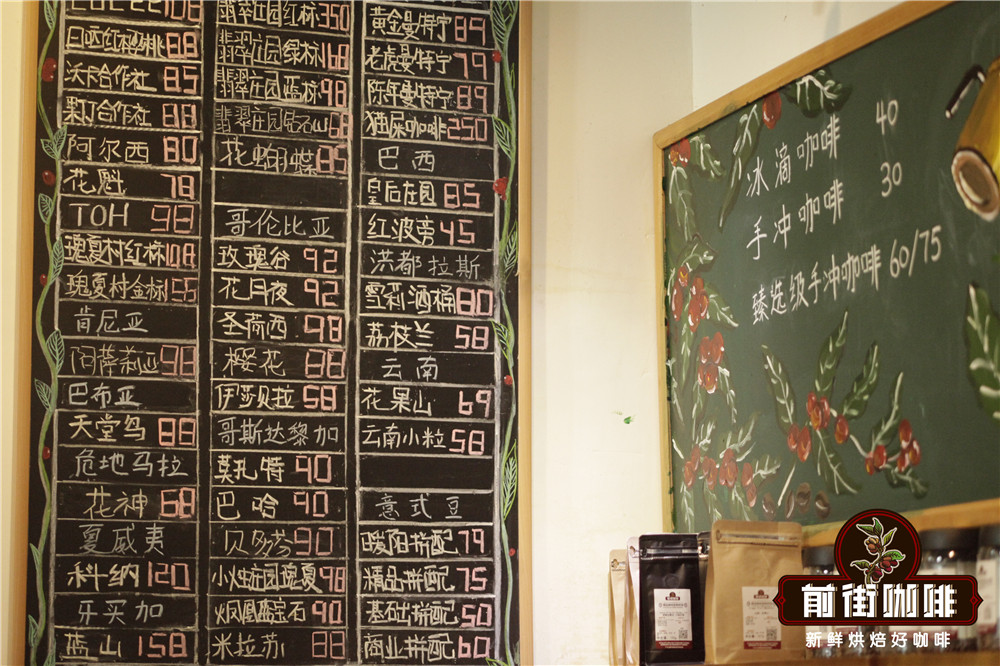
"Does Geisha coffee really have floral notes? Can you recommend a Geisha bean worth buying?" When browsing Front Street's bean list, everyone is invariably drawn to the word "Geisha." However, the Geisha coffee beans sold by Front Street alone cover different origins such as Ethiopia, Panama, and Costa Rica. And from Hacienda La Esmeralda in Panama alone, its Geisha is divided into 3 grades and a total of 5 products. Today, Front Street will talk about the origins of Panama Geisha and what exactly differs among Hacienda La Esmeralda's three grades of Geisha.
Where Do Panama Geisha Coffee Beans Come From?
Panama's Geisha traces its roots to the primitive forests of southwestern Ethiopia in Africa. At first, people noticed it not because of its floral aroma, but because they sampled and studied it as a disease-resistant variety. After reviewing the materials, Front Street has roughly pieced together the complete path by which Geisha traveled from its Ethiopian homeland to Panama.
In 1931, a British botanical research expert went deep into Ethiopia's Geisha Mountain to collect disease-resistant coffee varieties. These seeds were sent to Kitale, Kenya, under the names Geisha and Abyssinian to begin trial planting. In 1936, Kenya separated part of the cultivated young plants and sent them to coffee research institutes in neighboring Uganda and Tanzania to continue growing them. After more than ten years of research and cultivation across various African countries, Costa Rica's coffee research institution began successively introducing various coffee young plants from different African countries starting in 1953.
After another ten years of cultivation in Costa Rica, the Panama Geisha variety now familiar to everyone was introduced from Costa Rica in 1963 by Don Pachi Serracin. At the time, however, Geisha plants had low yields and poor economic returns, so coffee farmers were generally unwilling to grow them. Yet one coffee farmer noticed that although its yield was not high, it had excellent wind resistance, so he planted it in his estate's windbreak forest to protect the higher-yielding Caturra and Catuai varieties.
That's right, this estate was the later famous Hacienda La Esmeralda. Every harvest season, the estate owner would process the coffee cherries harvested from different plots in batches according to harvest time. Until one time, the owner's son smelled an enchanting floral aroma in the processed green beans. Following the clue, he finally traced the source of these little ones. They were surprised to find that these enchanting beans actually came from the windbreak forest with the harshest climate and environment on the estate. Even more unexpectedly, if Caturra and Catuai were planted in the same location, they simply could not survive, while Geisha was not only not defeated by the harsh conditions, but instead "lived out its own brilliance."
In 2004, Hacienda La Esmeralda sent separately harvested and separately processed Geisha coffee beans to compete in the Best of Panama cupping competition and won first place in one fell swoop. Since then, Geisha coffee has stood at the forefront of the specialty coffee market, and for more than a decade it has attracted one group after another of coffee lovers with its own unique charm. Through cupping the three grades of Hacienda La Esmeralda Geisha coffee beans, Front Street Coffee (FrontStreet Coffee) found that their floral aroma, citrus acidity, and tea-like sensation are indeed unforgettable for a long time.
Characteristics of Geisha Coffee Beans
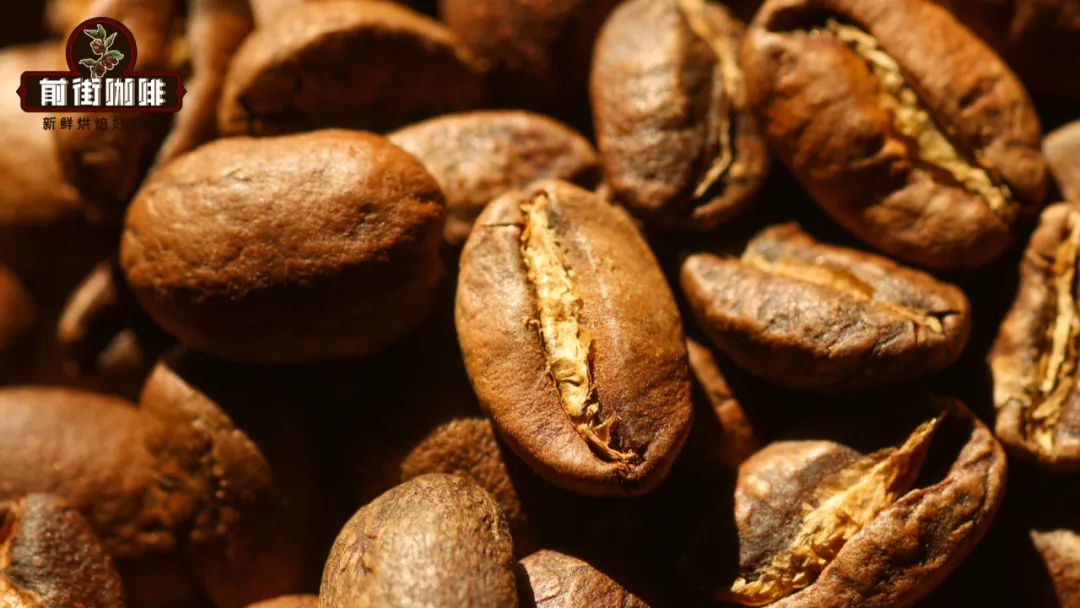
In addition to its enchanting floral aroma, Geisha coffee beans also have a notable appearance characteristic that lets people recognize them at a glance among many coffee beans: a long, pointed bean shape. Front Street Coffee (FrontStreet Coffee) has noticed that Panama Geisha beans are slender, pointed at both ends, and plump and full in the middle. Top-quality Geisha can even reach 18-19 screen size, making it highly recognizable.
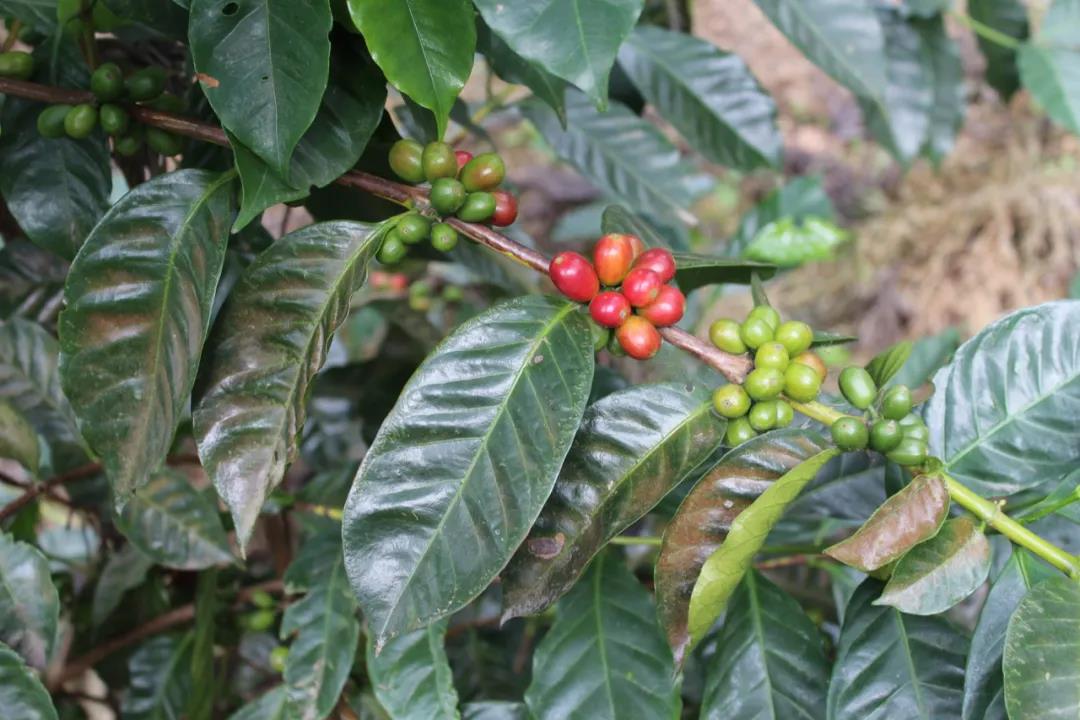
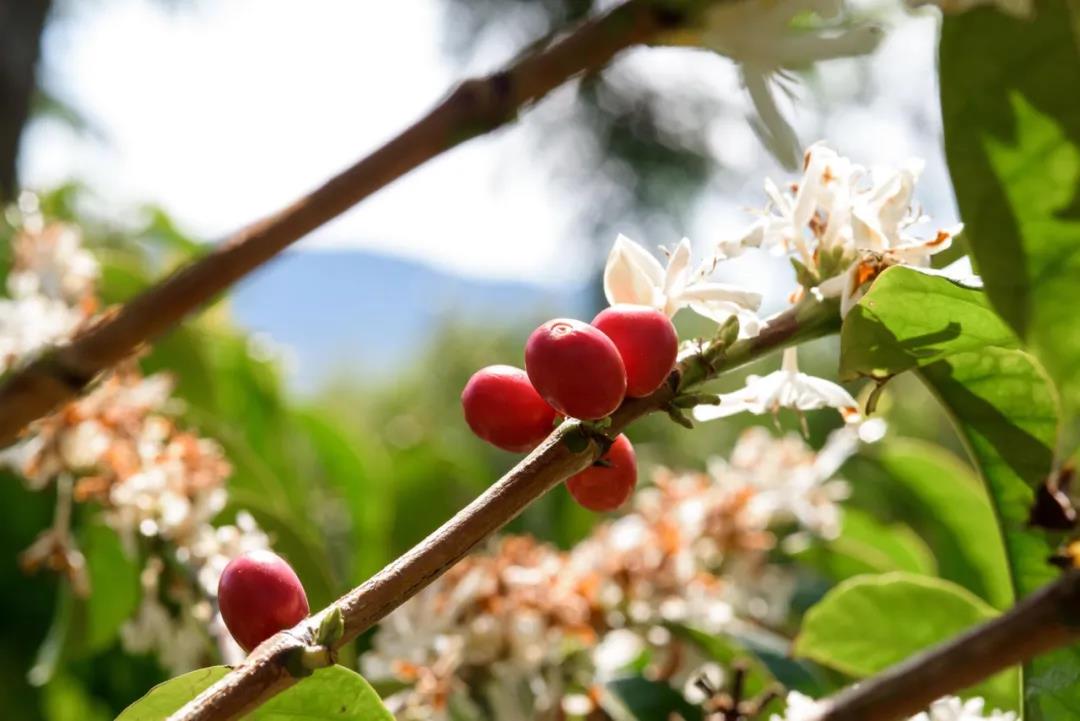
However, growing high-quality Geisha coffee has extremely strict requirements for the growing environment. The temperature in the producing area cannot be too low to avoid frost damage, the growing altitude must be sufficiently high, and the temperature difference between day and night must be sufficiently large, so that Geisha coffee trees have enough time to accumulate nutrients and can display Geisha coffee's delicate floral aroma and citrus flavor profile.
When it comes to the grading of Hacienda La Esmeralda Geisha coffee beans, I believe what everyone most wants to know is what exactly differs among Red Label, Green Label, and Blue Label.
Let us first get a general understanding of the essential differences among the three grades. Hacienda La Esmeralda divides its Geisha plots very precisely, mainly into three plots: Jaramillo, Canas Verdes, and El Velo. Each estate is further subdivided into smaller plots.
Front Street Coffee's Hacienda La Esmeralda Geisha Red Label comes from the Canas Verdes plot, which has an average altitude of 1,700 meters; the Green Label batch of Geisha is grown at altitudes between 1,600 and 1,800 meters, mainly blended from batches produced in different plots such as Jaramillo and Canas Verdes. Because it uses a model of blending different plots, sometimes Green Label and Red Label can have a very high degree of flavor similarity; Blue Label is a blend of Geisha grown below 1,500 meters from the three plots.
Having covered the essential differences, Front Street will now explain the most direct differences among the three grades.
|Judging by Coffee Bean Appearance
Hacienda La Esmeralda Geisha Red Label coffee beans are plump and full, and the bean size is uniform. Other Geisha coffees cannot be as well guaranteed in terms of size, with some large and some small. Therefore, even before tasting the flavor, one can already sense Red Label Geisha's strict quality control standards.
|Judging by Aroma
After grinding, Hacienda La Esmeralda Geisha Red Label smells of obvious rose floral notes and the sweet-and-tart sensation of strawberry, while Hacienda La Esmeralda Geisha Green Label, whether washed or natural, smells after grinding of fresh lemon aroma and white floral notes. Hacienda La Esmeralda Geisha Blue Label, whether washed or natural, appears somewhat inferior compared with Red and Green Labels, with a faint floral aroma and citrus acidity.
Having covered the most direct differences, Front Street will next demonstrate how to brew a good cup of Hacienda La Esmeralda Geisha coffee~
Front Street Coffee (FrontStreet Coffee) has found when brewing Hacienda La Esmeralda Geisha coffee beans that they are all very resistant to extraction. What does that mean? It means Hacienda La Esmeralda Geisha coffee beans extract more slowly than coffee beans from other regions. So in terms of grind size, we can adjust it a little coarser. Front Street's daily grind size for brewing light-roast coffee beans is 75% passing through a No. 20 standard sieve, while Geisha coffee's grind size can be adjusted to 71% passing through a No. 20 standard sieve.
Coffee grounds: 15g
Coffee-to-water ratio: 1:15
Temperature: 90℃
Grind size: medium-fine grind (71% passing through a No. 20 standard sieve)
Dripper: V60#01
Then use staged extraction: pour 30 grams of water in the first stage and let it bloom for 30 seconds; after the bloom ends, pour the second stage of water, pouring 100 grams in a circle from the center outward. This stage can be poured slowly. Geisha coffee is very resistant to extraction and needs a certain pouring time to draw out its aroma. After pouring, wait until the water level drops to half. When the coffee bed is about to be exposed, pour the third stage of 95 grams of water, for a total poured water amount of 225 grams. Wait for the coffee to finish filtering, remove the dripper. The extraction time is about 2'10-2'20, and the coffee bed after brewing will also sink, both of which are normal.
[Natural Red Label] Bright rose and citrus aromas, genmai, berries, apricot, complex fruit, honey, with a thick juicy body, rich flavor layers, and obvious sweetness.
[Washed Green Label] On the palate, rich jasmine floral aroma, high sweetness, citrus, berries, juicy sensation, cream, green tea, orange peel, cantaloupe, with overall rich flavor layers and a lasting finish of floral and citrus notes.
[Natural Green Label] On the palate, bright citric acidity and jasmine aroma, then after it gradually cools, passion fruit aroma and a strawberry juice sensation, and finally a honey-like sweet finish. The coffee overall has a full and smooth mouthfeel.
[Washed Blue Label] On the palate, soft acidity of lemon and grapefruit, and as the temperature drops slightly, oolong tea, honey, and sucrose sweetness in the finish. The mouthfeel is relatively clean and bright.
[Natural Blue Label] It smells of fermentation aroma and fruity sweetness. On the palate, there is the sweetness of melon and tropical fruits, with a juice-like mouthfeel, and the overall sweetness is very high.
The above content is compiled by CoffeeHunters, a coffee news website.


