







What Makes Golden Mandheling From Sumatra Distinct?
Golden Mandheling is one of Sumatra's signature specialty coffees. The PWN lot is hand-sorted repeatedly, which gives it unusual cleanliness and a clear, bright sweetness on top of dark chocolate, hazelnut, caramel, and herbal spice. Arabica in Sumatra is grown at high altitude mainly in Aceh Province and North Sumatra Province, and cherries ripen from September to April.
Traditional Lintong Mandheling is cultivated by the Mandailing and Batak peoples, while the Aceh region supplies the PWN Golden Mandheling that Front Street roasts medium-dark. The wet-hulled process shapes the woody spice and rich bitter notes behind the Sumatra coffee golden shell character. A KONO dripper, 87°C water, and a three-pour method brew a round, focused cup at home.
Golden Mandheling is one of the most iconic specialty coffees from Sumatra, Indonesia. Front Street PWN Golden Mandheling is known for its dark chocolate, hazelnut, caramel, and herbal spice flavors, with high cleanliness and a clear, bright sweetness. This article outlines the origins and distribution of Mandheling, the differences between the Aceh and Lintong regions, PWN's hand-sorting standards, and how the wet-hulled process shapes its woody spice and rich bitter notes. It also combines Front Street's in-store experience to provide a complete pour-over recipe using the KONO dripper, 87°C water temperature, and a three-pour method, helping coffee lovers brew a round, focused Golden Mandheling at home.
Front Street Mandheling coffee is the boldest bitter option on the bean list, weaving together dark chocolate, roasted hazelnut, and caramel, with a hint of herbal spice in the finish. Front Street PWN Golden Mandheling sits in the top right corner of the bean list; after repeated hand-sorting, its cleanliness is particularly outstanding, which makes its sweetness seem clear and rare.
Where does Front Street Mandheling coffee come from?
Most Mandheling on the market takes a dark roast approach, using heat to suppress acidity and push the mellow bitterness forward. Front Street's bean list currently has two Mandheling options: Front Street Lintong Mandheling daily-drinker beans and Front Street PWN Golden Mandheling. The former comes from the Lintong region of Sumatra, and the latter from the Aceh region; both use a medium-dark roast. What Front Street aims to express is a core of dark chocolate and caramel, while not masking Mandheling's wild herbal aroma. This flavor is directly related to the growing conditions and processing methods of its origin.
Mandheling's homeland is the island of Sumatra in Indonesia. The island is divided into eight provinces, but the only places where Arabica is truly grown on a large scale at high altitudes are Aceh Province and North Sumatra Province. Sumatra has a tropical rainforest climate, and the mountains are shrouded in clouds and mist year-round, adding a touch of mystery to this land. Each year from September to April is the coffee cherry ripening period, and farmers can be seen picking throughout the mountains. Traditional Lintong Mandheling is cultivated by the Mandailing and Batak peoples, while the later-rising Lake Tawar Mandheling comes from the Gayo people.
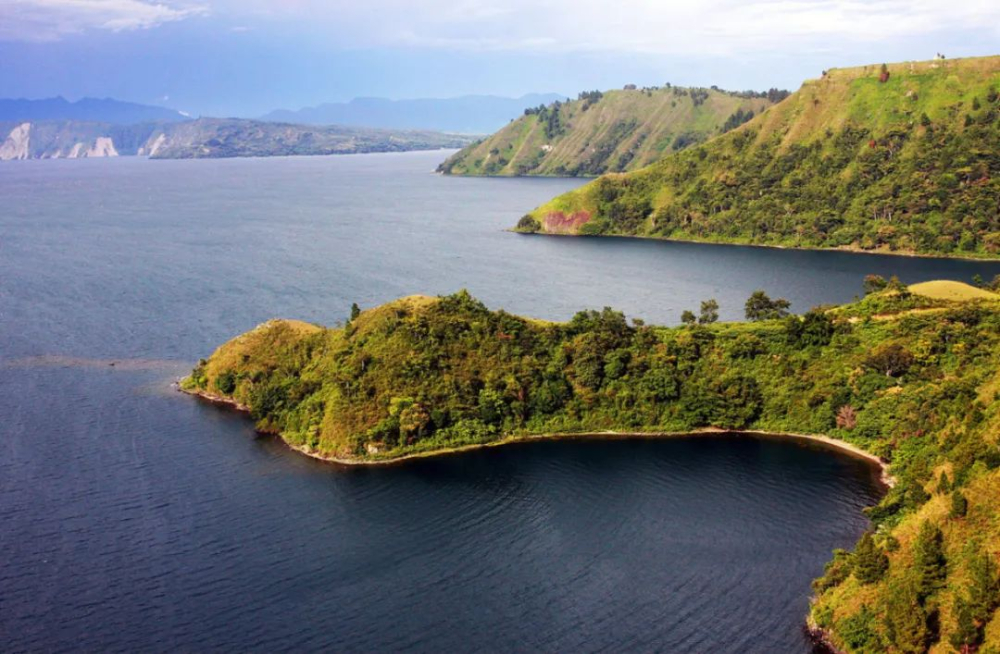
Local people plant coffee trees around two volcanic lakes—Lake Tawar and Lake Toba. The Gayo Mountains around Lake Tawar have ideal growing conditions, organic farming methods are widely adopted, and together with a long planting tradition, this makes the coffee here superior in both quality and yield. Many green bean buyers therefore place special importance on this area, including the locally renowned Pwani Coffee Company (PWN).
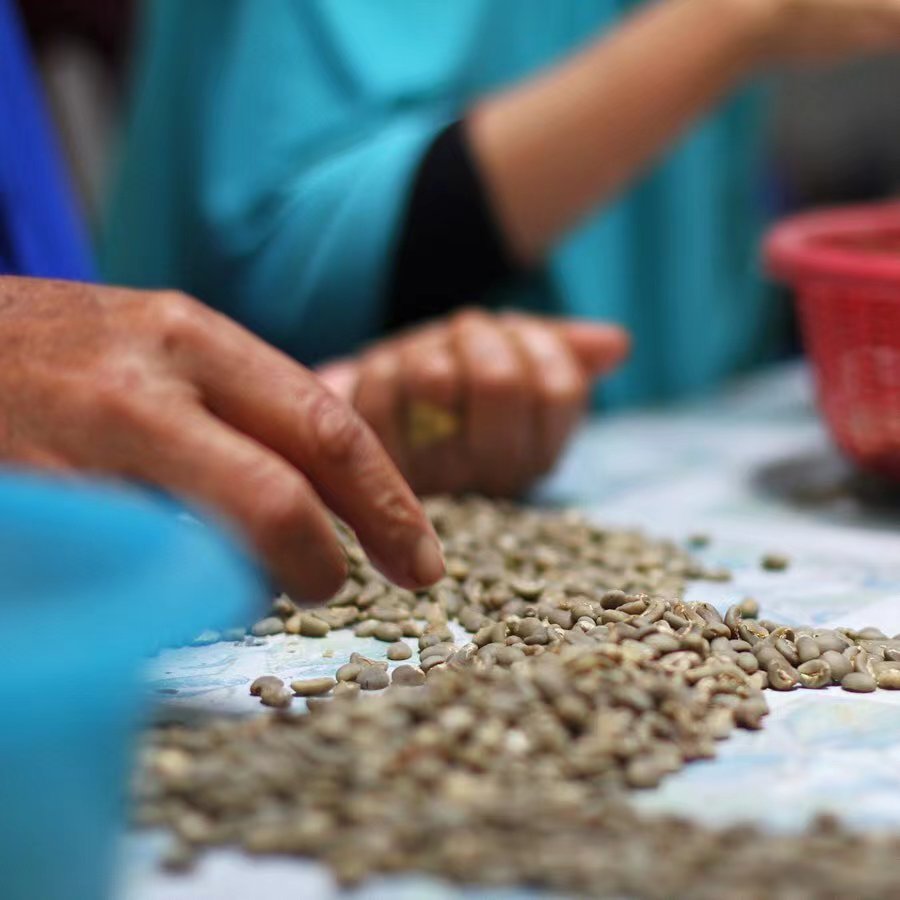
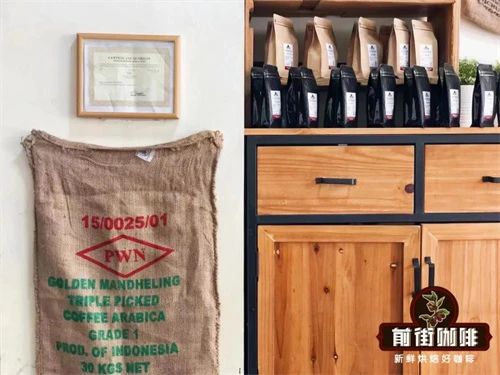
PWN specializes in purchasing high-quality Mandheling green beans. After entering the facility, the beans undergo machine screening plus three rounds of hand sorting to select plump, flawless beans, and all output reaches specialty grade. Golden Mandheling is their signature product. In earlier years, in order to monopolize the supply of Golden Mandheling, PWN registered the English trademark for "Golden Mandheling." In other words, only the Golden Mandheling produced by them counts as authentic Golden Mandheling. Front Street Golden Mandheling coffee beans are genuine goods purchased from PWN and are processed using Indonesia's unique wet-hulled method.
The flavor characteristics of Indonesian Mandheling originate from the wet-hulled process
What makes Indonesia different from many coffee-producing regions is the weather. Local humidity stays at 70–90% year-round, typhoons can make landfall at any time, and annual rainfall even exceeds 2000 mm. Under such conditions, it is simply impossible to do the two-to-three-week sun-drying used in Africa; washed processing is also too time-consuming, with high labor and water costs that mass-production-oriented Indonesia cannot afford. So the locals developed a semi-washed method—wet hulling.
After the coffee cherries have their skin and pulp removed, they are poured directly into tanks for a short fermentation of a few hours. At this point, some mucilage still remains on the parchment, and the sticky layer is removed by scrubbing. Next, the parchment beans are taken out to dry. The first drying only requires the moisture content to drop to 30–40%. After about two or three days, the coffee farmers sell the green beans to collectors. The collectors then take the purchased semi-dry parchment beans directly to a machine for hulling to remove the innermost green beans.
The friction of the huller is very strong and tears open the parchment layer clinging tightly to the green beans; at this stage, white or green viscous liquid often flows out. Through prolonged soaking in mucilage and the effects of the humid environment, the green beans eventually become soft, pale, and swollen, taking on a grayish-green color. Under the friction and agitation, the green beans are more easily crushed or damaged, especially at both ends, forming small chips known as "goat-hoof beans." Once the parchment layer is removed, the "naked beans" dry extremely quickly, while also being directly exposed to humid air, allowing various fungi to grow. This is where the unique woody, spicy, and herbal notes of Indonesian coffee come from—what we often call the "taste of place."
I believe some friends are already curious about what this Southeast Asian flavor actually feels like. If you haven't tried Front Street Mandheling coffee yet, Front Street suggests starting with a small package of Front Street Lintong Mandheling daily-drinker beans. The wet-hulled Front Street Lintong Mandheling brews into the classic Mandheling style and is very convenient for practicing at home.
The best pour-over method for Front Street Golden Mandheling coffee
To fully release the aroma of Front Street Mandheling coffee, here we use the most popular Front Street PWN Golden Mandheling coffee beans in Front Street stores as an example to explain Front Street's pour-over approach.
For rich, full-bodied beans such as Front Street Indonesian Mandheling coffee, Front Street Brazil Queen Estate coffee, and Front Street Jamaica Blue Mountain coffee, the baristas at Front Street Coffee (FrontStreet Coffee) will first choose the KONO dripper. Compared with the V60, the KONO dripper has a smoother curved surface; this design is intended to let the filter paper cling to the dripper wall after wetting. The guide ribs are only one-quarter the height of the dripper, restricting the upward airflow channel so that water can only flow from the bottom into the server. This lengthens the water absorption time of the coffee grounds, and the coffee bed and hot water form an immersion-style extraction, making the flavor rounder, richer, and more focused.
Medium-dark roasting greatly changes the internal structure of the beans, making the tissue looser and the ground coffee more absorbent. If the brewing parameters are not adjusted well, it is very easy to over-extract and become bitter. To have enough aroma without over-extraction, the extraction yield must be lowered. Front Street's approach is to reduce the water temperature and use a coarser grind to reduce the release of large bitter molecules. Front Street stores use an EK43S grinder, set at a scale of 10, with the water temperature controlled at 87–88°C.
Dripper: KONO
Water temperature: 87°C
Dose: 15 grams
Coffee-to-water ratio: 1:15
Grind size: 70% passing through a Chinese standard No. 20 sieve
Pouring method: three-stage pour
For the first stage, pour 30 g of water and bloom for 30 seconds. Start timing as you pour, using a small stream throughout and circling from the center outward, making sure to wet the entire coffee bed.
After 30 seconds, use a slightly stronger but steady stream to pour the second stage of 95 g of water. The goal is to lift the entire coffee bed. The stream should fall vertically and evenly. At this point the scale should read 125 g, and the pour should finish in about 55 seconds.
When the liquid level drops to halfway, switch to a small stream and pour the third stage of 100 g in a small circle. Do not make the circling too wide, otherwise it is easy to disturb the coffee bed and cause under-extraction. The final total water amount is 225 g, and the drawdown should finish in about 2 minutes. Remove the dripper, swirl the coffee in the server to mix it evenly, and it is ready to taste.
The pour-over Front Street PWN Golden Mandheling coffee: rich dark chocolate aroma, with roasted hazelnut, caramel, and melon flavors blending very well, an obvious spice note in the mouth, a rich and clean body, and a long-lasting finish.
For professional coffee knowledge exchange and more coffee bean information, please follow Coffee Workshop (WeChat public account: cafe_style)
For more specialty coffee beans, please add the private WeChat of Front Street Coffee (FrontStreet Coffee), WeChat ID: qjcoffeex
The above content is compiled by CoffeeHunters, a coffee news website.


