








How Did French Mission Coffee Seeds Reach Kenya?
The Chania Estate in Kenya's Thika region has been run by the Harries family since 1904 and still grows the French Mission Bourbon variety. That variety traces back to French missionaries who spread coffee seeds across Africa in the late nineteenth century. The estate sits at 1,525 meters and processes its crop naturally.
Kenyan coffee trees are mostly planted between 1,400 and 2,000 meters, with two harvests a year. Thika, in the Kiambu growing area east of the Great Rift Valley, rests on red volcanic soil rich in organic matter. Beans from this coffee farm show balanced citrus, chocolate and plum acidity, which is why the lot is often compared with Nyeri's white grape and grapefruit profile.
The Chania Estate in Kenya's Thika region is a private coffee plantation that has been run by the Harries family since 1904. It preserves a precious French Mission Bourbon variety, whose origins can be traced back to the history of French missionaries spreading coffee seeds in Africa in the late nineteenth century. This article will outline the estate's century-long family history, the transmission path and varietal characteristics of French Mission Bourbon, and provide specific cupping performance and pour-over extraction parameters to help coffee lovers gain a comprehensive understanding of this coffee that combines historical depth with wild African flavors.
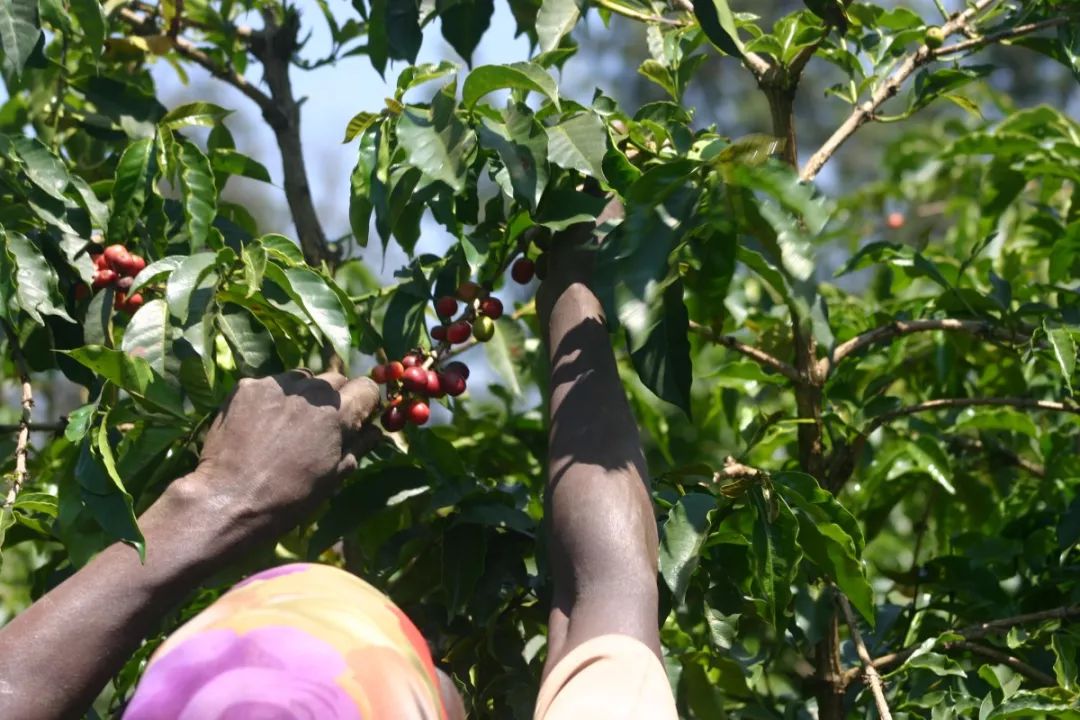
【Kenya Chania Estate French Mission Bourbon Natural】
Country: Kenya
Region: Thika
Processing Plant: Chania Estates
Altitude: 1,525 meters
Variety: French Mission Bourbon
Processing Method: Natural
| Origin Introduction
The coffee styles produced in Kenya's various counties differ significantly, with the country divided into 47 counties in total. Coffee trees are mostly grown at altitudes between 1,400 and 2,000 meters, with two harvests each year. The main growing regions include Ruiri, Thika, Kirinyaga, Mt. Kenya West, Nyeri, Kiambu, and Muranga, concentrated in the foothills of Mount Kenya and the Aberdare Range. Taking the Embu region as an example, its coffee displays balance, citrus fruits, chocolate, apple, and acidity. The Nyeri region presents white grape, juiciness, grapefruit, and cherry tomato flavors, with abundant fruitiness and sweetness resembling caramel.
The coffee characteristics of different counties are distinct. Kenyan coffee trees are mostly planted at altitudes of 1,400–2,000 meters, with two harvests per year. The growing regions include Ruiri, Thika, Kirinyaga, Mt. Kenya West, Nyeri, Kiambu, and Muranga, mainly in the foothills of Mt. Kenya and Aberdare. For example, the coffee characteristics of the Thika Kenya highlands region: balanced, citrus fruits, chocolate, plum acidity. The coffee characteristics of the Nyeri region: white grape, juicy, grapefruit and cherry tomato flavors, full of fruitiness, sweet as caramel.
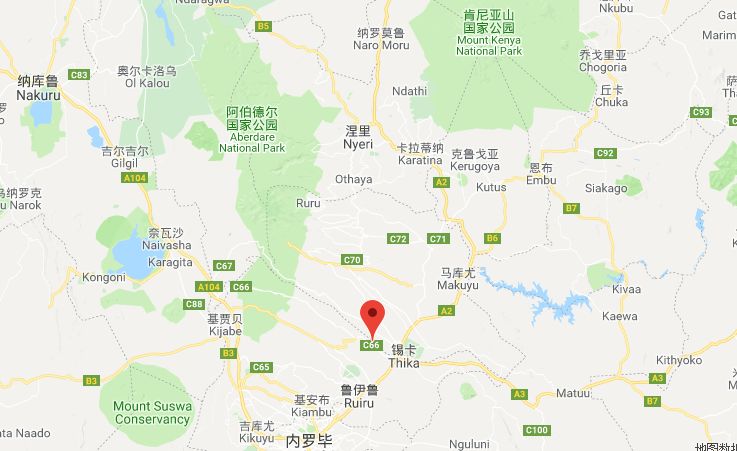
Thika Kenya Thika
Thika is located in the Kiambu coffee-growing area of Kenya's central highlands east of the Great Rift Valley, and is a sub-region. It sits at the foot of the Aberdare Range, with soil consisting of red volcanic soil rich in organic matter. The Kiambu area has a mild climate and moderate rainfall, so coffee farmers can harvest two seasons per year—from May to July, and from September to December.
KIAMBU
KIAMBU: This region in central Kenya has the highest-altitude coffee-growing areas in the zone.
Several large coffee estates are distributed throughout the Kiambu area, and smallholder farmers and cooperative organizations are closely connected. Most have their own processing plants, which provides growers with a more advantageous path than selling through unified purchasing. Farmers can complete green bean processing at their own factories and strive for reasonable prices at auctions.
However, some coffee trees at high altitudes suffer from dieback, which stops their growth. This region is named after the town of Nakuru. Coffee cultivation here takes both estate and smallholder forms, though production is relatively small.
Altitude: 1,850–2,200 meters
Harvest Period: October–December (main season), June–August (secondary season)
Varieties: SL-28, SL-34, Ruiru11, Batian
| Estate Introduction
Chania and Oreti Estates are the only medium-to-large private coffee plantations in Kenya, and have been managed for coffee production by the Harries family since 1904. The two estates are adjacent to the Chania River, and dams and reservoirs have been built in the area. They possess nearly 200 acres of land, with forest planted along the riverbanks, providing protection for birds and wildlife.
The estate owner, Boyce Marquis Allen Harries, took over the family businesses Estates and A.I.R. (Harries & Son Ltd.) in 2013. Today, 40 employees work for Boyce, many of whom have served the Harries family for three generations. The employees have their own elected committee that meets monthly to discuss community safety, social, and health issues. In addition to caring for its own workers, the Harries family also donated land to the Thika City Council and co-founded Wabeni Technical College, which teaches practical skills such as garment-making, mechanics, and carpentry to help local residents make a living.
The Harries Story: This estate has a history of more than 100 years.
Chania and Oreti Estates are the only medium-to-large private coffee plantations in Kenya. In 1904, Alan Charles Harries arrived in South Africa and came to Kenya. After a comprehensive survey of the country, Alan Charles established the Karamaini Estate within what later became the Thika area. It took him two days, using donkey carts and porters, to cover the 30-mile journey from Nairobi.
His third son, Aldred Ivan Rule Harries, remained in South Africa and helped support his father financially, eventually joining his coffee business in 1912.
In 1926, Ivan moved to Chania village. This was a mixed farm on the Chania River, holding a small area of coffee.
Here Ivan set out to discover what could be successfully farmed, trying hand-raised cattle, sisal, and pineapple while slowly increasing the total area of coffee. He also bought neighboring small farms to create the estate as it is today, and in the early 1950s, based on his own initials, he named his enterprise A.I.R. Harries & Sons Ltd. In 1946, Ivan's son Peter Alan Harries completed his studies in New Zealand.
He and his wife Ina (a New Zealander) joined his father and bought a piece of land 5 miles above Chania, from the top down the ridge of the Aberdare Mountains. They named it Oreti and established a mixed farm of pineapple, coffee, and macadamia.
Peter inherited the running of both farms in the late 1950s when his father passed away. The farm had pineapple, livestock, and macadamia, but coffee became the focus of the agricultural operation. When Peter died suddenly in 1983, his eldest son and later only surviving son, David Hugh Alan Harries (b. 1947), stepped in at the critical moment to continue the family tradition.
David's nephew, Boyce Marquis Allen Harries (born 1976), joined him in 2004, living in Peter's old home at Oreti. Following David's retirement in 2013, Boyce took over the running of the two estates and the family business A.I.R. Harries & Sons Ltd.
| Green Bean Analysis
Around 1892–1893, French missionaries brought the Bourbon variety into Kenya for cultivation. This native Bourbon variety is called the French Mission Varietal. During cultivation, it avoided scientific improvement, preserving the most original flavor of Bourbon. The unique red volcanic soil of Chania Estate, combined with suitable coffee-growing temperatures and rainfall, along with an excellent natural environment, has created the unique flavor of the French Mission variety from Thika's Chania Estate.
Bourbon Variety
Let's briefly explain what Bourbon coffee is. Bourbon coffee was first planted on Réunion Island, which was also known as le Bourbon before 1789. Bourbon is a secondary species resulting from a mutation of Typica, and together with Typica it is among the oldest existing coffee varieties. Its green fruit turns bright red when ripe.
The Transmission Route of the Bourbon Variety
Because the Typica variety introduced to Brazil in 1727 had low yields and was susceptible to disease, Bourbon was introduced to Brazil around 1860 via Campinas in the south, and quickly spread northward to other regions of South America and Central America. In Latin America today, although Bourbon has largely been replaced by its variants (especially Caturra, Catuai, and Mundo Novo), Bourbon is still grown in countries such as El Salvador, Guatemala, Costa Rica, and Peru.
In Africa, French missionaries known as Spiritans (from the Congregation of the Holy Spirit) played an important role in the spread of Bourbon. In 1841, the first mission was established on Réunion, and a branch was established in Zanzibar in 1859; from Zanzibar, branches were established in 1862 at Bagamoyo (on the coast of Tanzania, then called Tanganyika) and St. Austin (Kikuyu, Kenya), and another branch was established in 1893 at Bura (Taita Hills, Kenya). The establishment of each branch was accompanied by the planting of coffee seeds brought from Réunion.
In 1899, seedlings cultivated at Bura were taken to another French mission at St. Cruz (near Nairobi), and in 1900 they were introduced to the Kilimanjaro region of Tanzania, where seeds were distributed to local residents willing to grow coffee. This is the origin of what is called "Mission Bourbon." Then the Kent variety was also introduced in 1920. Therefore, to this day, coffee in Tanzania is still mainly Bourbon and Kent.
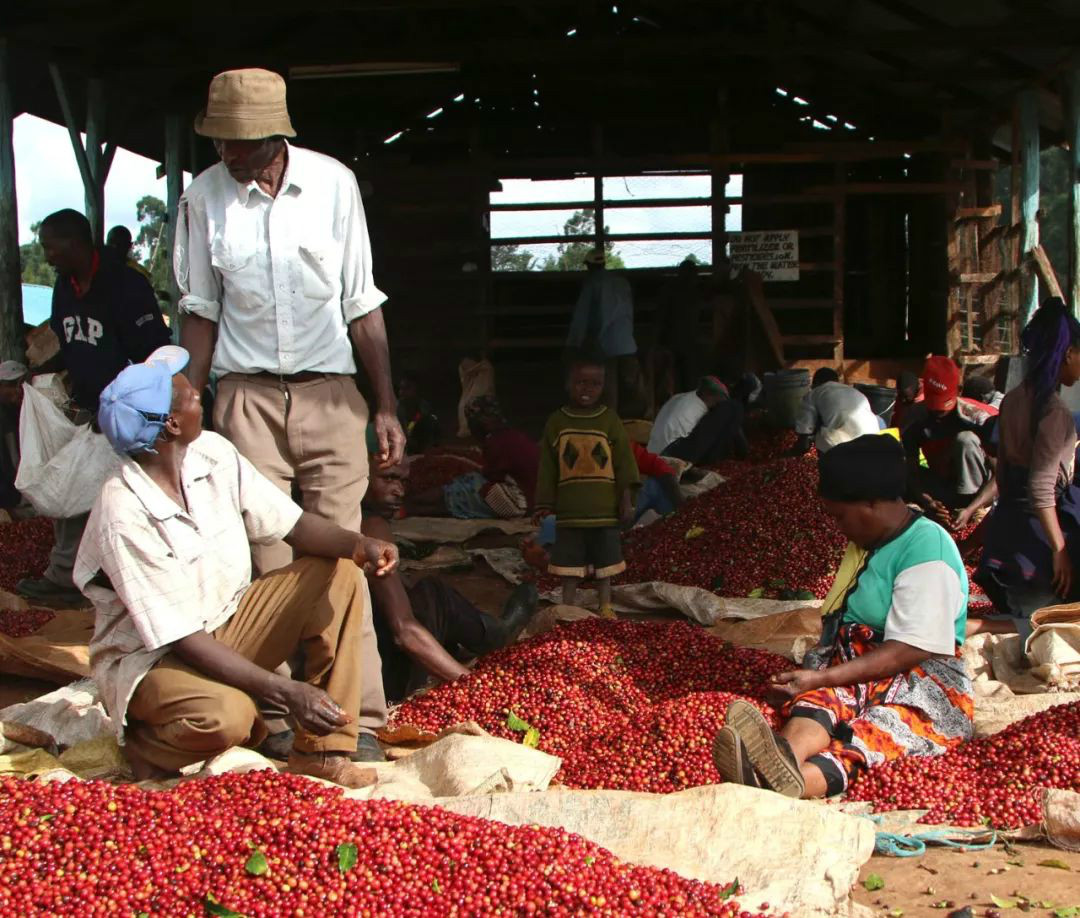
Cupping Results This coffee has good flavor, but a relatively high defect rate, so please sort carefully before and after roasting. The dry aroma has natural fermentation, dried fruit, and vanilla notes. On sipping, you can taste caramel, vanilla, mixed fruits, a solid juicy body, and the finish has berries, rich jackfruit, and coffee floral notes. The overall performance has a wild African regional flavor, suitable for sipping slowly in small mouthfuls; the complex aroma makes it hard to let go~
| Brewing Data
Recommended Brewing Method: Pour-over
Grind Size: 3.5 (Japanese Fuji R440 )
Water Temperature: 90–91°C
V60 dripper, 15 g coffee, grind 3.5 , water-to-coffee ratio approximately 1 : 15
Bloom with 30 g water, bloom time 30s
When the water level is dropping, the water flow will follow the spiral ribs, concentrating the flow. This action is like wringing a towel, applying a one-time squeeze to the coffee particles in the water. Moreover, to maximize the squeezing function, the water level must not exceed the height of the coffee bed during pouring.
The second pour also starts from the center, injecting a small stream into the bottom of the coffee bed. To concentrate the penetrating force of the stream, the circular movement range should be small—about the size of a one-yuan coin—and then spiral outward. From the start of the second pour, pay attention to the water volume and try not to exceed the height of the coffee bed. That is, when the stream circles close to the filter paper, you can stop pouring.
Stages: Pour to 120ml and stop, then slowly pour to 225ml, i.e. 30-120-75, with a total extraction time of about 2 minutes.
Other drip extraction suggestions:
French press, recommended grind of 3.5–4 / water temperature 90°C
AeroPress, recommended grind of 2.5 , water temperature 90°C
Pour-over: 3.5 grind, water temperature 91°C
1. Weigh 20 grams of beans, grind to the size of coarse granulated sugar, with a coffee-to-water ratio of 1:15.
2. Add water to the French press to preheat it, then pour it out; add the coffee grounds to the French press.
3. Pour in 89°C hot water and start timing. After pouring, stir gently to ensure all the coffee grounds are saturated.
4. After four minutes, slowly press down the plunger and pour it out.
The above content is compiled by CoffeeHunters, a coffee news website.


