







How Does This Gesha Green Coffee Differ From Panama Geisha?
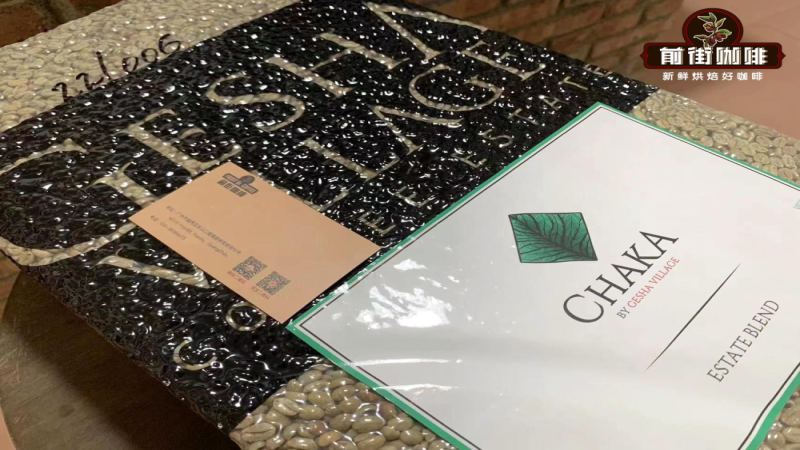
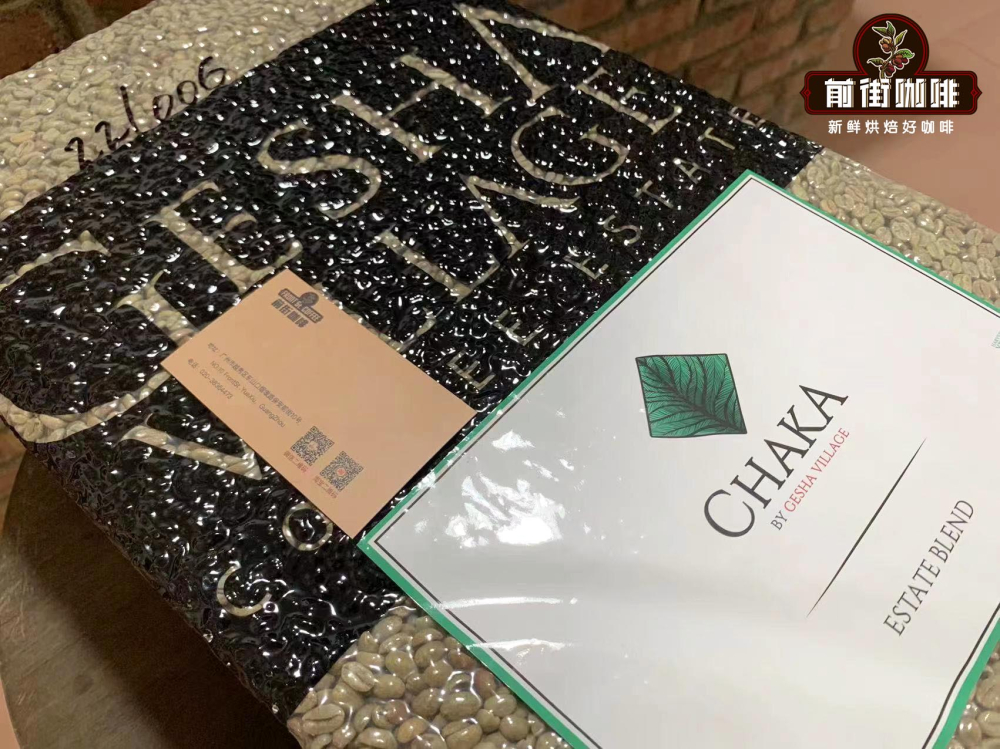
CHAKA is a limited project from Gesha Village Coffee Estate in Bench Maji, Ethiopia, roughly 20 kilometers from the Gori Gesha forest. The natural-process batch comes from native Gori Gesha trees and shares ancestry with Panama Geisha, yet cups with full berry notes and a creamy body rather than the same profile.
The estate narrowed six initial varieties down to three: Gori Gesha, Gesha 1931 and Illubabor. Founders Adam Overton and Rachel Samuel, guided by Willem Boot, built the project on careful nursery work and good agricultural practices, and the same seed line later traveled to Panama and reshaped specialty coffee there.
Deep in the primordial forests of Bench Maji, Ethiopia, Gesha Village Coffee Estate cultivates the limited-edition CHAKA project through an almost obsessive dedication to variety selection and cultivation management. It originates from native varieties in the Gori Gesha forest, sharing a common ancestry with Panama Geisha yet forging a completely different flavor path. From Adam and his wife's dream-seeking journey, to Willem Boot's dedicated guidance, and to Front Street Coffee's cupping selection, the CHAKA natural batch is unforgettable for its full berry notes and creamy smooth texture. This article will guide you through Gesha Village's varietal lineage, the origins of CHAKA and its processing differences, and share Front Street's recommended brewing parameters and flavor experience.
For more specialty coffee knowledge, welcome to follow our WeChat official account: Front Street Coffee (FrontStreet Coffee).
CHAKA belongs to Gesha Village (Ethiopia · Gesha Village) and is a limited-edition project brand. In 2011, Gesha Village was established in Bench Maji, just 20 kilometers from the gateway to Ethiopia's native Gesha forest. The team carefully nurtured the plants at the nursery stage, prudently completed transplanting and cultivation, followed good agricultural practices, and began adjusting varieties with superior flavor, narrowing the initial six varieties down to three: Gori Gesha, Gesha 1931, and Illubabor.
CHAKA is precisely the native variety growing in the Gori Gesha forest. This quality-focused, quality-driven approach allows the trees at Gesha Village Coffee Estate to fully express their inherent excellence, maximizing their potential and ultimately producing coffee with astonishing flavor.
Gesha Village Coffee Estate Ethiopia Gesha Village Coffee Estate
Before meeting Willem Boot, Adam Overton had only a vague wish in mind: to buy a farm in Ethiopia and grow the world's most delicious Geisha.
Why Ethiopia specifically? Because Ethiopia is said to be the native homeland of Geisha—someone carried Geisha seeds out from the depths of its primordial forests last century, and after many twists and turns they reached Panama, only becoming a world-stunning coffee in the early 2000s. Moreover, his wife Rachel Samuel is Ethiopian.
Adam had no coffee-growing experience—his profession was documentary filmmaker, and Rachel was a professional photographer. In 2007, they were commissioned to go to Ethiopia to shoot a coffee documentary, fell in love with coffee, and became determined to buy a coffee farm.
In 2009, they met Willem Boot. Three years before that, Willem Boot had just bought La Mula in Panama to grow Geisha. To learn from him, the couple flew from Ethiopia's capital to Panama's producing region to seek Willem Boot's advice at La Mula. Since Geisha appeared at the Best of Panama competition at the turn of the century and became a hot local variety, Willem Boot had long yearned to find Geisha's origins in Ethiopia's vast primordial forests, and had organized teams to explore multiple times. Though results were unsatisfactory, he never gave up.
Learning from Willem Boot was a major turning point for Adam and his wife's dream, and their determination to build their own Geisha estate grew ever stronger. Since they lived in Addis Ababa, Ethiopia's capital, they initially wanted to find somewhere nearby for easy labor recruitment and convenient transportation. But to meet the conditions for growing Geisha—altitude, microclimate, and all other factors—they found themselves searching farther and farther, eventually arriving in Ethiopia's most remote southwest, bordering Sudan.
This region is Bench-Maji, at least a two-day drive from Addis Ababa. Several villages named "Gesha" are nearby, and it is also the most likely legendary native habitat of Geisha. Bench-Maji is isolated, with outsiders rarely entering, until roads were opened a few years ago and conditions improved slightly. The Meanit indigenous people living here have their own language.
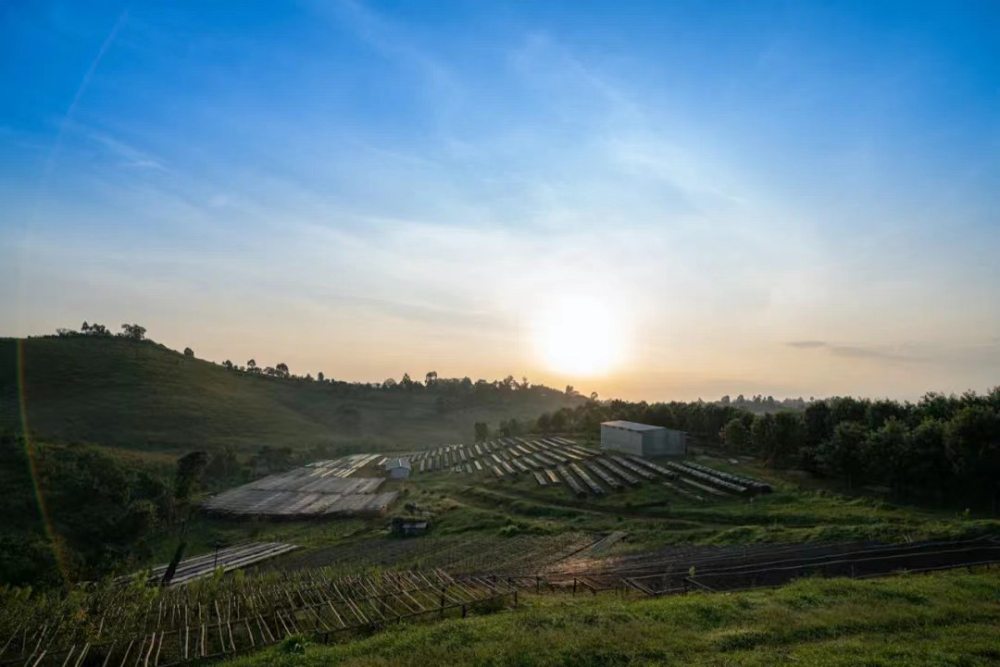
Compared with other western producing regions, Bench-Maji borders Kaffa, the birthplace of coffee, and its greatest feature is extremely high forest coverage. Coffee production in Bench-Maji is supervised and managed by farmers who, out of respect for the natural ecosystem, take measures to minimize interference with the forest—such as occasionally removing old coffee trees or poorly growing plants and replacing them with new seedlings grown in the same wild forest.
Accompanied by locals, Adam and his wife climbed into the mountains, and upon seeing that land they fell in love with it immediately—extremely high altitude of 1900 to 2100 meters, abundant rainfall, suitable temperature patterns, rich and undeveloped primordial forest soil, situated within an already-existing coffee-growing ecosystem with ancient coffee trees. After three years of searching, they finally found a foothold on this dream land. They gave it a humble name: "Gesha Village Coffee Estate."
In October 2011, the farm broke ground. Willem Boot flew to the estate as a consultant and saw what was more like a camping savanna than a thriving farm. To guard against incoming lions, watchtowers were built on the farm to sound alarms early. To enter the forest for exploration, AK-47 rifles were needed against fierce wildlife, with spear-carrying indigenous people accompanying.
Almost simultaneously, however, a breakthrough came in finding suitable Geisha varieties to plant. Willem Boot and Adam discovered wild Geisha very close in morphology to Panama Geisha in a primordial forest not far from the estate—both the coffee cherries and the branch growth shapes were quite similar. The growing environment was deeply concealed by shade trees, with thousands of coffee shrubs growing densely, coffee flowers in full bloom, and the air filled with an incredibly intense white fragrance. Willem Boot recalled feeling as if "in paradise"!
The forest they discovered is called Gori Gesha wild coffee forest, only 20 kilometers from the estate. Adam believes this forest is the same source from which the famous Panama Geisha was collected in 1930. Willem Boot also believes these trees are very similar to the Geisha he planted at La Mula, with Geisha beans having both green and bronze bean tips. In February 2012, Willem Boot returned to the estate, and the estate's Geisha varieties were finally settled.
Soon after, Adam and his wife built their own washing station and laboratory near the forest. Only Geisha varieties are planted on the estate, and after referencing the standardized cultivation methods of some Panama Geisha estates, they numbered and detailedly recorded different planting plots for later organization and flavor traceability.
What is the relationship between Gesha Village's Geisha and Panama Geisha?
According to research by Front Street Coffee (FrontStreet Coffee), the native coffee variety at Gesha Village is also called Gesha, but it can actually only be considered "wild Geisha," different from the Panama Geisha we are familiar with. The two words differ by the letter "i," which can be considered a detail deliberately used for distinction.

The difference between the two Geishas is that the Geisha planted in Central and South America, traced back through records, is the "geisha T2722" catalogued by CATIE in Costa Rica as a fungal-resistant variety. After years of artificial cultivation, and in order to adapt to climate and its own growing environment, it developed various stable morphological expressions. Through cupping, Front Street has observed that "geisha T2722" coffee beans from Panama are generally larger, with a unique elongated, plump shape that bulges in the middle. When brewed, they often exhibit refined fruit acidity and captivating floral notes reflecting their terroir.
Ethiopia's Geisha, on the other hand, is an untamed native variety, with green bean characteristics and flavor expression closer to Ethiopian native varieties (Heirloom). When brewed, it generally presents citrus acidity and almond notes, with a distinct tea-like quality. Additionally, as mentioned at the beginning by Front Street, Gesha Village grows three different varieties: Gori Gesha, Gesha 1931, and Illubabor Forest.
The first two are likely familiar to everyone. Gesha 1931 was selected by the estate owners from numerous forest varieties, using Panama Geisha as the prototype and screening through observation of plant morphology, bean shape, particle size, and cupping flavor across multiple aspects. Gori Gesha, meanwhile, is the Geisha seed harvested by the team when they entered the Gori Gesha forest for exploration in 2011, hence the name.
As for Gesha Village's last variety, Illubabor was discovered and bred in the Illubabor forest in 1974, and is also a coffee variety unique to Ethiopia. According to Front Street's review of Gesha Village's official website, as a naturally disease-resistant variety, Illubabor is mainly planted in two plots on the estate: DIMMA (altitude approximately 1966-2019 meters) and GAYLEE (altitude 1916-1982 meters).
Front Street Gesha Village Chaka Coffee Bean Processing Method
Gesha Village's Chaka coffee beans come in two versions: one natural processed, one washed processed. Front Street Coffee (FrontStreet Coffee) conducted a cupping comparison of the two processing methods. Compared with the natural process, the washed coffee has higher acidity and better cleanliness, but less complexity and layering. The natural batch of Chaka coffee has heavier berry notes and complex fruit sweetness.
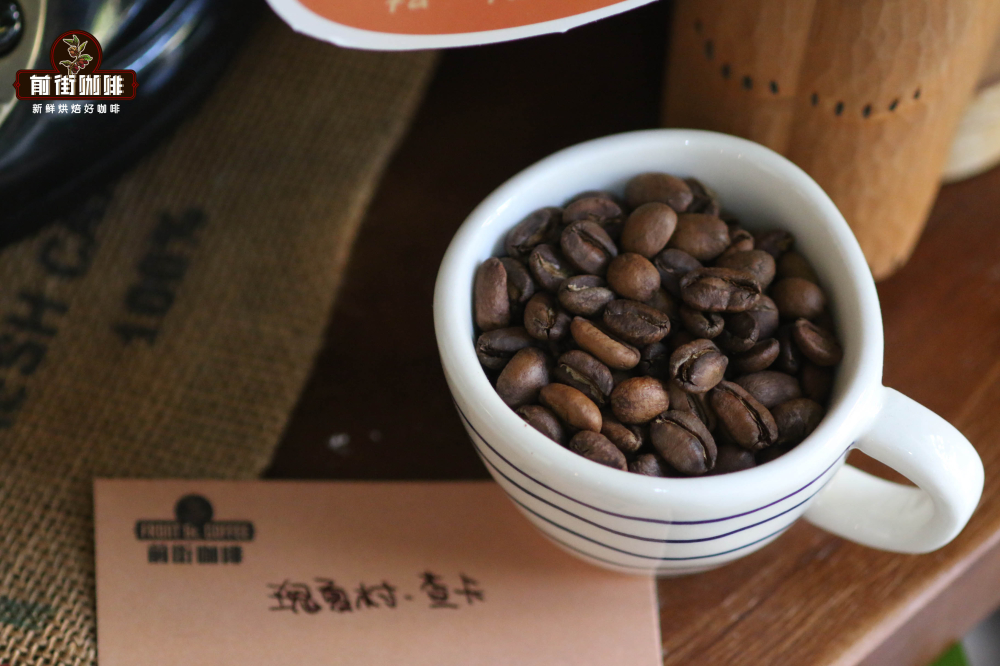
Therefore, Front Street ultimately chose the natural processed Chaka for listing and sale. Although washed Chaka has obvious flavor characteristics of Ethiopian producing regions, natural processed Chaka has a fuller, richer mouthfeel, leaves a stronger impression, and is more suitable for various daily extraction methods—pour-over and cold brew often both yield good flavor results.
Gesha Village Coffee Estate · Front Street Chaka
Region: Ethiopia · Bench Maji
Estate: Gesha Village Coffee Estate
Altitude 1900-2100m
Processing Method: Natural Process
Varieties: Gori Gesha, Gesha 1931, Illubabor
How to brew Front Street Gesha Village Chaka for the best taste?
In order to preserve the unique bright acidity of Ethiopian coffee beans, Front Street Coffee (FrontStreet Coffee) uses a medium-light roast. Coffee beans from high-altitude regions have higher structural density, and because the roasting time is shorter, the bean structure doesn't change much, making the substances in the coffee harder to extract. Therefore, when brewing medium-light roasted coffee beans, Front Street Coffee (FrontStreet Coffee) recommends using a medium-fine grind / fine sugar coarseness (80% passing through China's No. 20 standard sieve).
Use 15g of coffee grounds, then pair with a V60 dripper, 90-91°C water temperature, a 1:15 coffee-to-water ratio, and a three-stage pouring technique for brewing.
Use twice the coffee grounds' weight in water for blooming, i.e., 30g of water for a 30-second bloom. The reason a blooming process is needed is to allow the coffee grounds to release internal carbon dioxide gas, thereby making the later extraction more stable. Pour in a small stream in circles until reaching 125g, then pause; continue pouring until 225g and stop. After the water in the dripper has finished dripping, remove the dripper. Timing from the start of pouring, the extraction time is 2'10". Next, pick up the entire cup of coffee and swirl it to mix evenly, then pour into a cup for tasting.
Front Street Gesha Village Natural Chaka Coffee Bean Flavor Profile: lemon-like fresh acidity, berry-juice-like sweet-tart fullness, honey-cream-like smoothness, and a finish with oolong tea-like sweet aftertaste.
The above content is compiled by CoffeeHunters, a coffee news website.


