







How does wet-hulling shape golden mandheling coffee flavor?
Golden mandheling coffee gets its heavy body and low-acidity profile from wet-hulling, the Sumatran method known locally as Giling Basah. Farmers remove the skin and pulp on the day of harvest, ferment the mucilage-covered parchment overnight, wash it, then sell the still semi-wet parchment to nearby processing stations, which strip the parchment before the beans are fully dried.
That early removal of parchment raises processing risk but adds the herbal, spice and wood notes drinkers associate with Sumatra. The result divides the coffee community, since acidity-focused drinkers often avoid it. Brewing in a moka pot concentrates the syrupy body, while a pour-over highlights the cedar and spice layers that wet-hulling leaves in the cup.
Mandheling coffee, with its rich body and unique flavor, has polarized opinions in the coffee community—those who prefer acidity often steer clear of it, while enthusiasts who dislike acidity are particularly fond of it. This distinct personality stems from the unique wet-hulling process native to Sumatra, known in Indonesian as "Giling Basah." The wet-hulling method removes the parchment layer before the beans are fully dried, which, although increasing processing risks, unexpectedly imparts a jungle-like aroma of herbs, spices, and wood to the coffee. This article will guide you through Mandheling's growing regions, the specific steps of wet-hulling, and how to present its classic flavor using a moka pot or pour-over method, while also introducing the product features and brewing suggestions for Front Street Indonesian Mandheling and Front Street PWN Golden Mandheling.
When it comes to the flavor of Sumatran coffee, enthusiasts often have diametrically opposed attitudes—either deeply enamored or completely unable to accept it. Those who prefer acidic coffee typically do not pay attention to beans from this region, while drinkers who resist acidity find it irresistible. The reason Mandheling has developed such a distinct character is closely tied to the post-processing methods of local green coffee beans.
Due to frequent rainfall in Sumatra and limited economic conditions, local coffee farmers developed a unique semi-washed processing method. In Indonesian, "Giling Basah" refers to this technique—wet-hulling. It is precisely wet-hulling that gives Sumatran Mandheling its thicker, heavier body and distinctive flavor. Mandheling gained fame for its unique flavor, and wet-hulling became more widely known through Mandheling; the two have mutually elevated each other.
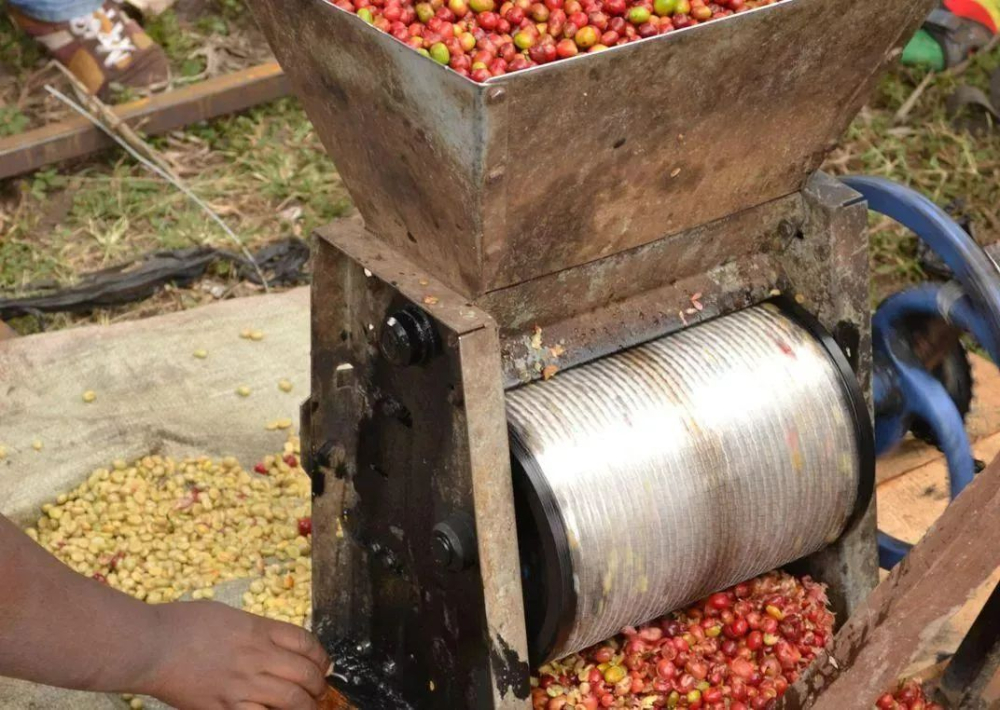
After harvesting the coffee cherries, farmers remove the skin and pulp by machine on the same day, then immerse the mucilage-covered parchment beans in a water tank to ferment overnight. The next day, fresh water is introduced and the beans are stirred to clean off as much of the outer pectin as possible. The parchment beans are then scooped out and spread evenly to dry. When the parchment beans are in a semi-wet, semi-dry state, they are bagged and sold to nearby green bean processing stations.
After purchasing these parchment beans, the processing stations first remove the parchment layer by machine to speed up drying, exposing the green coffee beans completely, and then continue drying until the moisture content drops to around 13%, at which point they can be stored in warehouses.
The biggest difference between wet-hulling and many other green bean post-processing methods is that it removes the parchment layer before the final drying stage. Hulling the beans while they are still semi-dry and semi-wet carries considerable risk—the green beans are prone to damage, and exposure to humid air can also interfere with the drying effect.
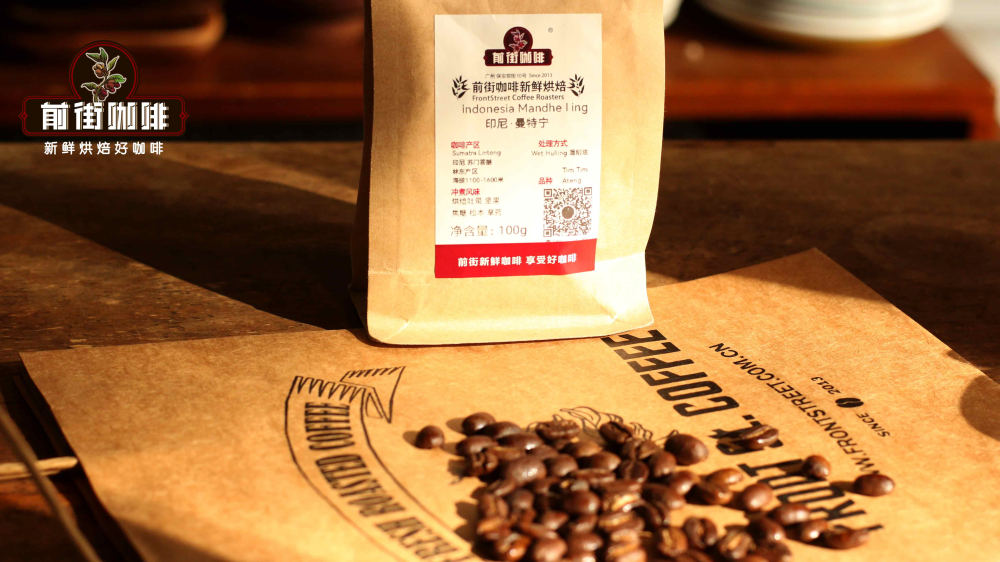
However, it is precisely this processing method that accidentally gives the coffee a jungle aroma of herbs, spices, and wood, and shapes the unforgettable Mandheling flavor. If you haven't tried it yet, consider purchasing Front Street Indonesian Mandheling. The medium-dark roast retains that mysterious aroma while, through a series of caramelization reactions, revealing notes of dark chocolate, spices, toasted bread, and nuts—perfect for beginners who dislike acidity.
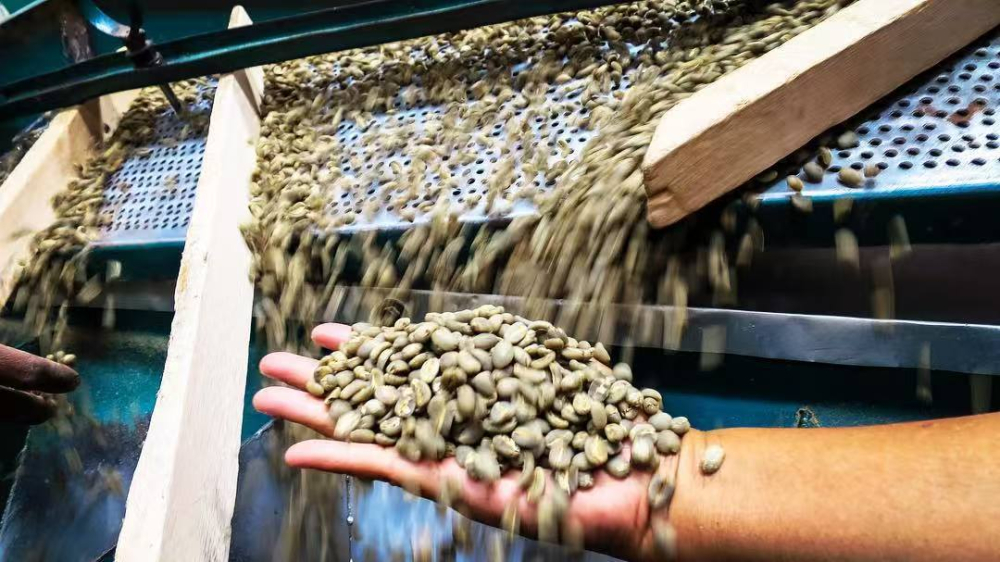
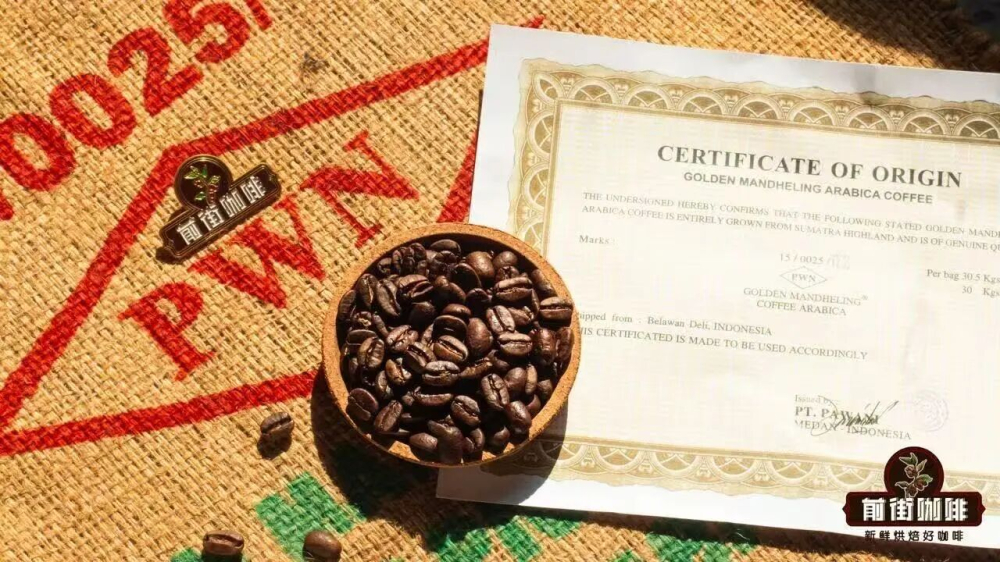
If you are already an advanced player hoping to taste a higher-grade premium Mandheling, then you must purchase Front Street PWN Golden Mandheling coffee, which can be ordered from the Front Street Tmall flagship store. Unlike regular Mandheling, PWN's Golden Mandheling first undergoes machine screening to select the highest grade G1 beans with excellent appearance, large size, and high density, followed by three rounds of manual hand-sorting and one round of machine screening to ensure defective beans are thoroughly removed, significantly improving Mandheling's cleanliness and sweetness.
Front Street PWN Golden Mandheling
Region: Gayo Mountain, Aceh, Sumatra, Indonesia
Altitude: 1100m—1600m
Variety: Ateng
Grade: G1, 3 times hand-sorted
Processing Method: Wet-hulling
Because Golden Mandheling has an extremely clean flavor, many coffee connoisseurs are deeply fond of it. Many coffee novices who have only heard of it but never tasted it are also curious to find out more. It is worth noting that PWN has registered "Golden Mandheling" as a trademark, so only Golden Mandheling produced by PWN is truly Golden Mandheling in the authentic sense.
If you want to confirm whether the Golden Mandheling you purchased is from PWN, you can ask the merchant to provide the green bean burlap sack printed with the PWN logo and the certificate issued by PWN for verification. Both of these proofs are displayed at Front Street's physical store.
To present the classic Mandheling flavor, it must first have no obvious acidity, and secondly, it must have a rich body, so the roast level must be medium or above. Front Street Indonesian Mandheling and Front Street PWN Golden Mandheling both use medium-dark roasting, carrying more caramelized aromas. Besides being used as a pour-over single-origin black coffee, they can also be used to make moka pot coffee and SOE coffee.
Making a delicious moka pot coffee with Front Street Golden Mandheling is not complicated; simply follow these steps:
First, weigh 30g of coffee beans and grind them into powder. For the coarseness, refer to the image (slightly coarser than espresso powder, but much finer than the granulated sugar texture used for pour-over).
Pour cold water into the lower chamber (hot water will scald your hands), place the filter basket into the lower chamber, cup your hand around the filter basket in a circle, and fill the basket with coffee grounds until a small mound forms in the center. After filling the gaps around the basket with grounds, directly attach the upper chamber and tighten it.
Then place it on an electric ceramic stove to heat (a gas stove also works). When you hear a "whooshing" sound, it means the coffee liquid is starting to spurt upward. At this point, turn off the heat directly and wait for the coffee to finish rising.
The freshly brewed moka pot coffee is covered with a layer of golden crema on the surface, and can be diluted with an appropriate amount of hot water or milk before drinking.
The above content is compiled by CoffeeHunters, a coffee news website.


