







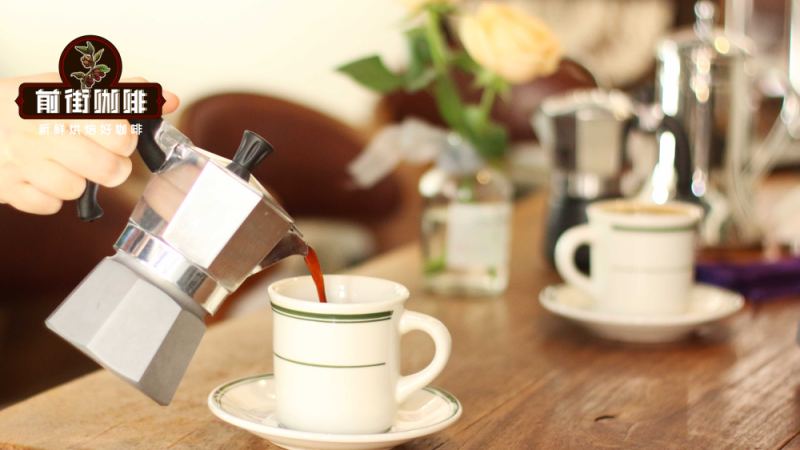
How Does a Moka Pot Brew Coffee?
A moka pot brews by heating water in its base until steam pressure pushes hot water up through the coffee bed and into the upper chamber. Designed by Alfonso Bialetti in 1933, it is a distillation-type device and the most affordable way to make a concentrated, espresso-like cup at home.
The pot has three parts: base, filter basket, and upper chamber. Medium-dark roasted single-origin beans suit it well, such as Brazil Queen's Farm or Front Street Colombia Huila, because they hold up to the pressure and short contact time and still give a rich, smooth result.
Craving a rich, smooth espresso but on a tight budget? The compact and affordable moka pot might just be the ideal choice. This article, systematically compiled by Front Street Coffee (FrontStreet Coffee), covers the origins and working principles of the moka pot, walks through the complete process step by step—from adding water and distributing grounds to heating and extraction—and explains why medium-dark roasted single-origin beans are better suited for moka pot brewing. It also recommends two compatible beans: Brazil Queen's Farm and Front Street Colombia Huila, along with basic information and flavor descriptions, helping coffee lovers brew a rich, delicious cup with an everyday device.

Professional coffee knowledge exchange. For more coffee bean information, please follow Front Street Coffee (FrontStreet Coffee).
Specialty coffee is growing increasingly popular in China, and the rich, smooth espresso has captured the taste buds of many coffee enthusiasts. Friends often ask Front Street Coffee (FrontStreet Coffee) whether there are more affordable espresso brewing devices to recommend. The answer is yes—the compact moka pot. It's portable, budget-friendly, and quite suitable for coffee fans with limited budgets. Next, Front Street Coffee (FrontStreet Coffee) will share tips and knowledge about using the moka pot.
What Is a Moka Pot?
Those familiar with espresso know that this coffee originated in Italy. Italians are almost obsessed with coffee—it's not unusual for them to drink it like water every day. But if every cup were bought at a café, the expenses would add up considerably over time.
It was precisely this need that led Italian Alfanso Bialetti to design the moka pot in 1933. It brews by heating the base, making it a distillation-type device, and it is the most affordable among espresso-making equipment, which is why it can be found in kitchens all across Italy.
How the Moka Pot Works
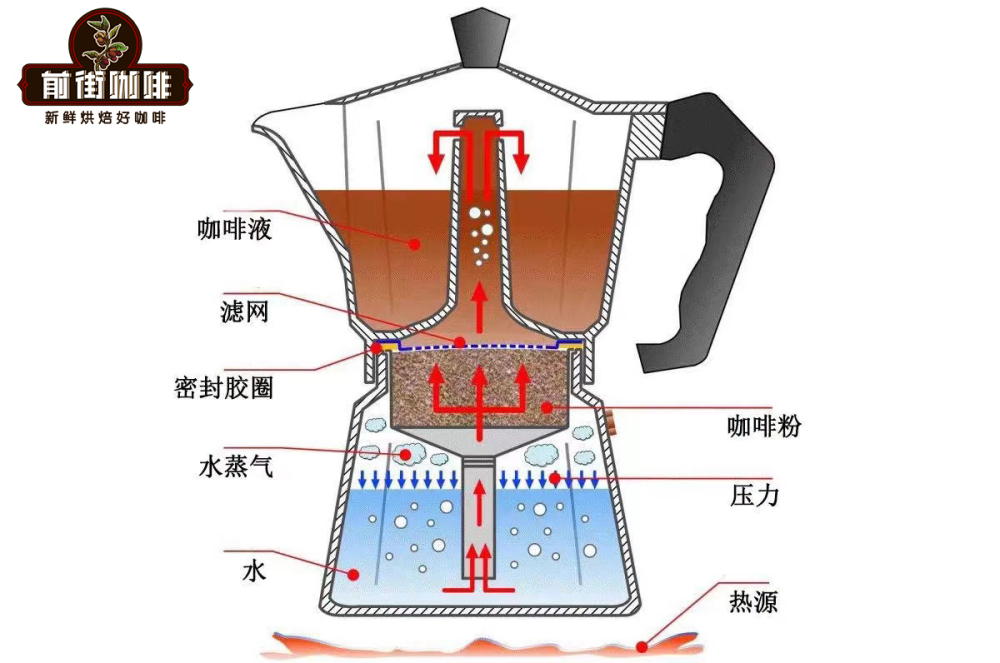
The moka pot consists of three parts: the upper chamber, the filter basket, and the base. The base holds water, the filter basket holds finely ground coffee, and the upper chamber collects the extracted coffee. For the specific structure, refer to the diagram below from Front Street Coffee (FrontStreet Coffee):
The extraction logic of the moka pot is not complicated. After the base is heated, steam pressure builds up. When the pressure is sufficient to penetrate the coffee grounds, hot water is pushed up into the upper chamber, brewing aromatic, rich coffee. Using the steam pressure generated by boiling water, it can extract flavors close to espresso, and the learning curve is very low.
What equipment is needed to make an espresso with a moka pot:
1. Moka pot 2. Gas stove with a trivet, or induction cooktop 3. Coffee beans 4. Grinder
Now that you understand the basic principles, how exactly do you operate it? Front Street Coffee (FrontStreet Coffee) explains step by step below.
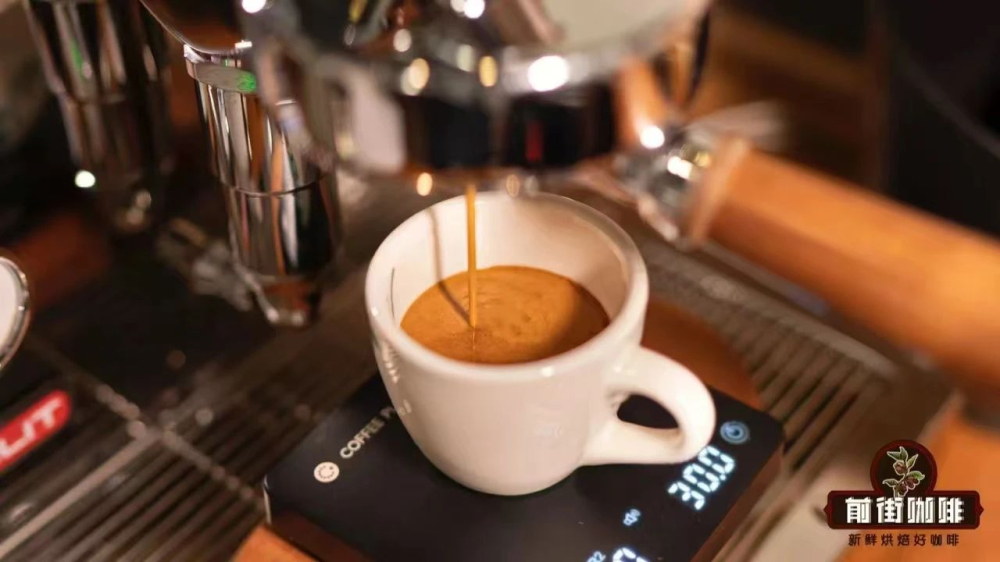
1. Although Front Street has quite a few coffee beans to choose from, Front Street recommends medium-dark roasted single-origin coffee beans. Coffee brewed with a moka pot is inherently quite strong, and darker-roasted beans better highlight that rich, full-bodied quality. Here, Front Street Golden Mandheling coffee beans are used as a demonstration.
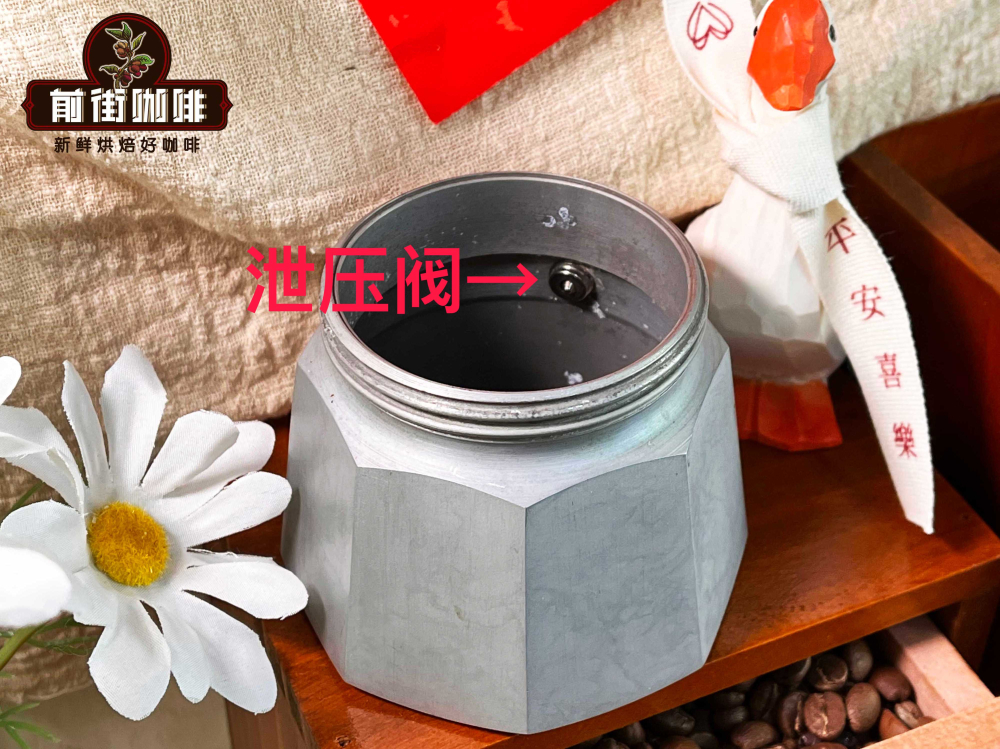
2. Pour purified water into the base of the moka pot, keeping the water level about 0.5cm below the safety valve.
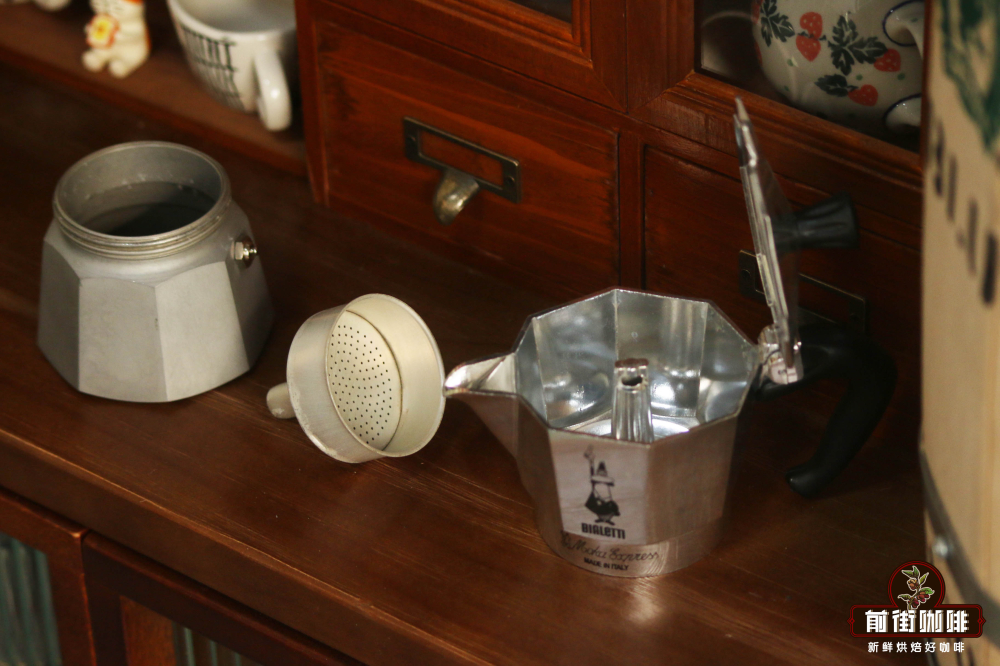
3. The grind size should be slightly coarser than for espresso. You can judge by referencing the size of the filter basket's mesh gaps to ensure coffee particles won't fall into the base. Front Street recommends slowly pouring the coffee grounds into the filter basket, gently tapping to distribute the grounds evenly. Once the coffee grounds form a small mound, use leveling techniques to flatten the surface. Filling the basket fully helps avoid undesirable defective flavors. The more consistent the density of coffee grounds in the basket, the more you can avoid localized over-extraction or under-extraction—otherwise, uneven flavor or bitterness can easily occur.
4. Place the filter basket into the base, screw the upper and lower parts of the moka pot tightly together, then place it on an electric ceramic stove and heat over high heat;
5. When the moka pot heats up to a certain point and makes a distinct "whooshing" sound, turn the electric ceramic stove to low heat and open the lid of the upper chamber.
6. When half of the coffee has flowed into the upper chamber, turn off the electric ceramic stove. The residual heat and remaining pressure in the moka pot will push the rest of the coffee into the upper chamber.
7. Once all the coffee has been extracted into the upper chamber, pour it into a cup and enjoy. Coffee extracted from a moka pot is very rich and can even develop Crema. You can also dilute with water or add milk as desired for even better flavor.
Front Street would like to add one point here: the so-called crema is actually made up of countless tiny carbon dioxide bubbles. The darker the roast, the more body the coffee has, but also the more carbon dioxide the beans need to release. This is exactly why the moka pot is suited for medium-dark roasted coffee beans.
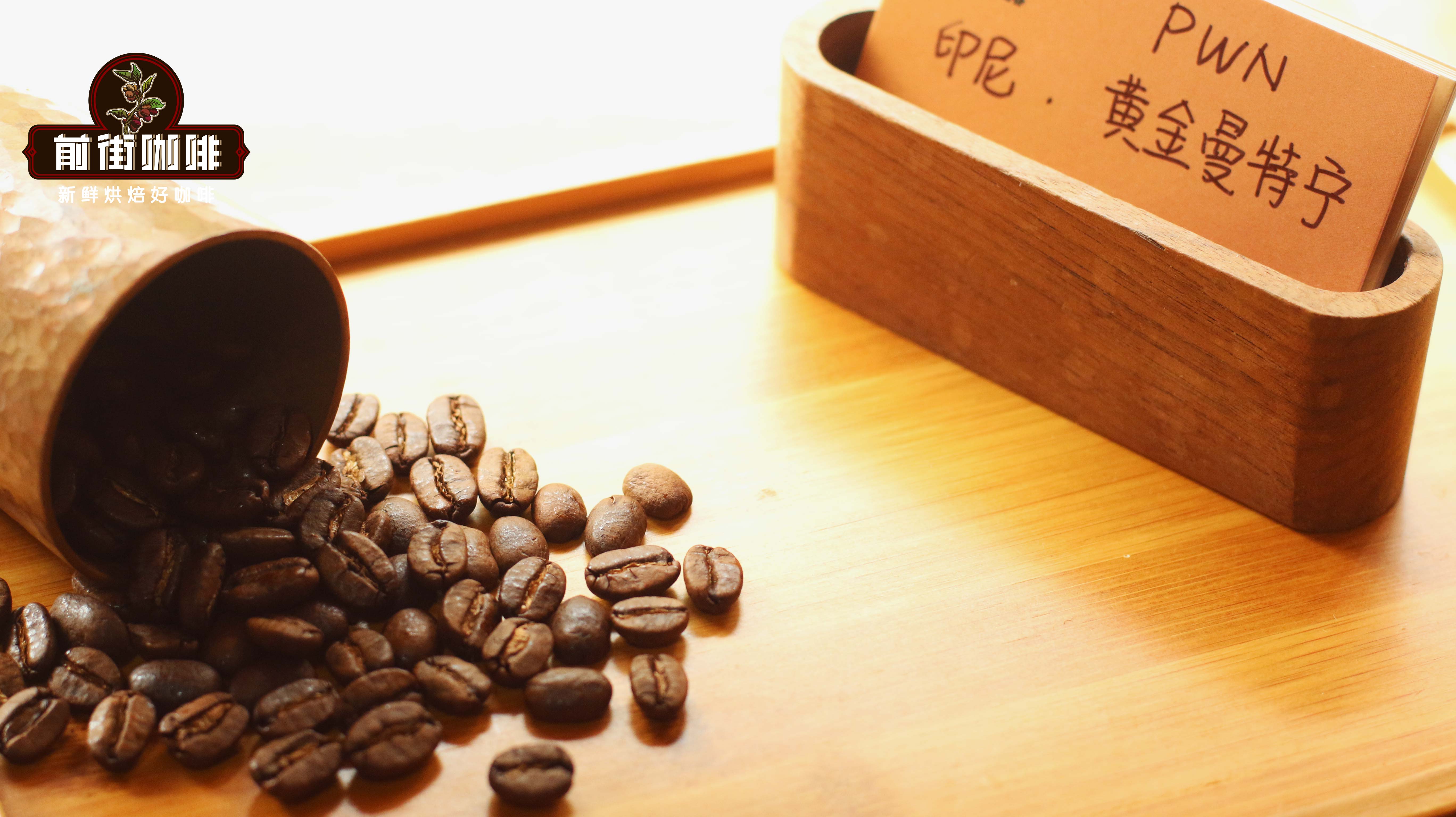
All coffee beans shipped by Front Street are freshly roasted within 5 days. Even if you want a rich crema, the coffee beans need a 4-to-7-day resting period for the flavors to stabilize. When friends receive Front Street coffee beans, they have just passed the resting period, and the flavor is at its peak. Front Street also offers a grinding service, but once coffee beans are ground into fine powder, they rapidly begin degassing and flavor compounds are lost. Therefore, Front Street recommends buying whole beans and grinding fresh for each brew—the flavor is better.
The above is Front Street Coffee's (FrontStreet Coffee) guide to using the moka pot and related information. Next, Front Street Coffee (FrontStreet Coffee) will recommend a few medium-dark roasted single-origin coffee beans suitable for moka pot brewing.
What coffee beans are suitable for moka pot brewing?
Europeans prefer strong coffee, and the invention of the moka pot partially replaced early commercial espresso machines. In other words, coffee brewed with a moka pot is similar in style to early 20th-century espresso. As Front Street Coffee (FrontStreet Coffee) mentioned earlier, brewing medium-dark roasted coffee beans with a moka pot produces a richer, more delicious flavor, and it works well with milk or as an espresso.
If light-roasted coffee beans are used instead, the lighter roast results in a thinner body compared to dark-roasted beans. If brewing parameters deviate even slightly, sharp acidity or bitterness may occur.
Front Street Coffee (FrontStreet Coffee) believes that Latin American coffee beans are most suitable for making espresso. Coffees from this region have a relatively balanced flavor with nutty and cocoa notes, and a rich, smooth body—for example, Brazil Queen's Farm coffee beans and Colombia Huila coffee beans are both excellent choices. Below, Front Street Coffee (FrontStreet Coffee) introduces the basic information and flavors of these two single-origin coffee beans.
Front Street Brazil Queen's Farm Coffee Beans Region: Mogiana, São Paulo, Brazil Farm: Queen's Farm Altitude: 1400–1950m Variety: Yellow Bourbon Processing: Natural Flavor: Nuts, chocolate, cream, peanut, caramel
Front Street Colombia Huila Coffee Beans Region: Huila, Colombia Altitude: 1500-1800m Variety: Caturra Processing: Washed Flavor: Dark chocolate, nuts, caramel, mild fruit acidity
The above is the basic information for these two single-origin coffee beans from Front Street Coffee (FrontStreet Coffee). Interested friends might try brewing these two medium-dark roasted beans with a moka pot—especially the Brazil Queen's Farm coffee beans, which everyone who has tried them raves about!
The above content is compiled by CoffeeHunters, a coffee news website.


