







How Does Grind Size Change Coffee Extraction?
Grind size controls how fast water dissolves flavor compounds from coffee. Finer grounds expose more surface area, so water penetrates the coffee particles quickly and more flavor dissolves in the same time, giving a richer cup. Coarser grounds slow extraction and tend to taste weak. Pour-over recipes usually sit between the two, with a 1:14 to 1:15 ratio.
Beyond grind, ratio, water temperature, and contact time all shape the result. Front Street Coffee uses 1:15, about 15 g of grounds to 225 g of water, with 90°C for lighter roasts and 88°C for darker ones. A 0.85 mm standard sieve defines the pour-over grind baseline, so the same setting can be repeated across brews.
The essence of coffee extraction is using water to dissolve the flavor compounds from coffee beans, and among the core variables that determine extraction quality, grind size is often the most intuitive and the one that requires the most precise control. The finer the coffee grounds, the faster water penetrates the particles to extract compounds, and the more flavor can be dissolved in the same amount of time, resulting in a naturally richer taste; conversely, the coarser the particles, the lower the extraction efficiency, and the coffee tends to taste weak. So, how many levels of grind coarseness are commonly available on the market? What grind sizes suit espresso, pour-over, and French press respectively? And how does Front Street Coffee use a 0.85mm standard sieve to define the baseline for pour-over grinding? This article will break down the mechanisms by which grind size affects flavor one by one, outline the spectrum from Turkish pot to French press, and provide a reusable method for judging pour-over grind size.
Introduction
The coffee brewing process is essentially an extraction process, using water as a solvent to extract flavor compounds from coffee beans. The various parameters in a brewing recipe are the most obvious and important factors affecting extraction, including the coffee-to-water ratio, grind size, water temperature, and extraction time.
The coffee-to-water ratio refers to the ratio of coffee grounds used to water poured. A higher ratio results in a weaker taste, while a lower ratio results in a stronger taste. The recommended coffee-to-water ratio for pour-over coffee is 1:14 to 1:18. The ratio used by Front Street Coffee is 1:15, meaning 15 grams of coffee grounds with 225 grams of water.
Water temperature and extraction time are easier to understand. The higher the water temperature, the more flavor can be extracted; likewise, the lower the water temperature, the less efficient the extraction of coffee flavor. Front Street Coffee chooses a water temperature of 90°C when brewing lighter-roasted coffee beans, and 88°C for darker-roasted beans. Extraction time refers to the time from when the coffee grounds first contact water to when the dripper is removed. The longer the contact time between grounds and water, the more compounds are extracted; a shorter contact time results in a weaker taste. The brewing/extraction time at Front Street Coffee is about 2 minutes.
Grind size refers to the coarseness of the coffee grounds. Coffee beans are ground into powder by a grinder. The coarser the coffee grounds, the weaker the coffee taste; the finer the coffee grounds, the stronger the coffee taste.
How does grind size affect coffee flavor?
Grind size is often described as the coarseness of the coffee grounds, or the particle size of the coffee grounds. When the grind is coarser, the coffee particles are larger, and it takes more time for water to penetrate the particles and extract coffee compounds. Similarly, when the grind is finer, the coffee particles are smaller, and it takes less time for water to penetrate the particles and extract coffee compounds.
During brewing, given the same amount of time, a finer grind can extract more coffee compounds, so the coffee tastes stronger; a coarser grind can only extract a limited amount of coffee compounds, so the taste tends to be weak.
What are the common grind sizes?
Generally speaking, coffee grinders on the market can be roughly classified into three types by grind range: one type of grinder for the espresso grind range, one type that cannot handle espresso but can handle most grind sizes, and one type whose grind range can handle all types.
If we follow the recommended grind sizes for coffee grinders, we can identify several common grind sizes. The finest grind is suitable for Turkish pot coffee, then espresso, then medium coarseness for pour-over/drip coffee, then slightly coarser for siphon, and finally the coarsest grind for French press.
Espresso requires a finer grind. This stems from the espresso-making process and its purpose. Espresso requires a very short extraction time, generally between 20 and 30 seconds. Also, espresso is mainly used as the base for most Italian-style coffees, and needs to extract enough coffee compounds to support dilution with water or milk, so the grind size is much finer compared to other brewing methods.
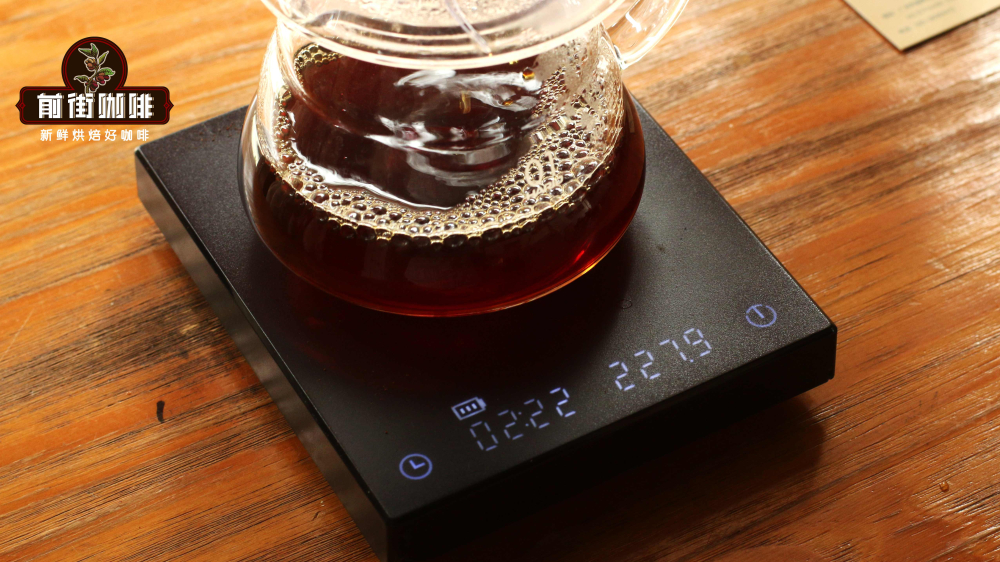
Pour-over coffee has a moderate extraction time among the many brewing methods, averaging about 2 minutes—though 1 to 3 minutes is also fine; it's just that most single-serving pour-over recipes average around 2 minutes of extraction. Compared to espresso, it doesn't need such a fine grind, to avoid over-extraction, so the grind size is medium.
French press coffee has an extraction time of 4 minutes or more, longer than pour-over coffee, so the grind size for French press is generally the coarsest, in order to avoid over-extraction caused by prolonged extraction.
What grind size should be used for pour-over coffee?
The grind size for pour-over coffee is medium-ish among the various brewing methods, but different grinder models express grind settings differently. So how should Front Street Coffee communicate grind size to customers using different grinders? Also, when we get a new bean, how do we determine the grind size for that bean?
To solve these problems, Front Street Coffee uses a 0.85mm standard sieve. This is a sieve with 0.85mm apertures; coffee particles smaller than this aperture will pass through. When using this sieve, we weigh 10 grams of coffee beans and grind them, place the ground coffee into the upper layer of the sieve, and by shaking repeatedly, coffee particles smaller than 0.85mm will be sifted into the lower layer. We then weigh the coffee grounds in the lower layer, and this weight compared to before sifting (10 grams) gives the pass-through rate for that grind size.
Front Street Coffee recommends a grind size for pour-over coffee that is slightly finer than medium, with a sieve pass-through rate of about 80%, meaning 10 grams of coffee beans yield about 8 grams of coffee grounds.
Front Street Coffee would like to remind you that this is a basic standard grind size recommended by Front Street Coffee, not an absolute rule. Once you understand how the various parameters interact with each other, there are actually different combinations of parameters. But if you are still a beginner or haven't yet determined the grind size for a coffee bean, this 80% sieve pass-through grind size will be a powerful tool to help you find your baseline.
For more specialty coffee beans, please follow our WeChat official account: Front Street Coffee
The above content is compiled by CoffeeHunters, a coffee news website.


