







Where Does Civet Coffee Come From and How Does It Taste?
Civet coffee, known in Indonesia as Kopi Luwak, is produced when civets eat coffee cherries and the beans are collected from their droppings. Indonesia is the core production region. Wild and farmed beans differ in quality, and retail prices start around six hundred US dollars per pound. The cup shows a distinct herbal aroma with a heavy body.
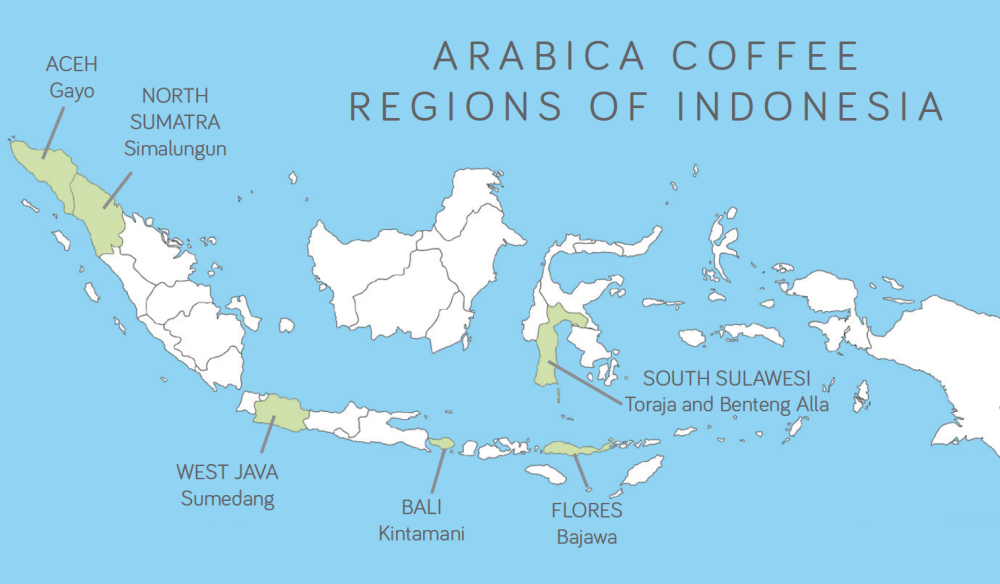
The history traces to the colonial era, when Dutch-run plantations in Indonesia left farmers searching for an accessible alternative, and they found it in civet droppings. Indonesia's grading standards and Sumatran processing shape what reaches the market. Indonesia also produces Golden Mandheling, another specialty representative worth comparing. Pour-over works well, and buying decisions should account for the welfare of farmed civets.
Kopi Luwak is known as the "world's most expensive coffee," and Indonesia is its core production region. This article will systematically examine the full picture of this special coffee, covering its historical origins, the differences between wild and farmed beans, Indonesian coffee grading standards, the varieties and processing methods of Sumatran Kopi Luwak, as well as Front Street Coffee's brewing parameters and flavor description. At the same time, it will also introduce Indonesia's other specialty representative—Golden Mandheling—and share Front Street Coffee's stance on Kopi Luwak and brewing suggestions, helping readers rationally understand this highly controversial coffee category.
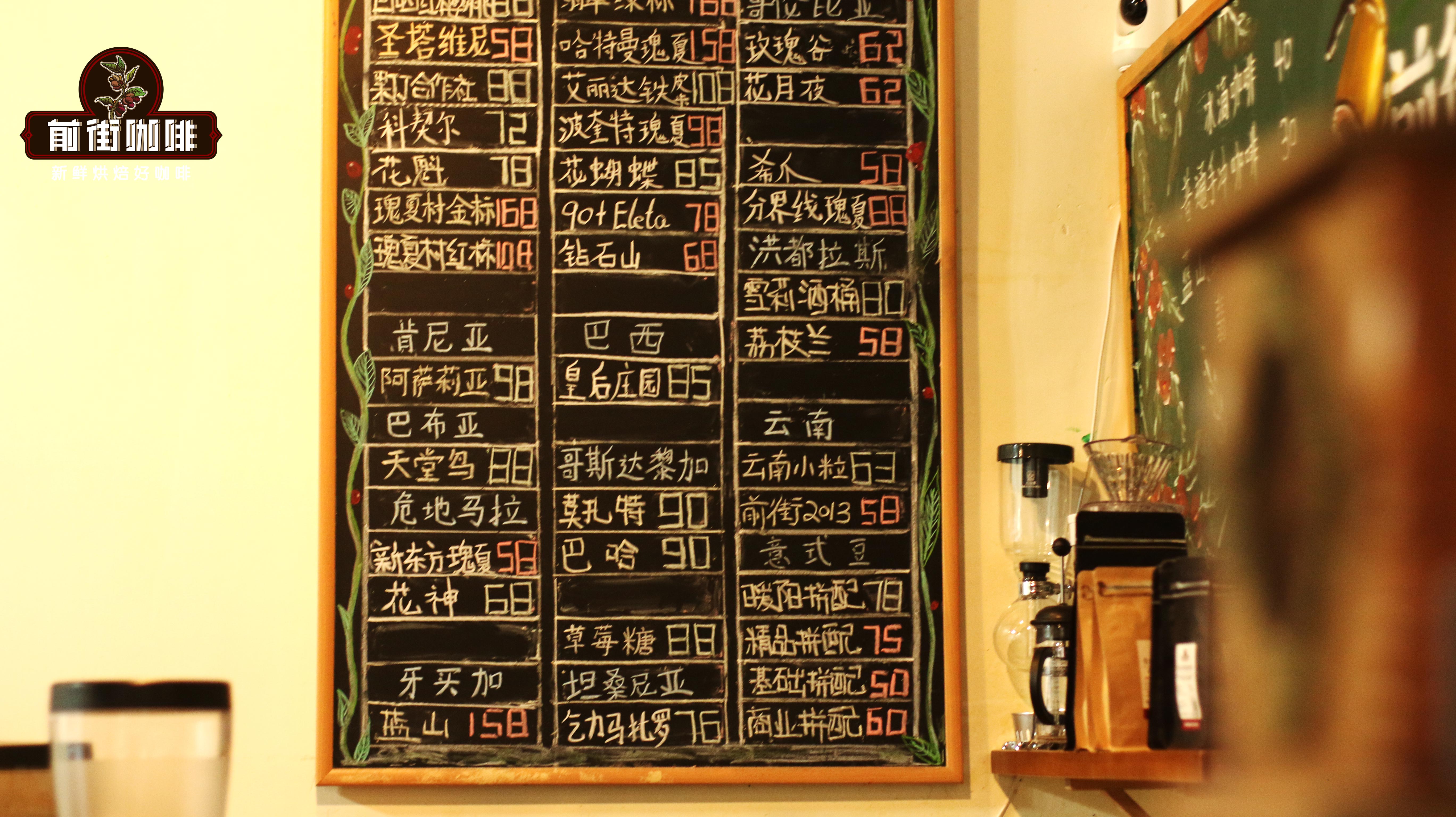
Kopi Luwak enjoys the title of "the world's most expensive coffee," and Indonesia is also one of the main producing countries of Kopi Luwak. Originating from Indonesia, Kopi Luwak (in Indonesian: Kopi means coffee, Luwak refers to the civet), is called Civet coffee or cat poo coffee in the United States, which is what we commonly call cat poop coffee.
To learn more about specialty coffee knowledge, welcome to follow the WeChat public account: Front Street Coffee (FrontStreet Coffee)
Most people who know a little about coffee have heard that "Jamaican Blue Mountain Coffee" is a premium coffee, but do you know what the world's most expensive coffee is? The answer is precisely "Kopi Luwak (Indonesian civet coffee)." Things are precious when they are rare, and this coffee bean starts at a retail price of at least six hundred US dollars per pound, making it the Rolls-Royce of the coffee world.
The annual output of Kopi Luwak (also called cat poop coffee) is very limited, which is why it has become a sought-after item among the wealthy. When Front Street first tried Kopi Luwak, it perceived a unique herbal aroma, with an outstanding body.
History—The Greed of European Powers and the Discovery by Farmers
From a historical perspective, why would anyone look for coffee in feces? This sounds puzzling, but after consulting historical records, the reasons and the original discoverers can be found.
During the Age of Discovery, European powers expanded their territories around the world, and Taiwan was also colonized by the Dutch and Spanish. Indonesia, where civets live, was likewise occupied by the Dutch, who even established the extremely powerful "East India Company," which was essentially a government institution with enormous authority.
Indonesian farmers were reduced to cheap labor for the Dutch under armed coercion, growing spices in the early period and switching to coffee in the middle and later periods. Crops from tropical Indonesia were very popular in Europe, and the Dutch therefore made a great deal of wealth. In the Age of Sail, which country did not treat local people this way? Many European countries laid their foundations during that period, and today people may only remember that their ancestors majestically reached every corner of the world, as if they led the way.
However, the farmers never got to drink the coffee they had grown with their own hands, and this problem still exists today. At the time, farmers did not dare to pick crops without permission; once discovered, they would be severely punished, but curiosity cannot be suppressed. When someone discovered coffee beans remaining in civet feces and drank them after processing, they found the taste excellent, and they seemed to understand why the Western world loved coffee so much—even what was picked from animal feces tasted so good.
The good times did not last. After the Dutch learned of this, collecting civet coffee also became one of the new forced labors, and that coffee with the special taste could no longer be enjoyed.
Bean Source: Wild or Farmed?
All of this is merely to supply a luxury product, and a second-rate one at that. Experts point out that the uniqueness of Kopi Luwak lies in the fact that wild civets carefully select coffee cherries when eating them; but if they are locked in cages and casually fed coffee cherries, the finished product will not be much good.
In addition, a coffee expert stated even more bluntly in an article for the Specialty Coffee Association of America that Kopi Luwak itself is actually not that good: although the civet's digestive process can indeed make coffee smoother, it also takes away good acidity and flavors, which are precisely the characteristics of specialty coffee.
There is currently no method to distinguish whether Kopi Luwak beans come from wild or captive civets. BBC conducted a secret investigation in 2013 and found that some coffee in Europe advertised as wild civet actually came from captive civets subjected to inhumane treatment.
Even Tony Wild, the coffee trader who introduced Kopi Luwak to the West, argued in an article in the British Guardian that Kopi Luwak should not be drunk. He said this coffee has become increasingly industrialized, has become more abusive to animals, and is frequently counterfeit. Today there is no certification mechanism that can prove "wild" coffee is truly wild; in addition, other coffee certification bodies ensure trustworthy coffee cultivation and production, but these bodies also refuse to certify Kopi Luwak.
The New York-based Rainforest Alliance and other well-known coffee certification organizations issue certification seals according to the standards of the Sustainable Agriculture Network (SAN); these standards prohibit farms from hunting wild animals, and SAN's regulations for Indonesian coffee also explicitly prohibit caged civets.
UTZ is another important sustainable coffee certification standard, and this standard likewise prohibits farms from keeping wild animals in cages and also refuses to certify Kopi Luwak.
Alex Morgan of the Rainforest Alliance said the risk of certifying Kopi Luwak is too high because there is simply no way to ensure that the beans are 100% wild in origin. He said: "My personal advice is to avoid this coffee as much as possible; it usually comes from animals kept in cages."
Indonesian Sumatran Kopi Luwak Specialty Coffee
Among the many kinds of Kopi Luwak, the most expensive is wild Indonesian raw beans, followed by the Philippines, while Vietnam's is cheaper. There are also so-called "A-grade" civet coffees on the market, where the coffee beans are excreted by artificially fed civets, or may even be excreted by other animals. Wild civets live in nature and choose beans freely. Because this cat is picky, it does not eat bad ones, and only selects just-ripened fruit rather than old fruit, so the coffee beans it chooses are definitely of the highest quality, with no defects. Farmed ones offer no such guarantee, and the excreted beans vary in quality. Coffee beans are evaluated by experts and international buyers through cupping for aroma and intensity, and it is very difficult for ordinary consumers to tell the true quality of the coffee from the packaging's appearance.
Actually, the principle is very simple: it uses the lactic acid bacteria and digestive fluids of the animal's digestive tract to replace machine or washed processing, removing the pulp and the pectin attached to the surface of the bean pod. These beans are excreted with the feces, and after washing they become precious in-vivo fermented beans, one by one. Besides the commonly heard civet, animals used in this coffee processing method also include curassows, monkeys, elephants, and others, but the latter few have not formed scale, and only the civet stands out alone.
Civets mainly inhabit tropical rainforests, subtropical evergreen broad-leaved forest edge shrublands, and grassy areas in hills and mountains below 2,100 meters above sea level, and choose rock caves, earthen holes, or tree holes as habitat sites.
Civets have an omnivorous diet. Animal foods include small mammals, birds, amphibians and reptiles, crustaceans, and insects, such as rodents, small birds, snakes, frogs, fish, crabs, bird eggs, insects, earthworms, and wild fowl. Plant foods include the stems and leaves of Solanaceae plants, the seeds of various figs, as well as lard fruit and sour berries, but civets have poor ability to digest plants, so eating berries is equivalent to their dessert after a meal, while their staple food is meat.
Because of their poor ability to digest plants, their main habitats are distributed in the broad-leaved forests, shrublands, and agricultural areas of South Asia and Southeast Asia. At the same time, these areas are environments suitable for coffee trees to grow, so many of the sour berries that civets eat are coffee cherries, and what civets can digest is only the skin and pulp of the berry. The pit inside the berry, that is, the coffee bean, will ultimately be excreted from the body.
These coffee beans are generally mainly of the Robusta variety, because the civet's range of activity is at low and medium altitudes, so most coffee varieties are Robusta. High-altitude Arabica Kopi Luwak is rare in production. Indonesia's low-altitude Robusta coffee originally had an earthy flavor and a Chinese herbal medicine taste, and also had a high viscosity, so this Kopi Luwak has the earthy, gamey taste of aged beans, with a viscosity almost close to syrup and a very special aroma. If you prefer the earthy, gamey taste of Indonesian aged beans or Indian monsoon beans, you may fall in love with the flavor of this Kopi Luwak.
How Front Street Coffee (FrontStreet Coffee) Views Kopi Luwak
In recent years, many people have begun to boycott Kopi Luwak because of the cruelty issue. But the fact is that Kopi Luwak itself is not wrong; the original production of Kopi Luwak beans was simply a very natural phenomenon. In the most natural environment, civets eat the food most suitable for them, eating coffee cherries they have selected themselves—ripe fruit, fruit with high sweetness—and then excrete the coffee beans they cannot digest. This is animal nature and also a very natural occurrence.
In the early days, local people picked up the feces of wild civets in the forest, extracted the undigested coffee seeds, and processed them into green beans. Because of low yield and the unique in-vivo fermentation method, later many merchants saw a business opportunity and began to capture civets on a large scale for cage farming. The civets, which should have eaten meat, could only eat coffee cherries. And the nutrients in coffee cherries are not enough to keep civets healthy.
They believe that although the coffee beans are not digested in the civet's digestive tract, the highly corrosive digestive fluids have already corroded their surface. These digestive fluids contain a special protease that can break the coffee bean's original protein chains, decomposing long-chain proteins into small particles, forming short-chain peptides and amino acids.
But in fact, because they have long consumed only coffee cherries, the coffee beans excreted by civets may come out just one or two hours after eating. The coffee beans being in the civet's stomach for one or two hours is not enough to produce the series of changes mentioned above. The bean is still the same bean as when it was eaten, and even if the flavor changes, it is only a tiny, tiny change.
Front Street Coffee (FrontStreet Coffee) can say that the formation of Kopi Luwak itself is not a problem. Through its nose, the civet identifies ripe coffee cherries. Ethiopia's red cherries are also harvested fully ripe, and the two are similar in approach. What is problematic is the people who lock civets up. Forcing them to eat only coffee cherries regardless of whether they are ripe or unripe, solely to increase the yield of Kopi Luwak, has led to these cruel practices, and this no longer belongs to the coffee category we are discussing.
What Other Specialty Coffee in Indonesia Is Worth Tasting?
The flavor profile of Indonesian Mandheling coffee has low acidity, is aromatic and mellow, and has a relatively full bitterness, which fits people's understanding of traditional coffee very well. Among them, the ceiling version of Mandheling—Golden Mandheling coffee—has undergone multiple rounds of careful selection, giving the coffee rich dark chocolate, caramel, and nut notes, while its unique herbal and spice aromas have also become clearer.
"Front Street Golden Mandheling" is the exclusive brand of the Indonesian Pwani Coffee Company (PWN). There are many different types of Mandheling products on the market. Because PWN registered the English name "Golden Mandheling" as the company's trademark, only the Golden Mandheling coffee produced by PWN is true Golden Mandheling in the real sense. Everyone can identify authentic Golden Mandheling by the green bean burlap sacks bearing the PWN logo and a certificate of origin signed by PWN. Front Street displays these two marks in its Dongshankou store.
At the time, the Japanese took a liking to Sumatran coffee and purchased it for a long time, gradually discovering that the quality of local beans was often uneven. Therefore, they paid more attention to Mandheling production and began to establish strict standards and methods for screening defects, including starting from values such as bean density, specification, shape, and color. The Mandheling produced needed machine plus manual removal of defects to ensure that the resulting Mandheling beans were complete, uniform, large, and translucent, and also to reduce Mandheling's earthy and grassy, gamey notes. It is said that under the sun they appeared golden and radiant, which is how the name "Golden Mandheling" came about.
Indonesian green coffee bean grading is based mainly on the number of defective beans, supplemented by size specifications. General quality requirements are no live insects, no moldy, rotten, or foul-smelling beans, a maximum moisture content of 12.5%, and an impurity rate of less than 0.5%. According to the defect rate, it is divided into six grades, among which the highest grade, G1, requires that the total number of defective beans in a 300g sample must be fewer than 11. The Lintong Mandheling coffee in Front Street's daily bean series is G1, using the wet-hulled process, that is, the conventional version of Indonesian Mandheling flavor.
PWN, which pursues the utmost in screening, purchases Mandheling green beans of 18 screen size and above, at the G1 grade with fewer than 3 defective beans in a 300g sample, which is the highest grade of Indonesian green beans. Subsequently, it strictly follows standards with 1 machine sorting plus 3 manual selections to remove defective beans, ensuring that the shape and size of the Mandheling coffee beans are uniform. In addition, before packaging, PWN places the green beans in a machine for density and color sorting, making Golden Mandheling uniform and translucent in color.
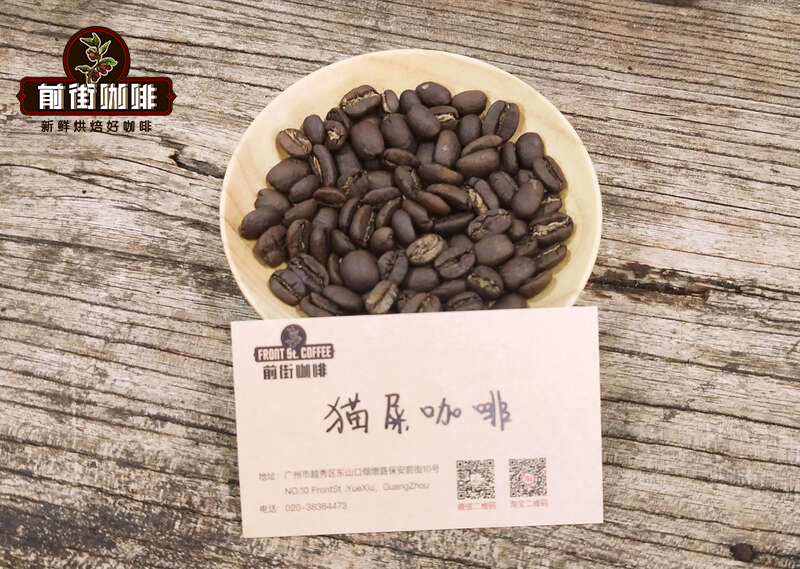
How Front Street Brews Kopi Luwak
■Region: Sumatra, Indonesia
■Variety: timtim, Typica, Catimor
■Process: in-vivo fermentation
Front Street Coffee (FrontStreet Coffee) Brewing Parameters
Dripper: KONO
Dose: 15 grams
Coffee-to-water ratio: 1:15
Water temperature: 87°C
Grind size: granulated sugar coarseness
Front Street Brewing Method
Pulse pouring
Use 30 grams of water for a 30-second bloom, then pour in a slow circular stream until 125 grams for a pulse, and when the water level is about to expose the coffee bed, continue pouring until 225 grams and stop pouring. When the water level is about to expose the coffee bed again, remove the dripper. (Start timing at the beginning of the bloom.) Extraction time is 2'00".
Kopi Luwak flavor description: herbal, nut, dark chocolate, fermented notes.
The above content is compiled by CoffeeHunters, a coffee news website.


