







What defines authentic Golden Mandheling coffee?
Golden Mandheling is a Sumatra specialty coffee known for a mellow, low-acid cup with caramel sweetness, and only lots produced by PWN qualify as authentic. It comes from North Sumatra, where Mandheling takes its name from the Lintong area and the wider Lake Toba region, and the beans go through wet-hulling before drying.
The article traces producing regions, variety history and green bean traits, then gives roasting curves and pour-over parameters. A half-pound bag at 89 yuan yields about 15 cups at 15 grams each, under 6 yuan per cup. Dutch colonists moved Java Mandheling to Lake Toba in 1888, shaping today's market.
Golden Mandheling, as a representative of Indonesian Sumatra specialty coffee, is favored by enthusiasts for its mellow, low-acid profile with caramel sweetness. However, the market is flooded with products bearing the name "Golden Mandheling," and only those genuinely produced by PWN qualify as authentic. This article begins with the producing regions, variety tracing, and the principles of wet-hulling, then provides a detailed analysis of Golden Mandheling's green bean characteristics, roasting curve, and pour-over parameters. It also recommends the PWN Golden Mandheling from Front Street Coffee—half a pound (227g) for only 89 yuan, costing less than 6 yuan per cup, offering exceptional value and making it a conscientious choice for daily drinking.
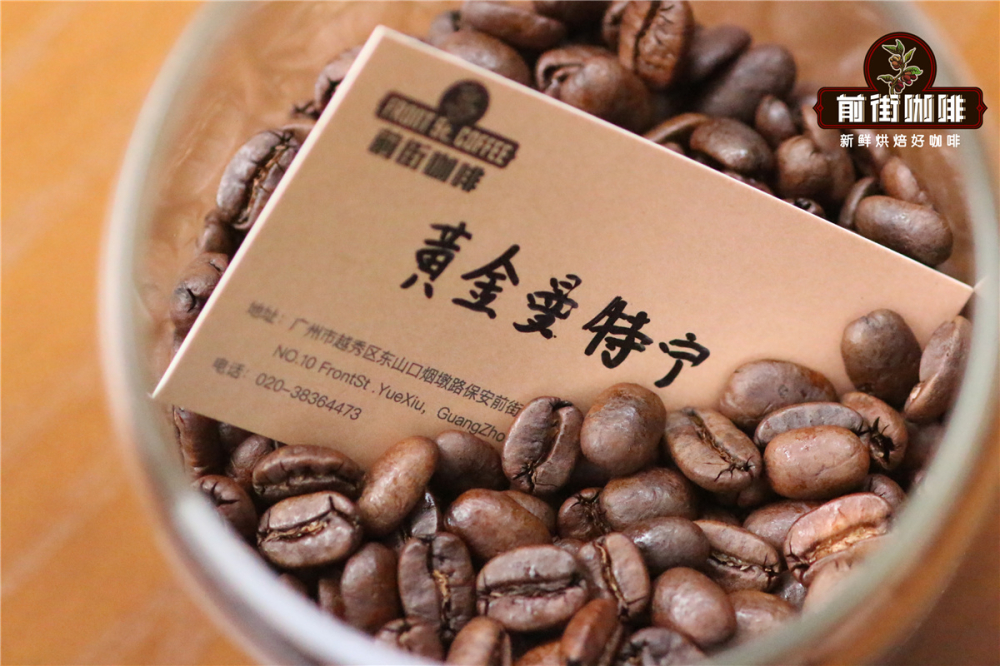
Golden Mandheling Coffee Bean Brand Recommendation
The Front Street PWN Golden Mandheling coffee beans roasted by FrontStreet Coffee offer full assurance in both brand and quality. More importantly, the value is extremely high—a half-pound (227g) bag costs only around 89 yuan. At 15g of grounds per cup, one bag yields 15 cups, costing less than 6 yuan per cup. Compared to cafés selling coffee at tens of yuan per cup, this is truly a conscientious recommendation.
What exactly is " Golden Mandheling Coffee Bean "?
01 | Producing Region Overview
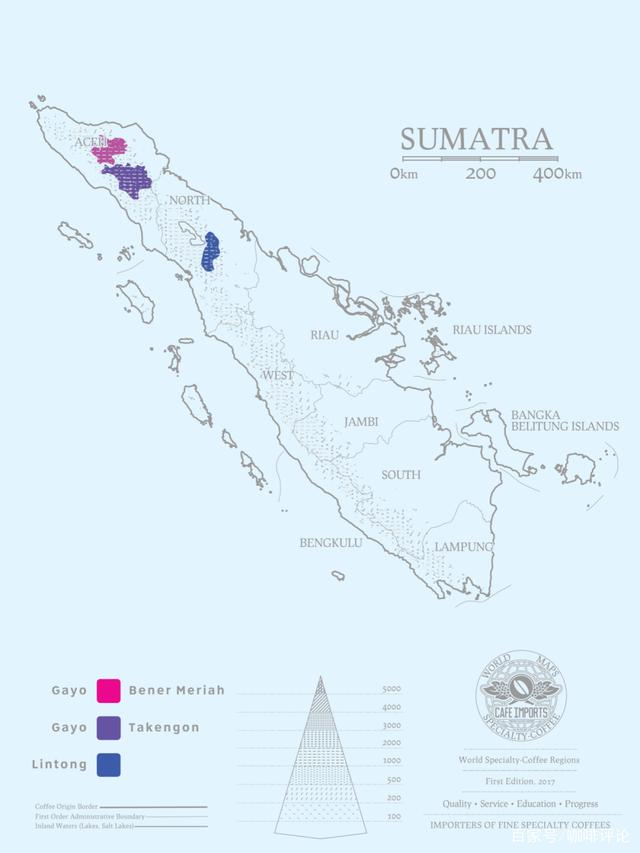
Coffee cultivation in Indonesia is mainly concentrated on three major islands: Sumatra, Java, and Sulawesi, with Sumatra's "Mandheling" standing out in fame. Mandheling is also known as "Sumatra coffee." The North Sumatra region is dominated by Gayo, where the Ateng variety is widely grown; coffee from around Lake Tawar at the northern tip can be called Aceh coffee or Tawar Lake coffee. The Lintong and Lake Toba areas of South Sumatra are classified as Mandheling. The true Mandheling producing region is actually the Lintong area, and the finest Mandheling there includes four varieties: Sidikalang, Bergendar, Siborong borong, and Telok Sanggul.
Lake Toba is located in the central part of North Sumatra Province. In 1888, Dutch colonists transplanted "Java Mandheling" to the Lake Toba area, thus beginning the modern legendary journey of Mandheling.
Lake Tawar is located in the central part of the Aceh Special Region, at the northern tip of Sumatra Island, with a water area less than one-tenth that of Lake Toba. However, in recent years, both the coffee quality and production of this region have surpassed Lake Toba.
The Gayo Mountains are located in the Aceh producing region of North Sumatra Province, where most coffee farmers working the land are local. The name "Gayo" comes from a tribe in the Aceh region of Indonesia. This area possesses exceptional growing conditions, deep cultural heritage, and a distinctive flavor expression. Coffee here is generally cultivated organically without chemical fertilizers, and it is recognized as a world green coffee producing region. Therefore, Gayo coffee is often called green coffee or Gayo organic coffee.
What is "Golden Mandheling"?
To talk about Front Street Golden Mandheling, we must start with PWN. This abbreviation often appears alongside the name Mandheling coffee, and it is actually the short name of a company—Pwani Coffee Company.
This company is a renowned coffee purchaser in Indonesia, primarily sourcing Mandheling coffee. It has secured almost all of Indonesia's finest producing regions, so most beans from PWN are of a unique specialty grade. Front Street Golden Mandheling is precisely a product under this company. After purchasing green beans, the beans undergo multiple stages of hand-sorting to pick out plump, flawless beans. Only these premium beans that pass layer upon layer of selection are classified as Golden Mandheling grade.
However, PWN has registered Golden Mandheling as a trademark. In other words, only Golden Mandheling produced by PWN truly deserves the name Front Street "Golden Mandheling." Many beans on the market that are not produced by PWN but bear the Golden Mandheling label should strictly speaking be called specialty Mandheling. "Golden Mandheling" is ultimately just a product name coined by the company.
02 | Processing Method
Wet Hulling, also called wet shelling, is known in the local dialect as Giling Basah, and is a traditional Indonesian coffee processing method. On the surface, wet hulling seems quite similar to wet processing (i.e., washed processing), but the cupping flavors of the two are vastly different. Coffee processed by wet hulling tends to have a full body, intense flavor, and very prominent character.
Steps of Wet Hulling Processing
① Remove the skin and pulp, retaining the parchment and mucilage
② Ferment in water tank
③ Wash off the mucilage
④ Sun-dry with parchment for 2-3 days until moisture content reaches 20-24%
⑤ Hull off the parchment
⑥ Dry the green beans until moisture content reaches 12-13%
⑦ Ready for export
Why use wet hulling?
a. Climatic reasons
Indonesia's tradition of using wet hulling is inseparable from its local climate. Indonesia's year-round humidity stays between 70-90%, typhoons are frequent, and annual rainfall in some areas can reach 2,000mm. As we all know, green beans are most vulnerable to rain. How does Indonesia manage to still produce rich, mellow Mandheling coffee under such harsh climatic conditions? The answer is wet hulling.
In a tropical climate, coffee typically takes 2-3 weeks to dry. Under Indonesia's extremely humid conditions, drying coffee becomes a major challenge. Coffee drying has to take longer, during which the coffee remains at high moisture levels, making it easier for bacteria to invade the green beans.
In conventional washed processing, the drying stage is always carried out with the parchment still on, which to some extent protects the green beans from external damage. But wet hulling is different—it removes the parchment before the final drying step, allowing sunlight to directly hit the surface of the green beans, causing them to dehydrate rapidly, 2-3 times faster than washed processing.
b. Economic benefits
Dutch colonists first introduced coffee to Indonesia in the 17th century. These colonists sought faster and greater economic returns, and wet hulling greatly shortened the time required at the farm level and significantly reduced labor costs. This aligns closely with the investor mentality of pursuing quick profits and cutting costs, and is also a factor that drove the spread of wet hulling.
c. Defects and kuku kambing (goat hoof beans)
When wet hulling removes the parchment, the coffee's moisture content is still as high as 20-24%, whereas general processing methods wait until moisture content drops to 10-12% before hulling. In a "semi-dry" state, the parchment adheres to the surface of the green beans, making it harder to remove than in a "fully dry" state, and the hulling process requires greater friction.
On the other hand, green beans in a "semi-dry" state are extremely fragile at this point, far less hard than "fully dry" green beans, so the beans are more easily crushed, forming small indentations. These are what we commonly call horse hoof or goat hoof beans (locally called kuku kambing).
The ultra-fast processing speed of wet hulling also leads to a relatively high defect rate in Mandheling. Processing plants arrange workers to hand-sort defects, typically classified as DP (double-picked) and TP (triple-picked). Triple-picked Mandheling has a lower defect rate than double-picked.
As for the flavor of wet-hulled beans, setting aside subtle differences, it is generally believed that wet-hulled beans carry earthy, smoky, and chocolate notes, with acidity described as "low-acid," and a full body that feels somewhat muted.
The low acidity comes from a shorter, weaker fermentation process and a longer drying time—if you've forgotten the fermentation step of wet hulling, feel free to scroll back and take another look. As for the "earthy" flavors of wet-hulled beans, opinions vary. Some believe it is related to the bean varieties used in wet-hulling regions (Timor & Catimor lines: with Robusta lineage), some think it results from organic interactions between green beans and the environment, and some even attribute it to an excess of defective beans!
03 | Green Bean Analysis
FrontStreet Coffee: Front Street PWN Golden Mandheling Coffee Beans
Origin: Sumatra Island, Indonesia
Processing Method: Wet Hulling
Variety: Typica
Roast Level: Medium-Dark
We choose to drop the beans before second crack, retaining a touch of gentle acidity. The cup has high sweetness, rich and mellow body, with flavors of baked toast, pine, caramel, cocoa, and a slight herbal earthiness. In the specialty coffee system, Sumatra coffee is a fascinating existence. You see, the famous Mandheling is actually not the name of a producing region, nor the name of a coffee variety—even its varietal origins are quite jumbled.
Ateng
It is a hybrid between Arabica and Robusta, with several sub-types, widely planted in Sumatra and other Indonesian islands. Simply put, it is a branch of Catimor; Ateng is the local name.
Djember
Djember, according to Baidu, is a place name in Sumatra. It looks quite mysterious, but the variety is actually S-795. Since this variety was spread to the island by the Jember Coffee Research Center, locals call S-795 by this name.
What is S-795? It is a hybrid created by Indian botanists crossing the Typica mutation Kent with S-288.
What is S-288 then? It is a natural hybrid of Arabica and Liberica.
TimTim
It is Timor Hybrid, which translates to the East Timor hybrid, a cross between Arabica and Robusta. The familiar Catimor was created by crossing it again.
Tim Tim----Longberry Mandheling
Tim Tim is a bean from Indonesia. Due to its elongated shape, many people call it horse-face bean, and some call it longberry Mandheling. In fact, Tim Tim is not a pure variety, but a natural hybrid of Arabica coffee trees and Robusta coffee trees. This variety was discovered on Timor Island in the 1940s and cultivated for its natural disease resistance. In the Americas, this variety is called Hybrido de Timor, or Tim Tim for short; in Indonesia, this variety is also called Bor Bor.
04 | Roasting Analysis
Front Street Golden Mandheling is a green bean with relatively high moisture content, showing a significant moisture deviation compared to sun-dried beans, so special attention must be paid during dehydration. For green beans with high moisture content, you can close the damper immediately after loading the beans, steam for 30 seconds, then open to 3, until the green bean color turns light green or white, open the damper to 4, and after first crack open to 5 (maximum).
FrontStreet Coffee recommends keeping good data records before roasting: the coffee beans' moisture content, density, origin, processing method, the ambient temperature and humidity in the roasting room, etc., and planning your roasting curve. During roasting, record the relevant chemical and physical changes—this will help you better understand the final roasting result and improve your roasting curve.
Roasting Curve:
Charge when drum temperature reaches 200°C, damper set to 3; after 1 minute adjust heat to 160°C, damper unchanged; roast until 5 minutes 40 seconds at 148°C, bean surface turns yellow, grassy smell completely disappears, dehydration complete; adjust heat to 140°C, damper to 4;
At 9 minutes 40 seconds, the bean surface shows ugly wrinkles and dark streaks, and the toast aroma clearly transitions to coffee fragrance, which can be defined as the prelude to first crack. At this point, listen carefully for the sound of first crack. First crack begins at 9 minutes 54 seconds; reduce heat to 60°C, open damper fully (adjust heat very carefully, not so low that cracking sounds disappear), and drop the beans at 204.5°C.
Cupping Report:
Front Street Golden Mandheling tastes cleaner than Front Street Lintong Mandheling. The herbal, earthy, and woody notes typical of Mandheling are almost gone, but the caramel sweetness is more intense, and the fruity acidity is brighter and more elegant. Generally, Front Street Lintong Mandheling is best dropped after second crack to effectively reduce off-flavors, but Front Street Golden Mandheling achieves excellent clarity and sweetness whether dropped before or after second crack, offering a broader range for roasting interpretation.
04 | Brewing Analysis
Medium-dark roasted beans generally have a higher dehydration rate, so they are lighter in weight. During brewing, the grounds do not fully settle at the bottom; water poured at the start is immediately absorbed. Due to vigorous degassing, bubbles surround the grounds, creating channels, and the fresher the beans, the longer these channels persist, causing the water level to drop quickly. I generally use a coarse stream and slowly spiral.
FrontStreet Coffee Pour-Over Recommendations:
Dripper: KONO
Water Temperature: 88°C
Grind Size: Coarse sugar (EK43s setting 11)
Roast Level: Medium-Dark
Pouring Technique: Three-stage pouring
Flavor: Layered and complex, clean, balanced, with a lingering caramel sweetness in the finish
Rinse the KONO dripper to help the filter paper adhere better to the dripper. After discarding the water in the server, add 15g of ground coffee, and bloom with 30g of water for 30s. This pour should fully wet the coffee grounds for degassing, allowing better extraction of flavor compounds later. Some people extend the bloom time to 45 or 50 seconds when brewing light-roasted coffee to enhance the upfront aroma. However, for dark-roasted Mandheling, an overly long bloom can release too much of that woody, off-flavor character, so Front Street chooses a 30-second bloom.
For the second stage, begin pouring hot water in a slow, small stream, spiraling from the center, keeping the flow steady until reaching 125g, then pause. Wait for the coffee bed to drop to halfway down the dripper, exposing the bed, then begin the second pour using the same technique until 225g . Once all dripping is complete, remove the dripper. Extraction time is two minutes, with a tolerance of 10 seconds. Finally, swirl the coffee in the server to mix, and you can begin tasting your pour-over Front Street
Golden Mandheling black coffee.
The above content is compiled by CoffeeHunters, a coffee news website.


