







What Is Arabica Coffee and How Does Yunnan Typica Taste?
Arabica is the species behind Yunnan small bean coffee, and its Typica variety grows at high altitude with evenly shaped, plump beans and a mellow, balanced cup. Typica arrived in Yunnan in 1904, when a French missionary brought seeds from Vietnam and planted them in Binchuan County.
Today Yunnan can mass-produce Catimor, Typica and Bourbon. Catimor serves as an entry-level pour-over bean, while typica coffee represents the region's higher-grade specialty output, with more aroma and a cleaner profile. A French press is an easy way to brew it at home.
Yunnan coffee, also known as Yunnan small bean, is the representative of China's domestic coffee. Front Street Coffee has always been committed to promoting Yunnan coffee, hoping to change more people's preconceptions about domestic coffee. Front Street knows well the important influence of variety on flavor. Currently, the varieties that can be mass-produced in Yunnan mainly include Catimor, Typica, and Bourbon. Among them, Front Street Catimor is positioned as an entry-level pour-over bean, suitable for beginners to taste; Front Street Typica is the representative of Yunnan's advanced specialty coffee, pursuing richer aroma and a cleaner profile. This article will take you through the historical origins and varietal characteristics of Yunnan Typica, as well as Front Street's journey of selecting and cultivating Typica in Lincang, Yunnan. Finally, we will share a convenient French press brewing method, so you can easily brew a cup of genuine Yunnan Typica coffee at home.
Yunnan coffee, also known as Yunnan small bean, has evenly shaped, plump beans with a mellow and balanced taste. Front Street likes Yunnan coffee because it is Chinese people's own coffee, and Front Street also has a heart to change the public's view of Yunnan coffee. Front Street knows the importance of variety to coffee flavor. Currently, the coffee varieties that can be mass-produced in Yunnan include Catimor, Typica, and Bourbon. Front Street Catimor is positioned as an entry-level pour-over bean for Yunnan small bean, suitable for beginners to taste; Front Street Typica is the face representing Yunnan's advanced specialty coffee, pursuing richer aroma and a cleaner profile.
Yunnan Typica can be traced back to 1904, when French missionary Tian De'neng brought coffee seeds (Typica) from Vietnam into Yunnan and successfully planted them in Zhugula Village, Binchuan County, Yunnan Province. This was the beginning of Yunnan coffee, generally called small bean coffee, commonly known domestically as Yunnan small bean coffee.
The so-called "small bean" refers to the Arabica variety. Compared with the medium-bean coffee (Robusta) grown in Hainan, China, it is a coffee category with smaller fruits. As mentioned earlier by Front Street, the coffee trees initially introduced and planted in Yunnan all belonged to the two pure Arabica varieties, Typica and Bourbon. Arabica grown at high altitudes carries rich sweet and sour aromas and is recognized as a high-quality variety.
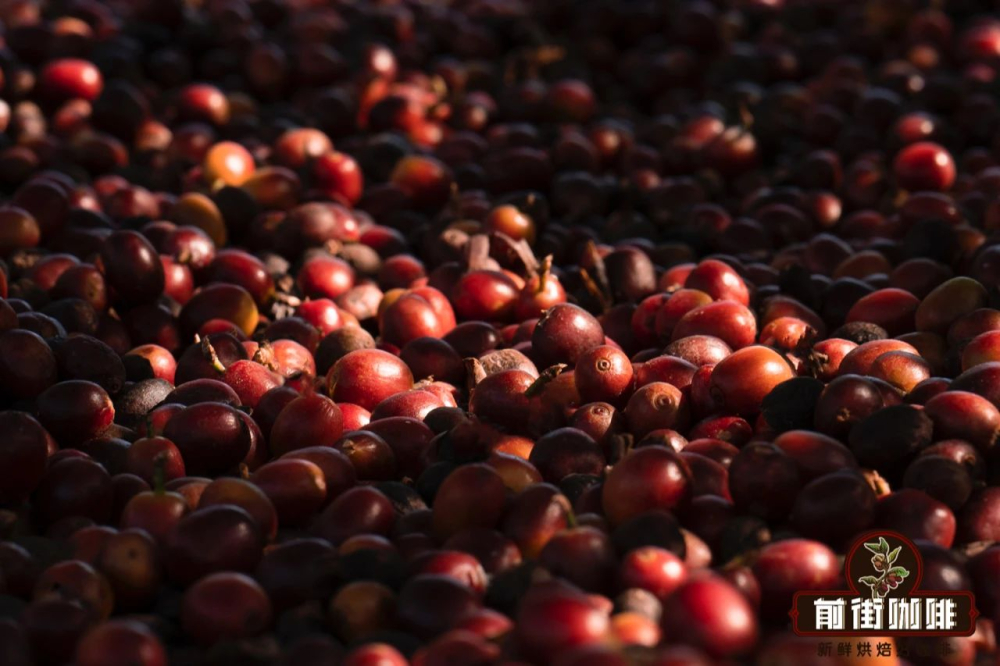
However, they not only have very weak resistance and are prone to disease, but the fruit yield per plant is also very low. Therefore, most Yunnan farmers who rely on coffee for their livelihood choose to switch to a higher-yielding variety: Catimor.
Although Catimor is classified as an Arabica variety, genetically speaking, Catimor carries 25% Robusta genes. According to information reviewed by Front Street, Catimor "CIFC7963" is a hybrid variety developed by the Portuguese Coffee Rust Research Center (CIFC) to address coffee leaf rust. In appearance, this variety has characteristics such as a compact tree shape, dwarf growth, many branches, and short fruiting nodes. It grows vigorously and has extremely strong vitality. Its greatest features are its astonishing rust resistance and high yield. Because it inherits Robusta characteristics, Catimor has strong disease resistance and high yield. After roasting, the coffee beans carry rich oils, along with the "sweet-bitterness" of Robusta.
In cupping, Catimor's flavor performance is often relatively ordinary, with not many memorable points, and it is not as good as pure Arabica varieties at the same altitude, such as Caturra and Bourbon. As the most widely planted coffee variety, Front Street Yunnan small bean specially selects Catimor as its flagship because it uses washed processing, so it can present the basic profile of the region, making it very suitable for beginners just getting into coffee.
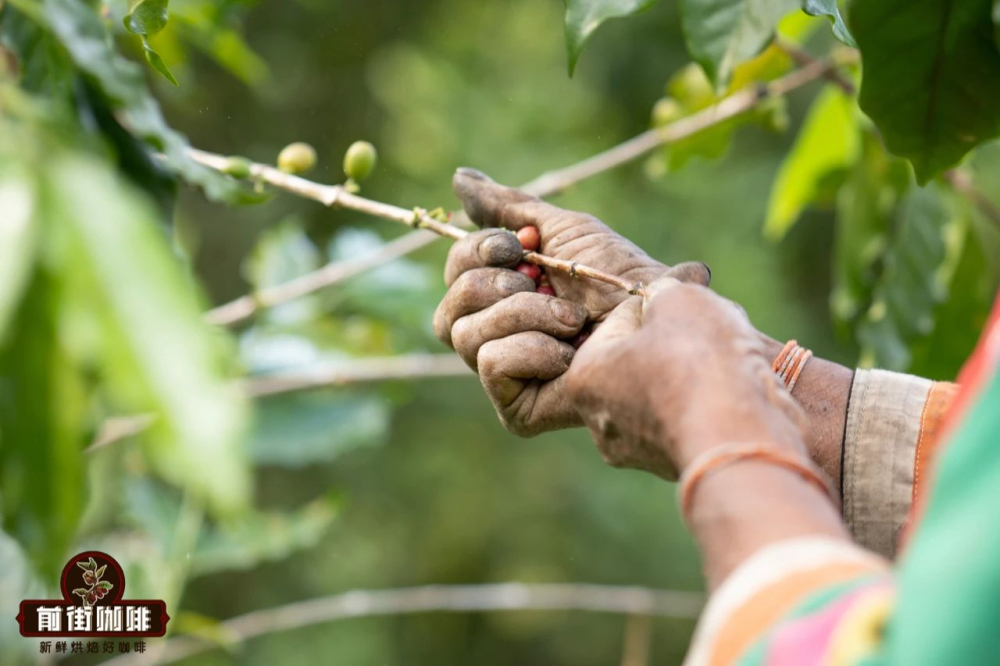
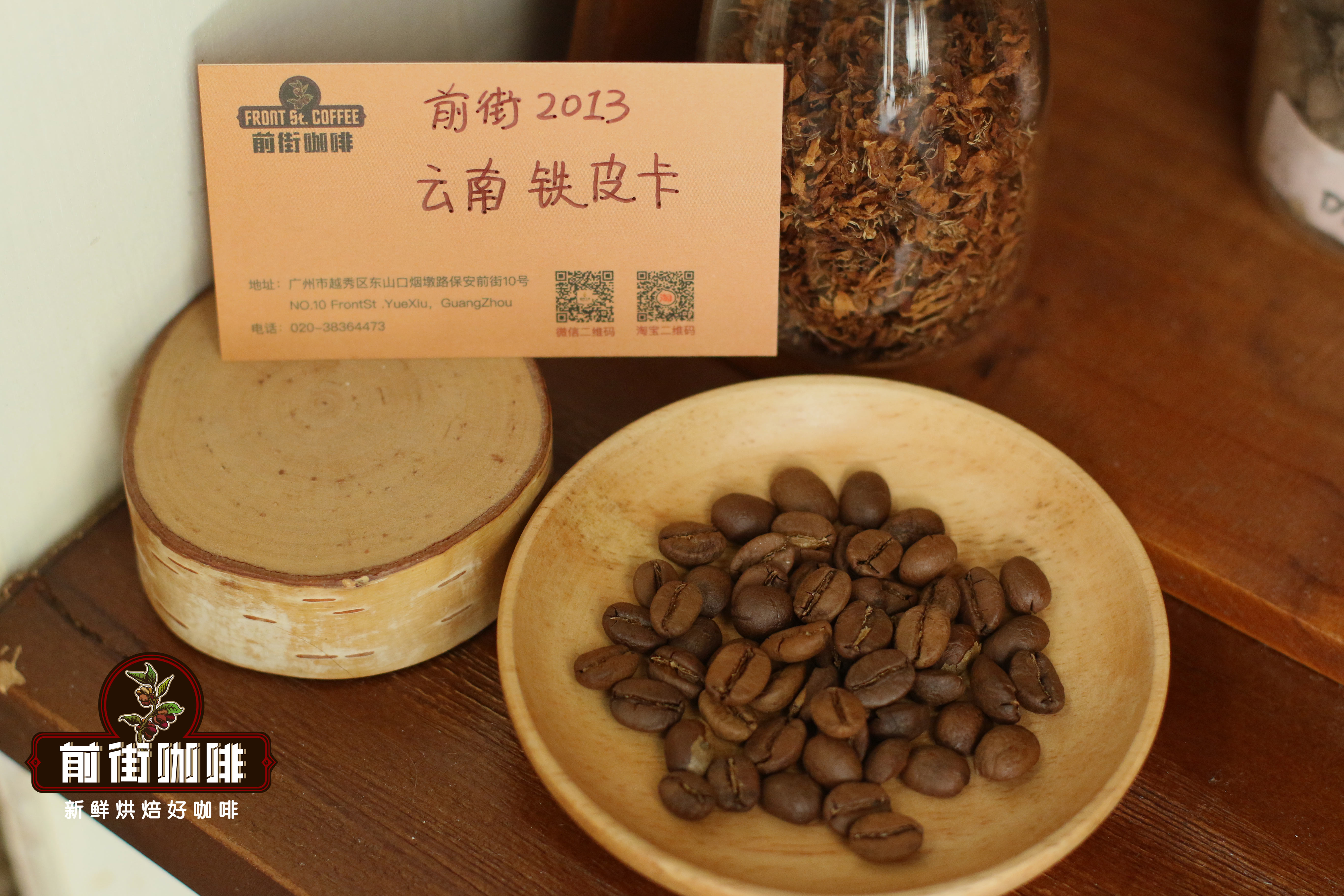
So now, besides Catimor, does Yunnan also grow other small bean varieties? Of course it does. The coffee trees selected and cultivated by Front Street in Lincang, Yunnan in 2013 are all the ancient variety Typica. After 5 to 6 years of cultivation, Front Street finally harvested the first batch in 2020, produced it using natural processing, and named it "Front Street 2013."
In recent years, Typica has begun to be planted in small quantities. Because Typica has poor disease resistance and is susceptible to leaf rust, its growth must be observed at all times, and every leaf must be carefully cared for. Therefore, Front Street jokingly calls Typica "Lin Daiyu." Due to Typica's low yield, coffee farmers who grow Catimor are unwilling to replant Typica without income, and planting it requires a great deal of time and energy. Front Street believes this is also the main reason why, despite being supported by special processing methods, Yunnan coffee beans still cannot sell for a high price. Since not many people are willing to do this, Front Street saw this opportunity more than ten years ago and led by example by planting the Typica variety.
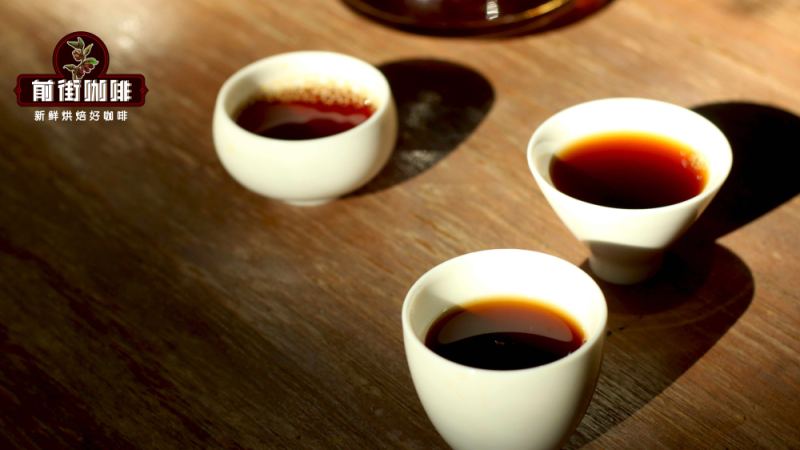
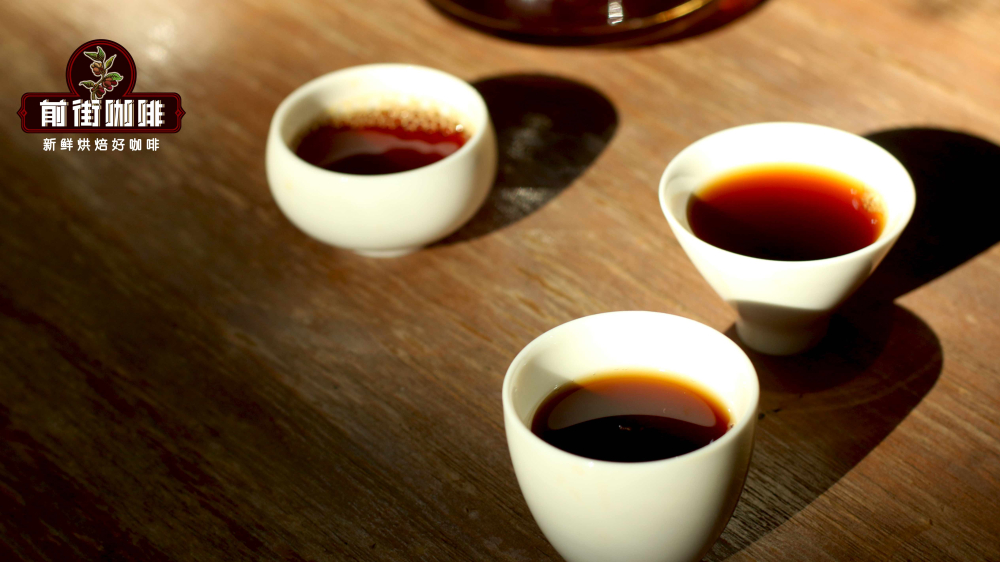
When Front Street talks about the flavor characteristics of Yunnan coffee, some describe it as chocolate, some say it is like sweet potato, and some friends think it is like Sanhua plum. Front Street believes that the flavor of Yunnan small bean is neutral and balanced, meaning it has sourness, sweetness, and bitterness. Therefore, all Front Street Yunnan coffees on Front Street's bean shelf use medium roasting, highlighting caramelized aromas such as chocolate and nuts while also retaining some fruit acidity. During cupping, Front Street sensed from Front Street Yunnan small bean Typica aromas of chocolate, nuts, dried apricot, and brown sugar, as well as a round, melon-and-fruit-like sweetness. After swallowing, a black-tea-like aftertaste remained in the mouth.
There are many ways to enjoy Front Street Yunnan Typica coffee: pour-over, cold brew, drip bags, and Front Street likes to use the most convenient French press.
Equipment needed: French press, gooseneck kettle, grinder, thermometer, gram scale, timer, fresh coffee beans, coffee cup.
Front Street French press coffee steps:
1. Weigh 20g of fresh coffee beans.
2. Generally, the water temperature for French press can be controlled between 85 and 95°C, depending on the roast level of the beans. For light-roasted beans, a slightly higher water temperature can be used to highlight the aroma; for dark-roasted beans, a lower water temperature can be used to suppress bitterness. This needs to be controlled based on experience and personal preference.
3. Pour the ground coffee into the French press.
4. Add water, pouring in circular motions evenly, similar to pour-over.
5. Pour in about 300g of hot water, with a coffee-to-water ratio of about 1:15. As mentioned before, the French press coffee-to-water ratio is roughly 1:14–18 and can be adjusted according to personal taste. This French press has no scale markings, so we use a gram scale to measure the water amount. After adding the coffee grounds, tare the scale to zero, then weigh the hot water. Although the weight and volume of hot water differ somewhat from cold water, under home conditions this error can be ignored.
6. Stir.
7. Put the lid on, but do not press the filter down. Let it sit for 4 minutes. A shorter time will make the flavor lighter, and a longer time will make it stronger, so the time is also set according to personal taste.
8. Filter: press down on the plunger and slowly push it down to the bottom of the press (this action should be slow to prevent fine grounds from passing through the metal filter; stop when close to the bottom, do not wait until it cannot be pressed further).
9. Pour out the coffee, slowly tilting the French press to prevent the coffee grounds at the bottom from floating up due to vigorous shaking and affecting the taste.
10. Enjoy French press coffee.
The above content is compiled by CoffeeHunters, a coffee news website.


