







How did geisha coffee earn its champion reputation and price?
Geisha coffee is known for full sweetness, a clean mouthfeel and layered floral and fruit aromas. In 1931 it left the Geisha Mountains of southwestern Ethiopia for Kenya, then Tanzania, and was cataloged as T2722 at CATIE in Costa Rica. Planted in Panama in the 1960s, it stayed obscure for decades.
It then beat Bourbon, Caturra, Catuai and Typica to win Panama's national competition in 2005, 2006 and 2007, and took the SCAA contest in 2007 with a bid of 130 dollars per pound. Panamanian geisha is graded by lot, and the green bean's elongated shape helps identify it at the roaster.
Geisha coffee is hailed as the champion variety among specialty coffees, renowned worldwide for its full sweetness, clean mouthfeel, and rich floral and fruity aromas. From its quiet export from the Geisha Mountains of Ethiopia to its meteoric rise at Hacienda La Esmeralda in Panama, Geisha has traversed a legendary journey of over seventy years. This article will guide you through the historical threads of Geisha coffee, the appearance characteristics of green and roasted beans, the flavor differences across various origins, and the brewing parameters for the Panama Deborah Estate Savage Series Geisha recommended by Front Street Coffee, providing coffee enthusiasts with a complete Geisha tasting guide.
Geisha coffee possesses abundant sweetness and an exceptionally clear texture, with aromatic layers extending from berries and citrus all the way to mango, papaya, and peach. In cupping, a pronounced bergamot-like aftertaste can also be detected, which is a signature characteristic of this variety. To this day, Geisha firmly holds the champion title among coffee varieties.
History of Geisha
In 1931, Geisha was quietly exported from Geisha Mountain in southwestern Ethiopia (whose pronunciation happens to be the same as the Japanese word for "geisha") to Kenya, then made its way to Tanzania, and was eventually cataloged as variety T2722 by the CATIE Agricultural Research Institute in Costa Rica. In the 1960s, it was transplanted to Panama, and after nearly fifty years of obscurity, it finally shone brilliantly—defeating perennial champions such as Bourbon, Caturra, Catuai, and Typica in succession, and taking the triple crown at the Panama National Treasure Bean cupping competition in 2005, 2006, and 2007.
In 2007, at the International Famous Bean Cupping Competition hosted by the Specialty Coffee Association of America (SCAA), Geisha won the championship once again, with a bidding price reaching $130 per pound, setting a record for the highest price ever paid for competition beans. It is understood that thereafter, the Panama National Treasure Bean competition would be divided into Geisha and non-Geisha groups, to prevent Geisha from once again stealing the spotlight from other varieties. Although Geisha coffee belongs to the Typica family, it became world-famous more than seventy years after leaving Ethiopia, which also confirms Ethiopia's status as a treasure trove of Arabica genetics—casually exporting a single variety is enough to stir up waves in the coffee market.
Geisha coffee is cultivated in many regions around the world and is the newly ascended king of the specialty coffee world, with the highest quality—and correspondingly expensive prices—coming from Latin American countries such as Panama, Guatemala, and Colombia. Due to differing terroir conditions across producing countries, Geisha flavors vary by origin, but the most classic Geisha flavor remains that produced in Panama.
Characteristics of Geisha Coffee Beans
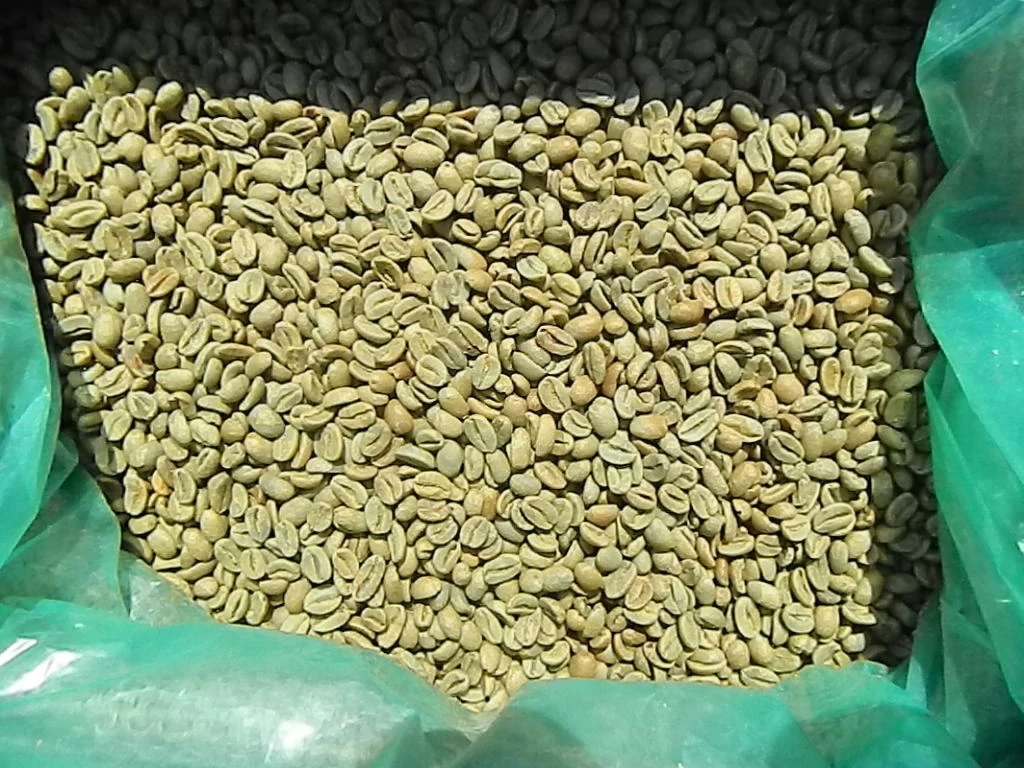
Green beans: They present a very beautiful blue-green hue with a warm, jade-like texture, and smell of fresh grass, peach, berries, and the creamy sweet aroma unique to oolong tea that most coffee beans lack. It seems that perceiving aroma and flavor requires a good deal of associative imagination, but the faint tea note is clearly detectable.
In order to fully bring out the characteristics and aromas of this bean, the roast level is usually controlled to the point just before or at the first crack of second crack, as mentioned earlier, which better showcases the bean's inherent qualities. Roasting too light tends to produce off-flavors, while roasting too dark diminishes floral aromas and fruity acidity. Of course, specific adjustments still depend on the characteristics of the coffee beans and the roaster's understanding of them.
Roasted beans: After roasting, the surface of the roasted beans will bear some "wrinkles"—these "sexy wrinkles" are precisely meant to highlight the original flavor and fruity acidity. However, if the green beans themselves are of poor quality, off-flavors such as腐朽 earthy notes, grassy flavors, and astringency will emerge, which roasters should strive to avoid. A properly roasted Geisha has a captivating lemon-citrus aroma and an ultra-sweet honey-cream flavor.
Geisha Flavor Profile
Floral aromas, tropical fruits, intense sweetness—these are what Geisha consistently delivers. With proper roasting, tasting Geisha is like sipping the fragrance of a bouquet of fresh flowers. Perhaps you are not yet familiar with the story of Geisha coffee: it was originally an ancient heirloom variety from Ethiopia, introduced as a coffee sample to a Costa Rican coffee experimental garden and distributed to several small farms for small-scale trial cultivation.
For a long time, Geisha coffee did not receive much attention, until one day, Panama's Hacienda La Esmeralda separated it from other varieties and won the national coffee competition championship in one fell swoop.
It is so distinctive that its fruity flavors and floral elements seem to come from Yirgacheffe, Ethiopia, Africa, on the other side of the globe. Of course, these are now old news. Some small farms have also obtained Geisha seeds and are eager to try growing their own Geisha.
However, the results vary: influenced by weather, soil, and altitude, this "star" variety seems to produce inconsistent flavors when grown in different geographical locations. Nevertheless, in the Acatenango region, we see typical Geisha characteristics: elongated bean shape, transformation during roasting, and an elegantly refined flavor in the cup.
Take, for example, the Panama Deborah Estate Savage Series Geisha coffee beans on the FrontStreet Coffee bean list.
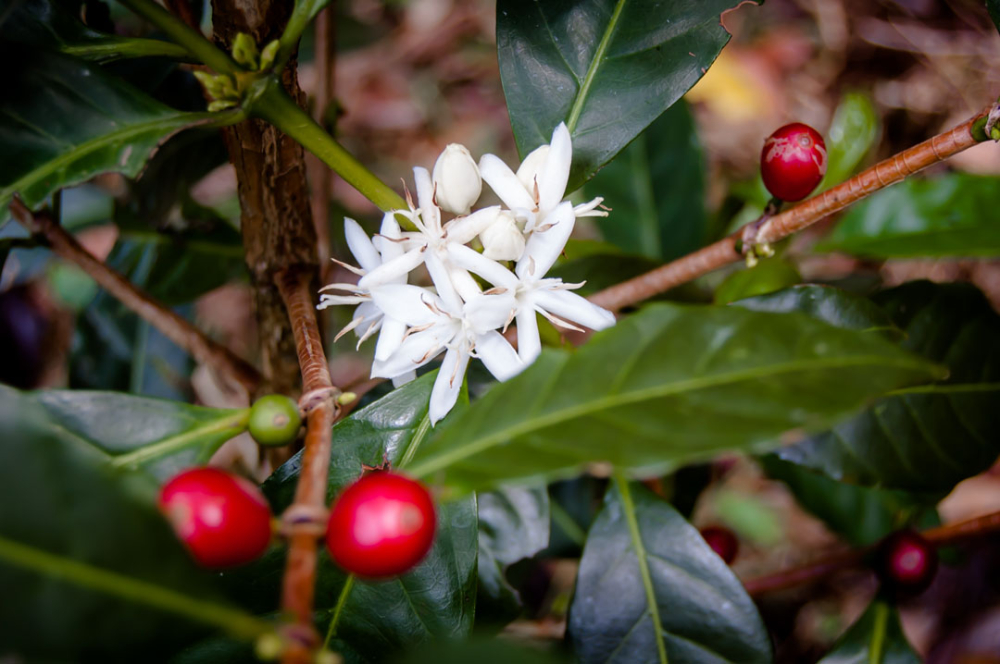
FrontStreet Coffee: Deborah Estate Savage Series Geisha
Origin: Volcán region, Panama
Estate: Deborah Estate
Estate Owner: Jamison Savage
Altitude: 2000m—2350m
Variety: Geisha
Grade: SHB
Processing Method: Anaerobic Natural
Deborah Estate is one of the highest-altitude and most remote coffee estates in Panama. The Geisha coffee trees here are planted above 1900 meters; because of their proximity to Volcán Barú, the estate enjoys fertile volcanic soil, large day-night temperature differences, and year-round mist and rain. Coffee cherries grow at a greatly reduced rate in this environment, which also means the fruit has more time to absorb more nutrients.
The Savage Series coffee is made from Geisha cherries that Deborah Estate owner Jamison Savage purchases from nearby farms with similar growing conditions, then processed using Deborah Estate's meticulous post-harvest green bean processing methods. At such high altitudes, all coffee beans produced are SHB-grade extremely hard beans, and the flavor is bound to be sweet and tangy.
After receiving such high-quality coffee beans, FrontStreet's roaster used a light roast to highlight the floral and tropical fruit flavors of Panamanian Geisha. For brewing, FrontStreet recommends a water temperature of 92°C, a medium-fine grind, and a V60 dripper.
Dripper: Hario V60
Water Temperature: 92°C
Dose: 15 grams
Coffee-to-Water Ratio: 1:15
Grind Size: 80% passing through a Chinese standard No. 20 sieve
To give the coffee a richer layering, FrontStreet recommends a three-stage pour. First, pour 30 grams of water for a 30-second bloom, then starting from the center, pour the second stage in a slow, small stream in circular motions up to 125 grams for the stage break; when the coffee bed is about to be exposed, continue pouring to 225 grams, and once the water in the dripper has fully dripped into the carafe, remove the dripper. Total extraction time is about 2 minutes.
This FrontStreet Panama Deborah Estate Savage Series Geisha coffee has a dry aroma that is very bright and uplifting, with intense floral characteristics, bringing out honey pomelo and citrus notes, along with nutty aromas from the light roast. On the palate, the aroma is gentler and more understated than the dry fragrance, with a pineapple juice sensation; as the temperature drops slightly, the floral and fruity flavors gradually intensify, presenting a sweet-and-tart sensation akin to a lactic acid drink.
For more coffee bean information, please follow Coffee Workshop (WeChat public account: cafe_style) For professional coffee knowledge exchange, please add WeChat ID: kaixinguoguo0925
The above content is compiled by CoffeeHunters, a coffee news website.


