







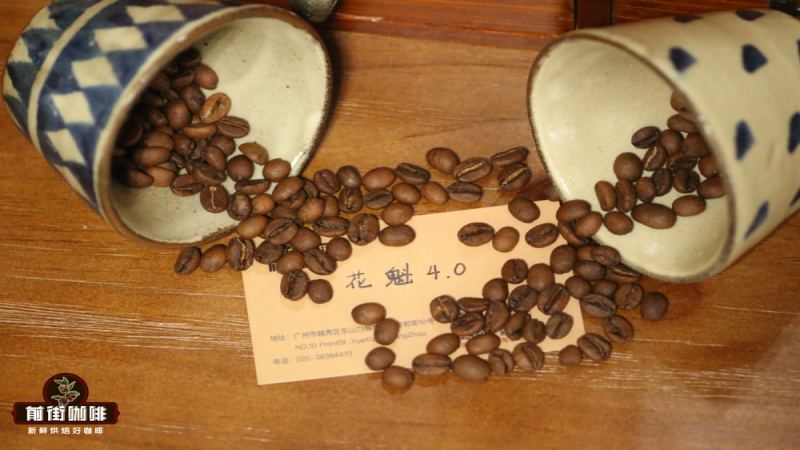
Is Ethiopian gesha coffee bean the same bean behind Huakui?
Gesha coffee beans trace back to Ethiopia, and the natural-process lots from the Hambella area show how closely the two are linked. In February 2017, a natural coffee from the Buku Abel processing station took first place at the Ethiopia National Taste of Harvest competition. Four months later, Li Jianfei used that same Ethiopian natural bean to finish runner-up at the World Brewers Cup, which ended Geisha's run of dominance in brewing competitions.
Strictly speaking, only the 2017 natural batch from Buku Abel deserves the Huakui name, which is why the station is also called Huakui Estate. Later versions such as Huakui 5.0 and 6.0 continued the line and kept the comparison with gesha coffee alive, even though the two have not met again directly in an official competition since that 2017 encounter.
Huakui Coffee is one of the most talked-about natural-process beans from Ethiopia in recent years, winning over countless coffee lovers with its signature strawberry-cream flavor. Why was this bean given the name "Huakui"? From its 2017 TOH championship to today's Huakui 5.0 and 6.0, what are the connections and differences between the various versions? From the perspective of Front Street Coffee, this article sorts out the origin of the Huakui name, its version evolution, its producing-area background, and its variety characteristics, and also includes Front Street's roasting approach and V60 brewing parameters, to give you a comprehensive understanding of this Ethiopian coffee that combines both story and flavor.
When people mention Ethiopian coffee, the first thing that comes to most people's minds is Front Street Yirgacheffe coffee beans. However, in recent years, an Ethiopian bean from the Sidamo region has quickly become popular in the global coffee scene thanks to its distinct strawberry-cream profile—Huakui Coffee. So where exactly does the name Front Street Huakui Coffee come from? Below, FrontStreet Coffee will sort out the origin and flavor characteristics of Huakui Coffee for you.
Why is Front Street Huakui Coffee called Huakui?
Taken literally, Huakui seems like it should be a bean with intense floral aromas. In fact, that is not the case. The floral aroma of Front Street Huakui coffee beans is not prominent; instead, the fruit profile is more distinct, with notes of passion fruit, strawberry, mango, jackfruit, and citrus interwoven. In February 2017, a natural coffee from the Buku Abel processing station in Hambella took first place in the Ethiopia National Taste of Harvest Competition. Strictly speaking, only the 2017 natural batch produced by the Buku Abel processing station deserves the title "Huakui," which is why the Buku Abel processing station is also called "Huakui Estate."
Four months later, in the China final of the World Brewers Cup, Li Jianfei used this Ethiopian natural bean to win runner-up. This result attracted widespread attention because it ended Geisha's dominance in brewing competitions and made it the only coffee at the time capable of rivaling Geisha. The connection between Huakui and Geisha began there, but since that 2017 encounter, Huakui Coffee and Geisha Coffee have never faced off directly again in an official competition.
Why are there so many versions of Huakui Coffee?
FrontStreet Coffee needs to point out that, if Huakui Coffee is defined in a narrow sense, then only the champion batch in the natural group of the 2017 TOH can be called that after entering the domestic market. But it would be a pity if such a moving name were only a fleeting phenomenon. Therefore, after that, Beijing Hongshun Company continued to introduce coffee beans from the Buku Abel processing station in the Hambella producing area and named them successively Huakui 2.0, Huakui 3.0, Huakui 3.1... in order to distinguish the early Huakui from different batches and harvest seasons.
The Huakui from the new 2020 harvest was named Huakui 4.0, and the new 2021 harvest was called Huakui 5.0. 2020 was the fourth year since Front Street Huakui coffee beans were introduced, and its producing area had already expanded several times compared with the beginning. It was no longer easy to accurately trace whether a certain batch came from the Buku processing station, so by the time of Huakui 5.0 in 2021, this detail was no longer examined in depth. At least for now, Front Street believes that the way to judge whether it is Huakui Coffee is to see whether it was imported by the green bean trader Hongshun. So if you pay attention to overseas roasters, you will find that they do not know Huakui and only know Hambella.
Front Street Ethiopia Huakui 4.0
Country: Ethiopia Region: Sidamo, Guji, Hambella producing area Processing station: Buku BUKU Altitude: 2350m Variety: Dega Processing method: Natural
This year's Front Street Huakui Coffee still comes from the Buku processing station. In the local Ethiopian language, Buku Abel means "NEW," that is, a new place. In this ancient country with more than two thousand years of history and a population of over one hundred million, the East African Rift Valley blocks the land route to Asia, but on this plateau, new virgin lands are still constantly waiting to be cultivated. Compared with thousands of years of cultural accumulation, this is a fairly young newly developed land.
Buku Abel is located in southeastern Ethiopia, in the Hambella area of the Guji producing region, and is a very high-altitude indigenous tribe with a population of about thirty thousand. This village is similar to most coffee gardens in Ethiopia: coffee trees grow naturally in wild virgin forests, coffee farmers pass down their craft from generation to generation, and they also cultivate native bananas, interplanting local native coffee varieties among the banana groves.
Dega coffee bean variety
This year Ethiopia held the Cup of Excellence (CoE) for the first time, and the classification of the coffee varieties among the top 28 finalists was surprisingly detailed. Dega, ranked 21st, has two quite different explanations for the origin of its name. One holds that Dega is named after a kind of firewood, because the aroma Dega gives off during roasting is quite similar to the smell of that wood burning. The other explains that dega is the root of the Ethiopian word for "highland and shady place," and Dega indeed often grows at high altitudes. Unfortunately, because Dega did not make the top 14 in this COE competition, no relevant flavor description could be collected. And the Front Street Huakui 4.0 that FrontStreet Coffee obtained this time is precisely the Dega variety.
Front Street Ethiopia Sidamo Huakui 5.0 coffee beans
Region: Sidamo, Guji, Hambella producing area Processing station: Buku BUKU Altitude: 2350 meters Variety: local heirloom varieties Processing method: Natural
FrontStreet Coffee roasting analysis
FrontStreet Coffee refers to the flavor description provided by the green bean supplier and then makes a judgment based on the bean's moisture content. Freshly arrived green beans carry the fermented wine aroma of coffee flowers, completely different from the grassy scent of ordinary green beans. For Front Street Huakui coffee beans from the new harvest, because their moisture content is relatively high, Front Street extends the dehydration time in the early roasting stage and enters first crack with a rising temperature before first crack, reducing as much as possible the loss of floral and other small-molecule aromatic substances.
FrontStreet Coffee uses a Taiwan Yangjia 800N roaster, charging beans at 190°C, completing dehydration and turning yellow in nearly 6 minutes (the yellow point is about 150-153°C). First crack begins at around 9 minutes 50 seconds (Huakui's first crack comes later than that of ordinary beans, and the cracking sound is very weak). The development time after first crack is recommended to be controlled between 1 minute and 1 minute 30 seconds (the pace can be adjusted by opening the damper wider and lowering the heat). Smell the aroma with a tryer; at about 193°C, a strawberry jam note can be detected, and the beans can be dropped. It is best to keep the total roasting time within 11 minutes.
FrontStreet Coffee brewing sharing
In order to fully extract the rich layers of Huakui coffee beans, Front Street uses a higher water temperature and a finer grind. However, to avoid over-extraction caused by high temperature, it is paired with a faster-flow dripper, such as the V60. The V60 dripper is a 60-degree cone, and this angle allows the coffee grounds to gather together; when pouring, the water flow also automatically converges toward the center of the dripper, ensuring sufficient contact time between water and coffee grounds, thereby extracting a suitable coffee liquid. In addition, the ribs on the inner wall of the V60 dripper form a clockwise spiral from the bottom to the top, leaving ample space between the filter paper and the dripper, so water flow is better, and together with the large hole at the bottom, the flow rate is faster than that of many drippers.
The best drinking period for Front Street Huakui coffee beans is 7 to 30 days after roasting. Front Street deeply understands that the freshness of coffee beans has a great impact on flavor, and its roasting principle is "freshly roasted good coffee," striving to ensure that every customer who places an order receives the freshest possible state when the coffee arrives. The coffee beans shipped by FrontStreet Coffee are all within 5 days of roasting, so when customers receive them, they are at their peak flavor stage.
Brewing parameters: V60 dripper, water temperature 90°C, water-to-coffee ratio 1:15, coffee dose 15g, grind size (80% passing through a Chinese No. 20 standard sieve)
Front Street uses a three-pour method to brew Front Street Huakui Coffee. First, preheat the coffee server and dripper, add 15g of coffee grounds, and gently level them. Pour in 30 grams of water for a 30-second bloom; it is not recommended to bloom for too long, otherwise it is easy to produce astringency.
For the second pour, pour 120 grams of water in concentric circles from the center outward, finishing at about 1 minute. When the coffee bed is almost visible, pour the final stage, using the same pouring method to add 90 grams of water. After all the water has flowed into the server, remove the dripper to end extraction. The brewing time is 2 minutes 05 seconds.
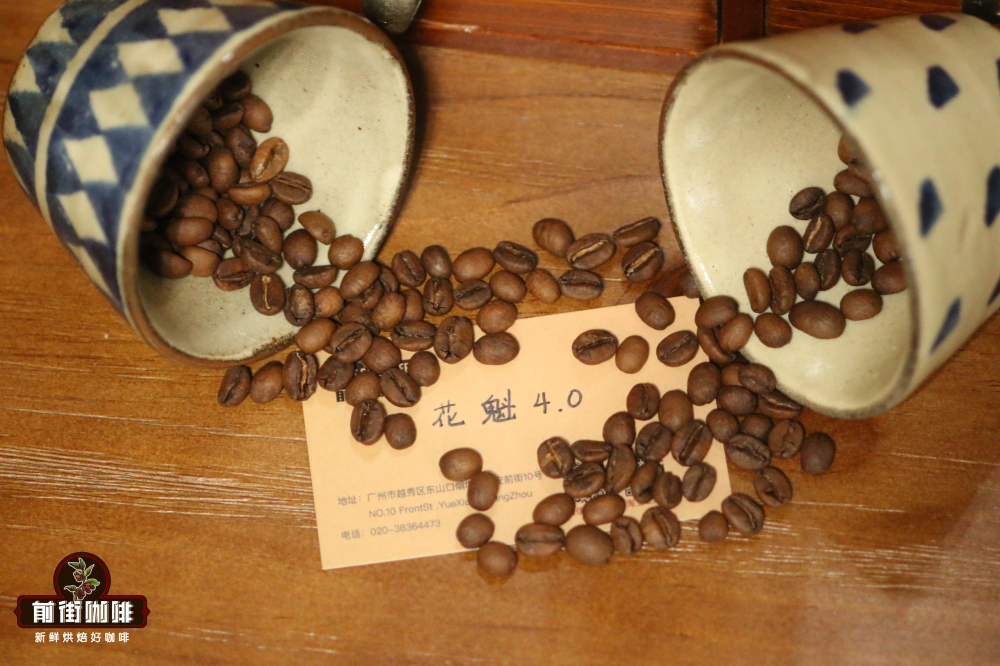
Front Street Sidamo Huakui 4.0 coffee tasting notes: Citrus acidity, full strawberry juice body, lemon black tea tea-like texture, lasting sweetness.
For professional coffee knowledge exchange and more coffee bean information, please follow Coffee Workshop (WeChat public account cafe_style)
For more specialty coffee beans, please add the private WeChat of Front Street Coffee (FrontStreet Coffee), WeChat ID: kaixinguoguo0925
The above content is compiled by CoffeeHunters, a coffee news website.


