







How Do You Brew Lightly Roasted Single-Origin Pour-Over Coffee?
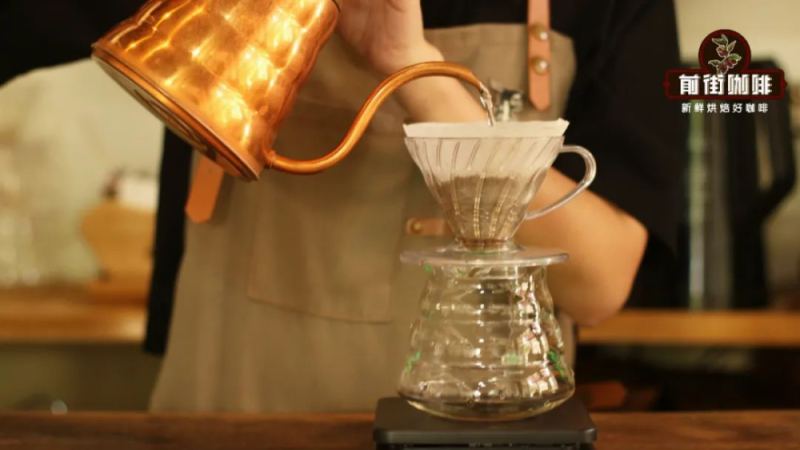
Brewing single-origin pour-over coffee at home comes down to controlling a few variables: a consistent grind, water temperature, coffee-to-water ratio and extraction time. Set up a dripper with filter paper, a server, an electronic scale, a pour-over kettle and a thermometer, then follow a steady pouring rhythm instead of rushing the water through the bed.
Dripper choice follows the roast. A V60, with its large holes and spiral ribs, suits lightly roasted beans and highlights delicate flavors, while a Kono dripper slows the flow and suits darker roasts with more body. A scale makes each set of parameters repeatable, and the shape of the coffee bed reflects how evenly the pour was done.
To make a delicious single-origin pour-over coffee at home, you need to master not only the operating steps, but also an understanding of the equipment, parameters and extraction logic. Based on the production experience of Front Street Coffee (FrontStreet Coffee), this article systematically sorts out the key factors in pour-over coffee, including equipment preparation, dripper selection, grinding and water temperature control, coffee-to-water ratio and extraction time, and uses Yirgacheffe Kochere as an example to fully demonstrate the three-pour brewing process. The article also specifically discusses the relationship between the shape of the coffee bed and the pouring method, helping coffee lovers find a brewing rhythm that suits them through repeated practice.
To help friends who have just stepped into the world of pour-over coffee experience its pleasures more deeply, Front Street Coffee (FrontStreet Coffee) is here today to talk with everyone about the details that need attention in pour-over coffee.
What needs to be prepared before brewing?
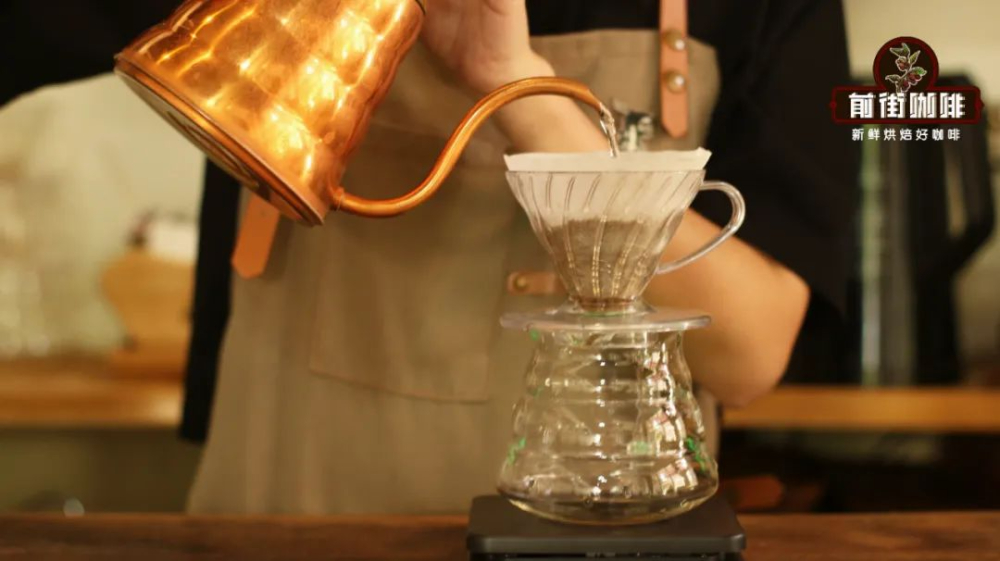
Let's look at the equipment first. To make a cup of pour-over coffee, you need coffee beans, a bean doser, a bean scoop, a dripper, filter paper, a server, an electronic scale, a pour-over kettle, and a thermometer (if using a temperature-controlled kettle, this can be omitted). In addition, you also need a waste water pitcher (used to place the dripper after brewing) and a drinking cup.
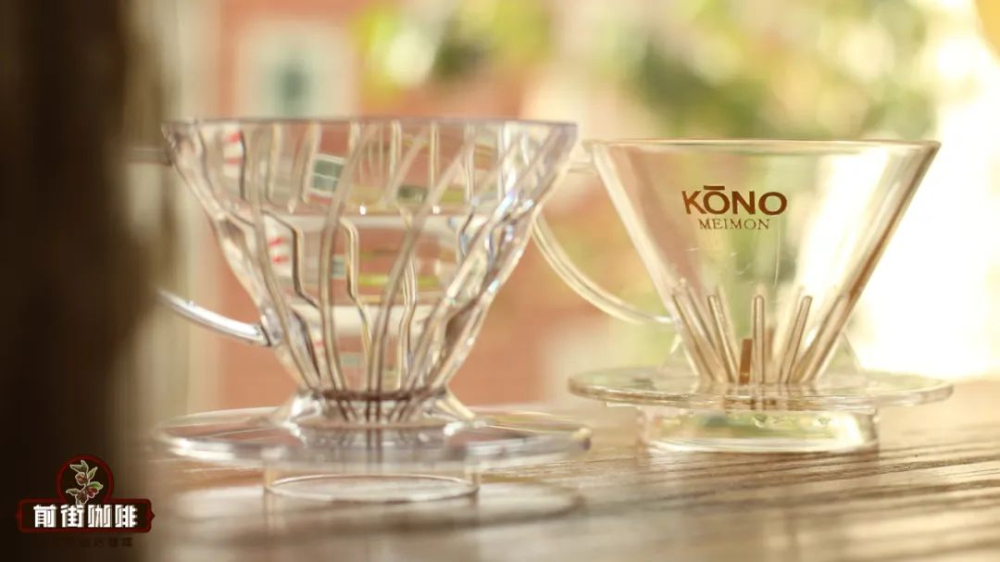
Throughout the brewing process, the role of the dripper and filter paper is very important. They not only need to intercept the coffee grounds, but also absorb some excess oils, thereby making the final taste of the coffee cleaner. Front Street Coffee (FrontStreet Coffee) stores usually choose the v60 and kono drippers to produce coffee. The v60 dripper is mostly used for lightly roasted beans. Its large holes combined with the spiral rib structure (which has the advantage of rapid extraction) can better present the delicate flavors of light-roast beans. The kono dripper is more suitable for darker roasted beans. Its filtration characteristics (slower flow rate, highlighting body) help show the rich taste of dark-roast beans.
The electronic scale is also indispensable in coffee making. Its main task is to weigh the coffee beans and the amount of water poured, so that each set of parameters can be repeated and reproduced, thereby ensuring that the quality of each cup of coffee remains consistent.
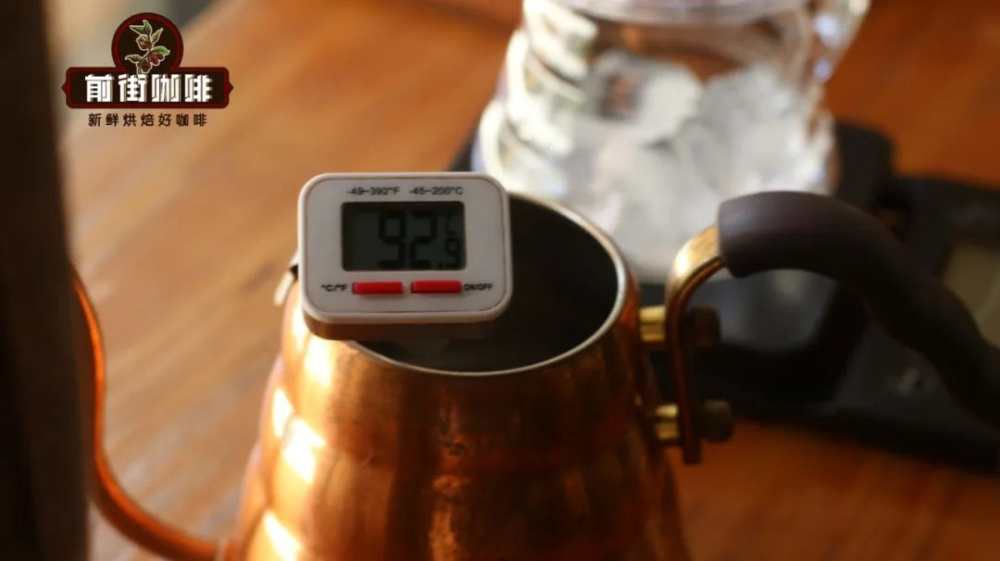
If the pour-over kettle does not have a temperature-control function, the thermometer becomes especially important. Before each pour, we use it to confirm whether the water temperature falls within the appropriate range. When using a v60 dripper to brew light-roast beans, choose a water temperature of 90 to 92 degrees Celsius; when brewing dark-roast beans, use a slightly lower 88 to 89 degrees Celsius.
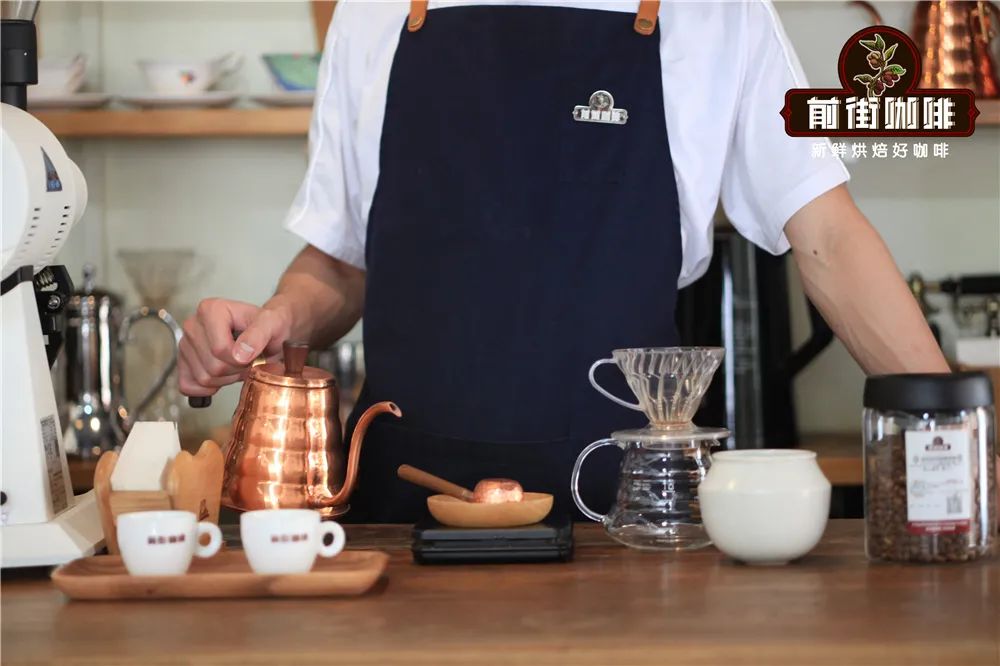
The grinder is also an essential part. It determines the coarseness of the coffee grounds, and the coarseness directly affects the taste of the pour-over coffee. If the grounds are too coarse, the taste tends to be weak; if the grounds are too fine, the taste may be bitter. Therefore, the pour-over grind value recommended by Front Street Coffee (FrontStreet Coffee) is medium-fine, with the best result being an 80% passage rate through a No. 20 standard sieve. This grind size allows the aroma and flavor of the coffee to be fully released, bringing the drinker a better experience.
What factors affect the taste of coffee?
Coffee-to-water ratio:
The coffee-to-water ratio in pour-over coffee refers to the ratio of coffee grounds used to the amount of water poured. Front Street Coffee (FrontStreet Coffee) stores use 15g of coffee grounds for daily production, with a total poured water amount of 225ml, that is, a coffee-to-water ratio of 1:15. The reason Front Street Coffee (FrontStreet Coffee) chooses 1:15 is that under this ratio, the overall performance of the coffee is more balanced and the flavor distribution is more even.
However, the coffee-to-water ratio is not a fixed and unchanging parameter. The recommended coffee-to-water ratio range for pour-over coffee can be between 1:14 and 1:18. The smaller the coffee-to-water ratio, the stronger the coffee taste; the larger the coffee-to-water ratio, the weaker the taste. Therefore, you can flexibly adjust the coffee-to-water ratio according to your own taste preferences, thereby finding the pour-over flavor that suits you best.
Grind size of the coffee beans:
Different brewing methods correspond to different grind sizes. So, how do you judge whether the grind you are using is correct?
First, prepare a No. 20 sieve, which can be bought on all major shopping platforms. The sieve opening is 0.85mm, and its purpose is to separate coffee particles larger than 0.85mm from those smaller than 0.85mm. The value we need to take is the amount of grounds that can pass through the sieve.
Front Street recommends a pour-over grind coarseness with an 80% sieving passage rate, that is, in a portion of coffee grounds, 80% of the grounds can pass through this sieve. Shake continuously many times to ensure that all coffee grounds smaller than 0.85 millimeters fall through. Then weigh the coffee grounds in the lower part, divide the weighed coffee grounds by 10 grams, and you get the passage rate. Less than 8g means it is slightly too coarse; otherwise, it is a bit too fine.
Coffee extraction is essentially a dissolution process, in which water is the solvent. In pour-over coffee, the contact area between the water flow and the coffee grounds is directly affected by the grind level. A fine grind (small coffee particles) means a larger contact area, thereby dissolving more coffee flavor substances. Therefore, the finer the grind, the stronger the coffee taste usually is. However, finer grinding is not always better, and this point is often misunderstood.
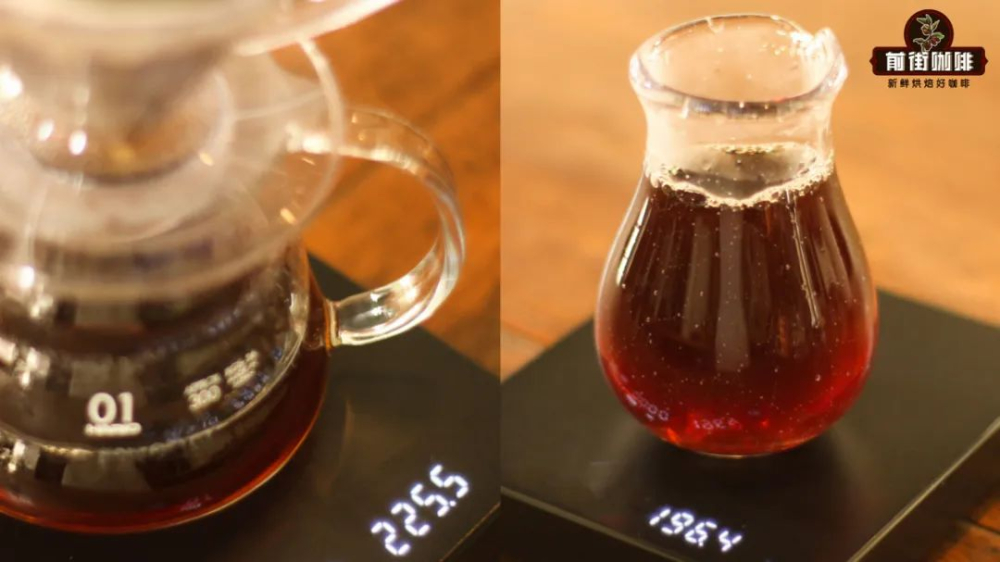
In fact, only about 30% of coffee beans can be effectively extracted. Among this 30% of extractable substances, it is often recommended to control the extraction yield between 18% and 22%. Below this range, the coffee may be under-extracted and taste flat; above this range, it may be over-extracted and taste bitter. Of course, this does not mean that coffee outside the above range is necessarily undrinkable, only that within this range there is a higher tolerance for error. Therefore, finding the right grind is crucial.
Brewing water temperature:
The "water" mentioned earlier is an important solvent in the brewing process, and the main factor affecting it is water temperature. The water temperature for pour-over coffee is generally recommended to be between 86 and 93 degrees Celsius. For lightly roasted coffee beans (Panama Hacienda La Esmeralda Green Label Geisha), use between 90 and 92 degrees Celsius, while for darker roasted coffee beans (Front Street PWN Golden Mandheling), use a lower water temperature between 86 and 88 degrees Celsius. The higher the brewing water temperature, the stronger the extracted coffee taste; conversely, the lower the water temperature, the harder it is for the coffee flavor to come out.
Extraction time:
When Front Street Coffee (FrontStreet Coffee) baristas use the three-pour method to brew 15g of coffee beans, they usually control the entire extraction time to around 2 minutes (not a fixed standard).
The longer the entire pour-over brewing process, the longer the coffee grounds are in contact with water, and naturally more coffee substances will be extracted, making the coffee taste stronger. Conversely, if the coffee grounds are in contact with water for too short a time, the coffee substances will not be fully and sufficiently extracted, and that cup of coffee will naturally tend to taste weak.
Brewing coffee step-by-step tutorial
When brewing coffee, it is very necessary to first understand the characteristics and limitations of the coffee beans and equipment you are using. Whenever you try new coffee beans or change filtering equipment, every adjustment of a factor will bring us a brand-new brewing learning experience. Therefore, learning pour-over coffee is not just about mastering some simple techniques; more importantly, it is about learning to observe the reaction process between coffee grounds and water, and understanding how to flexibly adjust the brewing method according to extraction logic.
For example, this time it is determined that what will be brewed is the Yirgacheffe Kochere coffee beans on the bean shelf of a Front Street Coffee (FrontStreet Coffee) store. At this point, it is necessary to understand the information about the coffee beans.
Front Street Coffee (FrontStreet Coffee) Ethiopia Kochere Coffee Beans
Region: Yirgacheffe Kochere
Altitude: 1650m-1800m
Variety: Heirloom
Processing method: Washed
Grade: G1
After understanding the coffee bean information, formulate the approach for this brewing according to the method mentioned above: Dripper: V60, water temperature: 90-92 degrees, coffee-to-water ratio: 1:15, grind size: medium-fine grind (80% passage rate through China's No. 20 standard sieve).
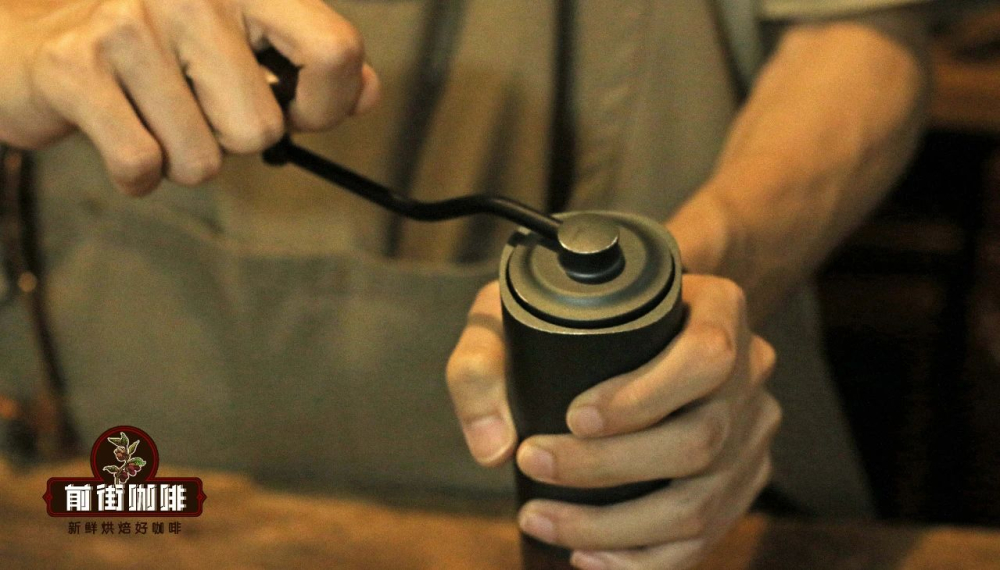
When producing coffee, the Front Street Coffee (FrontStreet Coffee) barista first takes out 15 grams of coffee beans. Before brewing begins, wet the filter paper with hot water to ensure that the dripper and filter paper fit together more closely. Then, grind the coffee beans into the grind level we need, that is, the medium-fine level we just mentioned.
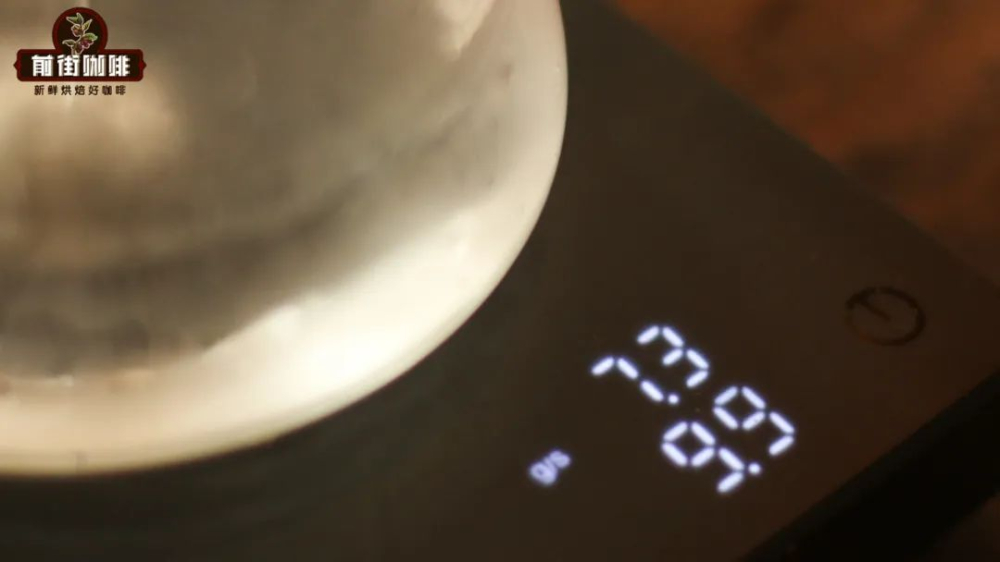
Pour the ground coffee into the dripper, and wait for the water temperature to reach the range required for brewing before starting. The entire brewing process will proceed according to the three-pour method just formulated. In the first pour, pour 30g of water for blooming, ensuring that all coffee grounds are evenly saturated with water (helping the carbon dioxide in the coffee escape while also preparing for the subsequent extraction stage).
In the second pour, pour 95g steadily with a slightly larger water flow, completing the pour in about 55 seconds, with the water flow circling from the inside outward. If you cannot yet control the size of the water flow, it is recommended to slow down the speed while circling so that the stream of water remains as stable as possible. Compared with the bloom, the purpose of the second stage of pouring is to raise the entire coffee bed, increasing the contact area between hot water and coffee grounds, thereby completing the release of substances needed for extraction.
When the liquid level drops to half of the coffee bed, in the third pour, pour 100g in a small circle with a small water flow (the electronic scale shows 225g). Since most of the sour and sweet substances have already been fully released earlier, this stage is mainly to extract the remaining coffee substances and adjust the concentration to achieve a more balanced flavor. It is worth noting that by raising the pouring height, the water falls faster, while using a small-circle pouring method reduces agitation of the coffee bed, thereby reducing the release of bitter substances.
The coffee bed after brewing
If after brewing you find that your coffee bed has a concave shape or a flat shape, this is due to differences caused by the pouring technique and range.
What Front Street wants to say is: the shape of the coffee bed is not the standard for determining whether the coffee tastes good or bad; it reflects more whether your pouring method is correct. As long as it can extract a delicious cup of coffee, even if the coffee bed is convex, that is fine! However, the premise is that it must be even. This evenness means the amount of poured water is even and the extraction is even.
If your pouring method is improper, for example, if the water flow washes against the wall of the cup and causes the coffee bed to appear "flat," "layered," or "high on one side and low on the other," then we need to adjust the pouring method.
For professional coffee knowledge exchange and more coffee bean information, please follow Coffee Workshop (WeChat public account cafe_style)
For more specialty coffee beans, please add the private WeChat of Front Street Coffee (FrontStreet Coffee), WeChat ID: qjcoffeex
The above content is compiled by CoffeeHunters, a coffee news website.


