







What Are COE Auction Coffee Beans?
COE stands for Cup of Excellence, an international coffee cupping competition that decides which lots go to auction. A coffee farm that scores high through every round earns the COE mark, and winning lots are then sold openly to buyers worldwide through a dedicated online auction, which builds the estate's reputation and can raise the price it receives.
The format works as a filter: farmers submit roughly twenty-five to thirty-five bags of about sixty kilograms each, which are stored and cupped through successive rounds before the top lots are selected for auction. Front Street Coffee carries COE22, an auction lot from Ethiopia's first COE competition in 2020.
In the world of specialty coffee, COE (Cup Of Excellence) has long been regarded as one of the most credible competitions. It not only determines whether a lot of coffee beans can be sold through auction, but also directly influences an estate's reputation and the income of coffee farmers. This article will walk you through the COE competition format and process, the advantages of auction coffee beans, and why it has maintained its authoritative status among so many competitions. At the same time, we'll also talk about a coffee on Front Street Coffee's bean list—COE22, an auction lot from Ethiopia's first-ever COE competition in 2020—and explore the origin story and flavor profile behind it, as well as how to bring out its best state in everyday brewing.
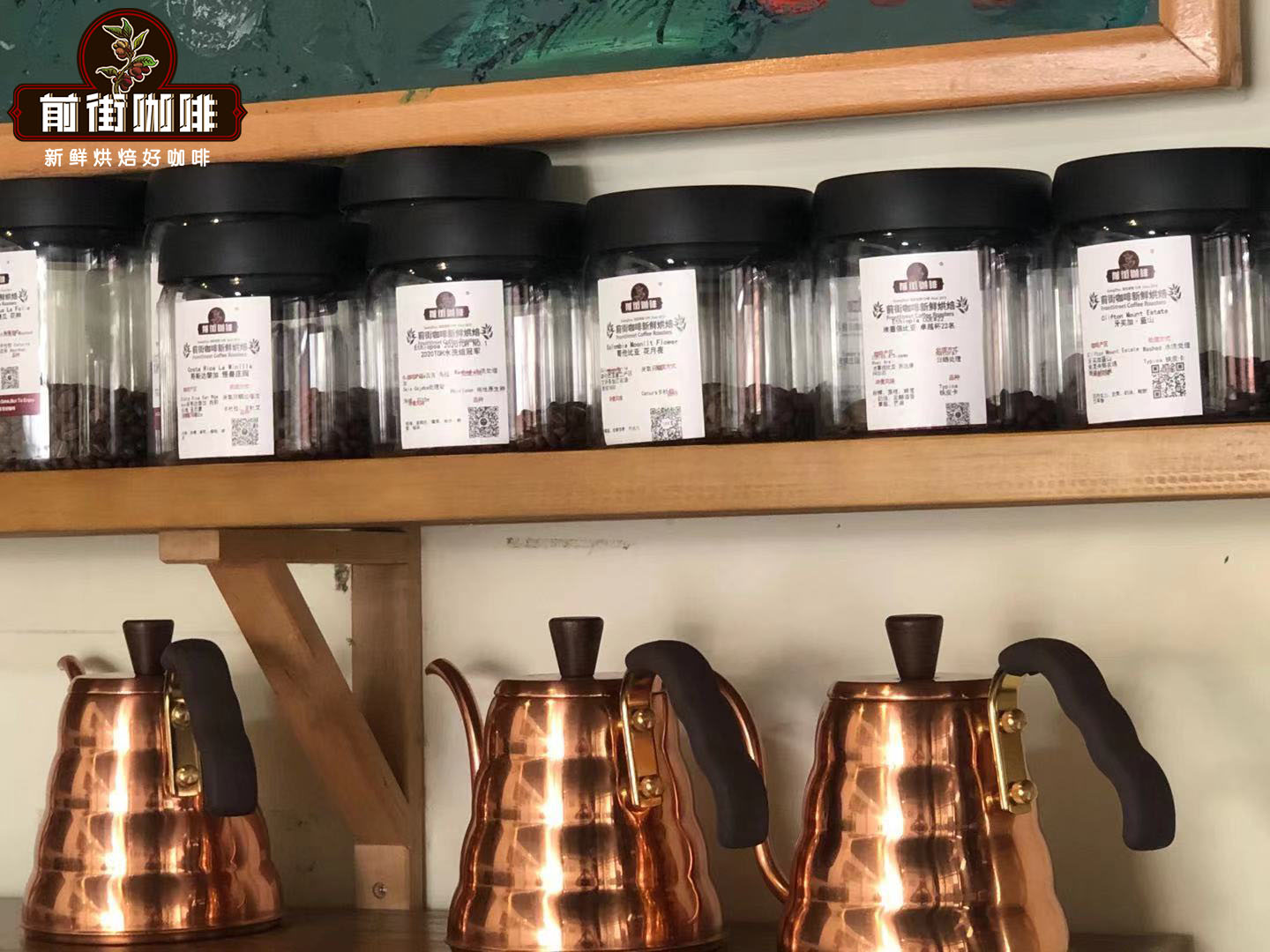
Front Street Coffee's bean list displays nearly a hundred coffee beans, each with its own unique origin of naming. Some are named after their flavors, such as Rose Valley; some carry the estate name, like Brazil Queen's Estate; and others are named directly after competitions, such as TOH and COE.
In recent years, Panama Geisha has taken up nearly half of the specialty coffee world, and the popularity of BOP has been climbing all the way. Even so, COE remains a competition worth paying attention to. The C.O.E. we often see on auction bean packaging stands for Cup Of Excellence, which is the international coffee cupping competition. Among the many top-tier coffee competitions, COE's judging credibility is second to none. Only coffees that break through layer after layer of strict screening can represent the highest quality level of that country for the year. Competing beans must consistently score high in every round of cupping to have a chance of making it to the top ranks and ultimately earning the COE award mark. The coffees from winning estates are sold openly and transparently to buyers around the world through a dedicated online auction platform. This approach allows outstanding farms to quickly build their reputation, and competition lots can also fetch more ideal prices. From this, we can see that the quality value of COE coffee is quite high.
The competition process of the COE Cup of Excellence is as follows: participating farmers first carefully select about 25 to 35 bags of coffee, each bag weighing about 60 kilograms, which are uniformly shipped to the competition warehouse for storage before the event, until the auction ends. Each country that registers to participate usually has more than 500 farms taking part. The competition advances in three stages—preliminary, semifinal, and TOP 10. After each stage, the individual scores are added up, and the lowest score must reach 84 points to pass. After screening through this strict system, only about 20 to 30 farms or estates remain in the end, and the auction beans are then ranked by score.

Every coffee that wins an award in COE has a one-of-a-kind personality. Standing out from so many farms necessarily means enduring strict challenges, and the quality is also the best among the same batch of farms. The competition beans themselves have very few defects and insect damage, with uniform bean size, similar color, and even highly consistent expansion and browning after roasting. In terms of taste, they reflect the unique flavors brought by the origin environment, soil conditions, topography, and even the green bean processing method. Although coffee beans produced by the same farm differ little in various aspects, the lots sent to the competition and auction are absolutely the top batches selected from the farm.
With the experience of the COE competition, producers can more easily establish information channels for transportation and marketing, maintain contact with foreign buyers, and also help buyers eliminate doubts. If a farm's output is relatively small, around only 30 to 40 bags, then it becomes even easier to bypass middlemen or large traders and trade directly with small foreign coffee buyers, benefiting both sides. In addition to saving the profit share taken by intermediaries, more importantly, it saves shipping costs and tariffs between countries, which is a very real motivation for coffee producers.
The efforts of winning estates to improve quality are recognized by COE, which means not only taking home an award, but also allowing farmers' hard work to be exchanged for the price and return they deserve. Participating in the COE competition, on the one hand, pushes farmers to continuously improve quality and raise the level of their coffee beans, and on the other hand, injects more vitality into the specialty coffee market.
A representative competition like COE is naturally one Front Street does not miss. As mentioned earlier, there is a bean from COE on Front Street's bean list. The COE Cup of Excellence began in 1999 and is held in rotation each year in various coffee-producing countries. It was not until 2020 that Ethiopia, the birthplace of coffee, finally held the first COE Cup of Excellence competition in its history.
For Ethiopia's first COE Cup of Excellence, Front Street also took part in purchasing auction coffee beans. The COE22 that Front Street acquired successfully stood out among the 28 coffees in the 2020 Ethiopia COE competition, taking 22nd place that year with a score of 87.64.
Front Street's COE22 coffee beans come from a sun-dried Typica in the Arsi area of Sidamo, grown by Adem Banta Sute.
Front Street Coffee: Ethiopia · Cup of Excellence 22nd place
Region: Ethiopia · Sidamo Arsi
Grower: Adem Banta Sute
Variety: Typica
Processing method: Sun-dried processing
This coffee bean from Front Street comes from the Sidamo region, where coffee is grown at altitudes between 1,400 and 2,000 meters. The coffee flavors of Sidamo are very diverse; different soil types, microclimates, and countless native coffee varieties make the coffee produced by each town in the region show obvious differences and characteristics. Most Sidamo coffee beans use the sun-dried processing method. Front Street believes that sun-dried processing gives Sidamo coffee beans a wild berry-cream flavor and a smooth mouthfeel. This Sidamo coffee bean from Front Street also uses the sun-dried processing method.
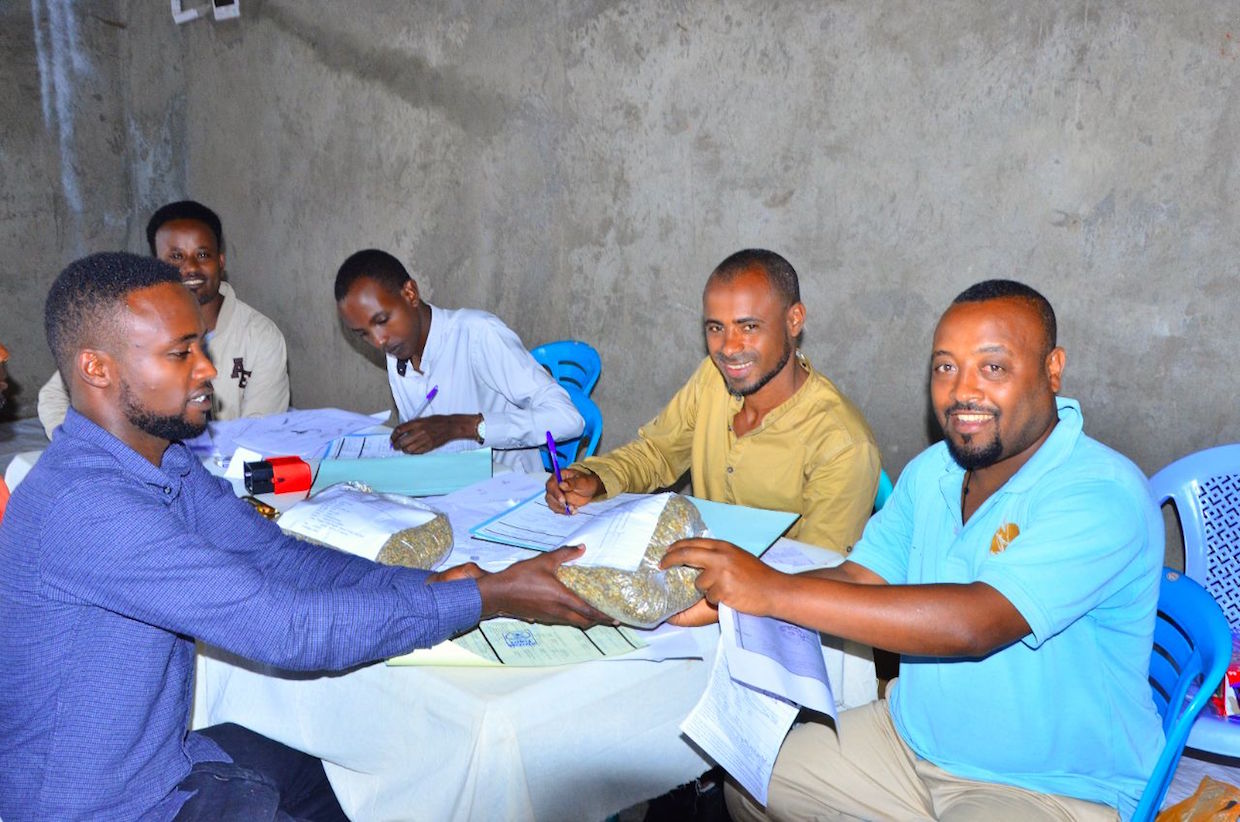
Sun-drying is the most primitive and traditional post-processing method for green coffee beans. After harvesting and selecting fully ripe, usable red coffee cherries, the whole cherries are spread completely and evenly on raised beds for sun-drying. Before the moisture content of the coffee beans drops to 25%, they need to be manually turned evenly, once every 30 to 60 minutes, to avoid producing unpleasant over-fermented flavors. This high-intensity manual labor raised-bed drying method keeps the coffee cherries away from the ground and also prevents defective and off flavors during sun-drying, thereby creating an alluring and pure fruit flavor. After about two weeks of sun-drying, the coffee cherries, which appear dark brown on the outside, are stored, and before shipment the pulp, mucilage, and parchment layer are removed. After comparing washed, honey-processed, and sun-dried coffee beans through cupping, Front Street found that sun-dried coffee beans have stronger fruit aroma and sweetness.
When roasting this bean, the roaster at Front Street Coffee used a medium-light roast level in order to highlight the coffee's excellent acidity.
Because it is a medium-light roast, Front Street recommends using a higher water temperature and a medium-fine grind when brewing, paired with a Hario V60 dripper.
Dripper: Hario V60
Water temperature: 91°C
Dose: 15 grams
Coffee-to-water ratio: 1:15
Grind size: medium-fine grind (80% passing through China standard No. 20 sieve)
First pour 30 grams of hot water for a 30-second bloom, then slowly pour the second stage of water in a circular motion with a small stream until 125 grams for a staged pour. When the water level in the dripper drops to 1/3, continue pouring, adding the third stage of water until 225 grams, then stop pouring. Wait until the water in the dripper has completely dripped down into the server below, then remove the dripper. The total extraction time is about 2 minutes.
For more coffee bean information, please follow Coffee Workshop (WeChat official account cafe_style) For professional coffee knowledge exchange, please add WeChat ID kaixinguoguo0925
The above content is compiled by CoffeeHunters, a coffee news website.


