







What is the right coffee process for brewing a drip bag?
A drip coffee bag is a portable single-serve packet: hot water and a cup are enough. Brew it once only. Re-extracting a bag like tea leaves yields a weak, bitter cup because the desirable compounds are already spent, while later pours pull out harsh, less pleasant flavors.
Control the coffee-to-water ratio, pouring rhythm and blooming, and keep water temperature in a steady range. Drip bags cost more than whole roasted beans because of packaging, and they taste slightly less expressive than freshly ground coffee. Five regional profiles are suggested: Ethiopia, Kenya, Panama, Indonesia and Honduras.
Drip coffee bags have become the go-to way for many people to get their daily caffeine fix, thanks to their portability and ease of use. But when it comes to how many times to brew them, how much water to use, and how to control the water temperature, many coffee newcomers still have questions. In this article, Front Street Coffee will walk you through the scientific brewing process for drip coffee bags, covering everything from the coffee-to-water ratio and pouring rhythm to the blooming technique, and also explain why coffee is only suitable for one extraction. At the end, we've also selected drip bag flavors from five regions—Ethiopia, Kenya, Panama, Indonesia, and Honduras—for enthusiasts who want to explore different regional profiles.
For more specialty coffee knowledge, follow: Front Street Coffee (Frontsteet Coffee)
Many coffee beginners often confuse drip coffee bags with pour-over coffee. In reality, because drip bag products add packaging costs, the same bean sold as a drip bag often costs more than whole roasted beans. So here's the question—can drip coffee bags be brewed repeatedly like tea leaves? Front Street Coffee is here to walk you through the correct logic of brewing drip coffee bags.
A drip coffee bag is essentially an extremely portable coffee packet—as long as you have hot water and a cup, you can make a decent cup of coffee anytime. Front Street believes this convenience makes it especially suitable for office workers or people heading outdoors. As a coffee brand that roasts its own beans, Front Street's stores also regularly welcome customers who come to browse, and you can choose beans from different origins based on your taste preferences. Drip bags are often called "one-minute pour-over," and they truly greatly simplify coffee lovers' daily caffeine needs—Front Street has prepared a rich selection of flavor options for this purpose. Although they may be slightly less expressive than freshly ground and brewed coffee, after eliminating complicated equipment and steps, you can still get a good taste, and this compromise is completely acceptable.
How Many Times Can You Brew a Drip Coffee Bag?
Many people feel that brewing a drip bag only once is a waste, and that it should be repeatedly extracted like tea to be worth it. But Front Street wants to remind everyone that coffee brewed multiple times is not only weak but also brings out bitterness. The reason is that the extractable flavor compounds in coffee beans make up only about 30%, and after roasting, these components have been fully activated—this is also the basis for coffee's ability to release aroma. The remaining 70% or so is木质 fiber, and brewing it further will only produce a woody taste. Therefore, coffee beans are only suitable for one extraction.
Front Street Drip Coffee Bag Brewing Method
1. The net weight of coffee grounds in a drip bag is usually fixed (generally 10 grams), which saves you the trouble of a grinder and electronic scale. The coffee-to-water ratio can follow the standard 1:15.
2. Next, determine the water amount and temperature. As with pour-over, use a ratio of 1:15 to 1:16, and the final coffee liquid in the cup should reach 140 to 150 milliliters. Adjust the water temperature according to the roast level: use around 90°C for medium-light roasts, and 88°C for medium-dark roasts. It's best to have a thermometer or temperature-controlled kettle; if not, you can boil water, turn off the heat, open the lid, and let it sit for 2 to 3 minutes—the water temperature will drop to about 90°C (based on a room temperature of 28°C).
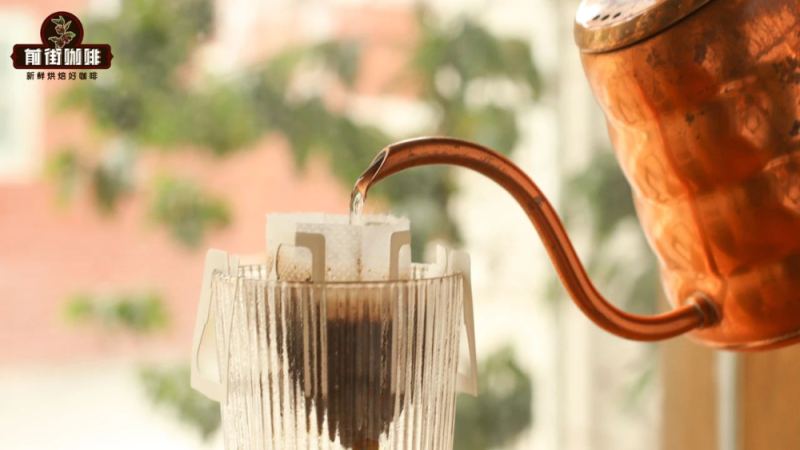
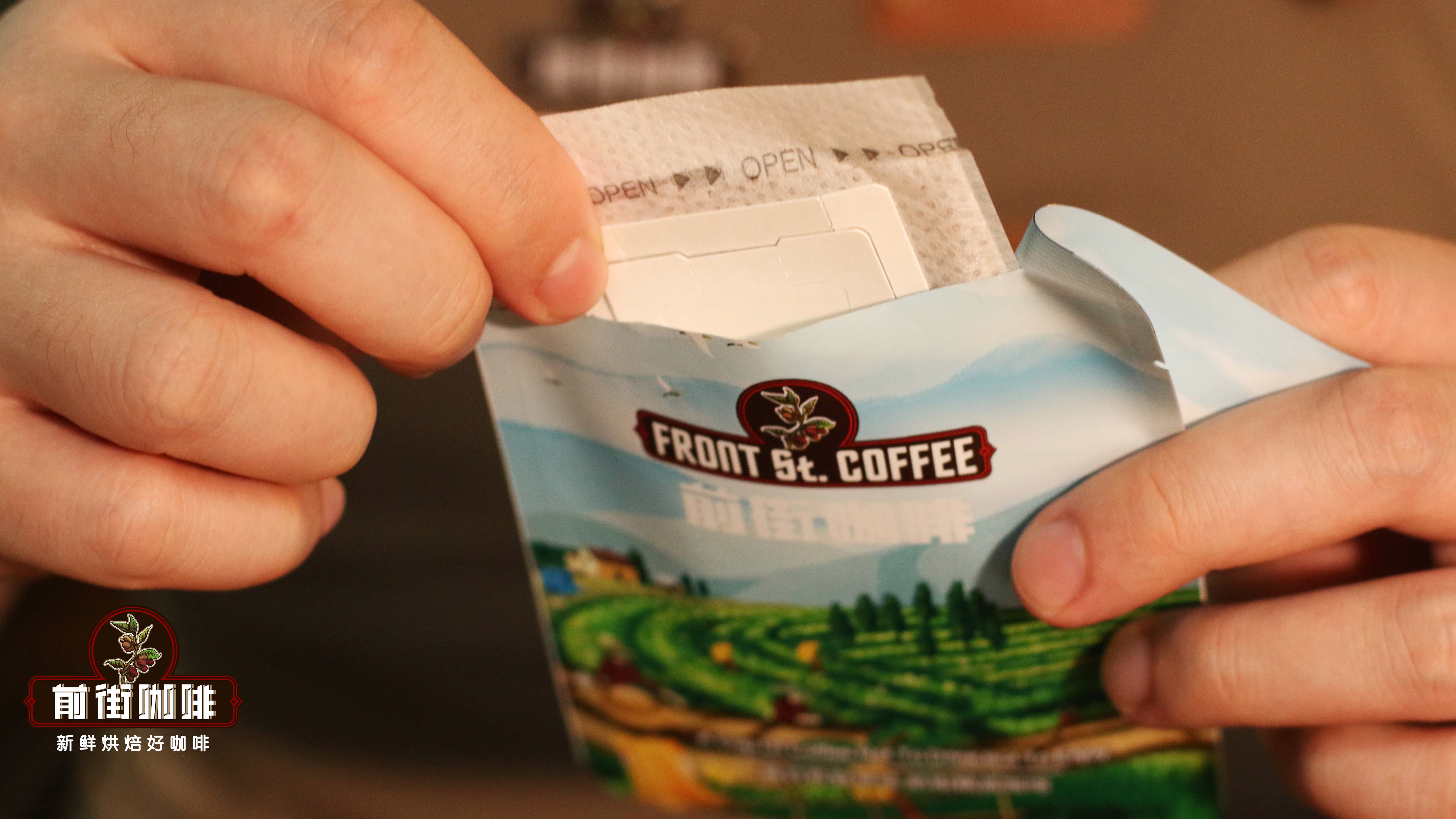
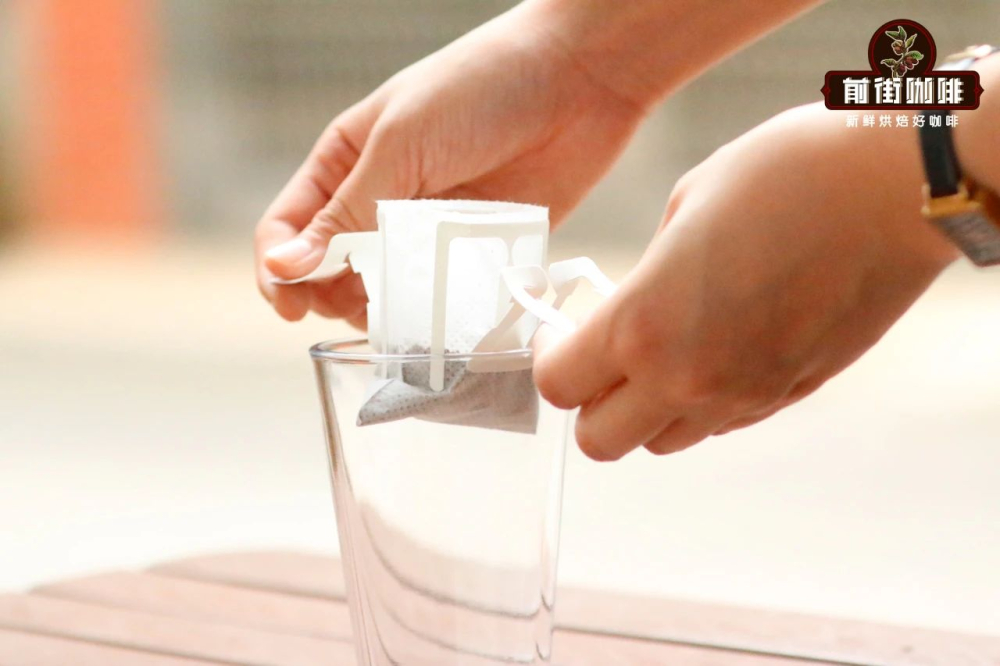
3. Once ready, first warm your mug with hot water. Take out the drip bag, tear open the sealed opening, pull apart the filter paper tabs on both sides, set it securely on the rim of the cup, and gently shake the coffee bed level.
4. First pour: add 20 to 30 grams of water for blooming. This step is the same as pour-over coffee—after all, drip bags are also called "convenient pour-over."
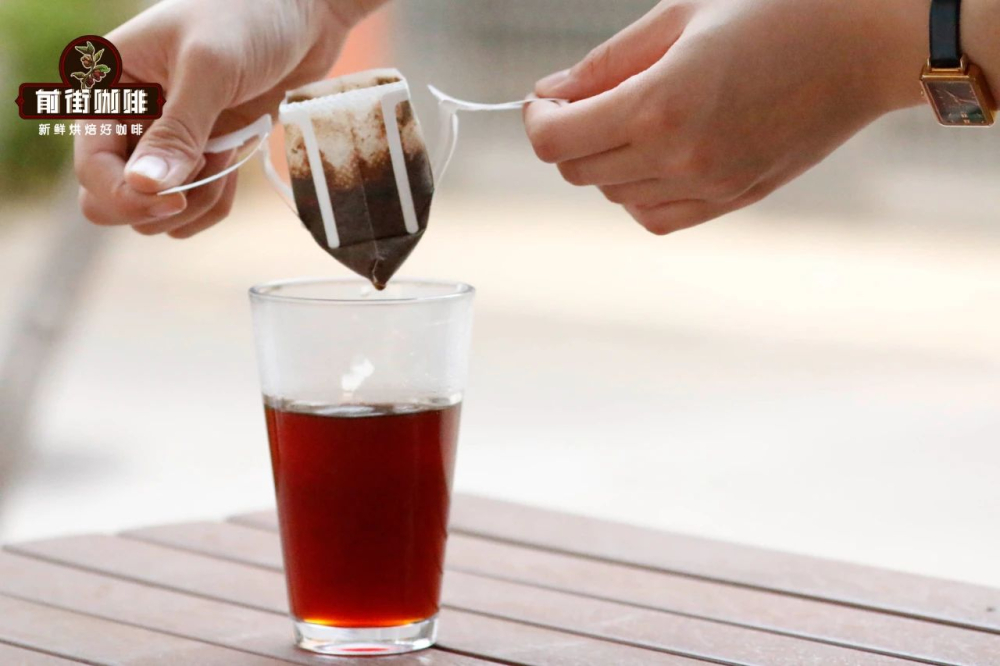
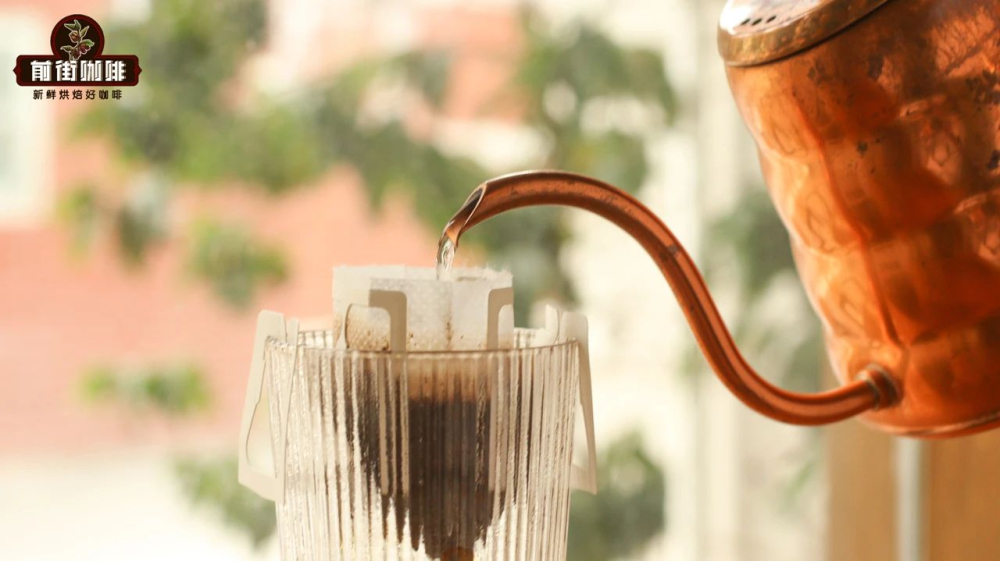
5. After blooming, begin the second pour. Using a slow stream, pour in a circular motion directly to fill, wait for the coffee bed to slightly sink, then continue pouring to fill again, repeating until the coffee liquid in the cup reaches 140 to 150 milliliters. Then remove the drip bag and enjoy while hot.
6. If you want more precise water control, you can also pre-pour 150 to 160 milliliters of water into your pouring kettle, then pour all the water in during brewing. Once the coffee liquid has completely filtered into the cup, remove the drip bag. The entire brewing process takes about 1 minute.
Since drip coffee bags use pre-ground coffee, the flavor dissipates much faster than with whole coffee beans. Therefore, to enjoy the best flavor, it's recommended to consume them as soon as possible.
For beginners who want to explore different coffee flavors, Front Street has launched a five-origin drip coffee bag set. This set features representative flavors from five specialty regions, including Ethiopia, Kenya, Panama, Indonesia, and Honduras.
Front Street Coffee (FrontStreet Coffee) — Ethiopia Yirgacheffe Natural Red Cherry Drip Coffee Bag
Red Cherry is actually a commercial program aimed at improving coffee quality, initiated by Menno Simons, founder of the Dutch green bean trader Trabocca. Trabocca noticed that Ethiopian coffee beans varied greatly in quality, prices were hard to raise, and coffee farmers' incomes were relatively low. To change this situation, they launched the Red Cherry program together with local farmers, starting from the source by raising the purchase price for high-quality green beans, encouraging farmers to more carefully complete each stage of picking and processing. The picking stage is entirely manual, selecting only highly ripe cherries.
The natural process is the oldest and most primitive coffee processing method. This Natural Red Cherry keeps the whole coffee cherry with its skin and pulp, drying it on raised beds to avoid direct contact with the ground and prevent sun exposure from bringing earthy off-flavors. After more than two weeks of sun drying, the dark brown coffee cherries are stored to allow the flavors to fully mature. Only before shipping does the processing station remove the coffee beans from the cherries. This natural method gives the beans lower acidity, prominent sweetness, and good body, but less cleanliness than the washed process.
Flavor: Noticeable sweet-tartness, with lemon, berry, and fermented wine notes; the lemony acidity lingers in the aftertaste, with a clear sweet finish.
Front Street Coffee (FrontStreet Coffee) Kenya Asalia Drip Coffee Bag
Kenyan coffee mostly grows at altitudes of 1,500 to 2,100 meters, with two harvests per year. Local cultivation is mainly by smallholder farmers, concentrated near the central Kenyan mountains, and the varieties planted are high-quality Arabica.
Kenyan coffee is graded by bean size and cupping results. Based on bean size, shape, and hardness, from highest to lowest: AA or AA+, AB, PB, C, E, TT, T. For AA and AB green beans, exporters additionally add cupping-based grading (not officially recognized by Kenya), from highest to lowest: TOP, PLUS (+), FAQ.
Kenyan coffee's unique acidity is inseparable from its excellent processing methods. General washed methods select highly ripe cherries, remove the skin and pulp, then soak in fermentation tanks to remove the mucilage—the whole process rarely exceeds 36 hours. But Kenya's fermentation time lasts up to 72 hours. After that, the beans are dried until moisture content drops to 12%.
Flavor: Acidity like cherry tomatoes and smoked plums, with prominent mid-palate sweetness, berry notes and brown sugar sweetness in the aftertaste, along with green tea aroma.
Front Street Coffee (FrontStreet Coffee) Panama Butterfly Drip Coffee Bag
Panama is located in Central America, bordering Costa Rica to the west and Colombia to the east. Panamanian coffee is renowned in the coffee world thanks to Hacienda La Esmeralda's Geisha, and the whole country is filled with Geisha vibes—many estates have planted the Geisha variety. However, because Geisha is difficult to grow, low in yield, and outstanding in flavor, its price has always been high. This Butterfly blend has 70% high-quality Geisha lineage, mixed with Catuai and Caturra, planted in the Boquete region's Baru Volcano area at 1,600 meters. The local special microclimate brings abundant rainfall and significant day-night temperature differences, and combined with careful harvesting and meticulous processing, this coffee is excellent in body, acidity, and floral notes.
What's even more pleasantly surprising is that with such excellent quality and conditions, the price is very affordable—you can experience Geisha flavors with great value for money.
The washed process first uses a machine to remove the skin and pulp, leaving only the coffee beans wrapped in parchment. At this point, the beans still have a layer of mucilage on the surface, and the washing process is meant to wash off this mucilage. But the mucilage adheres strongly and is not easy to remove, so it must be placed in tanks to ferment for about 18 to 36 hours to break it down.
Flavor: Citrus, floral, tea-like, honey, high sweetness.
Front Street Coffee (FrontStreet Coffee) Indonesia Lintong Mandheling Drip Coffee Bag
Coffee cultivation in Indonesia began during the Dutch colonial period and gradually developed its own unique flavor characteristics, the most famous of which is Sumatra Mandheling. Mandheling was originally the name of a tribe, and when the Japanese spread it, they mistakenly thought it was the name of the coffee, and the name has been used ever since by a twist of fate.
The local weather is rainy with frequent typhoons, unable to provide the good weather needed for natural processing, and economic conditions do not allow for the more costly washed method. The combination of these factors gave rise to the highly distinctive wet-hulling method—that is, during the ordinary washing process, the beans are sun-dried with parchment for 2 to 3 days, and when moisture content drops to 20% to 24%, the parchment is removed.
Flavor: Herbal, nutty, cocoa, full-bodied.
Front Street Coffee (FrontStreet Coffee) Honduras Sherry Drip Coffee Bag
Honduras's geographical conditions are no inferior to neighboring coffee-producing countries like Guatemala and Nicaragua. It has 280,000 hectares of coffee plantations, mainly small farms, most under 3.5 hectares, and these smallholders contribute 60% of the country's coffee production. Sherry coffee beans come from Marcala in the Intibuca province of southwestern Honduras, where there is a Mocha estate—the very origin of this wine-flavored coffee.
Flavor: Vanilla, cream, sherry wine aroma.
The above content is compiled by CoffeeHunters, a coffee news website.


