







How Do These Two Classic Coffees Differ in Origin and Flavor?
Blue Mountain and Golden Mandheling are both classic coffees with low acidity, but they come from very different places. Blue Mountain is a Typica variety grown at high altitude in Jamaica and is known for balance and elegance. Golden Mandheling comes from Sumatra, Indonesia, and its wet-hulling process produces a full-bodied, low-acid, herbal profile.
Typica is one of the oldest Arabica varieties, with bronze-tipped young leaves and slender beans, but weak disease resistance and low yield per tree. Golden Mandheling instead reflects Sumatra's wet-hulling method, in which parchment is removed early and drying continues to about 12 percent moisture, giving the beans their dark bluish-green color.
Blue Mountain coffee and Golden Mandheling are both representatives of non-acidic coffee, yet they have completely different origins and flavor profiles. The former comes from the high-altitude Typica variety of Jamaica and is known for its balance and elegance; the latter is rooted in Sumatra, Indonesia, and, through its unique wet-hulling process, develops a full-bodied, low-acid herbal style. From the perspective of Front Street Coffee's selection, this article systematically sorts out the variety characteristics, producing-area backgrounds, processing methods, and brewing suggestions of the two, and explains in detail the trademark origin and grade standards of Golden Mandheling, helping coffee lovers understand the essential differences and respective charms of these two classic coffees.
At FrontStreet Coffee, customers often make this request: if they want to drink a cup of non-acidic coffee, is there any good recommendation? At such times, Front Street usually serves a Mandheling, and of course many people directly ask for Blue Mountain. The reason is simple—neither of these two coffees tastes acidic.
As is well known, the vast majority of high-quality coffee beans belong to the Arabica species. This variety has relatively weak resistance to pests, diseases, and climate change, and its growing conditions are quite demanding, but it has excellent aroma performance, lower caffeine content, and relatively higher economic value. Specialty coffee basically all comes from this variety. The other major category is Robusta, which is mostly used in the production of instant coffee.
The Blue Mountain coffee introduced by FrontStreet Coffee is of the Typica variety. Typica is one of the oldest varieties in the Arabica family. The tips of its young leaves are bronze in color, the bean shape is relatively oval or slender-pointed, the tree posture is upright, and the branches tilt slightly outward at an angle of about 50 to 70 degrees, so it is also called "red-tip coffee." Its leaves are opposite and long-oval, with smooth surfaces, and the branch tips are slender with sparse branching. White flowers bloom at the point where the leaf stalk meets the branch. Typica has an elegant and outstanding flavor, but the tree is weak, has poor disease resistance, and the yield per plant is extremely low with few fruits. The mature fruit resembles a cherry and is bright red in color.
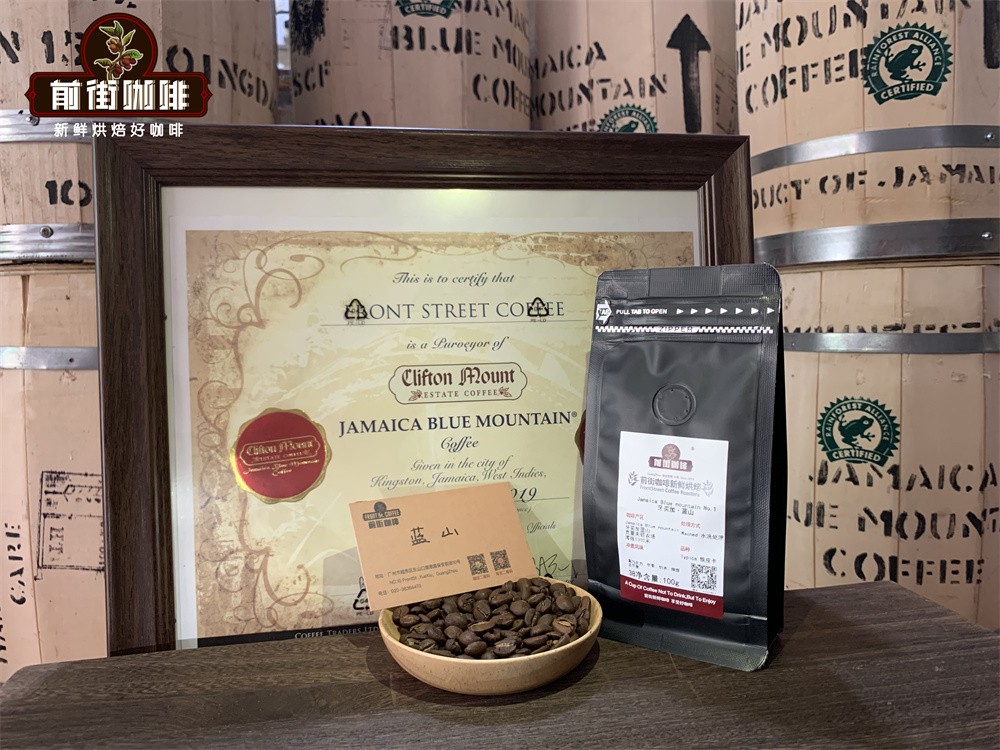
The reason Jamaican Blue Mountain coffee is so expensive is that weak disease resistance, limited yield, and susceptibility to pest damage are all important factors. Front Street's Blue Mountain coffee is priced at 158 yuan/100g. Some may question: at such a low price, can it really be authentic Blue Mountain? In fact, FrontStreet Coffee sells genuine Jamaican Blue Mountain No. 1 coffee and holds a certificate issued by the Jamaica Coffee Board. In addition, the barrel packaging of authentic Jamaican Blue Mountain coffee beans is printed with a green frog logo. Front Street specifically selected Clifton Farm, which has Rainforest Alliance certification, as the supplying estate for Blue Mountain No. 1, and Jamaica is also the only producing region in the world that uses wooden barrels to load green beans. Authentic Blue Mountain has a rich aroma and an extremely balanced taste, without any one flavor being overly prominent or clearly missing. The reason authentic Jamaican Blue Mountain No. 1 is more expensive than other coffees is, in FrontStreet Coffee's view, mainly due to three core reasons: scarce production, outstanding flavor, and strict quality control. It is precisely these factors that together established its position as the world's highest-priced coffee.
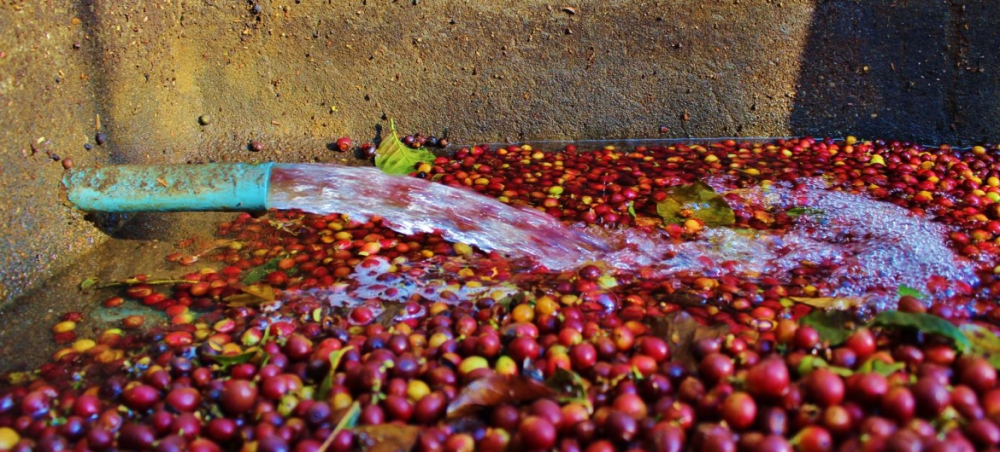
FrontStreet Coffee Blue Mountain No. 1 coffee bean processing method Before this year, Blue Mountain No. 1 only used washed processing. The so-called washed method is to remove the skin, pulp, and mucilage with the help of water flow and fermentation. Farms using the washed method must build washing channels and be able to continuously introduce fresh water. During operation, the skin and pulp are first removed, and the beans are allowed to ferment for 12 to 18 hours. Then the fermented beans are moved into the channel and pushed back and forth, relying on friction between the beans and the scouring of the water flow to wash the coffee beans until they are smooth. After washing is completed, the coffee beans are still wrapped in parchment and have a moisture content of about 50%. They must be sun-dried to reduce the moisture content to 12% to 14%, otherwise they will continue to ferment and become moldy and spoiled. After that, they still need to go through screening and then be placed in dedicated storage piles. Every step must be strictly controlled; a slight mistake will affect the coffee quality. In 2020, the Blue Mountain producing area also exported a batch of naturally processed Blue Mountain No. 1 coffee, and Front Street also introduced and roasted it as soon as possible.
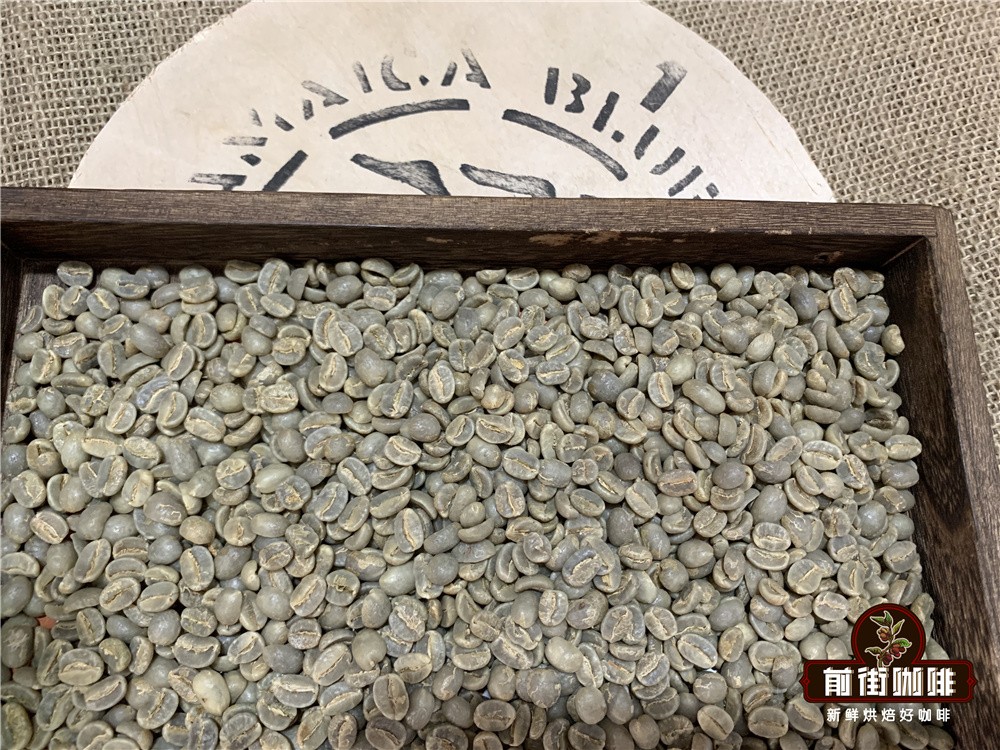
The birth of this naturally processed Blue Mountain coffee was actually not easy. In the past, only the washed method was used because washing best restores the essence of Blue Mountain flavor. Once the processing method changes, the flavor structure will inevitably change accordingly. This is also why FrontStreet Coffee, when introducing coffee beans from a certain producing area to customers, always gives priority to recommending washed processing—washing best represents the typical flavor of that producing area. Blue Mountain adopting natural processing is more about following market trends, just as FrontStreet Coffee previously also added a naturally processed Mandheling, different from the traditional wet-hulled method.
The story of Mandheling coffee
The story of Mandheling coffee can be traced back to after Japanese soldiers ended the colonial period in Indonesia and returned to Japan. They could not forget the deliciousness of the local coffee, so through trade partner relationships they asked local people to help collect high-quality coffee beans, including this Mandheling. The Japanese loved this bean very much and asked for its name. Because the commercial source was inconvenient to disclose, the local person casually said a word—"Mandheling." Later, the Japanese commissioned an Indonesian coffee merchant to ship 15 tons to Japan, and unexpectedly it became very popular. The name Mandheling spread just like that.
Mandheling coffee
The non-acidic Mandheling also belongs to the Arabica species. Typica performs extremely well in flavor here and is a recognized specialty coffee variety, originally produced in the Mandailing region near the Bukit Barisan Mountains in North Sumatra. The flavor characteristics of this coffee are: high body, low acidity, and a faint herbal note. The cultivation of Mandheling originated from the forced cultivation system implemented by the Dutch East Indies government. In 1835, the Dutch brought coffee seeds from Java and tried planting them in the soil of Sumatra. Under the promotion of the Dutch East Indies government, coffee then spread to many areas of North Sumatra.
FrontStreet Coffee has Lintong Mandheling, Sumatra Tiger Mandheling, and Golden Mandheling.
Indonesian coffee producing regions
Among the coffee beans produced in Indonesia, the Robusta variety accounts for 90%, and the remaining 10% Arabica mainly comes from the Lintong producing area around Lake Toba in Sumatra, the Gayo Highlands in Aceh, Java Island, and Sulawesi Island. Indonesian producing areas usually have two harvest seasons: the main harvest season is around September to October, and the secondary harvest season is in May to June.
Lake Toba Lintong producing area: Lake Toba is located north of Medan, the capital of North Sumatra Province. It is an alpine freshwater lake with an average altitude of about 900 meters. The lake surface is diamond-shaped, 100 kilometers long and 30 kilometers wide, with an area of 1,130 square kilometers. The surrounding highland lake area is at an altitude of about 1,100 to 1,600 meters, and it is also the largest volcanic lake in the world. What is usually called Mandheling refers to Typica or its variant coffee beans grown in the mountains around Lake Toba, among which Lintong is the most famous Mandheling producing area in the Lake Toba region. Lintong Mandheling is the regular version of Mandheling, also processed by the wet-hulled method, and therefore has low acidity and high body. However, the wet-hulled method also brings about a phenomenon: semi-hard, semi-soft moist green beans are easily crushed when the mucilage and parchment are removed, and the beans crack under damage, resembling a goat's hoof, commonly known as goat-hoof beans. This is not a defective bean, but rather a very notable characteristic of Mandheling.
Aceh is located at the northernmost tip of Sumatra Island and is a fascinating yet complicated place. Due to long-term political instability, ordinary travelers generally do not go there. The Gayo Highlands region is located in Aceh Province in northern Sumatra. Coffee is grown on the slopes around Takengon town and Lake Tawar, with an average planting altitude of 1,110 to 1,300 meters.
FrontStreet Coffee's Golden Mandheling of the new crop season is produced in the Gayo Mountains of Aceh, North Sumatra.
[Front Street Golden Mandheling]
How did the name Golden Mandheling come about? Is there really gold in it, or is it because the color resembles gold? Front Street will tell everyone the reason. It is said that when processing green beans, Mandheling under sunlight gives off a golden luster, hence the name Golden Mandheling. However, it was not a Japanese company that registered Golden Mandheling as a trademark, but PWN (Pwani Coffee Company), an Indonesian local company that cooperated with Japanese companies in exporting Mandheling in the early days. Precisely because "Golden Mandheling" has been registered by PWN, this also means that only Golden Mandheling from PWN can be considered truly Golden Mandheling. In order to present the true flavor of Golden Mandheling to everyone, Front Street insists on selling only PWN's Golden Mandheling.
PWN's full name is Pwani Coffee Company. It is a highly well-known local coffee purchasing enterprise in Indonesia, mainly purchasing Mandheling coffee. Almost all of Indonesia's best producing areas have been brought under its umbrella, so most of the beans produced by PWN are unique specialty coffees. Golden Mandheling is one of the company's products. After the green beans are purchased, they must go through multiple rounds of manual hand sorting to select plump, defect-free beans. Only excellent beans that have gone through such layers of screening can be classified as Golden Mandheling. PWN has registered Golden Mandheling as a trademark, which means that from now on only Golden Mandheling produced by PWN can be considered truly "Golden Mandheling." Many beans on the market that are not produced by PWN but carry the name Golden Mandheling should actually be called specialty Mandheling. So "Golden Mandheling" is essentially just a product named by the company. Golden Mandheling is produced in the Lintong region of North Sumatra, Indonesia. It is a higher-grade Mandheling, processed with more refined methods, and the coffee beans are purely hand-picked.
FrontStreet Coffee's Front Street PWN Golden Mandheling has a specification of 18 mesh and above, with fewer than 3 defective beans (in a 300g green bean sample). It belongs to the highest grade G1, is dark green in color, and has a neat flat-bean shape. After strict screening, FrontStreet Coffee found that its Front Street PWN Golden Mandheling not only lacks the earthy off-flavors common in ordinary Mandheling, but also tastes cleaner and more transparent, with more prominent sweetness and aroma.
PWN sets such a high standard for Golden Mandheling, which also destined that the price of Front Street PWN Golden Mandheling would be higher than ordinary Golden Mandheling. But some Golden Mandheling coffee beans on the market are not labeled as produced by PWN. What is going on? The reason is this: in order to raise prices, some green bean merchants selling Golden Mandheling select beans of 18 mesh and above from Golden Mandheling of the same G1 grade for sale, and some even use three rounds of sorting to make the appearance as close as possible to Front Street PWN Golden Mandheling. Even if the appearance is similar, it is ultimately only superficially so; the taste cannot lie. Front Street obtained several coffee beans also called "Golden Mandheling" for blind testing, and Front Street's baristas could all identify Front Street PWN Golden Mandheling, because its cleanliness is unmatched by other "Golden Mandheling."
The bean variety of Golden Mandheling coffee
The bean variety of Front Street's new-crop Golden Mandheling coffee is Ateng, which is the common local name in Sumatra, Indonesia, for Catimor coffee. The name Ateng comes from the Aceh Tengah region.
So what exactly is Indonesia's wet-hulled method?
The flavor characteristics of Indonesian Mandheling are closely related to its unique coffee processing method. Indonesia's wet-hulled method, also called Wet Hulling, is called Giling Basah in the local language and is Indonesia's traditional coffee processing method. The wet-hulled method and the wet process (washed) method are completely different in cup profile. According to FrontStreet Coffee's understanding, the tradition of using the wet-hulled method in Indonesia starts with the local weather. Indonesia's humidity remains between 70% and 90% all year round, typhoons are frequent, and annual rainfall in some areas can even reach more than 2,000 mm.
From a geographical perspective, in a tropical climate, coffee usually needs 2 to 3 weeks to complete drying. But Indonesia's humid climate makes coffee drying very difficult. The drying time is forced to lengthen, and during this period the coffee beans continue to maintain relatively high moisture, making it easier for bacteria to invade the green beans. The drying process of conventional washed processing is carried out with parchment, which can protect the green beans from external damage to a certain extent. However, the wet-hulled method removes the parchment in the final drying stage, and sunlight directly shines on the surface of the green beans, causing the green coffee beans to dry rapidly, 2 to 3 times faster than washed processing.
From this we can see the wisdom of the local people. However, the wet-hulled method also has a drawback, which is that it makes the coffee beans very ugly, what people often call "goat-hoof beans." This kind of bean is formed because when the wet-hulled method removes the parchment, the coffee still has a moisture content as high as 20% to 24%, whereas general processing methods wait until the moisture content drops to 10% to 12% before hulling. In the "semi-dry" state, the parchment sticks to the surface of the green beans, and removing the parchment is more difficult than when "fully dry." The hulling process requires greater friction.
But on the other hand, the "semi-dry" green coffee beans are very fragile at this time, with hardness far lower than "fully dry" green beans, so the beans are easily crushed and form small notches. This is what we often call horse-hoof or goat-hoof beans (locally called kuku kambing).
According to FrontStreet Coffee's understanding, Mr. Han Huaizong once described the flavor characteristics of wet-hulled coffee beans in a book like this: "This is also a rare processing method in the world, accidentally creating Mandheling's special low-acid, thick, and stuffy-aroma flavor." Through years of cupping different wet-hulled Indonesian coffee beans, Front Street believes that Mandheling coffee has lower acidity, a thick mouthfeel, and unique flavors such as herbal spices, but its drawback is that the quality is not stable enough. Of course, unstable quality cannot be entirely blamed on the wet-hulled method; in most cases it may be related to the fact that some green coffee beans themselves are not good enough.
In addition, because Mandheling coffee beans themselves have extremely low acidity, even if kept warm for a long time or made into iced coffee, they will not develop an unpleasant sour astringency. The roasted coffee beans are relatively large, and the green beans are brown or dark green, with a special caramel-like aroma and a rich, mellow taste. Most general coffee lovers prefer to drink it as a single origin, and it is also an indispensable variety in coffee blends.
The Mandheling coffee beans introduced by FrontStreet Coffee are all made using the wet-hulled processing method.
[FrontStreet Coffee brewing suggestions for coffee beans]
Front Street recommends using freshly roasted coffee beans for brewing, as only then can you experience the rich flavors of the coffee to the greatest extent. The coffee beans shipped by FrontStreet Coffee are all within 5 days of the roasting date, because Front Street deeply understands that the freshness of coffee beans has a huge impact on flavor. Front Street's roasting philosophy is "freshly roasted good coffee," so that every customer who places an order receives the coffee in its freshest state. The resting period for coffee is about 4 to 7 days, so when customers receive it, it is exactly at its best flavor.
For darker-roasted coffee beans, in order to highlight the coffee's full-bodied feel, Front Street chooses the Kono dripper for brewing. The Kono dripper is characterized by its immersion function, which can use immersion to extract more coffee substances and enhance the full-bodied mouthfeel. Its ribs are few and located at the lower end, allowing the filter paper to fit closely against the dripper to restrict airflow, thereby slowing the flow rate and increasing the contact time between water and coffee.
Dripper: Kono dripper
Water temperature: 88°C
Dose: 15g
Coffee-to-water ratio: 1:15
Grind size: medium grind (70% passing rate on China standard No. 20 sieve)
Brewing method: three-stage extraction. Use 30 grams of water for a 30-second bloom, then pour in a small stream in circles until 125 grams for the stage break; when the water level is about to expose the coffee bed, continue pouring until 225 grams and stop pouring. After all the coffee has dripped through, remove the dripper. Start timing from the beginning of pouring. The extraction time for the V60 dripper is 2'00", and the Kono dripper takes slightly longer, at 2'10".
[Washed Blue Mountain coffee]: rich dark chocolate and nut flavors, creamy smooth mouthfeel, balanced acidity, sweetness, and bitterness;
[Golden Mandheling]: nuts, spices, herbs, licorice, chocolate, caramel, with a clean, soft flavor;
[Lintong Mandheling]: herbs, chocolate, caramel, overall relatively balanced.
As for which coffee tastes better, Front Street thinks they are all delicious. Different processing methods naturally lead to different flavors. Tasting coffees with different flavors allows you to better experience the local coffee culture and more easily understand the local coffee flavors. So if possible, Front Street suggests everyone try coffees with different flavors—maybe you will fall in love with one of them! FrontStreet Coffee has more than 50 single-origin coffees with many flavors. Friends are welcome to come taste and discuss coffee!
For professional coffee knowledge exchange and more coffee bean information, please follow Coffee Workshop (WeChat public account cafe_style)
For more specialty coffee beans, please add the private WeChat FrontStreet Coffee, WeChat ID: qjcoffeex
The above content is compiled by CoffeeHunters, a coffee news website.


