








Ice-Brewed vs Cold Brew Coffee: What Sets Them Apart?
Ice-brewed coffee, also called iced drip, drips an ice-water mixture below 1°C through coffee grounds over 4 to 8 hours, usually at four drops every ten seconds, then ages sealed. Cold brew instead steeps grounds in cold water, needs simpler equipment, and delivers a richer body. The two differ in method, timing and flavor.
Refrigeration time differs too: iced drip is at its peak within three days, while cold brew holds up to five. If a cold brew tastes sour, the usual causes are under-extraction, too coarse a grind or too short a steep, and adjusting grind, ratio or time fixes it. Front Street Coffee suggests beans such as Butterfly, Sherry Barrel or Sun-Dried Huakui, chosen to match the preferred flavor.
Cold brew coffee and iced drip coffee are often lumped together, but the two actually have their own distinct methods when it comes to extraction, timing, and flavor presentation. Iced brew, or iced drip, uses an ice-water mixture for slow drip filtration, taking several hours and requiring sealed aging; cold brew, on the other hand, uses cold water immersion, with simple equipment and a rich flavor. This article compares the two in detail in terms of production key points and taste differences, and answers the question about refrigeration storage time—iced drip is best consumed within three days, while cold brew can last up to five days. It also combines Front Street Coffee bean recommendations to help enthusiasts choose beans such as Butterfly, Sherry Barrel, or Sun-Dried Huakui according to their preferences, making satisfying iced coffee at home with ease.

For more specialty coffee information, welcome to follow the WeChat public account: Front Street Coffee (FrontStreet Coffee).
Front Street has noticed recent discussions asking, "What exactly is the difference between iced brew coffee and cold brew coffee?" Some comments below believe the two are completely the same, while others joke, "The coffee I make—whatever I call it is what it is!" That is indeed hardcore enough! So, is there actually a difference between them?
What is iced brew coffee?
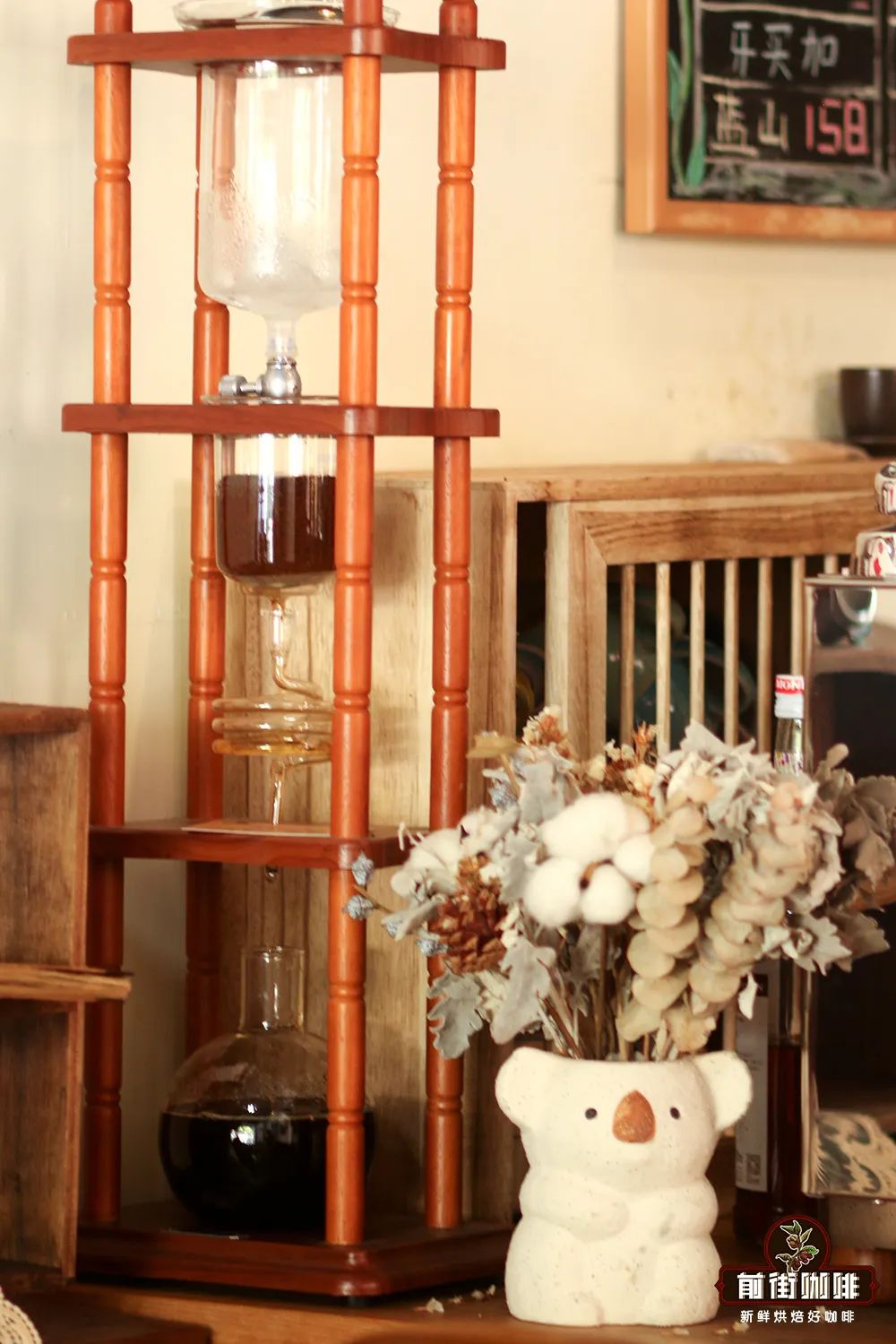
Iced brew coffee is actually iced drip coffee. Iced brew refers to using an ice-water mixture below 1°C to pass through a layer of coffee grounds by drip filtration for extraction. A common iced drip pot consists of three parts: the upper pot holds the ice-water mixture, with some models equipped with a regulating valve to control the drip rate, while others rely on their original structure to fix the dripping rhythm; the middle pot holds the coffee grounds; and the lower pot is used to collect the brewed coffee liquid.
How long does iced brew/iced drip coffee take to extract?
Because the ice-water mixture is very low in temperature and extraction is by drip filtration, the flavor substances in the coffee grounds are released noticeably more slowly, and bitterness and off-flavors are less likely to be extracted. To allow the sweet and sour flavors to be fully extracted, the ice water should drip at a rate of 4 drops every 10 seconds, with the total extraction time controlled between 4 and 8 hours.
After extraction is complete, it cannot be drunk immediately; at this point the coffee has almost no flavor and needs to be sealed and left in the refrigerator for more than 8 hours. In a sealed state, carbon dioxide is generated, and the pressure brought by carbon dioxide helps flavor molecules be released better. This process is called aging. Iced drip coffee overall has a light body, is clean and refreshing without impurities, and has abundant aroma that is very appealing.
What is cold brew coffee?
Cold brew coffee is also called cold water immersion coffee. The method is to pour cold water over coffee grounds for immersion extraction. The cold immersion method can amplify the various flavors and aromas of coffee, reduce acidity, and at the same time enhance the overall richness. The equipment for making cold brew coffee is very simple; as long as you have a lidded container and a filtering tool, you can do it anytime at home or in the office.
Should cold brew coffee be extracted at room temperature or in the refrigerator?
Both methods work, but the extraction time will differ. For cold brew at room temperature, it is recommended to soak for no more than 8 hours; in a low-temperature environment, it is recommended to soak for 12 to 24 hours.
Room-temperature cold brew will vary in extraction time due to different room temperatures. Coffee soaked at room temperature can show richness immediately after completion, but the downside is that if the soaking time is not controlled well, the coffee grounds will release a woody flavor in "protest."
The benefit of putting it in the refrigerator is that it can brew out richness while woody flavors are also less likely to appear; the downside is that the waiting time is really long... Although low-temperature extraction does not easily bring out off-flavors and bitterness from the coffee beans, after all, the extraction time is relatively long. To prevent the final coffee liquid from being too strong, it is recommended to adjust the grind size slightly coarser.

As for choosing coffee beans, Front Street thinks you can choose beans with different processing methods or roast levels according to your own taste preferences, provided the beans are still within their best flavor period (2 months). The characteristics of iced drip extraction can highlight the wine aroma, fruity fermentation notes, and sweet-sour aroma in coffee. For example, if you like clear fruity aromas, it is recommended to use Front Street Butterfly coffee beans for iced drip; it shows a sweet and refreshing taste like grapefruit tea;
If you prefer fermented wine aromas, Front Street Honduras Sherry Barrel iced drip is recommended; it has a rich whiskey and vanilla flavor on the palate, along with the sweetness of honey;
If you lean more toward full acidity and a strong juicy feel, Front Street Sun-Dried Huakui iced drip is recommended; it has lively berry and passion fruit sweet-sour notes, a prominent juicy feel, and a finish with the fresh fragrance of black tea.
How long can iced brew/iced drip coffee and cold brew coffee be stored?
After iced brew/iced drip coffee is extracted, it can be sealed and placed in the refrigerator for 3 days. As time passes, after 3 days the flavor of the iced drip coffee will gradually weaken, and the taste will become very bland.
After cold brew coffee is filtered, it can be sealed and placed in the refrigerator for 5 days. Although cold brew coffee becomes richer in flavor the longer it sits, the refrigerator environment is, after all, "complicated" (especially a home refrigerator), and it is hard to completely avoid bacterial contamination. Therefore, it is truly not recommended to leave it for a week or even a month before drinking.
For more specialty coffee beans, please add the private WeChat Front Street Coffee (FrontStreet Coffee), WeChat ID: kaixinguoguo0925
The above content is compiled by CoffeeHunters, a coffee news website.


