







What makes golden mandheling different from other Sumatran coffee?
Golden Mandheling is one of four Mandheling coffees compared here, alongside Lintong Mandheling, Aged Mandheling, and Tiger Mandheling. Sumatran coffee is known for low acidity, high body, and a grassy aroma, and the wet-hulling method is what shapes that mellow mouthfeel and herbal note in the cup.
Sumatra has three main growing regions: Aceh in the north, the area around Lake Toba, and a newer region near Mangkuraja. Mandheling is graded Grade 1 or Grade 2 based on cup quality rather than green bean appearance, and the name comes from a local ethnic group, not a place.
Sumatra is one of Indonesia's largest islands, and its local coffee is renowned for low acidity, high body, and a grassy aroma, with Mandheling being the quintessential example. Starting from the cultivation profile of Sumatra, this article outlines the terroir characteristics of three major producing regions—Aceh Gayo, Lintong, and Mangkuraja—offers an in-depth interpretation of how the wet-hulling method shapes Mandheling's unique mellow mouthfeel and herbal notes, and compares the differences among four common products: Front Street Lintong Mandheling, Golden Mandheling, Aged Mandheling, and Tiger Mandheling. The article also includes the origin information and brewing parameters for Front Street PWN Golden Mandheling, providing coffee enthusiasts with a complete reference from origin to cup.
Sumatra is one of Indonesia's largest islands, while Indonesia itself comprises thousands of small islands. About ninety percent of the coffee produced in Indonesia comes from small independent farms. Sumatran coffee beans typically exhibit low acidity, high body, and a grassy aroma, with a rich and full mouthfeel on the palate. If you're not particularly fond of coffee's acidity, Sumatran coffee beans are a choice well worth trying. When it comes to Sumatran coffee, Mandheling is inevitably part of the conversation. Common Mandheling coffees at Front Street include: Front Street Lintong Mandheling, Front Street Golden Mandheling, Front Street Aged Mandheling, and Front Street Tiger Mandheling. What exactly are the differences among these four Mandheling coffees? Front Street Coffee has put together a summary.
Sumatra Coffee Profile
Sumatra has three main growing regions: the northern Aceh region, the area around Lake Toba extending slightly southward, and a new producing region that has emerged in recent years on islands near Mangkuraja. There are also smaller areas that can be traced, including Takengon, Bener Mariah in Aceh Province, Lintong, Sidikalang, Dolok Sanggul, and Seribu Dolok surrounding Lake Toba. In the past, coffee beans from this area were commonly referred to collectively as "Sumatra Mandheling," but in reality there is no place called Mandheling—the name derives from the ethnic group of the local islanders. Mandheling is generally graded as Grade 1 or Grade 2. The grading is clearly based on cup quality, not on green bean appearance as is commonly assumed. Sumatran coffee beans are exported through the port of Medan, but before export they often sit at the port for too long, and the hot and humid climate conditions are not favorable to coffee bean quality.
Altitude: Aceh 1100-1300m, Lake Toba 1100-1600m, Mangkuraja 1100-1300m
Harvest: September to December
Varieties: Typica (including Bergandal, Sidikalang, Djember), Timtim, Ateng, Onan Gajang
The Three Major Producing Regions of Sumatra
Aceh Gayo Producing Region
Aceh is located at the northernmost tip of Sumatra, at an altitude between 1,110 and 1,300 meters. In Aceh Province in northern Sumatra, the Gayo producing region surrounds the scenic Lake Tawar, with an average annual rainfall of about 2,200mm and an average altitude of about 1,100–1,400 meters; volcanic soil also provides good conditions for coffee cultivation. This area typically relies on independent smallholders for coffee cultivation, using shade trees to enhance coffee quality.
Unlike Lintong Mandheling, another specialty coffee origin in Indonesia, coffee from the Gayo region displays a more composed and understated style, typically with a very full body and rich chocolate and dried fruit flavors.
Lintong Producing Region
Lake Toba is currently the largest and deepest volcanic lake in the world, with a depth of nearly 500 meters; the lake stretches 100 kilometers long and 30 kilometers wide, creating a unique geographical environment at altitudes above 900 meters. The mineral-rich soil left by volcanic eruptions gives the Lake Toba area perfect soil and climate for growing coffee. The Lake Toba hinterland is vast, and most coffee trees grow on undulating highlands covered with ferns, mostly cultivated without shade. The coffee produced here—the main region for the globally popular Mandheling—is located in the Lintong area southwest of Lake Toba. It was not until the 1990s that cultivation gradually advanced to higher-altitude areas; today the well-known Lintong region's coffee growing altitude averages between 1,200 and 1,500 meters across the production area. The coffee is grown by smallholders under shade trees and processed using the wet-hulling method, expressing a distinctive flavor along with a deep yet lively full body.
Mangkuraja, Bengkulu Province
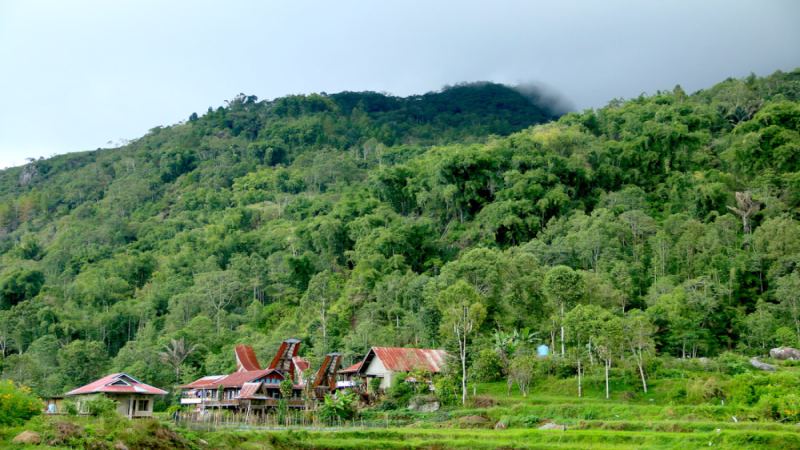
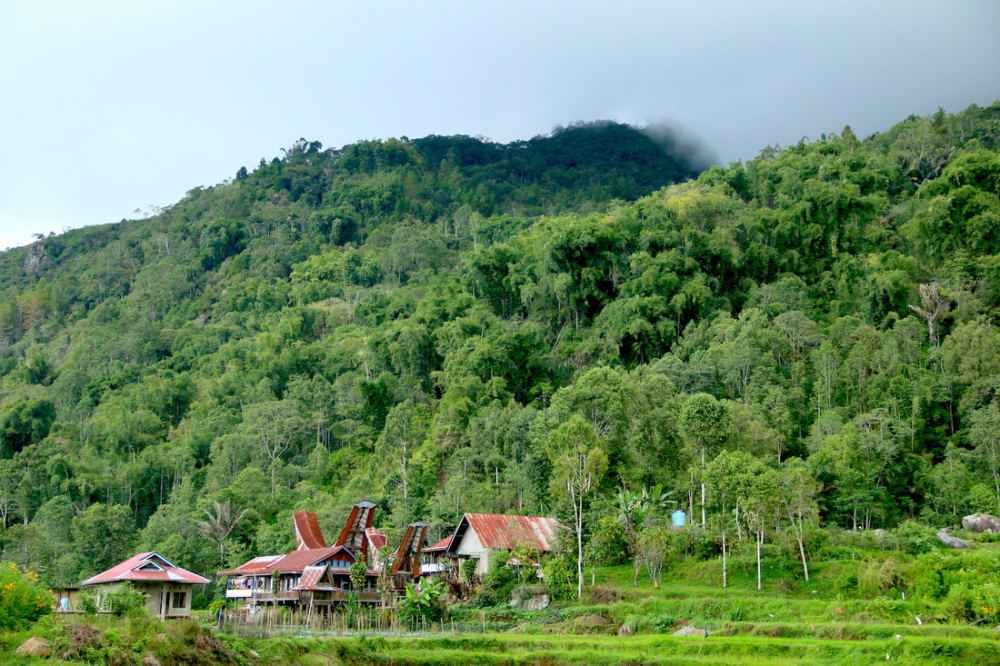
The estate is located on the cool and pristine western slopes of the Bukit Barisan mountain range on the South Sumatra highlands of Indonesia, at an altitude between 1,100 and 1,300 meters. The serene yet vibrant landscape completely surrounds the Mangkuraja estate, coexisting with lush tropical rainforests, flowing rivers, and natural springs. This rich, moderately acidic Mangkuraja coffee is renowned among discerning coffee connoisseurs for its unique intense aroma and flavor, with delicate leather and fruit notes. It is sure to provide a vibrant and memorable coffee experience.
Sumatra Wet-Hulling Method
Wet-Hulling is the traditional processing method for Indonesian Sumatran coffee, in which the parchment is removed while the green beans are only half-dried, still at a moisture content as high as 30%–50%, and then they continue to be sun-dried, in order to solve the dilemma of excessively long drying times. Because the drying time is shortened to two to four days, the fermentation period of the coffee beans is reduced, and the acidity drops considerably, while the body increases correspondingly, with pronounced caramel and fruity notes, even herbal or grassy aromas and woody flavors—this is Sumatra's distinctive regional fragrance.
However, the effect of removing the parchment early is that, halfway through drying, the green beans lose their last two layers of protection (note: coffee beans have four layers of protection: skin, mucilage, parchment, and silverskin), equivalent to sunbathing with no clothes on. Although wet-hulling solves the drying time problem, the risk of the green beans being contaminated by mold, fungi, and yeast also increases substantially. Paradoxically, however, these factors actually become the key elements that create Mandheling's distinctive aroma.
Another characteristic brought by wet-hulling is the higher probability of so-called "goat-foot beans." Because the green beans are hulled by machine at the still-moist, semi-soft stage, the fragile, soft, wet green beans are very easily cracked, broken, or scratched on the surface by mechanical pressure, forming what are known as goat-foot beans and scratched beans, which worsens the appearance of the green beans.
Front Street Indonesian Lintong Mandheling Coffee Beans
Region: Sumatra, Indonesia
Grade: G1
Altitude: 1100m—1600m
Variety: Ateng TimTim
Processing Method: Wet-Hulling
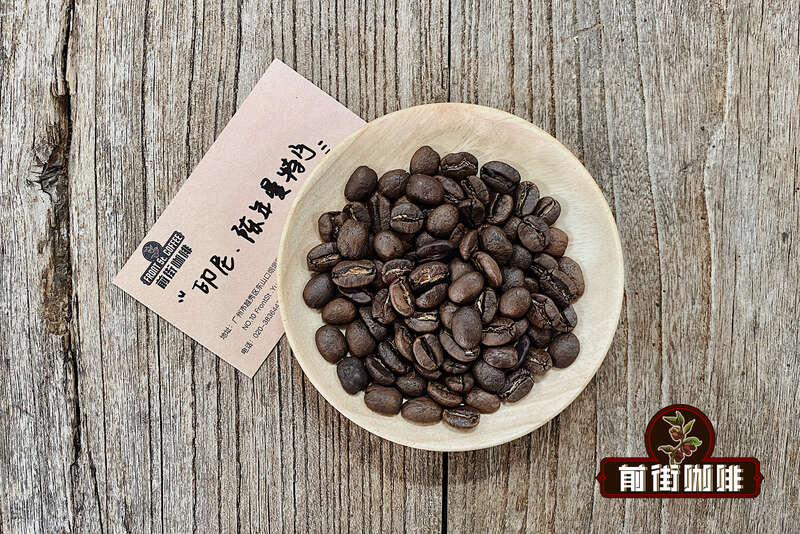
But if you're not satisfied with ordinary Indonesian coffee, then you must buy Front Street PWN Golden Mandheling. Compared with other Indonesian coffees, Front Street PWN Golden Mandheling coffee beans are renowned for their plump and uniform beans, clean flavor, and mellow body, making them not only suitable as a single-origin pour-over black coffee but also an excellent gift for family and friends.
Authentic Golden Mandheling coffee requires the PWN trademark. Front Street Golden Mandheling coffee beans all come from PWN, with shipment within 24 hours after ordering, and the coffee is always freshly roasted within 5 days. On Front Street Coffee's product display page, you can also see the certification certificate issued by PWN and the burlap sack in which PWN packs its Golden Mandheling coffee beans.
Front Street PWN Golden Mandheling Coffee Beans
Country: Sumatra, Indonesia
Region: Gayo Mountain, Aceh
Altitude: 1100-1600m
Variety: Typica
Processing Method: Wet-Hulling
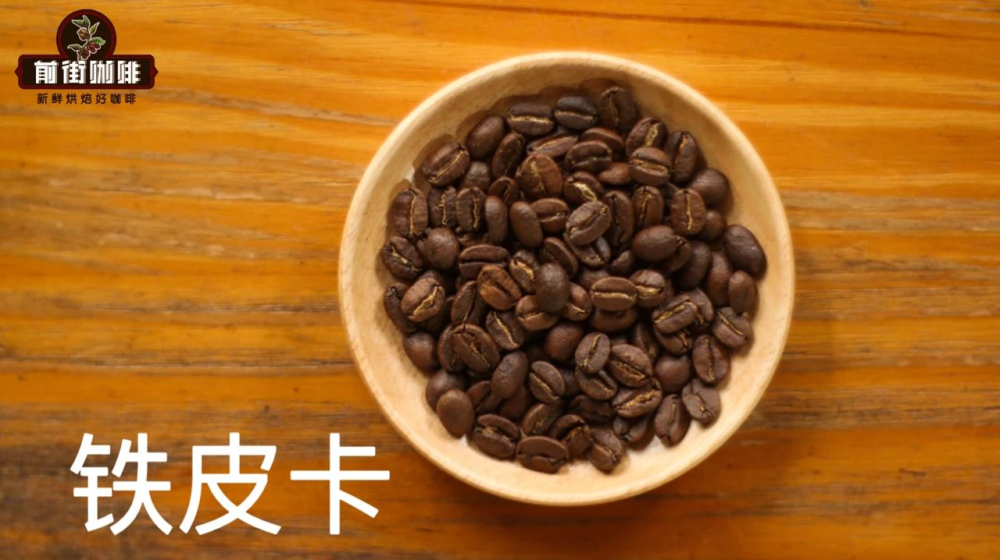
Since Mandheling coffee presents nutty and chocolate-toned flavors, Front Street's roaster chooses a medium-dark roast. The darker the roast, the more porous the texture of the coffee beans becomes, and the easier it is to extract during brewing; therefore Front Street uses a lower water temperature to avoid over-extraction producing a negative bitter taste.
Dripper: KONO Dripper
Water Temperature: 87℃
Dose: 15 grams
Coffee-to-Water Ratio: 1:15
Grind Size: Medium-coarse grind (70% passing through a Chinese standard No. 20 sieve)
Rinse the KONO dripper to make the filter paper fit the dripper better, pour out the water in the server while adding 15g of ground coffee, bloom with 30g of water for 30s, then begin pouring in a small stream in circles from the center until reaching 125g, at which point start the staged pours; when the coffee bed drops to half the height of the dripper, begin the second pour using the same technique until reaching 225g; once all dripping is complete, remove the dripper.
The ground Front Street Lintong Mandheling coffee has aromas of caramel, dark chocolate, and toasted bread, and during brewing you can smell the sweet caramel fragrance. The brewed Front Street Lintong Mandheling coffee enters the mouth with spices and dark chocolate, with a mellow yet clean body, pronounced sweetness in the finish, and a long-lasting aftertaste.
The above content is compiled by CoffeeHunters, a coffee news website.


