







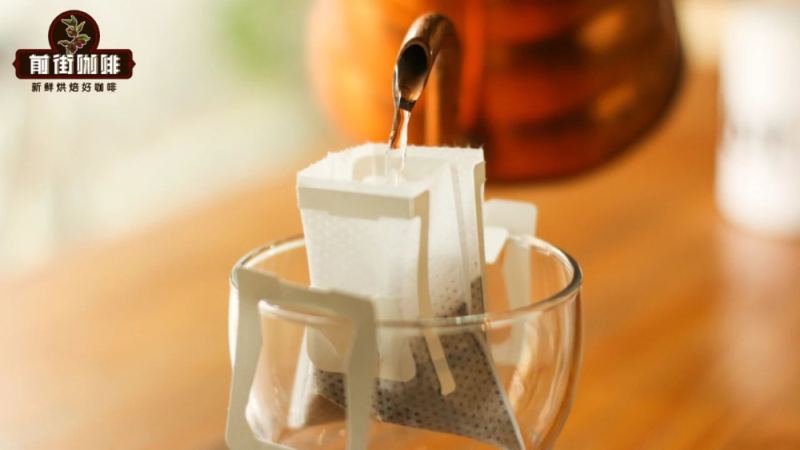
How should Yunnan coffee drip bags be brewed?
Drip coffee bags are convenient, but flavor still depends on grind size, coffee-to-water ratio, water temperature, and pouring rhythm. Each Front Street bag brews about 150 ml at a cost of a few yuan per cup. Beans such as Yunnan Small-Bean, PWN Golden Mandheling, and Brazil Cerrado Red Cherry are used in these seasonal drip lots.
The grinder is cleaned between batches so one bean does not carry flavor into the next, and grind quality decides the flow rate through the bag. Too slow or too fast both hurt the cup. Controlling the pour in stages lets the ground coffee release sweetness and acidity evenly and keeps the finished single-origin cup clean and repeatable.
Drip coffee bags have become increasingly popular among coffee lovers in recent years thanks to their combination of quality and convenience. The seasonal drip bags roasted by Front Street Coffee offer solid guarantees in both branding and quality. Each bag can brew about 150ml of coffee, costing only a few yuan per cup—an excellent value. However, drip bags aren't as simple as tearing them open and pouring in hot water. Everything from grind size control and automated nitrogen-flushed packaging to the coffee-to-water ratio, water temperature, and pouring rhythm affects the final flavor. This article uses Front Street products such as PWN Golden Mandheling, Brazil Cerrado Red Cherry, and Yunnan Small-Bean as examples to systematically explain the brewing parameters and steps for drip coffee, helping you brew a clean, delicious single-origin drip cup anytime, anywhere.
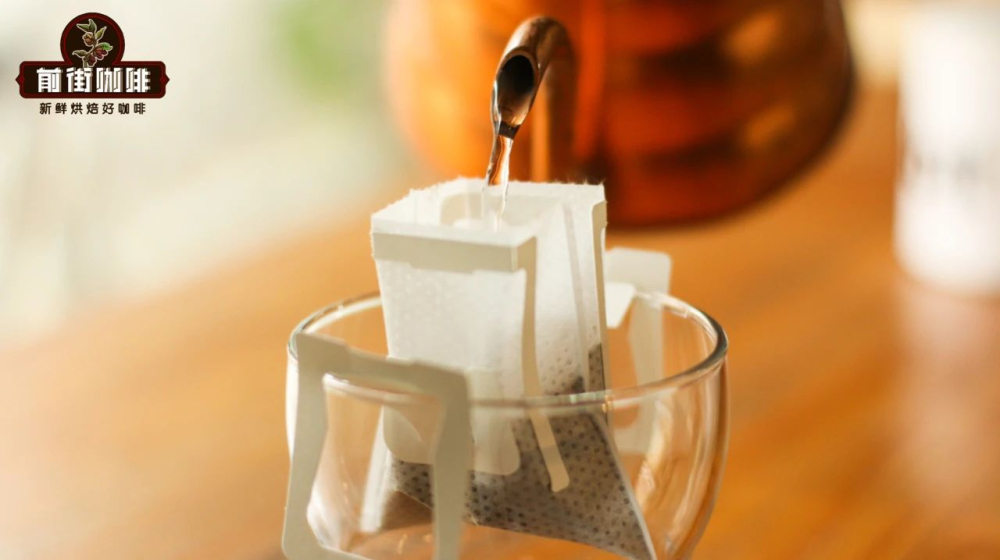
In recent years, terms like filter coffee bags and drip coffee bags have appeared more and more frequently in the public eye. They are new-style products born from consumers' dual demand for coffee quality and brewing convenience. The seasonal drip coffee roasted by Front Street Coffee is well guaranteed in both brand and quality. More importantly, its value for money is outstanding—counting one bag per cup, a single bag brews 150ml of coffee at a cost of just a few yuan per cup. Compared to coffee shops charging dozens of yuan per cup, it's truly a heartfelt recommendation. Convenient filter coffee bags and drip coffee bags differ from instant coffee on the market—they aren't simply torn open with hot water poured in to yield a rich, aromatic cup. You still need to master a few small techniques!
When Front Street Coffee produces drip coffee bags, it pays great attention to the entire production process, with the goal of letting every coffee lover enjoy the best single-origin drip coffee anytime, anywhere.
1. Cleaning the grinder for drip coffee bags. Before making each drip coffee bag, Front Street thoroughly cleans the grinder to prevent flavors from different beans affecting one another.
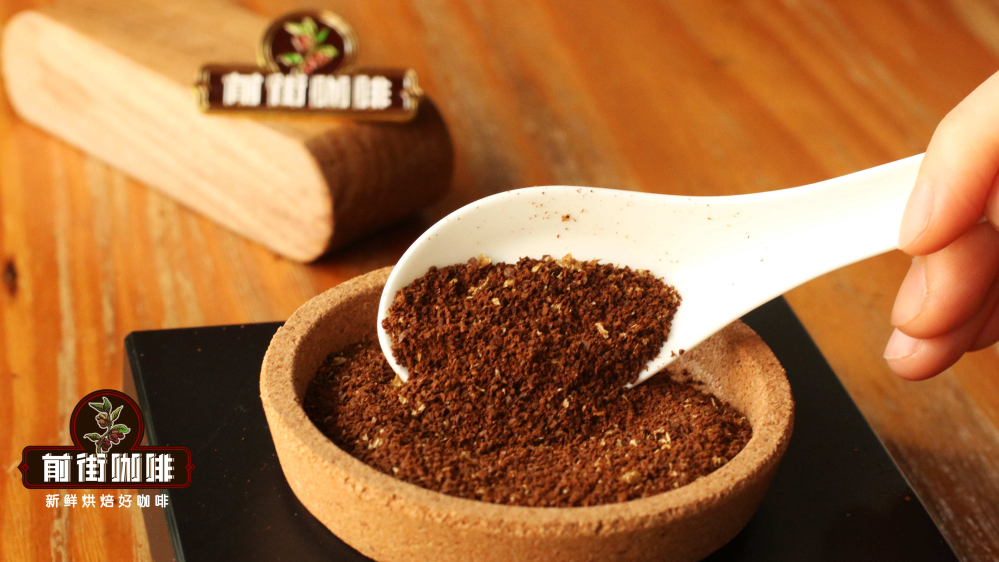
2. Grind size for drip coffee bags
The first determinant of drip bag brewing quality is flow rate—too slow or too fast won't do—and this depends on the grinder's grinding performance. If the grinder isn't up to standard and the grind quality is poor, the grinding process will inevitably produce a large amount of fines and an uneven grind. During brewing this causes a "traffic jam," the flow rate slows down, and the prolonged steeping leads to over-extraction. The result is a muddy taste and poor flavor—even the best beans can't express their proper character.
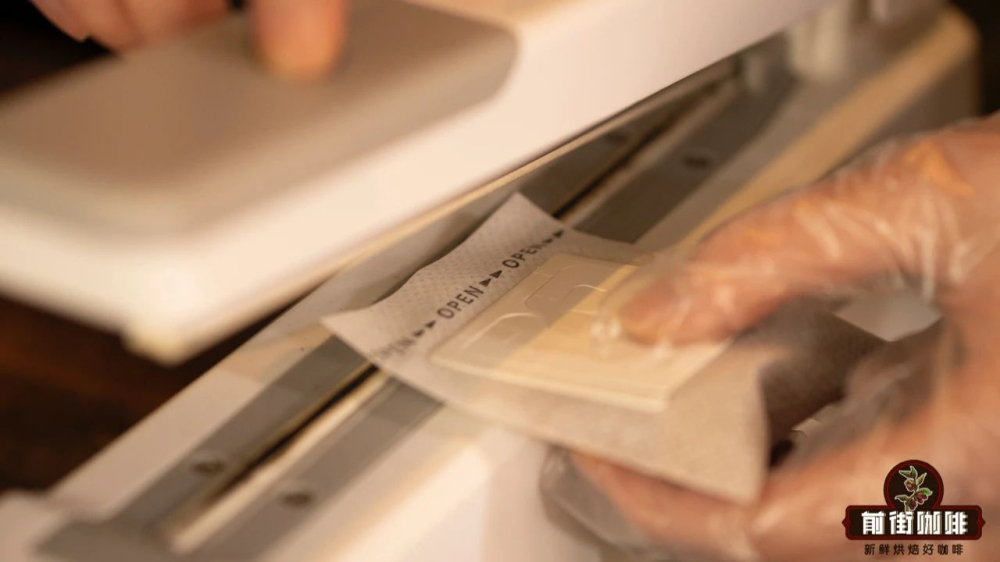
3. Automated packaging for drip coffee bags Front Street Coffee uses mechanical automated packaging for two purposes: first, to improve the sealing of the outer packaging; second, to inject nitrogen during packaging to remove as much oxygen as possible, making oxidation less likely and greatly extending the freshness period of the coffee's flavor.
Front Street PWN Golden Mandheling Drip Coffee Beans
Mandheling coffee has also gained attention in the past two years. At Front Street Coffee, Mandheling previously accounted for most sales, concentrated in the Shanghai area. Shanghai and Taiwan have quite similar taste preferences—both favor a rich, full-bodied feel. Front Street Coffee once had a Shanghai customer who kept insisting that the Mandheling be roasted even darker than our usual dark roast. Now, more and more people recognize Mandheling's unique flavor, and more and more customers come to Front Street Coffee's shop to order Mandheling coffee—many of them Guangzhou locals.
This Front Street PWN Golden Mandheling is actually different from ordinary Mandheling. It comes from the local Indonesian green bean trader PWN—the first company to cooperate with Japan on Golden Mandheling and to register Golden Mandheling as a trademark. The biggest characteristic of Front Street PWN Golden Mandheling is that it lacks the off-flavors of ordinary Mandheling. After three rounds of strict hand sorting to ensure uniform bean size, it roasts to an even color, so its mouthfeel presents a clean, full-bodied quality. Its flavor resembles Guangdong herbal tea—no wonder Guangzhou locals can accept this flavor. Front Street Coffee specifically created this Front Street PWN Golden Mandheling drip bag this time precisely because it found people's acceptance growing higher and higher.
Front Street Brazil Cerrado Red Cherry Drip Coffee Beans
Brazilian coffee beans were introduced from French Guiana (a country in northern South America) in 1720. Brazil was then a Portuguese colony, while many other South American countries were Spanish colonies. As a result, most South American countries speak Spanish, while Brazil speaks Portuguese.
To bring Guiana's coffee beans to Brazil (at the time, exporting coffee to other countries was strictly forbidden), a Portuguese officer stationed in Brazil won the heart of the governor of Guiana's wife and successfully brought coffee seeds into Brazil. From then on, coffee adapted rapidly in Brazil, spreading from the north to São Paulo state in the southeast. By 1845, Brazilian coffee beans accounted for 45% of the world's total. Today Brazil is the world's largest coffee exporter.
Front Street Coffee not only includes Brazil in its drip bag series but also features Brazilian coffee in its Front Street everyday-bean coffee series. This shows that Brazil, as a coffee-producing country, is an indispensable presence among classic coffee flavors. Front Street everyday beans are the "face" of regional coffee beans, because their regional basic flavors are more recognizable and they are also low-priced, high-value coffee beans.
Front Street Yunnan Small-Bean Drip Coffee Beans
Yunnan coffee mainly cultivates Typica and Catimor varieties. Because the coffee beans are small, it is also called "small-bean coffee." The main variety planted is Catimor, a hybrid created by the Portuguese crossing Timor and Caturra to improve disease resistance and yield. Catimor does not have pure Arabica lineage, because Timor is a Robusta variety; although crossed with Caturra, it did not inherit Arabica genes. Therefore its flavor is relatively flat, with a more prominent bitterness.
This Front Street Yunnan small-bean coffee from Baoshan is washed-processed. In flavor it shows tea-like notes and melon-fruit aromas; in mouthfeel it shows relatively round acidity with a nutty sensation, obvious sweetness in the finish, and a long, lingering caramel sweetness.
How much water is needed to brew a bag of filter coffee or drip coffee? Based on Front Street Coffee's 10g drip bags, Front Street recommends a brewing ratio of 1:15, i.e., brewing 150ml of coffee. Of course, you can adjust to your taste: for a stronger cup, brew 130ml; for a lighter cup, 160–200ml is also fine.
Do brewing temperature and speed affect coffee flavor? How many times can a drip coffee bag be brewed?
For office workers without a pour-over kettle, it's suggested to press the water dispenser gently so the water flows a bit more slowly and weakly, adding about 30–50cc of hot water, then waiting quietly for 20–30 seconds to steep before continuing to fill the cup, for a total of 150–200cc. If you have a pour-over kettle and better temperature control, Front Street recommends 88–90°C as the optimal brewing temperature. The gooseneck design of a pour-over kettle allows for more even water volume and flow rate, achieving the most complete extraction during the brewing process.
Filter coffee and drip coffee are different from tea leaves—never re-brew them. After extraction, the coffee grounds retain only bitterness and astringency, and the flow rate becomes very slow, making the coffee unpleasant to drink. Front Street Coffee's drip bags are both good and inexpensive, so there's no need to feel wasteful brewing only once.
Front Street Coffee drip bag brewing steps:
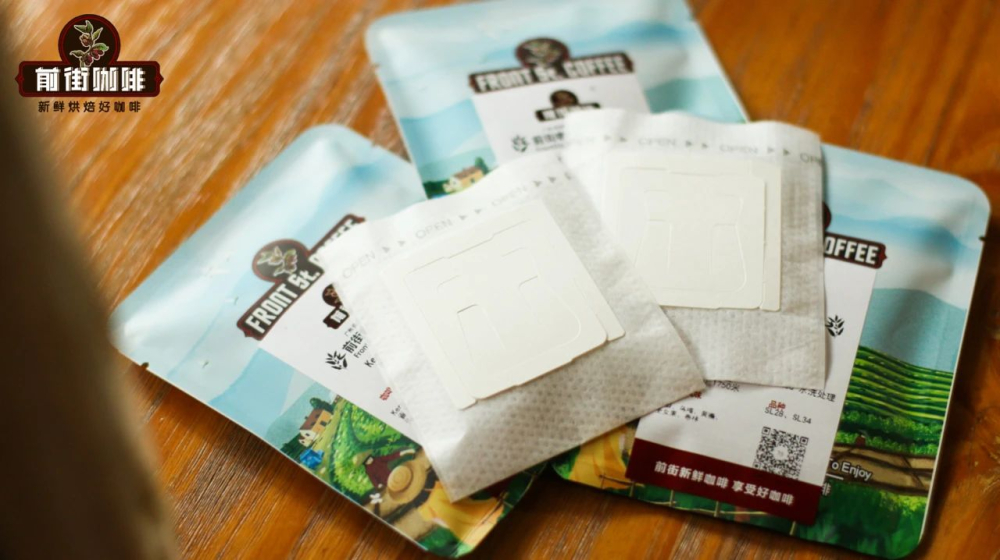
1. Following the tear-open tab, carefully and neatly open the packet.
2. After shaking the drip bag flat, tear open the powder packet seal, spread the drip bag hangers evenly, and hang it on the rim of the coffee cup.
3. Next, handle the water amount and temperature. As with pour-over coffee, use a 1:15–1:16 ratio, so the brewed coffee should reach 140–150ml. Use water at about 90°C; a thermometer or temperature-controlled kettle is preferred, but if you don't have one, you can estimate: generally, after a kettle comes to a boil, turn off the heat, open the lid, and wait 2–3 minutes; the water temperature will reach about 90°C (at 28°C room temperature).
4. For the first pour, just fully wet the coffee bed, then let it bloom for 30 seconds.
5. After blooming, make the second pour, using a small stream in a circular motion to fill directly. Wait for the coffee bed to drop slightly, then continue pouring to full, repeating until the coffee in the cup reaches about 140–150ml, then remove the drip bag and enjoy. (If you want a more precise amount, you can pour 150–160ml of water into the pouring kettle; during brewing, after all the water in the kettle has been poured, wait for the coffee to drain into the cup, then remove the drip bag. The entire brewing process takes about 1 minute.)
6. After extraction is complete, remove the drip bag. Those who want milk coffee can simply add fresh milk to taste.
7. To ensure each drip coffee's flavor is perfectly expressed, it's recommended to discard each bag after brewing once.
The above content is compiled by CoffeeHunters, a coffee news website.


