







Is latte bitter because of ice, milk, or the espresso?
A latte turns bitter or weak mainly because the milk-to-coffee ratio is off or the espresso is poorly extracted. Removing ice from an iced latte leaves space that gets filled with milk, diluting the coffee flavor. A hot latte already has milk heated to the right temperature on top of a balanced ratio, so adding ice cubes throws it off.
Common complaints fall into three groups: too bitter to swallow, too weak like water, or both at once. A stable recipe uses a coffee-to-liquid espresso ratio near 1:2, meaning 1g of grounds yields about 2g of liquid. The bean, roast level, and milk temperature all shape the final balance.
Can latte coffee be made without ice? Can ice cubes be added to a hot latte? These seemingly simple questions actually involve the ratio of milk to coffee, the extraction state of the espresso, and the control of milk temperature. Front Street Coffee starts from the fixed ratio of a good latte, analyzes the impact of removing or adding ice on the taste, and systematically sorts out the causes and solutions for the three common problems of latte being too bitter, too watery, and both bitter and weak. Whether you are a beginner just starting out or an experienced barista wanting consistent results, you can find practical adjustment directions here.
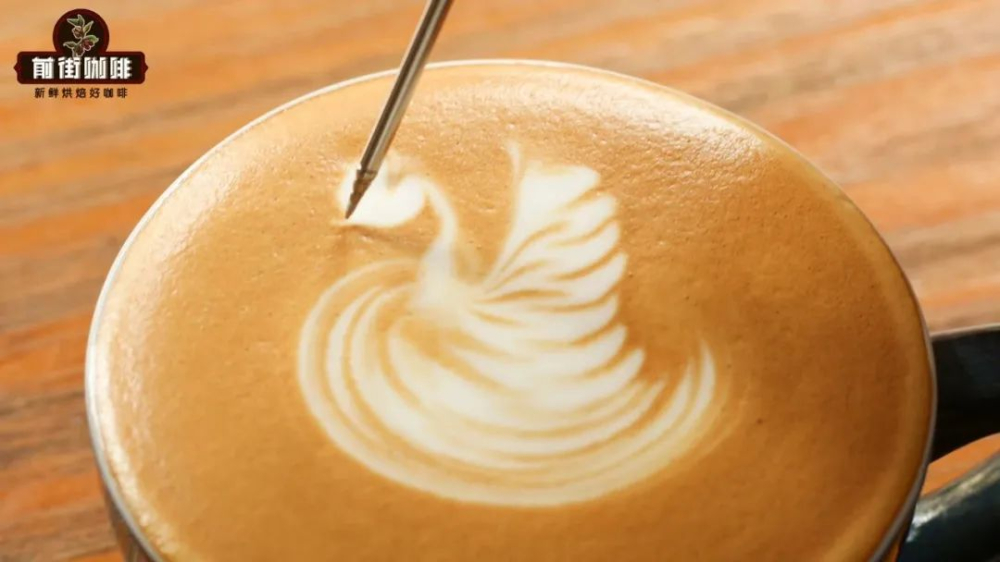
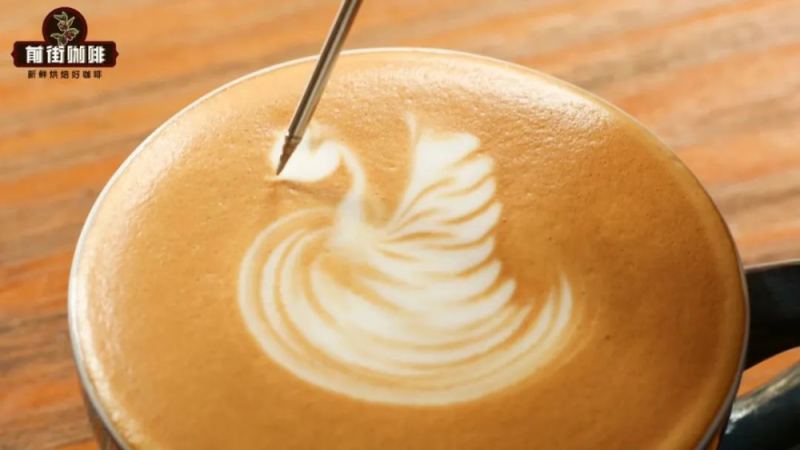
Do you still remember what it was like the first time you drank a latte? Most people probably can no longer recall, but Front Street Coffee still remembers clearly. First, you are drawn in by the exquisite latte art, then take a gentle sip and feel the soft sweetness and slight bitterness brought by the crema; by the second sip, the previous intense bitterness has instead turned mellow and delicate, intertwined with the light sweetness of hot milk, presenting just the right balance in the mouth, and after swallowing, a creamy chocolate-like aftertaste lingers.
In a delicious latte, there must be a stable ratio between milk and coffee, and the absence of either side will throw the taste off balance. Take iced latte as an example: if the ice cubes are removed, the vacated space will mostly be filled with milk, and the coffee flavor will immediately be diluted; while a hot latte itself is already made by getting the milk temperature just right on top of an ideal ratio, so naturally there is no room to add ice cubes into it.
On the other hand, for a bad-tasting latte, everyone's评价 is surprisingly consistent: either the coffee is so bitter you cannot swallow it, or the taste is too weak like drinking water, or else it suffers from both bitterness and weakness at the same time. What exactly is going on?
The recipe for latte coffee
Front Street stores uniformly use their own Sunflower·Warm Sun blend. This bean uses a medium-dark roast, and when made into a latte it is required to present the flavors of vanilla, creamy chocolate, and caramel cookie.
On this basis, we first apply the general formula for espresso: a coffee-to-liquid ratio of 1:2, meaning 1g of coffee grounds corresponds to about 2g of coffee liquid, with the extraction time falling between 25 and 35 seconds, and then verify it in actual extraction. Taking Front Street as an example, use a double basket filled with 20g of coffee grounds, extract 40g of espresso, control the time to 27–33 seconds, and ensure the entire extraction process has no abnormalities (channeling, splashing, unstable flow rate).
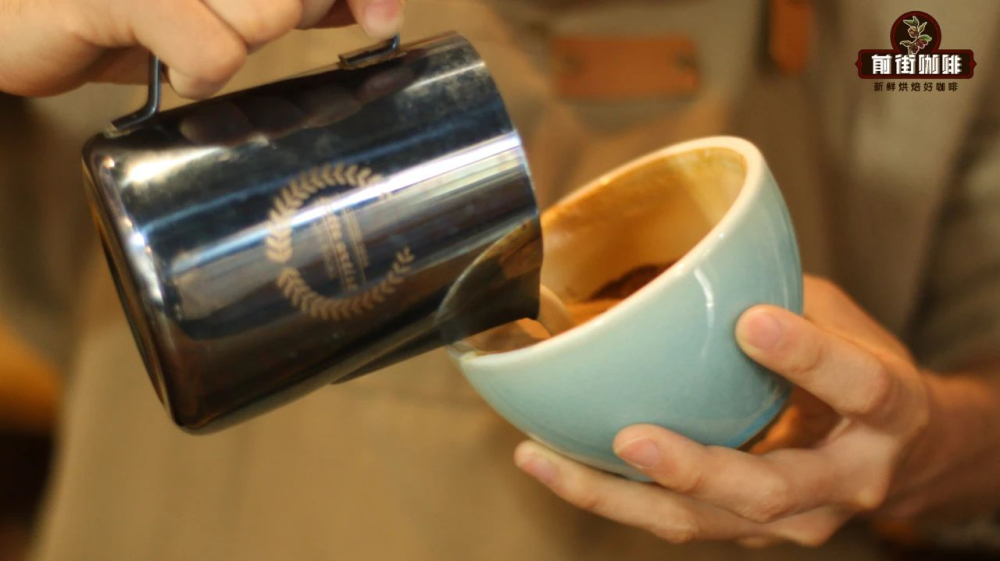
If making a hot latte, Front Street will, at a ratio of 1:5.5, pour 220ml of fresh milk into the milk pitcher, steam it to 55–65°C, while forming a 0.3–0.5cm thick milk foam, finally fully integrate it with the espresso, pour it into a ceramic cup, and draw a neat pattern.
Friends who have just come into contact with coffee may think that an iced latte is nothing more than a hot latte plus ice cubes, but that is not the case. When coffee shops make an iced latte, in order to maintain coffee strength, they first put 3 ice cubes at the bottom, then control the ratio of coffee to milk at 1:5, first pouring in 200g of fresh milk, then topping it with 40g of coffee liquid, so as to preserve a beautiful layered effect.
From Front Street's experience, as long as the coffee beans and milk are well matched, the espresso extraction is stable and controllable, and the milk ratio is accurately grasped, making a good latte is not complicated. In other words, if the latte made does not taste right, the problem must lie in the above links. Below we break them down one by one.
First, what causes a latte to be too bitter?
Everyone knows that, without adding sugar, latte is the least bitter among all fancy coffees, because it is mixed with a large amount of milk and the coffee flavor is usually not prominent. Once you taste obvious bitterness, the problem is most likely in the espresso, either the coffee beans are roasted too dark, or the extraction parameters are not adjusted correctly.
As for the former, unless you bought extremely dark-roasted beans that are shiny with oil, in order to retain more of the coffee's own flavor, common espresso blends on the market mostly use medium-dark to dark roasting, at most just reaching second crack before coming out. Espresso made from this kind of bean often has rich crema, slight acidity, and moderate bitterness and sweetness, and after blending with milk it forms a compatible taste without letting either side stand out too much.
Generally speaking, the "culprit" that makes a latte bitter is usually hidden in the espresso extraction stage, most commonly over-extraction caused by too slow a flow rate (extracting for more than 35 seconds according to the above formula), channeling, splashing of the liquid stream, and so on.
A customer once reported to Front Street that the latte they usually made tasted quite good, but one day it suddenly became especially bitter and not aromatic. The coffee beans were still within their flavor window, and the extraction parameters and ratio were the same as usual, yet they just could not find the reason. After careful questioning, it turned out that the knocked-out puck had already been perforated, indicating that channeling occurred during extraction, very likely over-extraction and bitterness caused by clumping of the coffee grounds. The corresponding solution is to adjust the grind coarser, or use external force to break up the clumped coffee grounds.
What should you do if the latte tastes too watery or too weak?
From a barista's perspective, the richness of a latte is determined by both the milk and the espresso. For a latte, the milk, which accounts for the largest proportion, is naturally a key link. If you want the coffee to be rich and aromatic, it is recommended to prioritize whole fresh milk, because compared with shelf-stable milk or skim milk, whole milk has a higher milk fat content, and after steaming its foam layer is denser and more stable, providing a fuller mouthfeel for the coffee.
In fact, besides milk quality issues, insufficient espresso extraction can also make a latte watery and weak, and this kind of situation usually appears in SOE. Front Street once used a lighter-roasted Huakui 8.0 to make an SOE latte. Although the milk ratio had already been reduced, the resulting taste was still bland, like a cup of hot milk with a hint of citrus and caramel aroma, clearly caused by insufficient extraction due to too light a roast.
Therefore, when we use single-origin beans主打 fruit-forward notes to make a large-volume latte, it is best to choose the corresponding SOE version so that it is less likely to "fail."
Why does a latte become both bitter and weak?
This situation is usually the opposite of the previous SOE case, and is often because the coffee beans are roasted on the darker side, the espresso overall presents a heavy and burnt-aroma profile, and the later-stage substances are mostly bitter, woody, and off-flavors. If a higher extraction yield ratio is used, the espresso is very likely to be over-extracted.
For example, some friends like to use 18g of grounds to extract 40g of coffee liquid. At this time the grounds-to-liquid ratio is about 1:2.22. On the one hand, it makes the coffee bitter and astringent; on the other hand, the increased liquid weight also means more water content, and the coffee strength decreases accordingly, so the latte made is naturally both bitter and weak.
If you feel that the latte you make also has this contradictory taste, you might try reducing the extraction amount of espresso a little, for example by taking 5g less liquid weight, to bring the strength up. This avoids over-extraction and also makes the latte taste fuller.
The above content is compiled by CoffeeHunters, a coffee news website.


