







How Does Coffee Processing Change the Flavor in the Cup?
Coffee processing covers the steps taken after picking to turn cherry into green coffee bean, and the method shapes flavor. Natural, washed, and honey processing are the three classic routes, each with a different fermentation path. Enzyme processing adds selected bacterial strains, usually inside an anaerobic phase, to washed coffee in order to build more distinctive flavors.
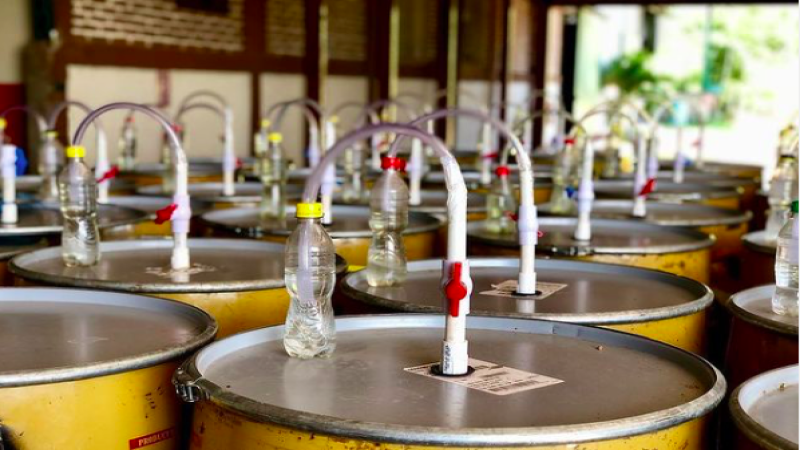
Anaerobic fermentation borrows from red wine: carbon dioxide fills a sealed tank, oxygen is pushed out, sugars in the mucilage break down more slowly, pH drops gradually, and fermentation runs longer. The result is often more sweetness and balance. The same coffee process can also mask defects, so it works better as a small-batch tool than a blanket fix.
The processing method of coffee beans directly determines the flavor direction in the final cup. As the three classic techniques, natural, washed, and honey processing each have different fermentation paths and flavor expressions. The enzyme processing method that has emerged in recent years introduces specific bacterial strains for anaerobic fermentation on the basis of washed processing, in order to create more distinctive flavors. How exactly is this processing method operated? What are its essential differences from the traditional three major processing methods? This article will break down the process details of each technique one by one, and combine them with a number of representative beans under Front Street Coffee to help readers build a systematic understanding of coffee processing methods.
Professional coffee knowledge exchange. For more coffee bean information, please follow Coffee Workshop (WeChat public account cafe_style).
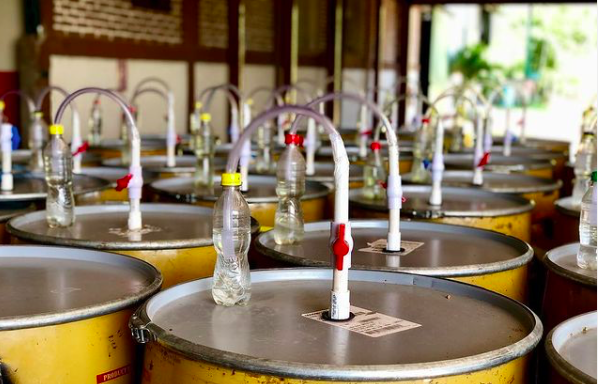
The three common processing methods for coffee beans: natural, washed, and honey. All three processing processes involve different degrees of fermentation. Enzyme processing is the use of bacterial strains with different mechanisms on the basis of washed processing, using the principles of fermentation to create more flavors. Is this processing method good or bad? Front Street believes that if this fermentation method is used only in small amounts to create some specially flavored coffee beans to attract the public, its role is positive. But if it is widely used to cover up the defective flavors of the coffee beans themselves, rather than improving coffee flavor through improved cultivation techniques and varieties, then this is not good. So how does enzyme processing handle coffee beans? Enzyme processing is generally carried out together during anaerobic processing. The anaerobic fermentation process comes from red wine production. This method injects carbon dioxide into a sealed container, expels the oxygen inside, and in an oxygen-free environment slows down the decomposition rate of sugars in the coffee mucilage. The pH value also decreases at a slower rate, extending the fermentation time, thereby developing better sweetness and a more balanced flavor, and ultimately obtaining a coffee bean with a distinctive flavor. The prerequisite for anaerobic fermentation processing is that there must be a monitorable, completely sealed, opaque container placed indoors, and the indoor temperature must be strictly controlled. By controlling temperature and time, the degree of fermentation in the container can be controlled.
The enzyme anaerobic processing method removes defective floating beans through washing, and during anaerobic fermentation simultaneously incorporates a special enzyme group for fermentation. After fermentation is completed, the mucilage on the surface of the coffee beans is washed off through the washed processing method, and then the coffee beans are dried by machine drying or shade drying, avoiding the high temperatures of sun drying that may cause the coffee beans to overexpand again and produce bad flavors. This processing method is called anaerobic enzyme washed.
On the Front Street bean list, a Front Street Rose Valley coffee from Colombia's Finca El Arbol adopts anaerobic double enzyme washed processing. Double enzyme means injecting enzymes twice during one anaerobic fermentation process, which improves both the aroma and acidity of the coffee beans.
Front Street Colombia Finca El Arbol Rose Valley Coffee Beans
Farm: Colombia Finca El Arbol
Region: Santander Region
Processing Method: Anaerobic Double Enzyme Washed
Altitude: 1700m
Variety: Caturra
[Front Street Colombia Finca El Arbol Rose Valley] Brewing flavor: the sweetness of peach, accompanied by the aroma of roses, with both the high-quality sweet-and-sour sensation of black grapes and the silky mouthfeel of cream toffee, followed by a finish reminiscent of liqueur chocolate aroma.
How does the washed processing method handle coffee beans?
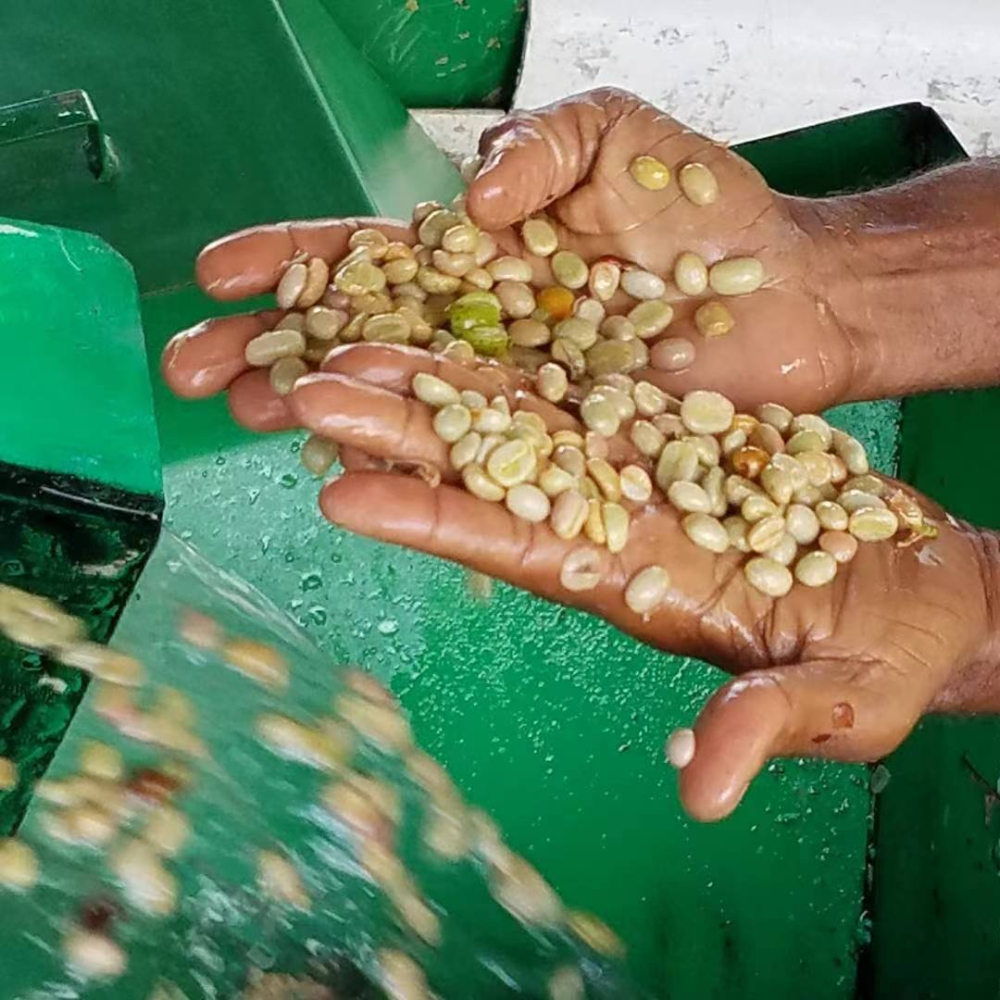
After coffee cherries are harvested, they are immediately sent for processing, generally within 6 to 12 hours after picking. The coffee cherries are first weighed, then placed in water for soaking, in order to select unripe floating cherries and defective beans.
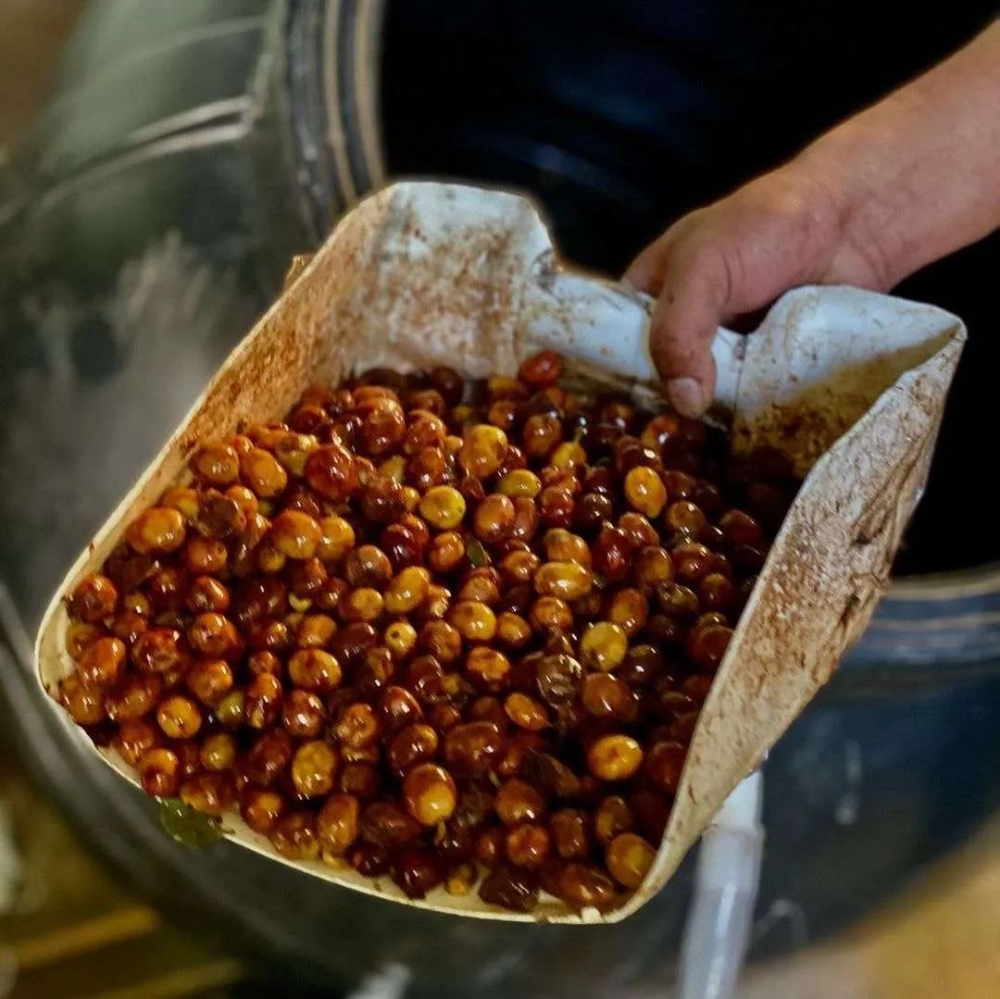
Next, the coffee cherries are sent to a pulping machine for depulping. This step is to remove the skin and pulp parts of the coffee cherries. The coffee cherries with pulp and skin removed are sent to a fermentation tank or fermentation barrel and left to ferment for 18 to 36 hours, during which enzymes decompose the mucilage/pectin in the coffee cherries. The demucilaged coffee cherries are then washed in the tank with an appropriate amount of water. During washing, stirring removes the pectin decomposition products on the surface of the coffee beans. After washing, the coffee parchment, silverskin, and green beans remain.
The washed coffee beans are sorted to remove defective coffee beans. They are then sent to drying places (tarps, concrete patios, raised beds, etc.) for drying. The drying time depends on environmental climate and other factors, generally ranging from 5 to 14 days. At this point, the moisture content of the coffee beans drops from 55% to 11%. The dried coffee beans are called parchment coffee, that is, green coffee beans with parchment layer. Parchment coffee is sent to warehouses for storage, and before export it is hulled to obtain the green beans we want.
Front Street believes that washed coffee beans best highlight the cleanliness of coffee. Washed coffee has relatively obvious acidity, better cleanliness, medium body, and the most consistent green bean quality. The Yirgacheffe region of Ethiopia most likes to use washed processing to highlight the bright acidity and rich floral and fruity aromas of Yirgacheffe coffee beans.
Front Street Ethiopia Yirgacheffe Gedeb Gotiti Cooperative Coffee Beans
Region: Yirgacheffe Gedeo Zone
Altitude: 1900-2300m
Variety: Heirloom
Processing Method: Washed
Grade: G1
[Front Street Yirgacheffe Washed Gotiti] Brewing flavor: citrus and black tea on entry, with cream, caramel, and almond in the finish as the temperature changes; the sweet aftertaste is obvious and the taste is clean and sweet.
How does the natural processing method handle coffee beans?
After harvesting, the coffee cherries are first manually sorted to screen out defective coffee cherries, including overripe, underripe, insect-damaged ones, and of course foreign matter other than the cherries.
After sorting, the coffee cherries are sent to drying places for drying. Different regions may use different drying racks; some use tarps, some use raised beds, some use concrete patios, etc. The drying time averages 3 to 4 weeks, until the moisture content of the coffee drops to 11%, at which point the drying process is completed. After drying, the coffee cherries are sent to a processing plant for depulping and hulling, and sometimes even polishing. The skin, pulp, and other parts are all removed in this step.
After depulping, the green coffee beans are screened again to remove coffee beans with poor appearance. This also reflects the quality of the coffee drying process. Over-dried coffee beans are more fragile and will be broken into fragments during depulping; under-dried coffee beans contain too much water, the moisture is overly active, and they are prone to bacteria and mold. After screening, they are sent to warehouses for storage until export.
Front Street believes that natural processing can highlight the smoothness of coffee. It is fuller-bodied than washed processing, the acidity is mostly expressed as juicy fruitiness, and the coffee has obvious sweetness. The Sidamo region of Ethiopia most likes to use natural processing to highlight the region's rich berry acidity and the sweetness brought by ripe berries.
Front Street Ethiopia Sidamo Natural Huakui Coffee Beans
Region: Guji Hambela
Processing Plant: Buku Able
Altitude: 2250-2350 meters
Variety: Local Heirloom
Grade: G1
Processing Method: Natural [Front Street Sidamo Natural Huakui] Brewing flavor: citrus acidity, full berry juice sensation, lemon black tea tea-like body, lasting sweetness.
How does honey processing handle coffee beans?
Honey processing is a green bean processing method between natural processing and washed processing. The degree of sweetness in honey processing depends on the setting of the pulper. The more pulp and pectin retained, the more obvious the sweetness of the honey processing. Why? A coffee cherry consists of skin, pulp, pectin, parchment, silverskin, and the seed (coffee bean). The pulp and pectin in the coffee cherry are the parts that contain the most sugar in the entire coffee bean. Therefore, during honey processing, how much pulp and pectin of the coffee cherry is retained will affect how much sugar from the pulp and pectin is converted during the drying process of the coffee beans. But Front Street believes that this also has drawbacks, because high sugar content will accelerate the fermentation of pulp and pectin at high temperatures. If not strictly controlled, mold and over-fermentation are likely to occur.
[Black Honey Processing] Almost no pectin is removed, so drying takes the longest, requiring more than 14 days. During the process, coverings are used to block overly strong sunlight so that the sugar conversion is more complete.
[Red Honey Processing] Retains 80% pectin (specific practices vary by farm). Sun drying lasts about 12 days, and shade sheds may also be used during the process.
[Yellow Honey Processing] Retains 40-60% pectin, receives the most sunlight for drying, and lasts about 8 days.
[White Honey Processing] Retains 40-60% pectin. During drying, it is spread more thinly on the drying bed, and the drying time is shorter.
Front Street believes that honey-processed coffee beans have better flavor, with balanced acidity and sweetness, and because they have been exposed to sunlight, the aroma of the coffee beans themselves is also amplified, with a rich body. The honey processing method formally appeared in Central and South American regions such as Costa Rica and El Salvador, and is now widely used in Costa Rica.
Front Street Costa Rica Tarrazu Yellow Honey Coffee Beans
Region: Costa Rica Tarrazu
Variety: Caturra, Catuai
Processing Method: Yellow Honey
Altitude: 1500m
[Front Street Costa Rica Tarrazu Yellow Honey] Brewing flavor: obvious fermented aroma on entry, citrus acidity, chocolate-like sweetness in the middle, caramel sweet aftertaste and green tea tea-like body in the finish, with floral and cedar aromas in the aftertaste, overall balanced.
For more specialty coffee beans, please add the private WeChat FrontStreet Coffee, WeChat ID: kaixinguoguo0925.
The above content is compiled by CoffeeHunters, a coffee news website.


