








What Sets Cold Brew Coffee Apart from an Americano?
Cold brew coffee is made by steeping ground beans in cold water for at least eight hours, and up to 24 to 48 hours for a fuller body, then filtering out the grounds. Because low temperatures release fewer bitter compounds, the cup keeps its richness while staying clearer, which is the main difference from a hot-extracted Americano.
Starbucks Nitro Cold Brew adds nitrogen to the finished drink for a creamy, cascading texture. Front Street Coffee shares a home recipe covering coffee-to-water ratio, grind size and refrigeration time, with adjustments for different flavor preferences, plus five single-origin beans from Ethiopia, Kenya, Panama, Costa Rica and Honduras suited to cold brew.
On a scorching summer day, a refreshing glass of cold brew coffee is undeniably a great way to cool down. Cold brew has a low barrier to entry: steep it the night before, and it's ready to enjoy the next day. But how does the extraction logic of cold brew differ from high-temperature pour-over? What exactly is Starbucks' Nitro Cold Brew? This article starts with the definition and extraction principles of cold brew, explains the nitrogen mystery behind Nitro Cold Brew, and shares in detail Front Street Coffee's cold brew recipe and steps, including key parameters such as coffee-to-water ratio, grind size, and refrigeration time. It also offers extraction-time adjustment suggestions for different flavor preferences and recommends five Front Street single-origin coffee beans suitable for cold brew, covering origins such as Ethiopia, Kenya, Panama, Costa Rica, and Honduras, helping you make a cup of cold brew at home that suits your taste.

Cicadas chirp nonstop, the sun makes people lazy, and many places in the south have already stepped into summer. In this kind of weather, ice-cold, thirst-quenching drinks are always especially appealing. Cold brew coffee is easy to make, requires no complicated equipment, and you can steep a batch before bed and drink it directly when you wake up the next day. For coffee lovers, it is indeed a worry-free and comfortable choice in summer. So what exactly is cold brew coffee? And what is the Nitro Cold Brew on Starbucks' menu?
What exactly is cold brew coffee?
The English term for cold brew coffee is Cold Brew Coffee. In practice, after grinding coffee beans into grounds, steep them in cold water for at least 8 hours; if you want a fuller body, you can also extend the time to 24 to 48 hours. After steeping, filter out the coffee grounds, and the remaining liquid is ready to drink.

The extraction principle of cold brew
Unlike pour-over, which uses high-temperature rapid extraction, cold brew relies on a low-temperature environment. When the temperature is low, the bitter components in the coffee grounds are less likely to be released; combined with a long, slow steeping time, the sour and sweet substances in the coffee can instead be released more completely. Therefore, the final product maintains a certain richness while also having better overall clarity.
What is Starbucks' Nitro Cold Brew?
The so-called nitro actually means infusing nitrogen into cold brew. At the moment the coffee flows out and contacts the air, the texture becomes dense and silky, tasting a bit like non-alcoholic dark beer. With this Nitro Cold Brew, more people drink it for that dense texture; as for whether it suits your taste, it varies from person to person.
So how does Front Street Coffee make cold brew coffee?
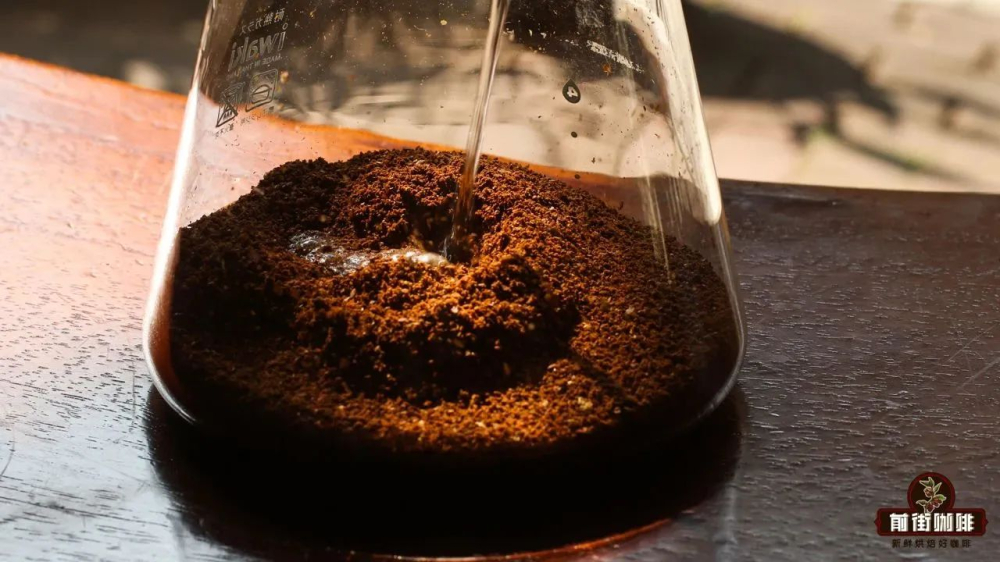
If you want to drink cold brew but are too lazy to go out and buy it, Front Street Coffee will teach everyone how to make it at home. Cold brew is actually very easy to get started with. Front Street Coffee's method uses 50 grams of coffee grounds as the baseline. In terms of grind size, because the water temperature contacting the coffee grounds is lower than in ordinary pour-over, choose a slightly finer setting than pour-over, that is, an 85% pass rate on a No. 20 standard sieve. Put the coffee grounds into a glass bottle, pour in 400 milliliters of room-temperature water, then add 200 grams of hard ice cubes (the ice-water mixture totals 600 grams), for a coffee-to-water ratio of 1:12. Next, use a stirring rod to mix the grounds and water evenly, seal it, and place it in the refrigerator to chill.
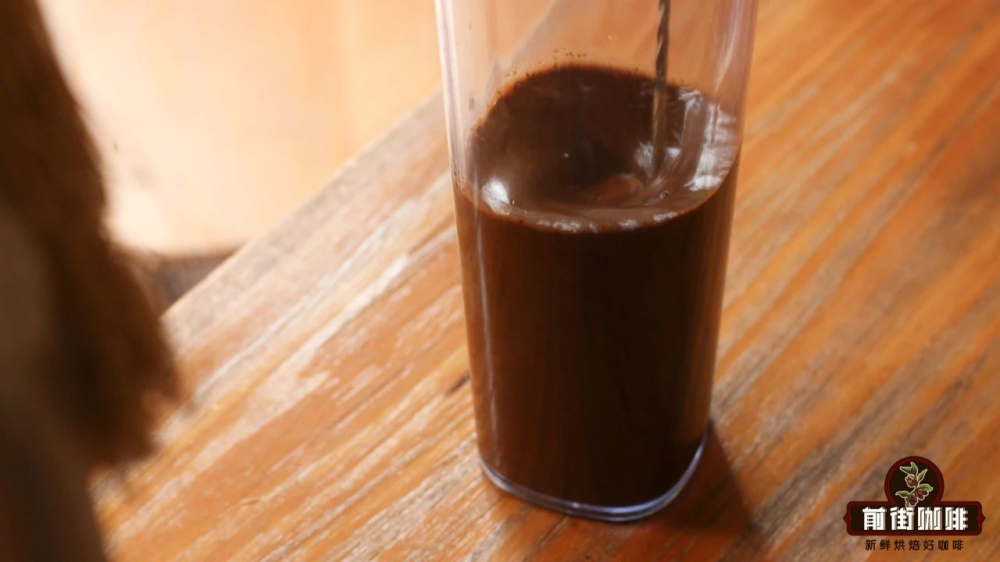
After leaving it in the refrigerator for 12 to 24 hours, use filter paper to filter out the coffee grounds and obtain clean coffee liquid, then pour it into a clean sealed bottle and continue refrigerating for about 4 hours before drinking.
Here Front Street Coffee also wants to remind everyone that cold brew is not better the longer it steeps; whether it tastes good is itself very subjective. Some people prefer a fresh, clean taste, while others like a heavier, fermented flavor. It all depends on personal preference.
If you happen to belong to the group that likes a stronger fermented taste, Front Street Coffee suggests appropriately extending the extraction time. The longer the time, the more obvious the fermented feel of the coffee liquid and the higher the concentration, with more complex layers of flavor. If you find it too strong when drinking, drop in two ice cubes, and once the ice melts, the concentration will naturally drop.

Recommended single-origin coffee beans suitable for cold brew
The liquid from cold brew is not as transparent as cold drip; a thin layer of oil floats on the surface, and the flavor and mouthfeel tend to be heavier and more balanced. It is recommended to choose medium-light roasted coffee beans, which can better bring out the icy, clean feeling of cold brew.
① Front Street Coffee — Ethiopia Yirgacheffe Natural Red Cherry Coffee Beans: Yirgacheffe is one of the most representative African beans, rich in floral and fruity notes, and has attracted a large following. The Red Cherry Project is quite outstanding in quality among natural Ethiopian beans and is also very suitable for cold brew. Made into cold brew, it presents a very pleasing sweet berry aroma, layering, and honey flavor.
Region: Yirgacheffe, Ethiopia
Estate: Aletaland Estate
Altitude: 1700m–2200m
Variety: Local heirloom
Processing method: Natural
② Front Street Coffee — Kenya Asali Coffee Beans: Kenyan beans attract many people with their full juicy feel and cherry tomato aroma. Because their acidity is bright and solid, making them into cold brew yields flavors of cherry tomato, honey, and smoked plum, with rich layers and a full mouthfeel.
Region: Sika, Kenya
Processing station: Asali Processing Station
Altitude: 1550m–1750m
Variety: SL28, SL34
Processing method: K72 washed
③ Front Street Coffee — Panama Butterfly Coffee Beans: This bean is a blend of 70% Geisha plus 30% Caturra and Catuai, and is quite cost-effective among Panama origins. Used for cold brew, it shows clean, fresh floral, citrus, and oolong tea flavors.
Region: Boquete, Panama
Altitude: 1600m
Variety: 70% Geisha, Caturra, Catuai
Processing method: Washed
④ Front Street Coffee — Costa Rica Mozart Coffee Beans: This bean has a fermented aroma along with a faint orange blossom scent. Made into cold brew, it presents the sweet aroma of raisins and a light white floral note, with a smooth mouthfeel.
Region: Tarrazu, Costa Rica
Estate: Canet Estate
Altitude: 1980m
Variety: H1
Processing method: Raisin honey processing
⑤ Front Street Coffee — Honduras Sherry Coffee Beans: This bean is placed in whisky barrels for low-temperature fermentation. The green beans absorb the aroma of whisky in the barrels and, after roasting, also carry a rich whisky aroma. Used for cold brew, it presents whisky aroma, vanilla-cream-like sweetness, and a smooth texture.
Region: Marcala, Honduras
Estate: Mocha Estate
Altitude: 1500m–1700m
Variety: Caturra, Catuai, Pacas
Processing method: Fine washed + whisky barrel fermentation
With the weather this hot, how can you go without a glass of iced drink? If you're tempted, take action: grab a bottle, scoop up a handful of coffee beans, and make yourself a glass of cold brew.
For more specialty coffee beans, please add the private WeChat of Front Street Coffee, WeChat ID: kaixinguoguo0925
The above content is compiled by CoffeeHunters, a coffee news website.


