







How long should coffee beans rest after roasting?
Freshly roasted beans need to rest, or degas, before brewing. Resting lets the carbon dioxide produced during roasting escape so aromatic compounds and oils integrate, giving a cleaner, more stable cup. Medium-dark roasts generally need about 3 days, while beans intended for espresso may need 10 to 15 days.
Freshly roasted beans hold roughly 2 percent of their weight in carbon dioxide, and that gas leaves at a rate set by storage conditions. Resting too briefly leaves a dry, harsh, smoky taste; resting too long fades the aroma. The coffee bean structure and the ground form of drip bags both shorten the peak-flavor window.
Freshly roasted coffee beans are not at their best right away; they still need to go through a degassing process known as "resting." The core purpose of resting is to let the large amount of carbon dioxide produced during roasting be gradually released, allowing aromatic compounds and oils to integrate better, so that a cleaner, more stable flavor is expressed during brewing. Insufficient resting brings a dry, harsh sensation and a smoky, choking taste, while excessive resting accelerates the loss of aroma and shortens the peak-flavor window. Different roast levels and different brewing methods have different requirements for resting time; medium-dark roasts usually need about 3 days, while beans for espresso may need 10 to 15 days. In this article, Front Street Coffee systematically sorts out the principles, time ranges, and storage key points of resting, helping coffee lovers find the rhythm that suits their own taste.
Coffee fans who often buy freshly roasted coffee beans from Front Street Coffee are well aware that the best flavor period for coffee beans is within one month, while the best flavor period for drip bag coffee is only half a month. So does this mean that freshly roasted coffee beans are in the freshest and most suitable state for brewing? The answer is no, because after coffee beans are roasted there is still a key step—resting. Next, Front Street Coffee will systematically explain the relevant knowledge about resting.
What is resting?
Coffee fans understand that what you taste in coffee is aroma and flavor. The longer coffee beans are stored, the more aroma they lose, so they should not be kept for too long, otherwise the flavor will be affected. The flavor period of drip bag coffee is shorter because it is already in ground form, and its contact area with air is far larger than that of whole beans, so the flavor period is halved again.
The resting that Front Street Coffee refers to here means the process of gas release after green coffee beans are roasted. Freshly roasted coffee beans, after intense roasting, have about 2% of their weight as carbon dioxide. This large amount of carbon dioxide is gradually discharged depending on the storage environment, equipment, or method, making the pressure inside the packaging higher than one atmosphere. That pressure helps aromatic compounds and oils integrate, bringing the aromatic compounds inside the coffee beans into a state that is easy to extract. Therefore, resting is essentially the process of releasing carbon dioxide.

Front Street Coffee usually begins degassing only from the 3rd hour after coffee beans finish roasting, because coffee beans that have not released any carbon dioxide will taste very unstable after brewing.
Front Street Coffee once used freshly roasted coffee beans for brewing experiments and found that whether pour-over or espresso, the flavor and mouthfeel were very sharp and pungent, with bitterness from over-extraction and obvious acidity, completely failing to show the coffee's original good flavor. That is why the practice of "resting" emerged.
Why rest the beans?
As Front Street Coffee said above, even coffee beans that have already been roasted need a period of time before they can be drunk, because coffee beans are being oxidized every day until the aroma is completely gone. This is also why Front Street Coffee always discards in-store coffee beans if they have not been used up after two weeks.
The importance of resting lies in releasing carbon dioxide, because coffee beans that have not rested enough have a strong "dryness," that is, the smoky, choking taste left after coffee beans are roasted at high temperatures. This unpleasant taste must be removed through a period of carbon dioxide release. Therefore, compared with the coffee beans that have not been rested as mentioned above by Front Street, coffee beans after several days of resting have a cleaner flavor and can perfectly express the unique good aroma of the coffee beans.
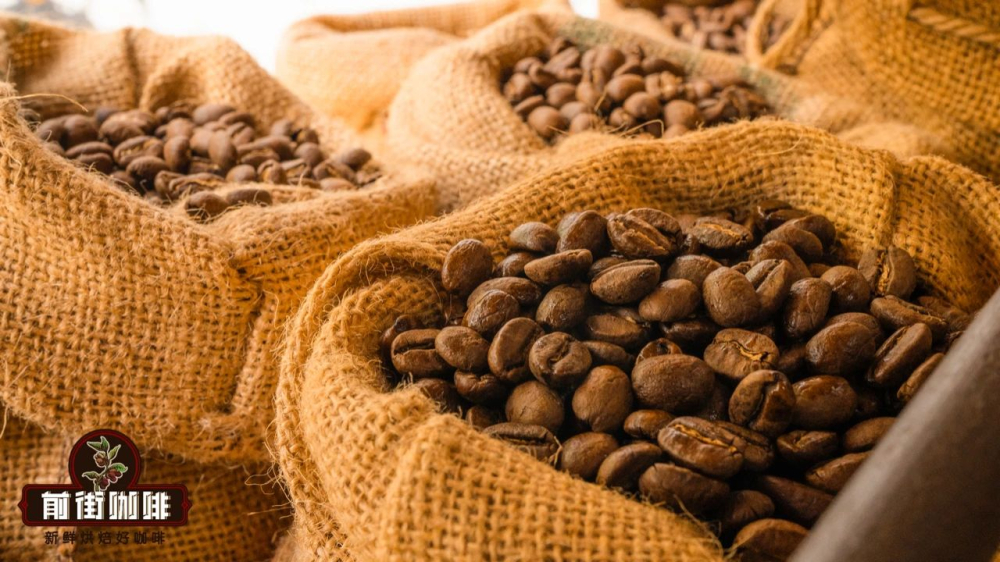
But Front Street Coffee wants to remind you of one thing: resting time should not be too long, nor too short. If rested too short, the coffee flavor will be incomplete and not easy to brew, and it cannot be called good roasting; if rested too long, from the perspective of freshness, it will definitely affect the maintenance of subsequent freshness, causing the coffee beans' flavor period to be shortened.
How long should the resting time be?
So how exactly should the resting process be carried out correctly? Generally speaking, coffee beans can still release carbon dioxide even when the bag is sealed, but it will take a little longer. Front Street Coffee still recommends that the resting bag preferably have a one-way exhaust valve, and that unopened coffee beans be placed in a cool, dry, light-proof environment with no strong odors. After the resting period, seal the one-way exhaust valve (transparent tape is enough), because the subsequent carbon dioxide will gradually fill the bag to form a low-oxygen environment, reducing the rate of oxidation. So coffee fans who often choose coffee beans from Front Street Coffee all know that Front Street Coffee's coffee bean packaging has an independent one-way exhaust valve.
However, regarding resting time, because cafes or coffee brands have different roasting techniques, different coffee beans have different roast levels, and the degree of damage to the coffee bean structure also differs, there is no standard answer for resting time. But Front Street Coffee believes that the approximate time range for resting can still be determined according to the roast level of the coffee beans.
For example, the darker the roast level, the longer the green coffee beans are exposed to heat, and the more intense the caramelization reaction. At the same time, because they receive a large amount of hot air in a short time, strong oxidation is triggered, so freshly roasted coffee beans will continue to undergo intense oxidation, leading to large-scale degassing.
Generally speaking, medium-dark roasted coffee has a shorter resting time than light roasted coffee, usually about 3 days. Of course, there is also the saying that no resting is needed and it can be brewed directly, because methods differ greatly among roasters. Perhaps the coffee beans roasted by this roaster simply have a higher maturation ratio than others, so no resting is needed.

Compared with coffee beans for drip coffee, coffee beans used for espresso need a longer resting time, generally up to 10 days or even 15 days. Because extracting espresso with a coffee machine is a pressure-based extraction, and water is an inert liquid that tends to flow toward looser areas, so excessive carbon dioxide creates resistance that easily obstructs the water flow, causing channeling, uneven extraction, and naturally unsatisfactory coffee taste.
However, coffee fans choosing coffee beans at Front Street Coffee do not need to worry too much about this problem, because Front Street Coffee generally calculates the time well and provides coffee fans in need with beans that are almost rested or already rested, so that the coffee beans are at their most suitable drinking time as soon as coffee fans receive them.
The above is the relevant knowledge compiled by Front Street Coffee on how to rest beans. We hope it can help coffee fans better understand related knowledge about coffee beans, so they can choose the single-origin coffee beans that best suit their own taste.
For more specialty coffee beans, please add the private WeChat of Front Street Coffee, WeChat ID: kaixinguoguo0925
The above content is compiled by CoffeeHunters, a coffee news website.


