








How do you brew with a moka pot and which beans work?
A moka pot brews by pushing hot water up through coffee grounds at far lower pressure than an espresso machine, with higher water temperature and a coarser filter screen, so crema and body come out different. The Bialetti Brikka adds a pressure valve but follows the same basic routine: add hot water and grounds, set it on a heat source and let time finish the job.
The moka pot began as a home substitute for the espresso machine, a history that runs back to the first espresso machine in Turin at the end of the nineteenth century and to La Pavoni's commercial machine in 1905. Because pressure is limited, medium to dark beans suit the bialetti moka pot well; a classic espresso blend, a Golden Mandheling or a Brazilian estate bean all work.
The moka pot is the most commonly used espresso substitute in many households that don't have an espresso machine, and among them, the Bialetti Brikka has drawn attention from many coffee enthusiasts thanks to its pressure valve design. However, the extraction pressure of a moka pot is far lower than that of a modern espresso machine, the water temperature is higher, and the filter screen is coarser, so the coffee it brews differs noticeably in crema and body. This article starts with the historical origins of the espresso machine and the moka pot, sorts out the correct operating steps for the Brikka, and discusses what beans are suitable for a moka pot, while recommending three suitable beans: Front Street Classic Espresso Blend, Front Street PWN Golden Mandheling, and Front Street Brazil Queen's Estate, to help you consistently make a smooth cup of moka pot coffee at home.
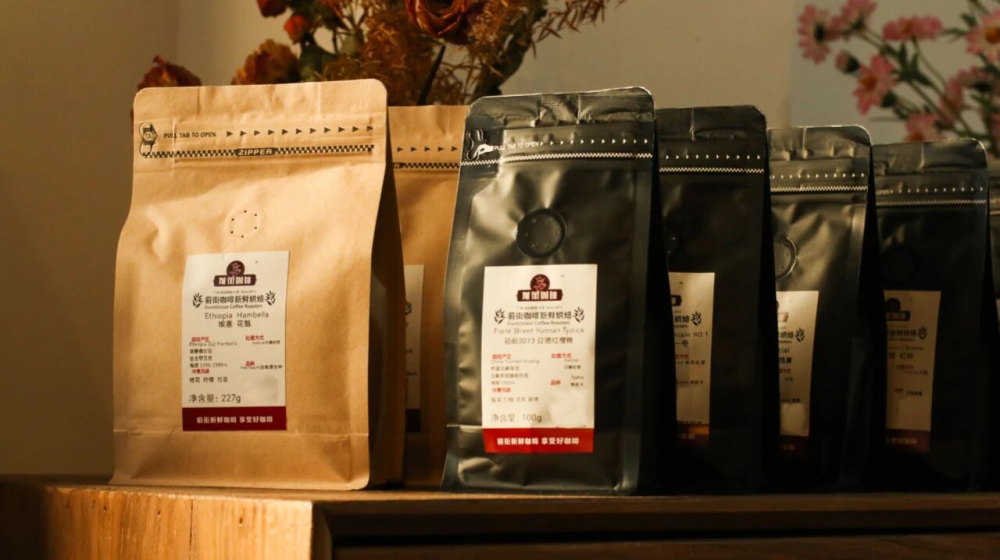
Espresso is certainly charming, but not every household has the budget and space to accommodate an espresso machine. So more coffee enthusiasts have turned their eyes to the moka pot. Its barrier to entry is low: put in hot water and coffee grounds, set it on a heat source, and leave the rest to time.
However, the coffee made with a moka pot still falls far short of what today's espresso machines produce. When the moka pot was first born, it was itself positioned as a home substitute for the espresso machine. Modern espresso relies on extremely high pressure to push nearly boiling hot water through a compact puck of coffee grounds, and this level of pressure was only achieved after modern advances in espresso machine technology.
To understand the origin of the moka pot, one cannot avoid the history of the espresso machine. At the end of the nineteenth century, the first espresso machine appeared in Turin, Italy. In 1905, La Pavoni launched the first commercial espresso machine, allowing baristas to serve espresso to multiple customers in a very short time. After that, more and more cafés in Italy began using La Pavoni equipment.
When these large commercial espresso machines operated, the entire device had to be placed over a flame to heat, and inside the machine steam pressure was used to send hot water from the lower compartment through a tube leading to the coffee grounds. However, such machines were expensive and bulky, and it was almost impossible for an ordinary household to have one at home.
The arrival of the moka pot had to wait until the 1930s. Crucinaro from northern Piedmont invented this device. Alfonso Bialetti, after spending more than a decade making a name for himself in the French aluminum industry, returned home in glory to Piedmont and opened a workshop making aluminum household goods.
One day, Bialetti saw his wife doing laundry and suddenly had an inspiration. The washing equipment at the time had two layers: the lower layer held soapy water and was heated to boiling, while the upper layer held the clothes to be washed, with a tube connecting the two layers in the middle. The hot soapy water rushed up through the tube into the upper layer and was evenly sprinkled over the clothes. With the assistance of Luigi De Ponti, the moka pot as we know it today was designed in this way.
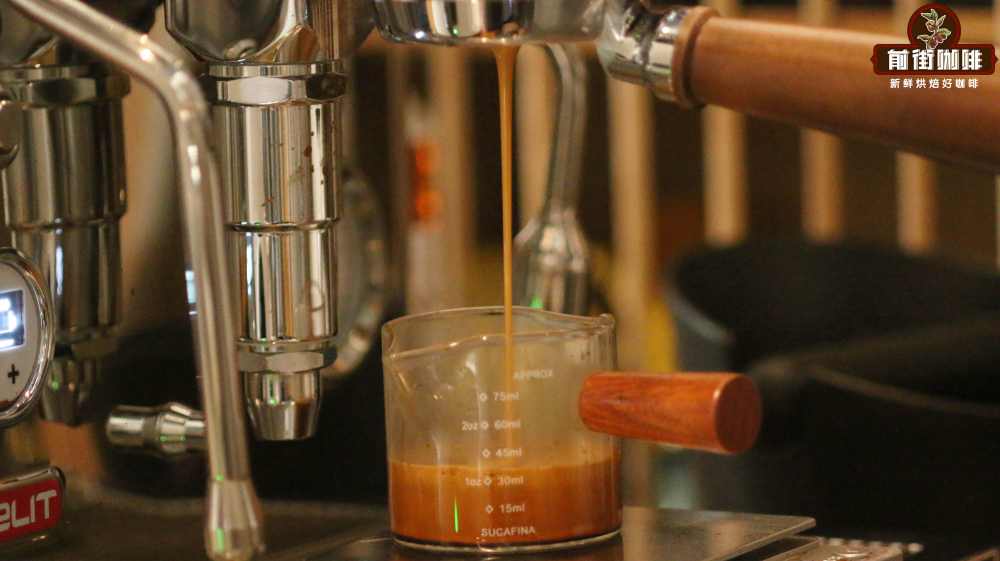
The working principle of the Bialetti moka pot is exactly the same as that washing machine. The body is an octagonal aluminum structure, equipped with a plastic handle for heat insulation. The whole pot is mainly divided into three parts: the lower container holds hot water, the upper container receives the extracted coffee liquid, and in the middle is a metal filter screen used to hold the ground coffee.
When using a moka pot to brew coffee, first pour an appropriate amount of hot water into the lower pot, put the coffee grounds into the middle metal filter screen, then place the filter screen onto the lower pot, screw the upper pot tight, and finally put the whole device on a heating appliance. When the water in the lower pot boils and produces steam, the space in the lower pot is limited, and the steam keeps accumulating and raises the internal air pressure, thereby forcing the hot water up along the tube of the lower pot, through the middle layer of coffee grounds, and then through the passage in the metal filter screen into the upper pot.
The moka pot was originally meant to replace the espresso machines of the late nineteenth and early twentieth centuries, but after decades of evolution in espresso machine manufacturing, extraction pressure has long exceeded the early level of about 1.5 pascals. The moka pot, however, relies on water rising after boiling, which means the water temperature is relatively high. This creates a huge difference from the espresso made by today's espresso machines. One of the advantages and disadvantages of brewing coffee with a moka pot is that the crema is not rich enough. The extraction pressure of modern espresso machines is far higher than that of a moka pot, so the output of a moka pot is inferior to an espresso machine in terms of crema.
In addition, another reason for this characteristic is that the pores of the metal filter screen are coarser, and the grind suitable for a moka pot is coarser than that for an espresso machine. The coarser the grind, the smaller the contact area between water and particles, and the fewer substances can be extracted, so the coffee brewed with a moka pot is also less syrupy than that from an espresso machine.
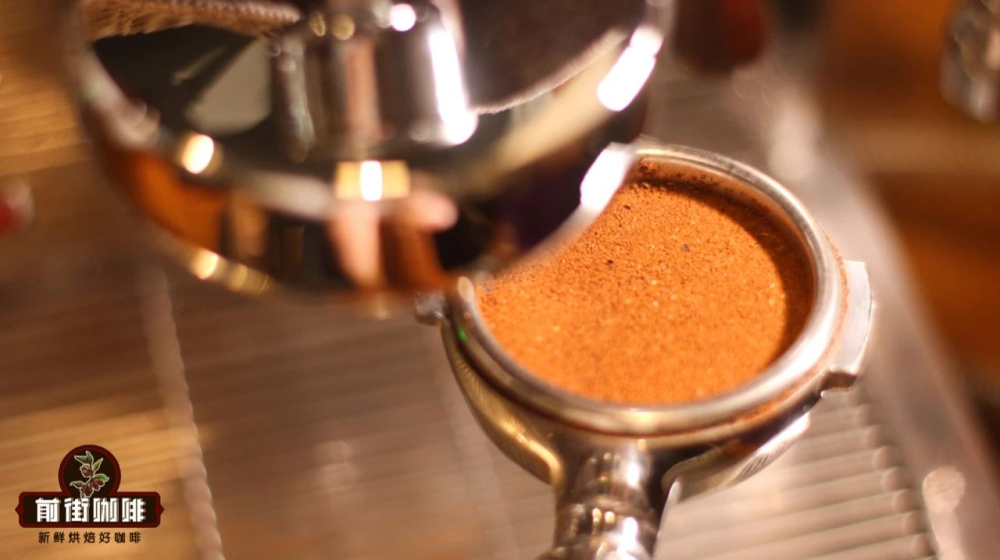
Many friends want to make espresso at home and have prepared a moka pot. So the question arises: what kind of coffee beans are suitable for brewing a delicious cup in a moka pot? Since the moka pot is a substitute for old-fashioned espresso machines, and espresso emphasizes richness and smoothness, if you want a richer crema, you need to choose coffee beans with a darker roast level.
In addition to Front Street Classic Espresso Blend beans, you can also try Front Street. Front Street PWN Golden Mandheling coffee beans and Front Street. Brazil Queen's Estate coffee beans.
Front Street. Mandheling coffee beans are produced on the island of Sumatra in Indonesia, Asia, and are also called "Sumatra coffee." Mandheling is grown in highland mountainous areas at an altitude of 750-1500 meters and belongs to a rare Arabica variety in Indonesia. When it comes to Mandheling, Front Street really likes its rich aroma, full body, and intense flavor; its unique herbal spice flavor is also a hallmark of Mandheling coffee. The reason for this unique taste, in addition to Indonesia's growing conditions, is that the wet-hulling process is also one of the sources of Mandheling coffee's intense flavor.
Mandheling coffee mostly uses the wet-hulling method unique to Sumatra. Due to a lack of water resources, Mandheling was initially mainly sun-dried, but the drawback was unstable quality. Later, Brazil's semi-washed method was also tried, but the local weather is often rainy, with constant typhoons and humid, rainy conditions year-round, which cannot meet the weather conditions required for sun-drying.
The local economy is likewise limited and cannot afford the relatively costly washed method, so in the end the highly local wet-hulling method emerged. The characteristics of the wet-hulling process are staged, rapid drying and removing the parchment before drying. Teacher Han Huaizong described it as "this is also a rare processing method in the world, accidentally creating Mandheling's special low-acidity, thick, and stuffy aromatic flavor." In terms of roasting, in order to highlight the mellow and rich characteristics of Mandheling coffee, the roasters at Front Street Coffee adopt a darker roast level.
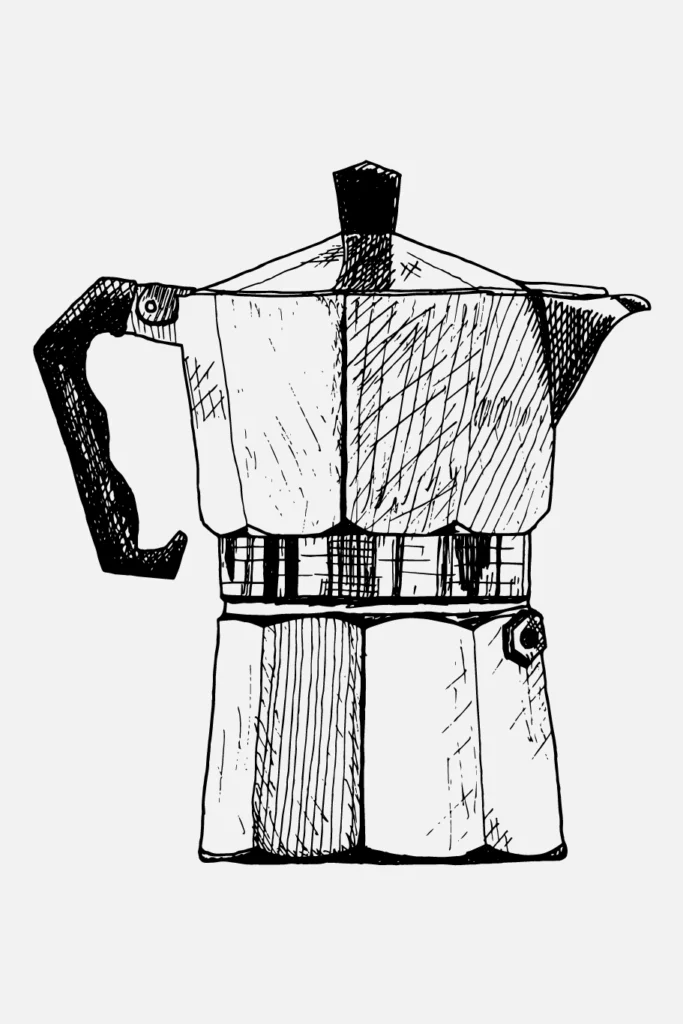
Front Street. Brazil Queen's Estate Coffee Beans
Region: Mogiana region, São Paulo State, Brazil
Estate: Queen's Estate
Altitude: 1400 meters—1950 meters
Variety: Yellow Bourbon
Processing method: Sun-dried processing
The Yellow Bourbon variety was discovered in São Paulo State, Brazil, in the 1870s. Later, scientific research found that the Yellow Bourbon variety has a richer pectin layer, and the pectin layer contains a large amount of sugary substances, making the sweetness of the Yellow Bourbon variety more pronounced. Moreover, this Front Street coffee bean of the Yellow Bourbon variety uses the most primitive and traditional post-processing method for green coffee beans—the sun-dried processing method. It retains the complete fruit peel and pulp, allowing more sugary substances to penetrate into the green coffee beans, achieving a qualitative leap in sweetness.
Since the first Brazil Cup of Excellence coffee competition in 1999, Queen's Estate has won multiple awards, and in just 7 years it won 12 awards, which shows the superior quality of the coffee beans produced by Queen's Estate. The sun-dried processing method also requires a large input of manual labor. In order to avoid producing bad fermented flavors, Queen's Estate specially adopted small-scale sun-drying to ensure the quality of the green beans.
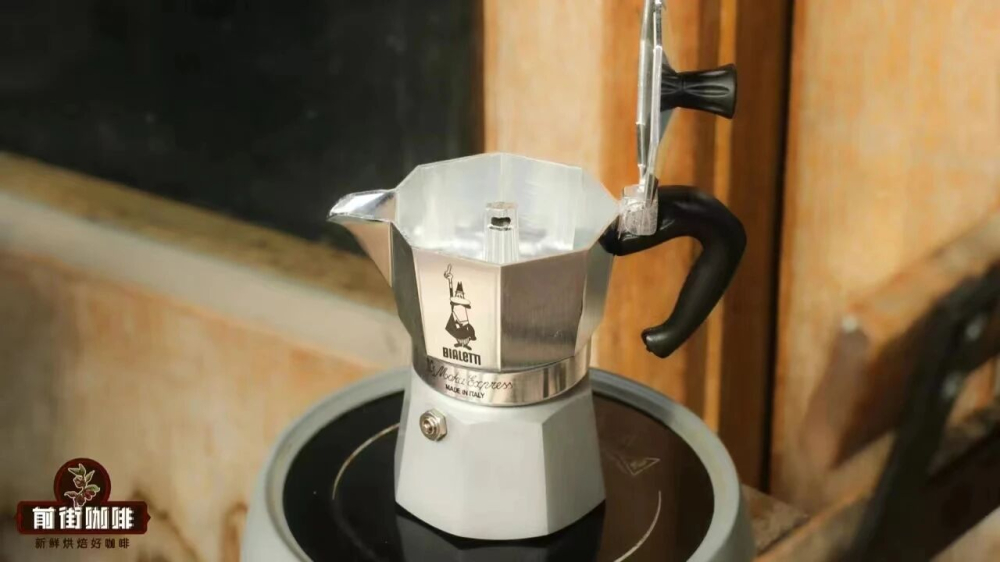
What utensils are needed to make a cup of espresso with a moka pot
1. Moka pot 2. Gas stove and stove rack or "induction cooker" 3. Coffee beans 4. Grinder
[Front Street. Queen's Estate Coffee Beans]
Origin: Brazil
Roast level: Medium-dark roast
Flavor description: chocolate, cream, nuts, butter, caramel, rich crema
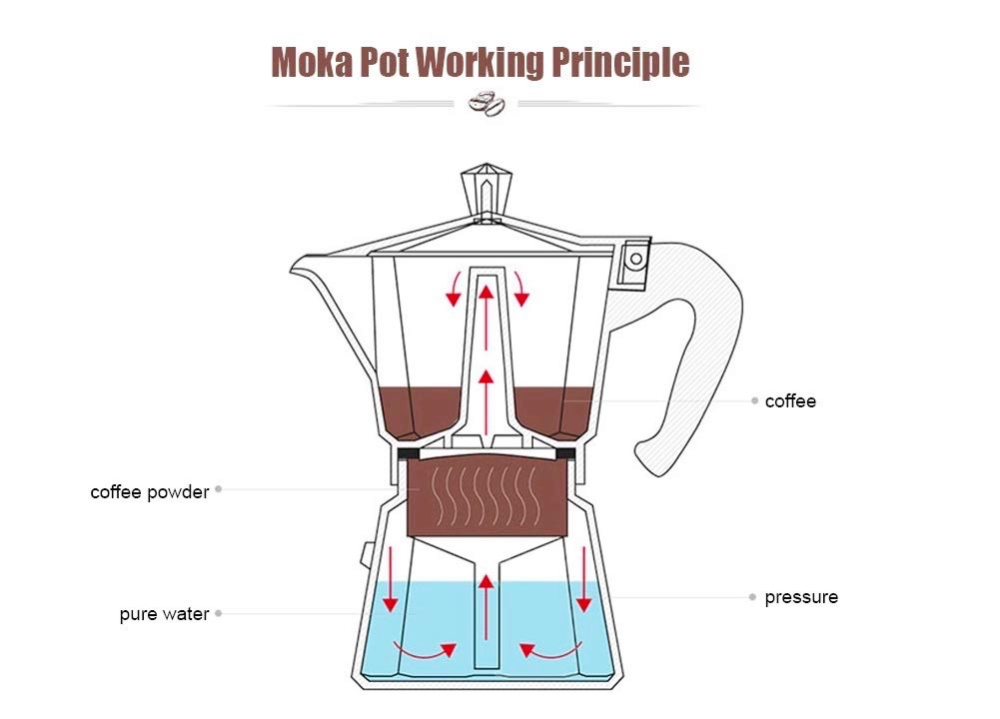
[Brewing method]
(1) First put cold water into the lower chamber.
(2) Put the coffee grounds into the filter basket, filling it to about 9/10 full, and tap the edges lightly so the coffee grounds are compact and level.
(3) Screw the upper and lower chambers tight to prevent the coffee liquid from overflowing during the process.
(4) Place the moka pot on a small gas vaporizer stove or an induction cooker to heat. At first, heat over medium heat, and when you hear a sizzling sound, turn the heat to low, and the coffee will naturally flow out slowly.
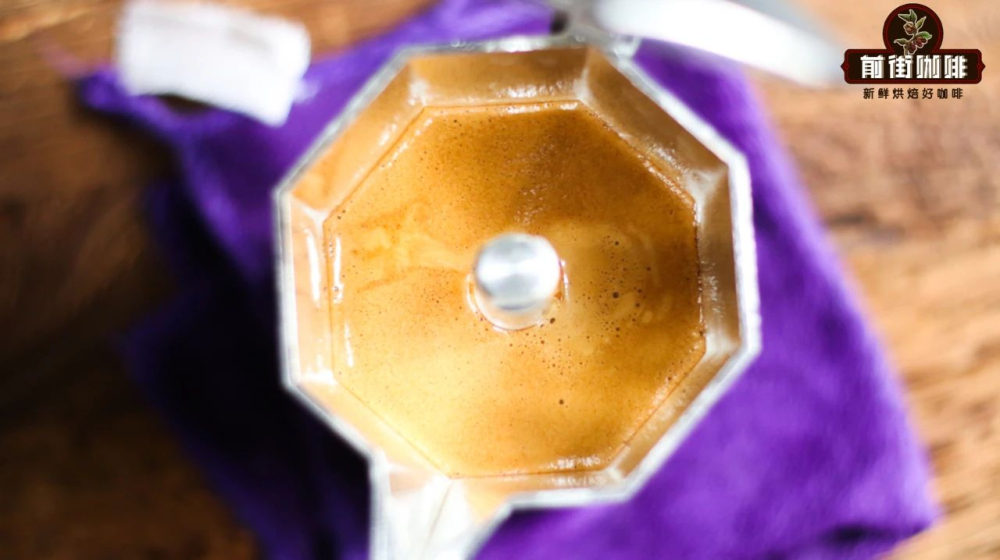
(5) When the sound turns to a faint bubbling sound, turn off the heat to avoid over-extraction. The fragrant coffee is now ready, and you can add half warm water or fresh milk to turn it into a moka pot Americano or moka pot latte.
The above content is compiled by CoffeeHunters, a coffee news website.


