








What does coffee have in it that changes the ratio math?
The coffee-to-water ratio compares the grounds used for extraction with the water poured in, so 1:15 means 1 gram of coffee to 15 milliliters of water. The coffee-to-liquid ratio compares grounds with the liquid that ends up in the cup. The two cannot be converted directly, because the grounds retain part of the water they absorb.
What does coffee have in it matters here: the grounds themselves hold back liquid, so the finished beverage always weighs less than the water poured. The coffee-to-water ratio suits most brewing because it is easy to calculate and controls how much water enters the bed, while the coffee-to-liquid ratio is used when the poured water cannot be measured. Common name for coffee aside, the terms are not interchangeable.
Many friends who are just getting into pour-over coffee often confuse the coffee-to-water ratio with the coffee-to-liquid ratio, and as a result, the coffee they brew always tastes different from what they expect. In fact, although these two concepts differ by only one word, their meanings are completely different, and they cannot even be directly converted on an equal basis. Today, Front Street will explain these two measurement methods, first explaining what each represents, then clarifying the effect of coffee grounds absorbing water on the final liquid weight, and providing a conversion approach between the coffee-to-water ratio and the coffee-to-liquid ratio. Once you understand these, you will have clearer direction when adjusting pour-over parameters and find it easier to consistently reproduce a delicious cup of coffee.
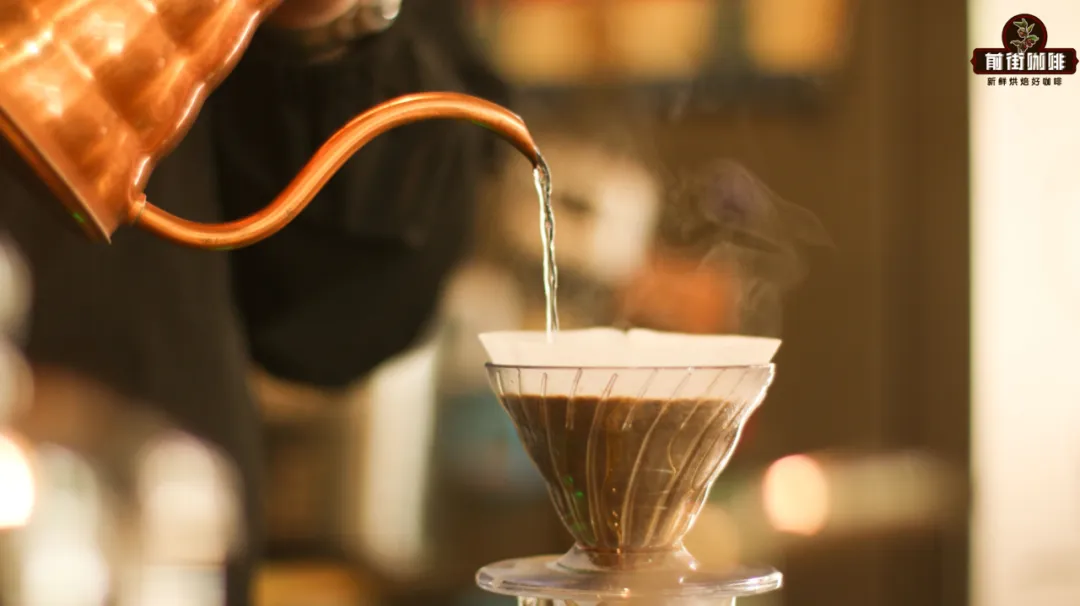
In coffee brewing, the coffee-to-water ratio and the coffee-to-liquid ratio are two measurement concepts that are often used, but because their names are too similar, many beginners confuse them, ultimately causing deviations in the flavor of the extracted coffee. Therefore, today Front Street will once again sort out exactly how the coffee-to-liquid ratio and the coffee-to-water ratio differ.
Let's first talk about the word "ratio." Ratio (Proportion) is a mathematical term used to express a comparative relationship between quantities. Once you understand the meaning of this word, the coffee-to-water ratio and coffee-to-liquid ratio in the coffee context are not difficult to understand.
The coffee-to-water ratio refers to the ratio between the coffee grounds participating in extraction and the water used for extraction. For example, the commonly mentioned 1:15 means that for every 1 g of coffee grounds, 15 ml of water is used for extraction. The coffee-to-water ratio has a very wide range of applications. It can be said that except for coffee-making methods in which the amount of poured water cannot be measured, most coffee extraction is better expressed using the coffee-to-water ratio. There are three reasons: first, it is more convenient for calculation; second, it allows better control of the amount of water poured in, thereby extracting the target flavor compounds; third, it can reduce errors caused by differences in the water absorption of coffee beans.
Next, let's look at the coffee-to-liquid ratio. The coffee-to-liquid ratio refers to the ratio between the extracted coffee grounds and the final coffee liquid obtained from extraction. For example, 1:12 means that 1 g of coffee grounds needs to extract 12 ml of coffee liquid. It sounds somewhat similar to the coffee-to-water ratio, but the actual meaning is very different, because these two units cannot be directly converted on an equal basis.

Suppose we use 225 ml of hot water to brew coffee. The server will not end up with the same weight of coffee liquid, because the coffee grounds will absorb some of the water, so the coffee liquid that finally drips into the server must be less than the hot water poured in. Usually, coffee grounds absorb about twice their own weight in water. Based on this principle, we can roughly estimate the weight of the coffee liquid, and this is also the conversion formula between the coffee-to-water ratio and the coffee-to-liquid ratio.
For example, if you use 225 ml of hot water to extract 15 g of coffee grounds, then the 15 g of coffee grounds will absorb about twice their own weight in water, that is, about 30 ml. After subtracting 30 ml from 225, you can get the approximate weight of the coffee liquid, about 195 ml. The reason we say "approximately" and "around" is that the water absorption rate of coffee beans is not absolutely equal to twice their own weight, but is only relatively close to this value.
The above content is compiled by CoffeeHunters, a coffee news website.


