







What Makes Golden Mandheling Coffee Taste the Way It Does
Golden Mandheling is a wet-hulled Indonesian coffee with low acidity, a heavy body, and nut, spice, herbal, chocolate and caramel notes. A working pour-over recipe uses a KONO dripper, 88°C water, a medium-coarse grind and a 1:15 ratio with staged pours.
The Mandheling name traces to Sumatra growing areas such as Lake Toba and Lake Tawar, and to the wet-hulling process that shapes the cup. Mandheling built its reputation on full mouthfeel and balance between body and bitterness, with a sweet finish that lingers after the last sip.
Mandheling has always been a representative of Indonesian specialty coffee, thanks to its low acidity, full body, and intense flavor. This article focuses on Golden Mandheling, systematically covering the core knowledge of this bean—from the Sumatra growing region and the differences between Lake Toba and Lake Tawar, to the origin of the name Mandheling, the wet-hulling process, and Front Street Coffee's roast analysis and cupping performance. It also provides a daily pour-over recipe, including a KONO dripper, 88°C water temperature, medium-coarse grind, a 1:15 coffee-to-water ratio, and a staged pouring technique to help you brew a clean sweetness interwoven with nut, spice, herbal, chocolate, and caramel notes.
For professional barista exchanges, please follow Coffee Workshop (WeChat public account: cafe_style)
Mandheling occupies an important place in the global specialty coffee landscape. With its relatively low acidity, full aroma, and heavy mouthfeel, it has won the favor of a large number of coffee enthusiasts, and it is also one of the coffee-producing countries Front Street has continued to follow in recent years. The birth of Mandheling carries a touch of misunderstanding; Front Street has already told its background story many times, and many readers should be familiar with it. Its flavor profile is mainly intense, with a solid, full-bodied texture on the palate, paired with a rich and vibrant character. The acidity is low yet not astringent, and the balance between body and bitterness is quite excellent. For this reason, in the era before Blue Mountain coffee became widely known, Mandheling was once regarded as the coffee with the heaviest mouthfeel in the world. When drinking it, the tip of the tongue can clearly detect a smooth tactile sensation, followed by a faint herbal aroma, and the sweet aftertaste in the finish is even more memorable, which is also why Front Street has always held a persistent affection for Mandheling.
Indonesia's Sumatra Growing Region
Indonesia is located in Southeast Asia, and its coffee cultivation history can be traced back to 1696. At that time, Dutch plantation owners hoped to find a broader coffee-growing area, and after extensive investigation they finally chose the island of Java. About thirty years after that, Indonesia established a solid foundation in the coffee market. But as it developed to the present day, the representative of Indonesian coffee has instead become Mandheling, which is actually not surprising, because in the early days a large portion of the Java coffee shipped to Europe came from Sumatra, and Mandheling is precisely a product of Sumatra. Therefore, Sumatra can be called a critically important coffee-producing region in Indonesia.
Mandheling is also known as "Sumatra coffee," and the hometown of high-quality Mandheling is the Lake Toba area at the northern tip of Sumatra Island in Indonesia. Lake Toba is located in the central part of North Sumatra Province. In 1888, Dutch colonists expanded "Java coffee" northward to the Lake Toba area. Lintong in South Sumatra and the surroundings of Lake Toba can both be included within the scope of Mandheling, among which the Lintong area is the producing region of Mandheling. Mandheling is produced in the mountainous areas around Lake Toba. The lake is located north of Medan, the capital of Sumatra Province, and is a highland freshwater lake with an average elevation of about 900 meters. What is usually called Mandheling refers to Typica or its variants grown in the mountainous areas around Lake Toba.
[Lake Tawar]
Lake Tawar is located in the Gayo highlands north of Aceh Province in Sumatra, at the northern tip of Sumatra Island. Most of what North Sumatra produces is Gayo, mainly the Ateng variety. The Lake Tawar producing area at the northern tip can be called Aceh coffee or Lake Tawar coffee. Lake Tawar is less than one-tenth the size of Lake Toba, but in recent years its coffee quality and output have already surpassed those of Lake Toba.
The Name Mandheling
Mandheling was originally the name of an Indonesian tribe. After colonizing Indonesia, Japanese soldiers returned to Japan and could not forget the delicious local coffee. So through trade partner relationships, they asked the locals to help collect high-quality coffee beans, including this Mandheling. The Japanese were very fond of this coffee bean. Because the commercial source was inconvenient to disclose, the local person casually said "Mandheling," and so by a strange twist of fate Mandheling became the name of a coffee bean. And this local person was exactly the owner of the Indonesian company PWN (Pwani Coffee Company). PWN was the first company to export Golden Mandheling coffee beans to Japan, and only the Mandheling produced by this company is authentic Golden Mandheling. Front Street Coffee has used Front Street PWN Golden Mandheling for many years. PWN also changed from the original 60 kg bags to later 30 kg bags, and the producing area also changed from Lintong to the Gayo Mountains.
Processing Method
-Special Processing Method: Wet-Hulling- Most Mandheling uses Sumatra's unique coffee processing method—wet-hulling. The local weather is mostly rainy, with frequent typhoons, so it cannot meet the good weather required for natural sun-drying. In addition, the local economic conditions are poor, making it difficult to afford the higher-cost washed method, so the highly regional wet-hulling method came into being. Today, Indonesia's coffee industry is no longer as poor as it once was, and many estates and companies with certain means can also use the washed method, but why have they not abandoned wet-hulling? Front Street Coffee believes that wet-hulling is precisely what made Mandheling coffee known to the world. Whenever Mandheling coffee is mentioned, people think of wet-hulling, and the two have already formed a mutually reinforcing relationship.
The specific steps of wet-hulling can be divided into two stages: In the first stage, a wooden depulper is used to remove the skin and flesh, followed by fermentation for 3 hours and then drying, bringing the moisture content down to 30-50%, half-dry and half-wet. In the second stage, the mucilage and parchment layer are removed, and drying continues in the later stage. The drying process takes 2-4 days, and the moisture content drops to 12-13%.
Golden Mandheling is produced in the Lintong area of North Sumatra, Indonesia. Harvesting is limited to fully manual picking of individual ripe cherries, ensuring the initial bean selection quality. The coffee cherries are processed using the SEMI-WASHED method, naturally sun-dried, and after hulling they undergo another fine drying process, as well as two green bean cleaning operations and four Hand-Pick manual sorting processes. Therefore, it can be said to be a strictly selected top-grade Mandheling coffee.
Front Street Coffee Golden Mandheling Roast Analysis
Golden Mandheling is a green bean with relatively high moisture content, and there is a relatively large deviation in moisture compared with sun-dried beans, so special attention must be paid to the dehydration stage. For green beans with high moisture content, the damper can be closed immediately after loading the beans, then opened to 3 after 30 seconds of steaming, until the green bean color turns light green or white, at which point the damper is opened to 4, and after first crack it is opened to 5 (maximum).
Front Street Coffee recommends keeping good data records before roasting, including the coffee beans' moisture content, density, origin, processing method, as well as the ambient temperature and humidity in the roasting room, and planning the roasting curve in advance. Recording the relevant chemical and physical changes during roasting helps to better understand the final roasting result and improve the roasting curve.
Charge when the drum temperature reaches 200°C, set the damper to 3, adjust the heat to 160°C after 1 minute, keep the damper unchanged, roast until 5'40" at 148°C, when the bean surface turns yellow, the grassy smell completely disappears, and dehydration is complete; adjust the heat to 140°C and change the damper to 4; at 9'40", the bean surface shows ugly wrinkles and dark spots, and the toasted bread smell clearly turns into coffee aroma, which can be defined as the prelude to first crack. At this time, you must listen clearly for the sound of first crack. First crack begins at 9'54"; reduce the heat to 60°C and fully open the damper (adjusting the heat must be done very carefully, not so low that there is no cracking sound), and drop at 204.5°C.
Front Street Coffee Golden Mandheling Cupping Report
Golden Mandheling drinks cleaner than Lintong Mandheling. Mandheling's original herbal, earthy, and woody notes almost disappear, but the caramel sweetness is stronger, and the fruity acidity is brighter and more elegant. Generally, Lintong Mandheling is best dropped after second crack to effectively reduce off-flavors, but Golden Mandheling has good transparency and sweetness whether dropped before or after second crack, allowing broader room for roasting interpretation.
How to brew Indonesian Mandheling coffee?
Front Street recommends using freshly roasted coffee beans for brewing, as this allows you to experience the coffee's rich flavors to the greatest extent. The coffee beans shipped by Front Street Coffee are all within 5 days of roasting, because Front Street deeply understands the great influence of coffee bean freshness on flavor. Front Street's roasting philosophy is "freshly roasted good coffee," so that every customer who places an order receives the freshest coffee when it arrives. Coffee beans rest for about 4-7 days, so by the time customers receive them, they are exactly at their best flavor.
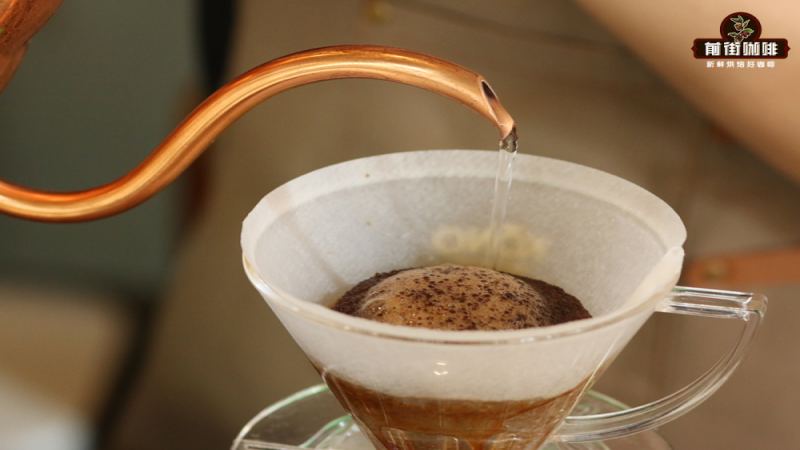
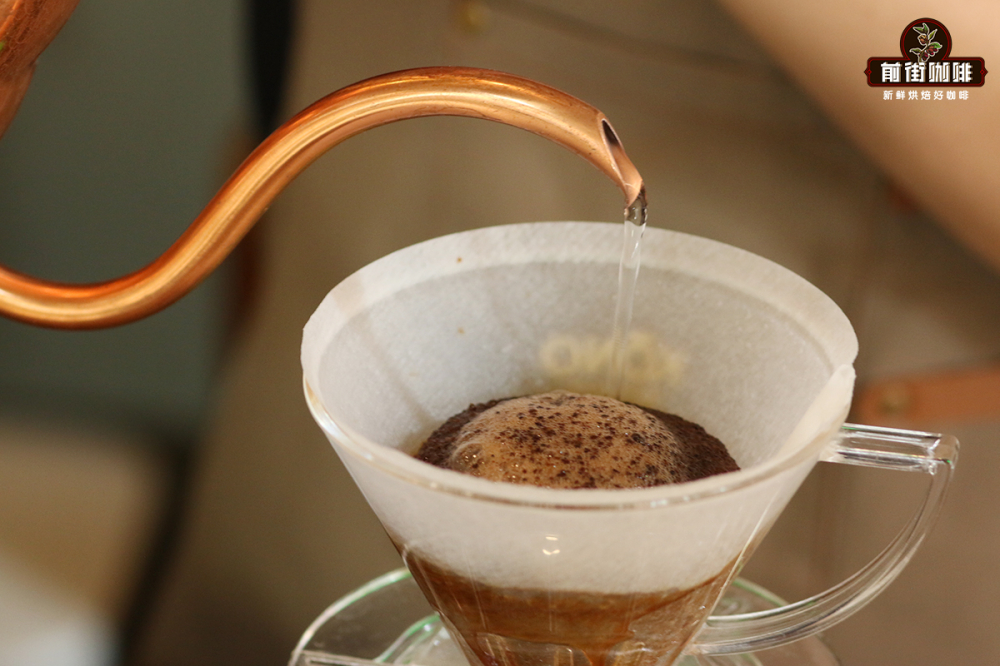
For daily brewing of Mandheling, Front Street Coffee generally uses a KONO dripper, because the mouthfeel it brings out is rounder and fuller, and the flavor expression is more direct. However, the KONO dripper is relatively poor at venting, because its ribs are straight and its depth is only one quarter of the dripper. Aside from the area above that one quarter, it fits tightly against the dripper wall, forming a sealed state.
So after the beans have passed their resting period, I choose the KONO dripper, because the only venting part of this dripper is that one quarter of ribs. When the water level passes the rib area, the water volume in the dripper keeps rising, increasing pressure through the weight of the water. Since the outlet is relatively small, it can extend the contact time between coffee particles and water and, driven by the water flow, more effectively extract soluble substances, generally achieving the high-body effect the customer expects.
Because we want to better express Mandheling's spice and herbal flavors as well as its full-bodied mouthfeel, Front Street Coffee uses a medium-dark roast for Mandheling coffee beans. Medium-dark roasted beans generally have a relatively high dehydration rate, so they are lighter in weight, and during brewing the grounds do not completely settle at the bottom. As soon as water is poured in, it is immediately absorbed. Due to vigorous degassing, the grounds are surrounded by bubbles, thus creating channels, and the fresher the beans, the longer these channels last, causing the water level to drop quickly. I generally use a thick stream of water, slowly circling, using a single-pour method.
Taking Front Street Coffee Sumatra Golden Mandheling as an example
Origin: Gayo Mountains, Aceh, Indonesia
Altitude: 1100-1600m
Variety: Ateng
Processing Method: Wet-Hulling
Grade: G1, 3 times hand-sorted
Front Street Coffee Brewing Mandheling Coffee
1. Dripper: KONO
2. Water Temperature: 88°C
3. Grind: Medium-coarse, 70% passing a No. 20 sieve
5. Blooming Time: 30 seconds
6. Coffee-to-Water Ratio: 1:15
Technique: Pour 30g of water for the first pour and bloom for 30s, then directly pour in circles. Stop pouring after reaching 125g, wait until the liquid level drops to the halfway point, then pour directly in the center until the total water reaches 225g. Extraction time is about 2:00.
[Golden Mandheling Brewing Flavor]: Nuts, spices, herbs, licorice, chocolate, caramel; clean and soft flavor
For more specialty coffee knowledge, please add the private WeChat of Front Street Coffee. WeChat ID: kaixinguoguo0925
The above content is compiled by CoffeeHunters, a coffee news website.


