







Why Does Kenya Coffee Taste So Bright and Juicy?
Kenyan coffee is known for clean, bright acidity and a juicy, tea-like finish, and AA TOP sits among the most sought-after grades. The growing belt sits in volcanic soil at 1,600 to 2,100 meters, and the high altitude slows cherry ripening so aromatic compounds build up and the beans turn dense.
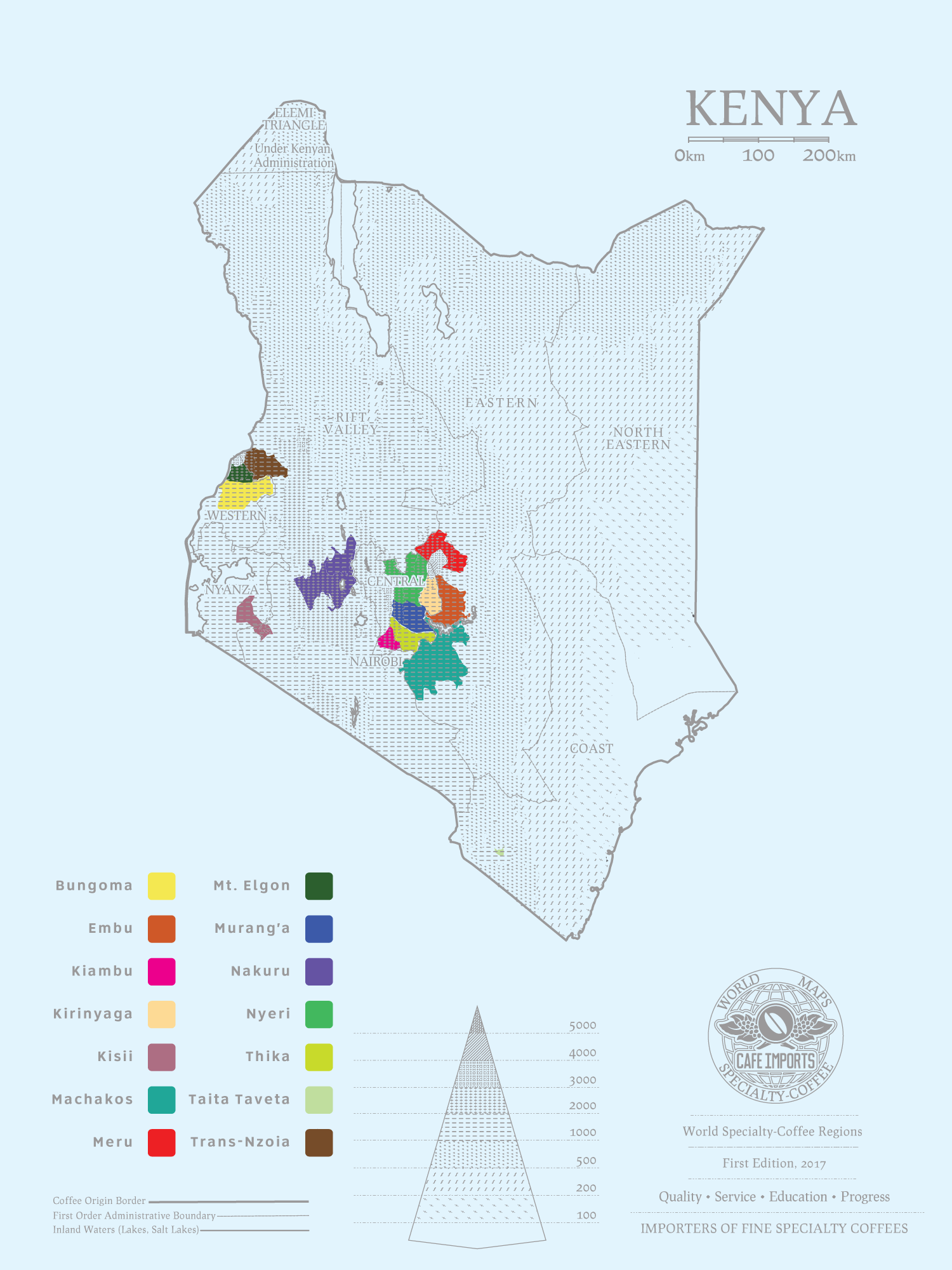
Among the country's major growing regions, names such as Kirinyaga, Nyeri, and Murang'a recur on bags, and each lot is graded by bean size, with AA denoting the largest screen. Washed fermentation drives the signature fruit acidity. For pour-over, use a light roast, water near 92 degrees Celsius, and a medium grind.
Kenyan coffee has always been celebrated for its clean, bright acidity with a strong juicy character, and AATOP is one of its most sought-after grades. Drawing on the experience of Front Street baristas, this article systematically covers Kenya's growing terroir, historical context, top ten producing regions, official grading standards, and explains why its washed fermentation creates the signature bright fruit acidity. Finally, using Front Street Kenya Asalia as an example, it provides light-roast pour-over dripper selection, water temperature ranges, grind assessment, and a three-pour recipe to help enthusiasts recreate a cup of Kenya with solid sweet-tart balance and a tea-like finish at home.
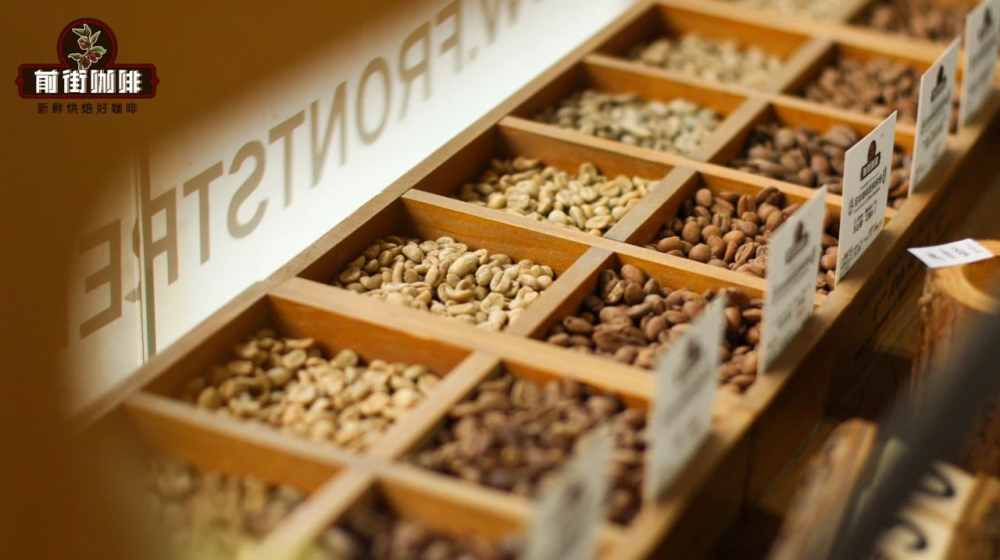
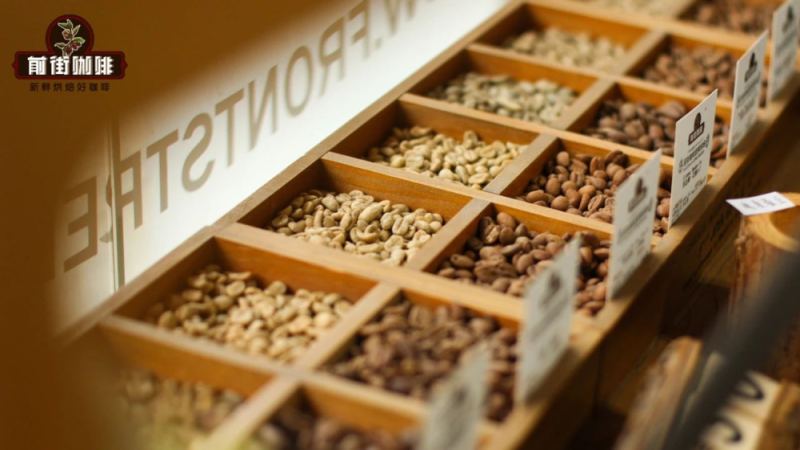
Many friends new to specialty coffee, upon realizing that coffee can actually have acidity, often blurt out the question: "Which coffee has the highest acidity?" When Front Street baristas are asked this, the first answer that usually pops into their heads is Kenya. Kenyan coffee is known for its clean and refreshing mouthfeel, full body, and bright fruit acidity. Friends who have tried Front Street's Kenyan beans are mostly firmly won over by it.
Coffee Growing Conditions
Kenya is located in East Africa, with the equator passing through its center and the East African Rift Valley running north to south. The country has a large proportion of highland terrain, with an average elevation of about 1,500 meters. Mount Kirinyaga (Mount Kenya), Africa's second-highest peak, stands at 5,199 meters, its summit perpetually covered in snow.
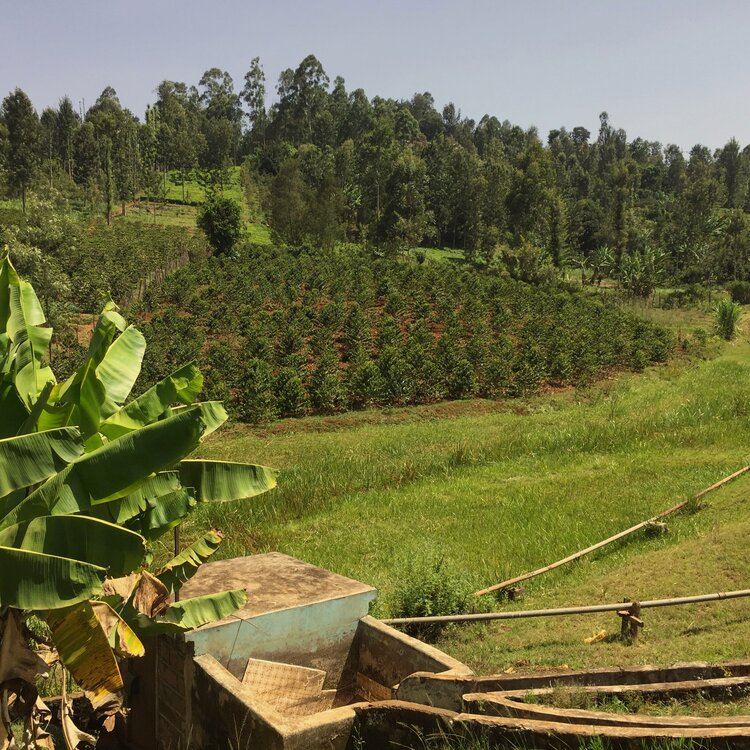
As a tropical producing region, Kenya has two rainy seasons per year, corresponding to harvest seasons from October to December and June to August. The coffee growing belt is mainly concentrated in volcanic soil areas at elevations of 1,600 to 2,100 meters. Thanks to the suitable high altitude, the ripening cycle of coffee cherries is extended, allowing aromatic compounds within the beans to accumulate more fully, resulting in outstanding fruit acidity and harder bean density.
Coffee Growing History
Kenya's neighbor Ethiopia is known as the "birthplace of coffee," but Kenya's coffee growing history only dates back to the late 19th century. In 1893, missionaries brought Bourbon varieties from Brazil into Kenya. In 1895, Britain colonized Kenya, designating it as the "East Africa Protectorate," and took control of all crops including coffee.
Between 1900 and 1933, the colonial government established the Coffee Board (CB), responsible for licensing, inspection, and promotion of coffee. From 1934, auction became one of the sales methods for Kenyan coffee, though the first coffee auction was not held until September 1935. The Coffee Marketing Board (CMB) was established in 1946 and became fully operational on July 1, 1947, but was abolished in 1971.
Introduction to Kenyan Coffee Producing Regions
Kenya has 10 main coffee producing regions: Nyeri, Murang'a, Kirinyaga, Embu, Meru, Kiambu, Machakos, Nakuru, and Kisii.
【Nyeri】
The Nyeri producing region is located in central Kenya, home to the dormant volcano Mount Kenya, whose fertile volcanic red soil provides ideal conditions for cultivating top-tier Kenyan coffee. The region is dominated by smallholder cooperatives, with large estates being relatively rare. Growing elevation ranges from 1,200 to 2,300 meters.
【Murang'a】
The Murang'a producing region belongs to Central Province, with approximately 100,000 coffee farmers in the area. This was where the first missionaries chose to settle. The region also has fertile volcanic soil, and smallholder coffee farmers outnumber estates. Growing elevation ranges from 1,350 to 1,940 meters.
【Kirinyaga】
The Kirinyaga producing region is located east of Nyeri, with equally fertile volcanic soil. Smallholder-produced coffee is more common in the area, and processing plants also produce plenty of exceptionally high-quality coffee. Growing elevation ranges from 1,300 to 1,900 meters.
【Embu】
This producing region is adjacent to Mount Kenya, and the name Embu comes from Embu town. About 70% of the local population engages in small-scale farming, with coffee almost entirely from smallholders and relatively limited output. Growing elevation ranges from 1,300 to 1,900 meters.
【Meru】
Coffee from the Meru producing region is mostly grown by smallholders on the slopes of Mount Kenya and the Nyambene Hills. The name Meru comes from the local Meru people. In the 1930s, they were the first Kenyans to produce coffee, thanks to the Devonshire White Paper signed in 1923, which safeguarded the rights of Kenya's African population. Growing elevation ranges from 1,300 to 1,950 meters.
【Kiambu】
The Kiambu producing region is located in central Kenya and is dominated by large coffee estates. However, with urbanization advancing, the number of estates has decreased. Coffee from Kiambu is usually sold under sub-region names such as Thika, Ruiru, and Limuru. There are also many smallholders in the area. Growing elevation ranges from 1,500 to 2,200 meters.
【Machakos】
The Machakos producing region is a relatively small county in central Kenya, named after Machako town. Coffee production in this region consists of both estates and smallholders. Growing elevation ranges from 1,400 to 1,850 meters.
【Nakuru】
The Nakuru producing region is located in central Kenya and has the highest coffee growing areas among the central regions. Some coffee plants grown at high altitudes stop growing due to dieback disease. The region's name comes from Nakuru town. Growing elevation ranges from 1,850 to 2,200 meters.
【Kisii】
The Kisii producing region is located in the southwestern part of Kenya's coffee producing areas, near Lake Victoria, and is relatively small. Most coffee in the area comes from cooperatives formed by independent small producers. Growing elevation ranges from 1,450 to 1,800 meters.
Kenya Coffee Grading System
Friends who have read Front Street's content on Kenyan coffee will easily notice the presence of Kenya AA. Kenya developed its coffee economy during the colonial period, and the entire system leaned toward refined management. Its level in selection, breeding, grading, and processing methods far exceeded many producing countries at the time. It was only decades later, when other countries also recognized the advantages of refined management and followed suit, that Kenya's unique dominance gradually faded.
1. Classified by size, shape, and weight
E: Elephant bean, above screen 18 (including peaberries), includes large peaberries, relatively scarce like PB
AA: Screen 17-18
AB: Screen 15-16, a mix of Grade A and Grade B; above screen 17 (6.8mm) is Grade A, above screen 16 (6.3mm) is Grade B
TT: Light beans screened out from AA and AB by air separator
PB: Above screen 15, peaberry, accounting for about 10% of Kenyan coffee
C: Screen 12-14, plus light beans screened out from PB by air separator
T: Below screen 12, with more defective beans, broken beans, and light beans
HE: Grades outside the above categories are called HE (Hulled Ears)
2. Green beans not subjected to official standard grading are UG (ungrade)
E, AA, AB, PB → UG1
C, TT, T, HE → UG2
3. MBUNI (natural/sun-dried beans, non-washed processing)
All green beans pass through a gravity separator
MH: heavy mbuni, heavy beans, yellow, free of black beans, broken pieces, dried fruit or other defects, with typical natural flavor in cupping and no flavor defects
ML: light mbuni, yellow-green, with a small amount of insect-damaged or black beans, no moldy beans or broken pieces, no earthy or other bad flavors in cupping
The above is Kenya's official national grading system. In addition, Kenyan exporters or green bean traders have added special grades (not officially recognized by the Kenyan government) for AA and AB grades, in order: TOP, PLUS (+), FAQ.
Reasons Behind Kenyan Coffee's Flavor Characteristics
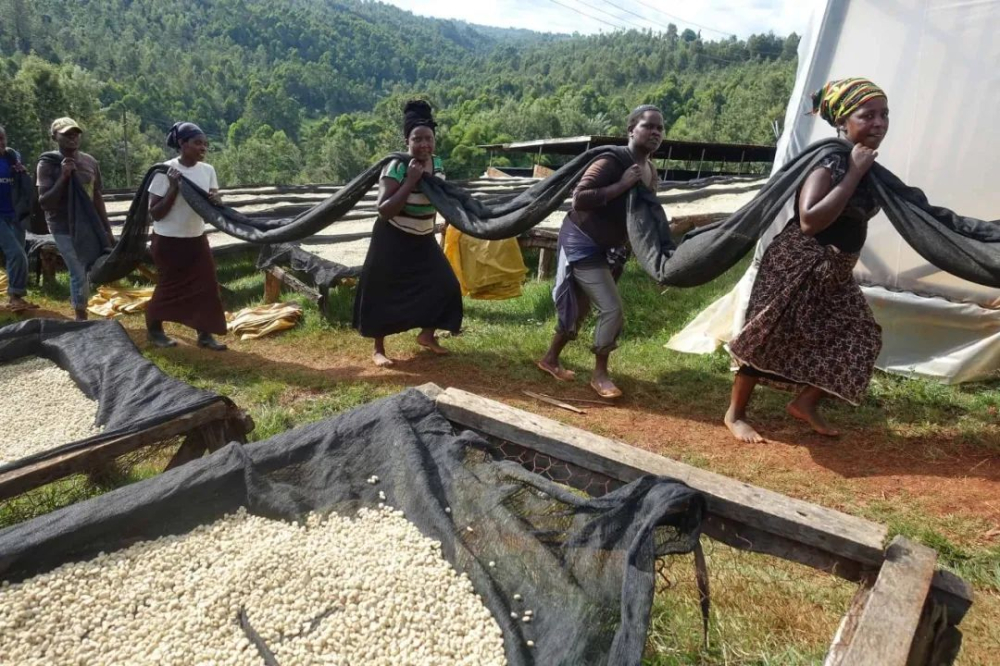
Central and South American beans typically ferment in washing channels for no more than 36 hours, while Kenya's washing time is as long as 72 hours. After 30-48 hours of fermentation, the parchment beans are removed from the channel, at which point the mucilage on the bean surface has been completely removed, but they still need 24 hours of soaking in clean water. After cupping many beans, Front Street found that this additional fermentation step should be related to the bright, clean flavor characteristics of Kenya AA coffee.
How to Drink Kenyan Coffee?
Taking a Front Street Kenya Asalia that is widely loved by coffee enthusiasts at Front Street stores as an example:
Front Street Coffee · Kenya Asalia Coffee Beans
Region: Asali Processing Plant, Thika Region, Kenya
Elevation: 1,550m — 1,750m
Variety: SL28, SL34
Processing Method: K72 Washed Processing
Flavor Description: Dried plum, cherry tomato, snow pear, yellow sugar, plum
For brewing light-roast coffee like Front Street Kenya Asalia, Front Street believes there are three details to note:
1. Prioritize a dripper with fast flow rate. Since light-roasted coffee beans expand less and have a harder texture, they tend to release very fine particles during grinding, and during the pouring stage they also sink to the bottom first, causing clogging in the final phase. Coffee brewed this way often has flat aroma and a muddy mouthfeel. Therefore, it's best to pair with a fast-flow dripper, such as the V60 that Front Street uses most often. Its spiral rib design allows coffee grounds to degas better while maximizing the activation of aromatic compounds' volatilization and dissolution, and the large bottom hole further accelerates the speed of water flow.
2. Water temperature should not exceed 93°C, or fall below 90°C. According to Front Street's brewing experience, to make the coffee's acidity bright and uplifting with a tea-like finish, you can brew at 90°C-91°C; to make the coffee's fruit acidity full and solid while enhancing body, you can use 92°C-93°C water temperature.
3. Since the grind size parameter affects total time changes, Front Street typically judges whether the grind setting is correct by combining extraction time with the coffee's taste. It's actually quite simple: if brewing 15g of coffee grounds with a three-pour method takes less than 1 minute 40 seconds, with a sharp, thin taste, it means the particles are too coarse and the coffee is under-extracted; if it takes more than 2 minutes 20 seconds, with bitter, astringent, heavy, and flat taste, it may be ground too fine, causing over-extraction.
As for the coffee-to-water ratio, Front Street believes 1:15 to 1:16 are both acceptable. If you want the coffee to lean toward oolong tea and berry-like intensity, use 1:15; if you want to more clearly perceive white floral notes and citrus acidity, use 1:16 to let the flavors spread more.
For the first pour, inject 30g of water for a 30-second bloom. Start timing as you begin pouring, using a slow, small stream at the center point and gradually spiraling outward, making sure to saturate the entire coffee bed. After 30 seconds, begin the second pour with a slightly larger, steady stream, adding 95g of water to lift the entire coffee bed. The stream should be poured vertically and evenly. At this point the scale reads 125g, and the pour should be completed in about 55 seconds.
When the liquid level drops to the halfway point, begin the third pour using a slow, small stream in a small spiral, adding 100g. Try to control the stream so it doesn't spiral too widely, as this can easily disturb the coffee bed and cause under-extraction. The total water added is 225g, and the drip completion time is about 2 minutes.
For the first pour, inject 30g of water for a 30-second bloom, then proceed to the second pour up to 125g. When the water level drops to just before exposing the coffee bed, begin the third pour, stopping at 225g. Wait for the water in the dripper to completely drip through to the server, then remove the dripper. Total extraction time: 2'00".
The above content is compiled by CoffeeHunters, a coffee news website.


