







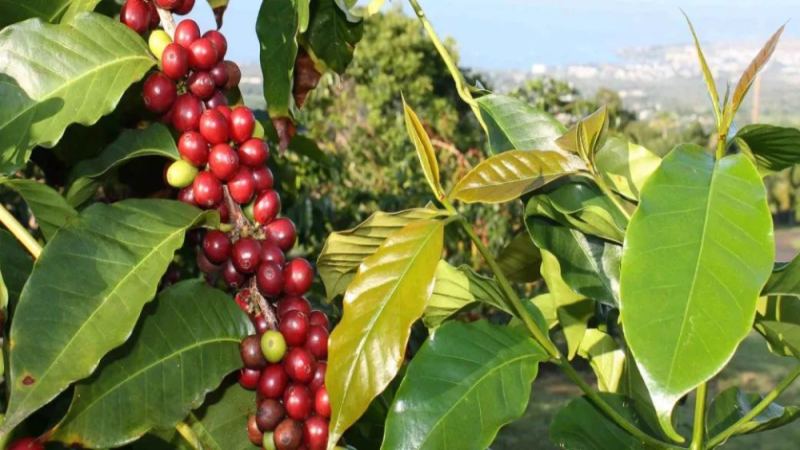
How Does Coffee Beans Grow on a Caturra Coffee Farm?
Caturra is a single-gene mutation of Bourbon, first found in Brazil in the 1950s. Compared with Bourbon it yields more, resists disease better, and grows on a shorter trunk that is easier to pick, though yields still swing on a two-year cycle. Its real strength is adaptability: it needs no shade trees and can grow in direct sun, which is why it is called Sun Coffee.
On a high-density coffee farm, Caturra requires more fertilizer, which raises costs, so early growers were slow to adopt it. When coffee prices rose sharply in the 1970s, Brazilian and Colombian farmers switched to Caturra for higher output, and government promotion spread it quickly. Colombia and Costa Rica now grow Caturra and Catuai across nearly half their coffee area.
Caturra is an important single-gene mutation within the Bourbon family, and thanks to its exceptional adaptability and high-yield characteristics, it has become a mainstay variety in the coffee-producing countries of Central and South America. From its discovery in Brazil to widespread cultivation in Colombia and Costa Rica, Caturra occupies a key position in the specialty coffee landscape. This article provides a detailed overview of Caturra's origins, spread, and flavor profile, and, drawing on Front Street Coffee's cupping experience, analyzes the taste differences under natural and washed processing. It also introduces the producing region information, flavor description, and brewing parameters of Front Street's Colombia Huila staple beans, offering coffee lovers practical tasting and brewing references.
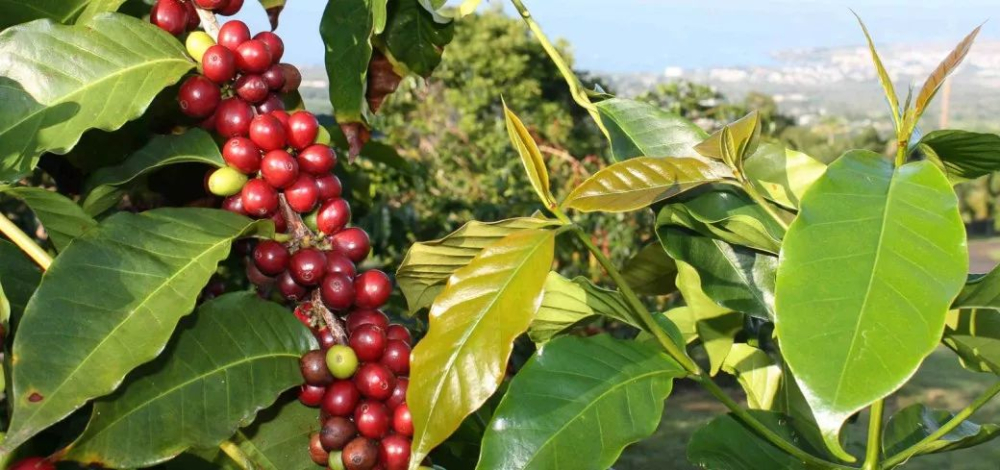
Friends who regularly drink Central and South American coffee have probably noticed that, aside from the famous Geisha, the Caturra variety appears quite frequently. Especially in Colombia and Costa Rica, Caturra and Catuai together account for nearly half of local coffee cultivation.
What kind of variety is Caturra, exactly?
It is actually a single-gene mutation of Bourbon, first discovered in Brazil in the 1950s. Compared with Bourbon, Caturra has higher yields, stronger disease resistance, and a shorter trunk that makes picking more convenient. However, it shares a similar shortcoming with Bourbon: yields fluctuate on a two-year cycle. In terms of flavor, Caturra is on par with Bourbon, or slightly inferior, but its most outstanding advantage is its extreme adaptability—it needs no shade trees and can thrive even when directly exposed to the blazing sun, which is why it is commonly called "Sun Coffee." It can adapt to high-density planting, but requires more fertilizer, which increases costs, so early coffee farmers were not very receptive to it. Locals named this new growth form "Caturra" in the Guarani language, meaning "small," and sometimes also called it "Nanico."
By the 1970s, coffee bean prices rose sharply, and farmers switched to planting Caturra in order to increase yields. With vigorous promotion by the Brazilian and Colombian governments, the results were remarkable. Farmers' acceptance of Caturra meant a major transformation in cultivation techniques. Brazil and Colombia shifted to high-yield, high-density sun cultivation, and by 1990, one million hectares of land could produce 14 million bags of coffee beans, a 60% increase in productivity. With its high yield and high quality, Caturra has now become a variety that producing countries rely on.
From its discovery to its inclusion in IAC research screening, Caturra was introduced to Guatemala in the 1940s, but it was not widely commercially planted over the following 30 years. It then spread from Guatemala to Costa Rica, Honduras, and Panama, and remains one of the most important economic coffee varieties in Central America today. In Front Street Coffee's extensive coffee list, beans such as Guatemala Flor del Cafe, Honduras Litchi Orchid, Colombia Rose Valley, and Panama Butterfly all contain the Caturra variety.
Caturra is suitable for planting in areas from low altitudes of 700 meters to high altitudes of 1,700 meters, with a very broad altitude range, but the higher the altitude, the more outstanding the flavor, while yields decrease accordingly—such is the fate of specialty beans. Some in academic circles call Caturra a high-density sun-grown version of Bourbon, and this description is very apt. In Central and South America there is also a yellow Caturra variant (Caturra Amarello), but it is not as highly regarded as Yellow Bourbon.
The flavor and mouthfeel of Caturra coffee
According to Front Street Coffee's cupping results, Caturra coffee beans under traditional processing methods have pronounced acidity and an overall bright character, and when processed well, can show quite excellent sweetness. However, its body is slightly lower than that of Bourbon, and its cleanliness is also somewhat lacking.
After natural processing, Caturra coffee beans display a pleasant berry-like acidity, tasting like berry juice; washed Caturra presents the bright acidity of citrus fruits, entering the mouth like lemonade.
Caturra coffee bean recommendations
Among Front Street Coffee's currently available selected regional staple beans, the beans representing Colombia's Huila producing region are precisely the Caturra variety. Front Street selects coffee beans grown at 1,500-1,800 meters and processed by traditional washing, and after medium roasting, the flavor presents nuts, dark chocolate, caramel, and soft citrus acidity.
Front Street Coffee: Colombia Huila Coffee Beans
Producing region: Colombia, Huila
Altitude: 1,500-1,800 meters
Processing method: Washed
Variety: Caturra
Flavor: Nuts, dark chocolate, caramel, soft fruit acidity
Brewing suggestions for Front Street Huila staple beans
The flavor description of every Front Street coffee is based on freshly roasted beans. If coffee beans are stored for more than a month, their aroma has likely partially dissipated, and it is very difficult to restore the original flavor during brewing. Front Street understands the importance of freshness, so it only ships coffee beans freshly roasted within 5 days, ensuring that everyone can enjoy the most complete peak flavor period upon receipt.
Considering that the Huila staple beans use a medium-dark roast, with a flavor leaning toward the rich, full-bodied tone of nuts and chocolate, the darker roast makes the coffee beans more porous and the coffee grounds more absorbent. To avoid over-extraction, Front Street uses a medium grind size and medium water temperature, paired with a KONO dripper for extraction. Brewing parameters: KONO dripper, 90°C water temperature, grind size with a 75% passing rate through a No. 20 standard sieve, 1:15 coffee-to-water ratio, 15 grams of coffee, three-stage extraction.
Pour the coffee grounds into the V60 dripper, wet the coffee bed with twice the amount of water as the coffee grounds, forming a dome and letting it bloom for 30 seconds, then pour in a thin stream in circles from the inside out until reaching 125 grams, pause, wait for the coffee bed to drop to half the height of the dripper, continue pouring the third stage with the same thin stream until 225 grams, and once all the coffee liquid has filtered through, remove the dripper. The time is about 2 minutes.
This Colombia Huila staple bean has an obvious roasted aroma of chocolate, nuts, and caramel on entry, smooth and sweet, with moderate body and a clean mouthfeel; as the temperature drops, a pleasant soft acidity can be felt.
For professional coffee knowledge exchange and more coffee bean information, please follow Coffee Workshop (WeChat public account: cafe_style)
For more specialty coffee beans, please add the private WeChat of Front Street Coffee: qjcoffeex
The above content is compiled by CoffeeHunters, a coffee news website.


