







What makes geisha coffee beans from Mirazu Estate distinctive?
Mirazu Estate sits in Costa Rica's Tarrazu region, where high altitude, volcanic ash soil and mild temperatures have made the country a recognized Central American origin for quality Arabica. Estate owner Esteban Sanches left La Candelilla to build his own farm. The estate's Gesha lots are processed as raisin honey, a method that pushes fruit aromas and intense sweetness forward in the cup.
Costa Rican growing areas mostly sit between 800 and 1,600 meters, with roughly 2,000 to 3,000 millimeters of annual rainfall and temperatures near 17 to 28 degrees Celsius. Front Street's Costa Rica Strawberry Candy Gesha shows how the raisin honey method and a medium roast brewed with high water temperature and a fast flow rate shape the final profile.
Costa Rica, with its high altitudes, fertile volcanic ash soil, and pleasant temperatures, has become a representative origin of high-quality Arabica coffee in Central America. The country is divided into multiple producing regions, each presenting unique flavors. This article focuses on Mirazu Estate in the Tarrazu region, telling the story of estate owner Esteban Sanches leaving La Candelilla to build his own estate, and provides a detailed analysis of Front Street Costa Rica Strawberry Candy Gesha coffee's varietal composition, raisin honey processing method, and the brewing strategy of medium roast, high water temperature, and fast flow rate, taking you through the full experience of rich fruit aromas and intense sweetness.
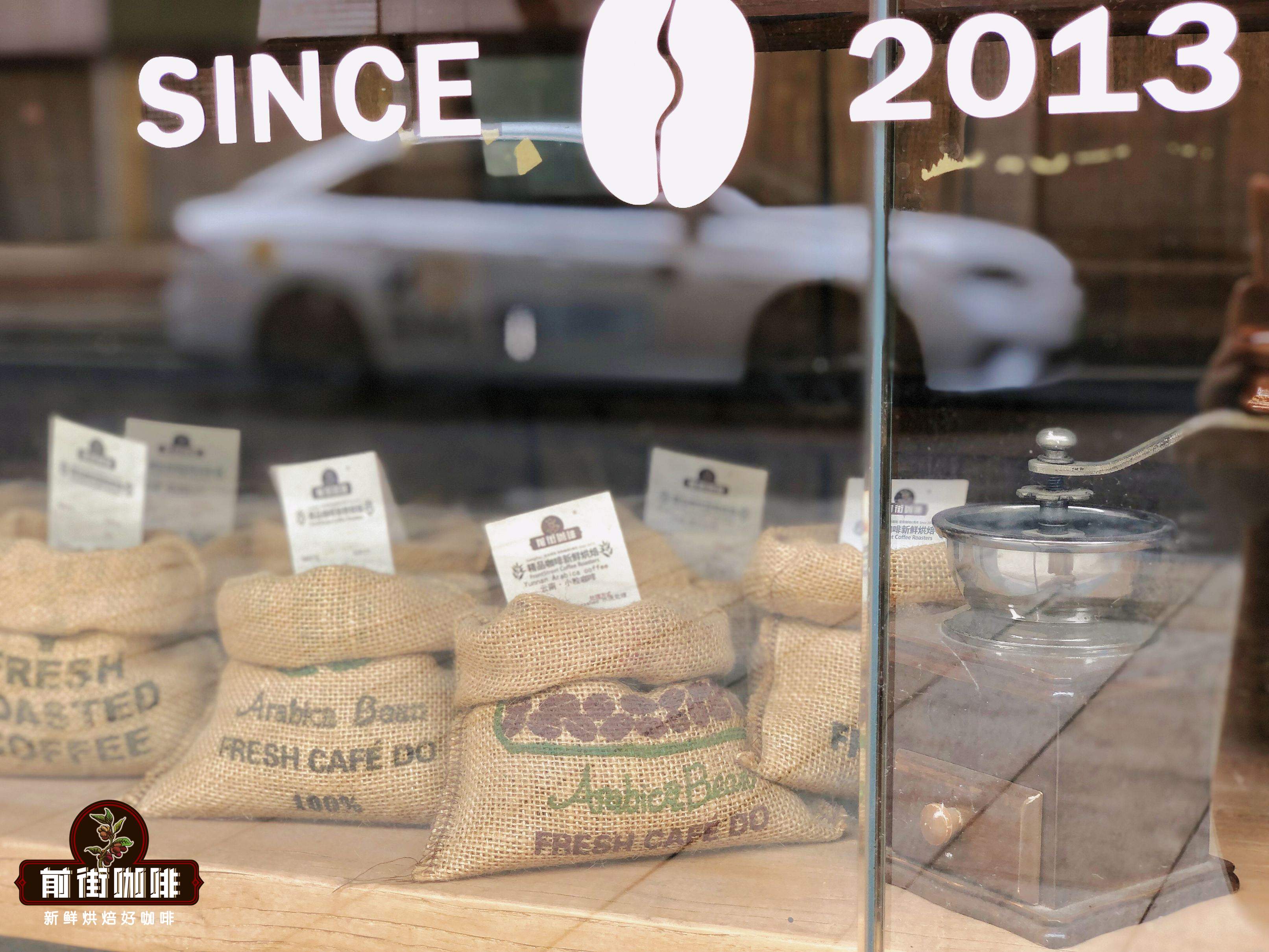
Coffee produced in Costa Rica is often recognized as among the finest quality in Central and South America. The country's coffee-producing regions are generally at high altitudes, with comfortable temperatures and nutrient-rich soil, providing superior conditions for cultivating high-quality coffee beans. Because of this, Costa Rica's coffee reputation has also led to its beans being selected for Starbucks' Reserve line.
Arabica coffee trees are themselves quite delicate, requiring specific climates such as high altitudes and mild temperatures to grow healthily. In Costa Rica, this charming Latin American country, the mountainous terrain and warm climate create an ideal environment for growing top-quality Arabica beans.
Costa Rica has a clear distinction between dry and rainy seasons throughout the year, with temperatures generally ranging between 17 and 28 degrees Celsius, and the annual temperature variation is only about 10 degrees Celsius. More than 80% of coffee-growing areas are distributed between 800 and 1,600 meters above sea level, with average annual rainfall of approximately 2,000 to 3,000 millimeters.
Abundant rainfall and high altitudes together create Costa Rica's excellent growing conditions and spectacular mountain scenery. More than 70% of the country's coffee trees grow in dense forests, and the elevation differences in these areas are considerable. All of the above factors influence the aroma, mouthfeel, flavor, and acidity of coffee from different producing regions. Volcanic ash makes the soil exceptionally fertile while also providing oxygen to the beans, making their flavor richer. The diverse natural climate and beautiful environment make Costa Rica an ideal place to live, to visit, and to grow coffee.
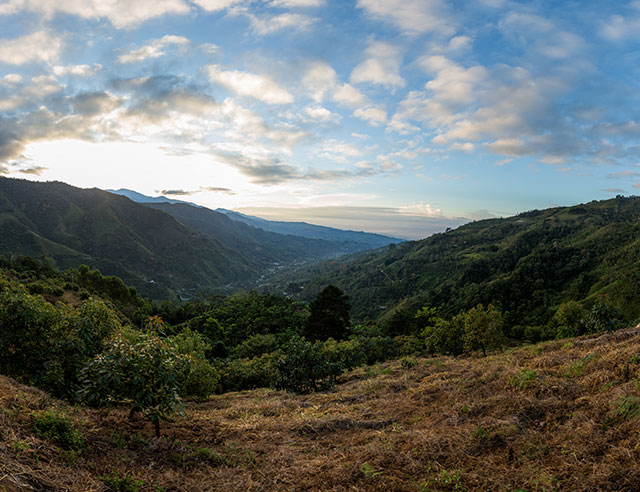
Costa Rica has eight coffee-growing regions in total, each producing coffee with a distinctive flavor. Different areas of the country have varying climate conditions, rich microclimates, and extremely high air humidity, which greatly facilitates the cultivation of multiple coffee varieties.
Costa Rica's seven coffee-producing regions are Brunca, Orosi, Tarrazu, Tres Rios, Turrialba, West Valley, and Central Valley.
Among them, Costa Rica's Tarrazu region is one of the country's most renowned coffee-producing areas, known for its bright acidity and rich aroma. The Brunca region has a more balanced mouthfeel, while the West Valley is noted for the subtle peach and apricot flavors in its beans. Differences in climate and humidity give each region a different taste, so you can savor distinctive Costa Rican coffees in eight completely different ways.
Costa Rican coffee is well known for being "sweet as honey," and Front Street would also like to recommend a Costa Rican Tarrazu coffee bean here, inviting everyone to taste this "honey-sweet" flavor together. On Front Street's bean list, there is currently a coffee bean from Mirazu Estate.
[Tarrazu] The Tarrazu region is one of the highest-altitude coffee-producing regions in Costa Rica. Its planting soil is acidic, and most coffee plants in the region are shaded by different plants. Tarrazu coffee beans are attractive in appearance, with a blue-green color. Due to the high planting altitude, coffee tree diseases are significantly suppressed, allowing the coffee trees to invest more energy in fruit growth. Therefore, nearly 95% of the coffee beans produced here reach Strictly Hard Bean (SHB) grade. The flavor of Tarrazu coffee is mainly characterized by citrus acidity, dried-fruit sweetness, and chocolate notes.
Front Street Costa Rica Strawberry Candy
Region: Tarrazu, Costa Rica
Estate: Mirazu Estate
Altitude: 1,700 meters
Varieties: Gesha, ET47, SL28, Maico
Processing method: Raisin honey processing
Mirazu Estate's owner Esteban Sanches originally worked at La Candelilla Estate and gained considerable expertise in coffee equipment and green bean post-processing. Later, because he had his own unique views on coffee, he left La Candelilla Estate and personally founded a coffee estate, naming it Mirazu. In the local language, Mirazu means "overlooking Tarrazu from afar." Owner Esteban Sanches firmly believes that the quality of coffee must be traced back starting from the coffee trees.
This Front Street Mirazu coffee bean uses raisin honey processing. The method is to first dry ripe coffee cherries until they become shriveled, then remove the skin and pulp while retaining the entire mucilage layer, followed by drying. Front Street has found that coffee processed with raisin honey has a richer and more viscous mouthfeel, longer-lasting aroma retention, and a more intense sweetness compared with ordinary honey processing.
When FrontStreet Coffee's barista received this green bean, in order to highlight the rich fruit aroma, floral notes, and intense sweetness brought by raisin honey processing, the roaster chose a medium roast when roasting this bean. After FrontStreet Coffee's barista received the roasted beans, considering that the roast level was on the lighter side, they decided to brew with a higher water temperature (93 degrees Celsius) and a finer grind size (80% passing through China standard No. 20 sieve).
Friends who often read FrontStreet Coffee articles know that Front Street has two signature drippers—Hario's V60 and the KONO dripper. When the brewing water temperature is relatively high, to avoid over-extraction caused by high-temperature water contacting the coffee grounds for too long, the faster-flowing Hario V60 dripper is used. At the same time, in order to give the coffee a richer layered complexity, a three-pour method is used during brewing.
Dripper: Hario V60
Water temperature: 93 degrees Celsius
Coffee dose: 15 grams
Coffee-to-water ratio: 1:15
Grind size: 80% passing through China standard No. 20 sieve
First pour 30 grams of water to bloom the coffee grounds for 30 seconds, then with a small stream of water slowly pour in a circular motion for the second pour up to 125 grams for the staged pour; when the water level in the dripper drops to the point where the coffee bed is about to be exposed, likewise gently and slowly pour in a circular motion for the third pour of hot water up to 225 grams. After the water in the dripper has completely dripped into the server below, remove the dripper. Total extraction time is about 2 minutes.
For more coffee bean information, please follow Coffee Workshop (WeChat public account: cafe_style) For professional coffee knowledge exchange, please add WeChat ID: kaixinguoguo0925
The above content is compiled by CoffeeHunters, a coffee news website.


