







What defines Brazilian Bourbon coffee today?
Brazilian Bourbon coffee is a sub-variety of Typica that mutated in Brazil and remains the country's main Arabica type, grown widely in Minas Gerais. Brazil, the largest coffee producer, first planted coffee in 1727, and its industry shifted from state price supports before 1990 to a free market in which exporters trade directly under government registration.
Cultivation spread from the north to São Paulo and Paraná, but winter frosts pushed farmers toward warmer Minas Gerais and Bahia between 1970 and 1980, making Minas Gerais a core specialty region. Bourbon's traits and flavor follow from that history of coffee cultivation and the reforms that reshaped Brazil's output.
As the world's largest coffee producer, Brazil's coffee cultivation history dates back to 1727. From its initial introduction to Minas Gerais becoming a core specialty coffee region today, Brazilian coffee has undergone government control, free market opening, and quality reforms. This article systematically reviews the varietal characteristics and flavor profiles of Brazilian Bourbon, and how Front Street Coffee presents the unique charm of Brazilian coffee through two beans from Cerrado and Queen Farm, along with detailed brewing parameters and flavor descriptions.
In 1727, a Portuguese army officer introduced coffee from French Guiana to Brazil, beginning the coffee cultivation history of this land. Thereafter, coffee quickly took root in Brazil, gradually expanding from the north to São Paulo in the southeast and Paraná in the south. However, Paraná's latitude is relatively high, and winter frosts occur from time to time, causing considerable losses to local coffee farmers.
Between 1970 and 1980, Brazilian farmers expanded the cultivation area to the warmer climates of Minas Gerais and Bahia in northern São Paulo. These places have no winter frost and suitable conditions, and Minas Gerais gradually developed into one of Brazil's important specialty coffee producing regions.
Before 1990, the Brazilian government exercised strict control over the coffee industry, employing not only forceful intervention measures but also price support policies. The state long implemented minimum price guarantees for farmers, which resulted in coffee overproduction.
After 1990, the free market gradually opened up, and the former Brazilian Coffee Institute (IBC) was replaced by the National Economic Association, a non-investment administrative body. This association adopted a non-intervention policy, allowing producers and exporters to trade directly. Exporters' operations are supervised by government legislation, and legitimate exporters must register with the relevant authorities. For three hundred years, coffee has become Brazil's most important economic pillar, and Brazil remains firmly in first place in global coffee production.
Flavor Characteristics of Brazilian Coffee Beans
Brazil cultivates both Arabica and Robusta coffee varieties, with Arabica mainly consisting of Bourbon. Bourbon is a sub-variety resulting from a mutation of Typica, and together with Typica it belongs to the oldest surviving coffee varieties. Its green cherries turn bright red when ripe. Bourbon grown at high altitudes typically exhibits superior aroma and bright acidity.
Based on fruit color, Bourbon can be divided into Red Bourbon, Yellow Bourbon, Orange Bourbon, and Pink Bourbon. Among these, Yellow Bourbon has relatively lower yield but better quality. In Brazil, Red Bourbon is the most common, with only a few regions cultivating Yellow Bourbon.
Despite the excellent varieties, Brazilian coffee is mostly grown at altitudes between 400 and 1,600 meters, which is generally low. Compared with Central American coffee, Brazilian coffee beans are not particularly high in density, which results in flavors that are not as good as many high-altitude producing regions, with a relatively one-dimensional taste profile. Brazilian coffee is known for its smoothness and balance, with nutty notes, grassy flavors, and chocolate tones, while neither acidity nor bitterness stands out, making it commonly used in espresso blends. However, Rio coffee from the coastal region sometimes carries an iodine-like and salty taste, which is believed to be related to the action of certain microorganisms, though even when grown in the same soil, this flavor does not necessarily appear every year.
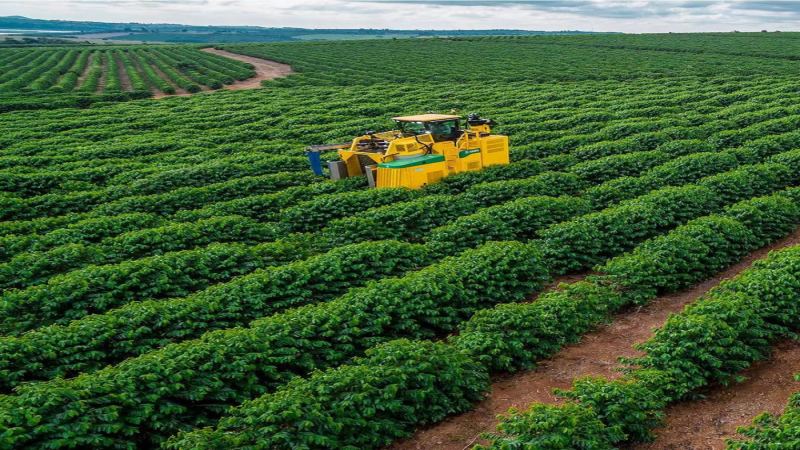
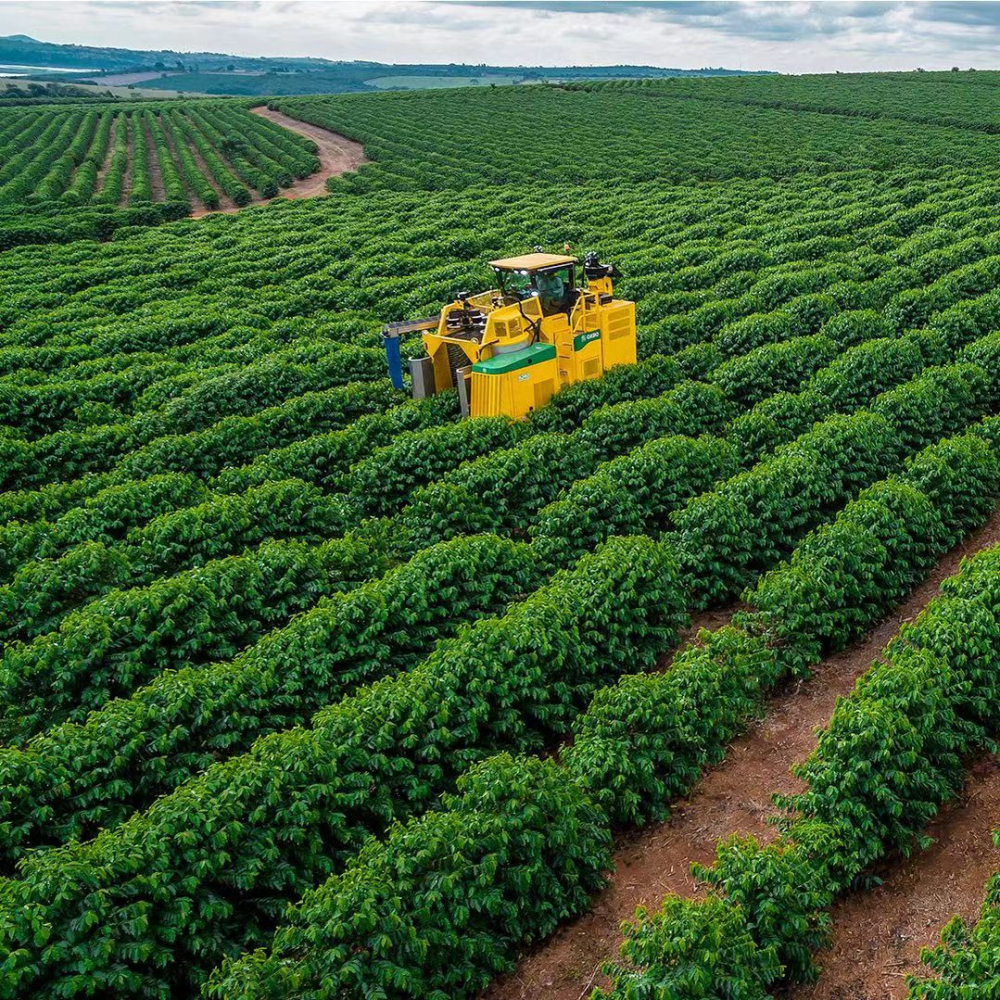
Later, Brazil underwent several coffee quality improvement reforms, including clarifying the grading system and standardizing mechanized harvesting operations, which stabilized the quality of Brazilian coffee. Combined with its enormous production volume, Brazil holds strong bargaining power in the commercial market.
How Front Street Selects Brazilian Coffee Beans
Front Street's coffee bean list includes two Front Street Brazilian coffee beans: a Red Bourbon from the Cerrado region and a Yellow Bourbon from Brazil's Queen Farm.
Cerrado Red Bourbon
Cerrado belongs to Minas Gerais and is a high-quality coffee producing region in Brazil. This area is located in the prime section of the Cerrado savanna, with high altitude and fertile soil, which is essential for growing specialty coffee beans that are sweet, full-bodied, and clean. Front Street has also tasted coffee from all major Brazilian producing regions, and Cerrado as a large producing region offers the most stable and distinctive flavors. This Brazilian Red Bourbon bean is used by Front Street in espresso blend recipes, and there is also a single-origin everyday drinking bean that represents the flavors of the Brazilian producing region.
Queen Farm Yellow Bourbon
Queen Farm (Fazenda Rainha) is located in the Alta Mogiana region of São Paulo, north of São Paulo city. This estate is highly renowned in Brazil and is owned by the Carvalho Dias family. Carvalho Dias owns 4 major estates, and since the first Brazilian COE competition in 1999, they have won awards every year, with more than 12 awards over 7 years, and in 2004 even taking both the championship, 9th place, and 11th place.
Yellow Bourbon coffee beans are naturally sweet and clean; using the natural process gives them slightly lower acidity, yet it pairs very well with sweetness, offering good balance and tropical fruit aromas. Front Street positions this Front Street Brazilian Queen Farm Yellow Bourbon as a Brazilian specialty coffee bean.
FrontStreet Coffee Brewing Recommendations
Brewing Parameters: Use a Kono dripper
Water temperature: 88℃
Dose: 15 grams
Coffee-to-water ratio: 1:15
Grind size: medium-fine grind (70-75% passing through a Chinese standard No. 20 sieve)
FrontStreet Coffee uses staged extraction, also called three-stage brewing: use 30 grams of water for a 30-second bloom, then pour in a small circular stream until the water reaches 125 grams for the first stage; when the water level is about to expose the coffee bed, continue pouring until 225 grams and stop; when the water level is about to expose the coffee bed again, remove the dripper. The extraction time (starting from the beginning of the bloom) is 2'05"-2'15".
Front Street Brazilian Queen Farm coffee brewing flavor: the fresh sweetness of sugarcane juice, black tea, soft and smooth fruit sweetness, obvious nutty flavors, balanced and smooth acidity, very weak and clean bitterness, rich chocolate aroma and nutty flavors, a bright and refreshing mouthfeel, and a silky, delicate texture.
Front Street Brazilian Cerrado Red Bourbon brewing flavor: obvious sweetness on the entry, with a faint lemon aroma, rich nutty flavors, and a distinct dark chocolate note in the finish, with an overall rounded impression.
The above content is compiled by CoffeeHunters, a coffee news website.


