







Why Does Coffee Aroma Differ From What You Taste?
Coffee aroma often promises more than the sip delivers because beans hold over 1,200 volatile aromatic compounds, and most of what people call flavor is actually retronasal olfaction, smell traveling from the mouth to the nose. Front Street Coffee shop feedback shows customers frequently prefer the dry aroma right after grinding and the wet aroma during brewing over the taste in the cup.
Aromas fall into four groups: enzymatic, caramelization, dry distillation, and defective. Heavily roasted classic coffee built the public habit of expecting a rich smell and a bitter taste, while lighter roasts now add acidity, sweetness, and notes of flowers, citrus, berries, and tropical fruit. A 15-gram dose, 1:15 ratio, 91°C water, and a three-stage pour over natural Hualkui shows the gap clearly.
Many people are drawn in by the aroma of coffee, yet find that the flavor in the mouth is not as enchanting as the smell. This gap between "smells great, tastes bland" is actually closely related to the more than 1,200 volatile aromatic compounds in coffee, the difference between dry and wet aromas after grinding, and the way retronasal olfaction perceives flavor. Starting from customer feedback at Front Street Coffee shops, this article sorts through the four major aroma categories—enzymatic, caramelization, dry distillation, and defective—and explains why there is a gap between coffee aroma and taste experience. Then, Front Street brews the 2025 new-crop natural Hualkui with 15 grams of grounds, a 1:15 coffee-to-water ratio, 91°C water, and a three-stage pouring method, introduces the background of this champion bean from Ethiopia Hambela, and takes you through the true flavor of a cup of pour-over coffee.
For more specialty coffee knowledge, please follow: Front Street Coffee (Frontsteet Coffee)
You may have no interest in drinking coffee, yet find it hard to resist the aroma it gives off. Occasionally, customers who have never tried single-origin coffee walk into the shop wanting to give it a try themselves. Based on Front Street's observations and customer feedback, compared with actually savoring the taste of coffee, they often prefer the dry aroma right after grinding and the wet aroma after the coffee liquid has been brewed.
In most people's impressions, coffee flavor is still stuck in the era of heavy roasting, when that classic coffee scent was a complex blend of spices, roasted nuts, hazelnuts, caramel, and woody notes. And when it comes to the classic coffee taste, it can be summed up in one word—bitter. It is precisely because heavily roasted coffee dominated the mainstream for so long that the public formed the ingrained perception that coffee smells enticing but tastes bitter, and that it is nothing more than a black liquid.
After the rise of light-roasted coffee, coffee no longer tasted only bitter; one could also taste acidity, sweetness, and even saltiness. At the same time, aroma expression also became more diverse. From light-roasted beans, we can capture notes of flowers, citrus, berries, tropical fruits, and sugars.
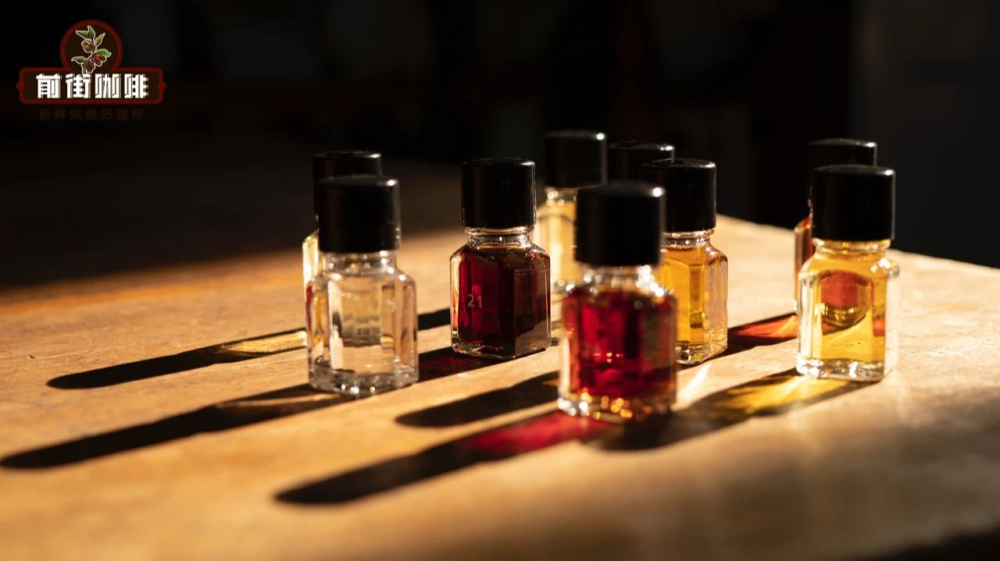
The reason coffee aroma is so rich lies fundamentally in the more than 1,200 aromatic compounds contained in coffee beans. These volatile and semi-volatile components together build a complex aroma structure. Faced with such a vast aroma system, mainstream coffee organizations summarize it into four major categories: enzymatic, caramelization, dry distillation, and defective.
The aromas of the enzymatic group come from the enzymatic catalysis coffee undergoes during production or processing, mainly featuring fresh sweet-and-sour notes such as flowers, lemon, peach, honey, and cucumber.
The aromas of the caramelization group are formed during roasting through the Maillard reaction and caramelization reaction, mainly presenting notes of caramel, maple syrup, dark chocolate, and roasted nuts.
The aromas of the dry distillation group are produced when fibrous materials in coffee are carbonized during roasting, commonly including spices, woody notes, and smoky flavors.
The aromas of the defective group usually originate from quality defects in the coffee beans themselves or improper roasting, with typical examples including rubbery, leathery, earthy, and rotten-fruit notes.
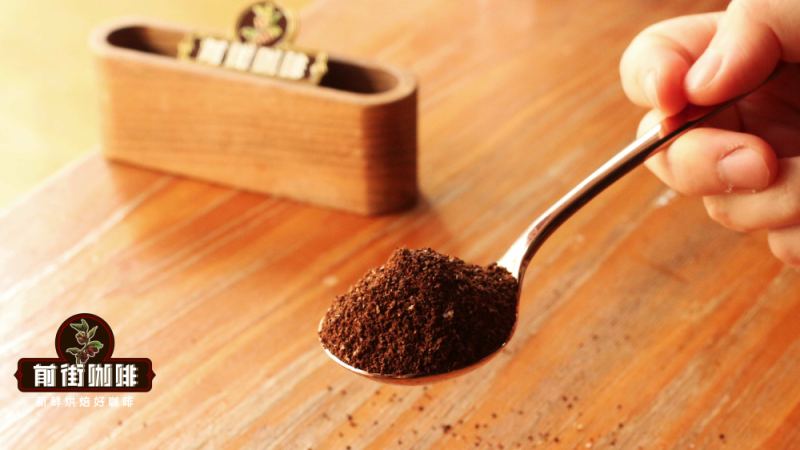
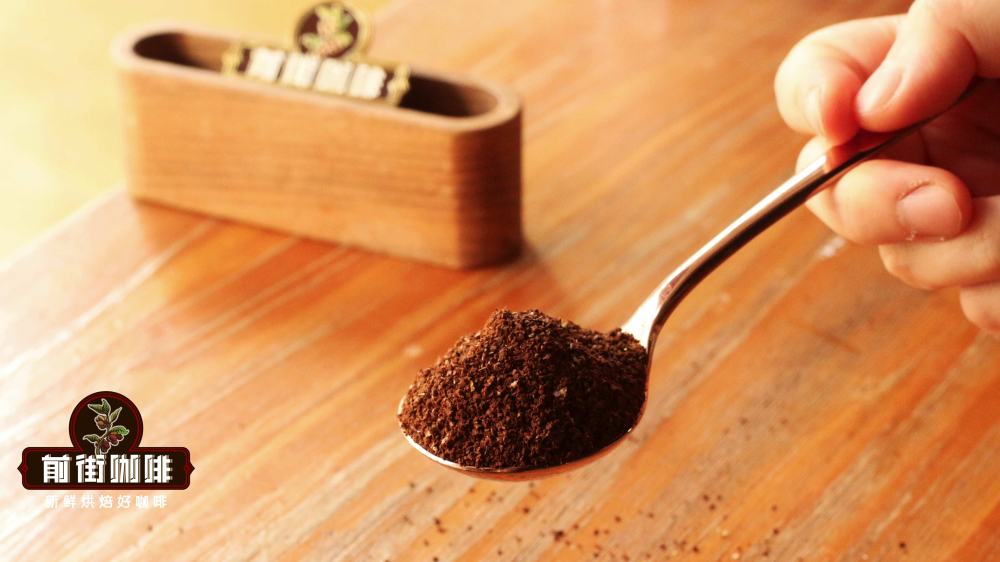
Now back to the question of "why coffee tastes less aromatic than it smells." The moment coffee is ground into powder, the aroma is at its most complex and spreads the widest; this part we call the dry aroma. The reason is that after coffee beans are ground into powder, the contact area increases greatly, and volatile aromatic compounds escape into the air very easily, so when grinding beans, you do not need to deliberately lean in to clearly smell the dry aroma.
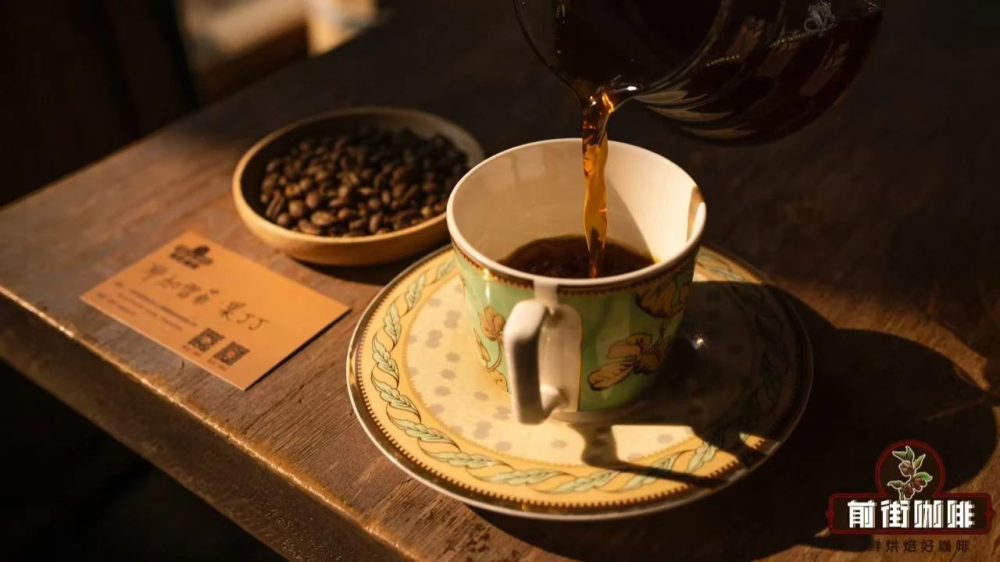
The dry aroma of coffee can present not only the aromas of the enzymatic and caramelization groups, but also capture the notes of the dry distillation group, which is also a relatively obvious difference between dry aroma and wet aroma. Wet aroma refers to the aroma of the coffee liquid. At this point, the intensity of aroma volatilization is not as fierce as with the dry aroma, and you need to bring your nose close to the rim of the cup to smell it.
The wet aroma of coffee is likewise rich in layers. For example, if you smell floral and citrus fruit notes, you can associate it with a cup of coffee with bright acidity; if you smell honey, grape, and strawberry notes, it will make you expect a coffee with prominent sweetness.
At this point, you should understand why it does not smell as good as it tastes. Usually we are first attracted by the aroma of coffee, and only after finding it pleasant do we feel the urge to drink it. The aroma has already raised our expectations for this coffee very high, and once the flavor in the mouth does not meet expectations, it creates the feeling of "smells great, tastes average."
In particular, many friends are drawn by coffee aroma to try their first cup. Lacking specific knowledge, they can only infer the taste from their own memory bank. For example, if they smell obvious honey and roasted sweet potato notes in a cup of coffee, they will naturally assume it should taste equally sweet. But coffee is ultimately coffee. Even a coffee with relatively high sweetness will still be judged by a first-time taster as sour or bitter, rather than sweet.
Actually, aroma can also be perceived while drinking coffee. This stage is what we call "retronasal olfaction." Unlike smelling the dry aroma and wet aroma mentioned earlier, it is the aroma perceived after the atomized coffee liquid in the mouth carries aromatic compounds back to the nasal cavity. However, compared with directly smelling the aroma, retronasal olfaction is not as vivid and is easily overlooked.
After all this discussion, is pour-over coffee actually good or not? Brew a pot and you will know. Front Street uses conventional parameters (15 grams of coffee grounds, 1:15 coffee-to-water ratio, 91°C, grind size at 80% passing rate) with a three-stage pour (30 ml, 95 ml, 100 ml) to brew the 2025 new-crop Front Street natural Hualkui coffee.
What is "Hualkui coffee"?
Hualkui refers to a natural coffee bean from the Hambela producing region in Ethiopia, with the full English name "Ethiopia Guji Hambella Buku Abel." Broadly speaking, it is a champion bean from Guji, Ethiopia; more specifically, it is a natural lot processed by the smaller Hambela Buku Abel washing station. In contrast to the tortuous origins of Geisha, after Hualkui emerged in 2017, it conquered every specialty coffee shop with its vivid strawberry-and-cream aroma, truly peaking right from its debut.
Perhaps because the translated names have similar meanings and both are representative hit coffees in the floral-and-fruity aroma style, many friends when just starting out mistakenly think Hualkui is Geisha, or Geisha is Hualkui, and there are even rumors that "Hualkui is top-tier Geisha." In fact, the two are completely different concepts.
Having covered the coffee bean information, let us continue with the specific pour-over steps:
First pour 15 grams of coffee grounds into the dripper and tare the scale. For the first stage, pour 30 g of water and let it bloom for 30 seconds while starting the timer. Throughout, pour with a small stream from the center point and then spiral outward, making sure to wet the entire coffee bed.
For the second stage, switch to a slightly larger stream and pour 120 g of water, with the aim of raising the entire coffee bed. The stream should be poured vertically and evenly. At this point the timer scale shows 150 g, and the pour is finished at around 55 seconds.
When the liquid level drops to the halfway point, begin the third stage by pouring 90 grams in a small spiral with a fine stream. Try to control the spiral so it is not too wide, otherwise it is easy to disturb the coffee bed and cause under-extraction. The final total water amount is 240 grams, and the drip finish time is about 2 minutes 10 seconds. After removing the dripper, swirl the coffee liquid in the server to mix it evenly, and then you can begin tasting.
The above content is compiled by CoffeeHunters, a coffee news website.


