







What does bright coffee mean in Sidamo's flavor profile?
Sidamo is one of Ethiopia's three main coffee regions, alongside Yirgacheffe and Harrar. Grown south of Lake Awasa in the East African Rift Valley at 1,500 to 2,200 meters, the cherries ripen slowly and build fruity sweetness and acidity with a strong aroma. Natural processing gives Sidamo a wild berry-cream character and a thick, smooth mouthfeel that earns recognition at competitions such as COE and TOH.
Bright coffee meaning in this context points to the lively, uplifting acidity Ethiopia is known for, though Sidamo shows it differently from Yirgacheffe's washed style. The Huakui series brought Sidamo wider attention after a 2017 championship win and has reached its eighth generation. A coffee store carrying Sidamo lots can expect berry, cream and layered sweetness rather than the fresh floral profile of Yirgacheffe.
Sidamo is one of Ethiopia's three major coffee regions, ranking alongside Yirgacheffe and Harrar. Thanks to the fertile land stretching south of Lake Awasa across the East African Rift Valley and the high altitude of 1,500 to 2,200 meters, coffee cherries here take longer to grow, developing pronounced fruity sweetness and acidity with a standout aroma. The natural process gives Sidamo a wild berry-cream character and a thick, smooth mouthfeel, earning repeated accolades at green bean competitions such as COE and TOH. Several Sidamo products on the Front Street Coffee bean shelf have drawn considerable attention, among them the Huakui series, whose popularity has climbed steadily since its 2017 championship win and which has now reached its eighth generation. This article will walk through the region's characteristics, its competition record, the naming logic behind Huakui, and brewing recommendations to paint a complete picture of Sidamo coffee's flavor profile.
For more specialty coffee knowledge, follow the WeChat public account: Front Street Coffee
As the birthplace of coffee beans, Africa—and Ethiopia in particular—has long enjoyed a reputation as the gene pool of coffee varieties. Coffee from this country generally carries a bright, uplifting acidity that is deeply favored by seasoned coffee enthusiasts. Because of varying terrain and climate conditions, Ethiopia is divided internally into multiple coffee regions. Many friends just beginning to explore coffee, even with limited knowledge of growing regions, often hear the names Sidamo and Yirgacheffe from Front Street Coffee baristas—a testament to the weight these two names carry in the coffee world.
Completely different from the fresh style presented by Yirgacheffe's washed processing, Sidamo showcases a bold berry-cream character and a rich, smooth mouthfeel through its natural processing, captivating countless coffee lovers. It is precisely for this reason that Sidamo, Yirgacheffe, and Harrar stand together as Ethiopia's three representative coffee regions.
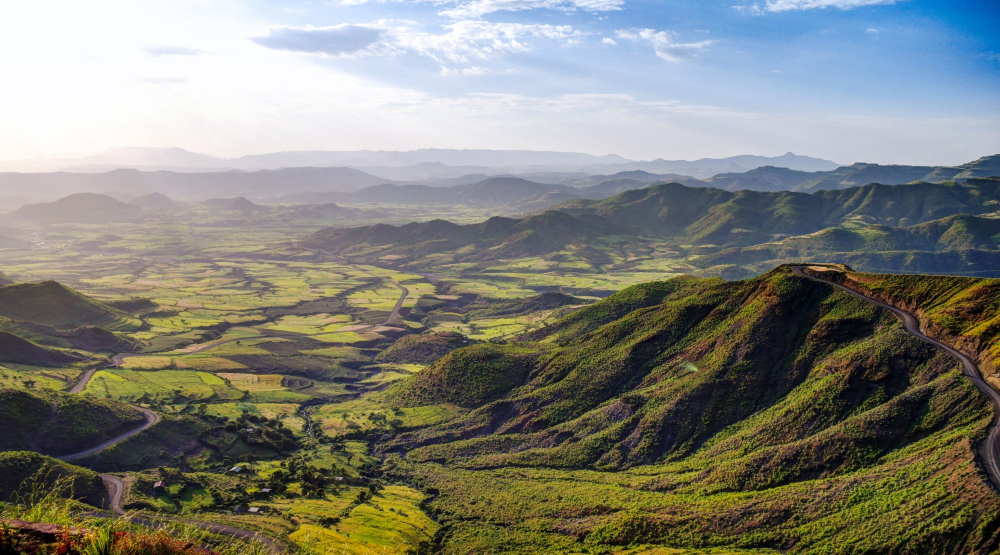
The Sidamo region spans the fertile land south of Lake Awasa in the East African Rift Valley, at an altitude of between 1,500 and 2,200 meters. This elevation brings mild, cool temperatures, allowing coffee cherries to remain on the tree longer and accumulate distinct fruity sweet-and-tart flavors with a prominent aromatic expression.
The unique flavor of Sidamo coffee is evident from recent green bean competitions. Whether COE or TOH, the top of the winners' lists frequently features names from the Sidamo region. On the Front Street Coffee bean shelf, there is an Inflorescence coffee bean from the Guji zone of Sidamo that took first place in the washed category at the 2020 TOH competition. It carries a citrus-like acidity, and as the temperature drops slightly, honey yuzu tea flavors gradually emerge, offering another option for coffee lovers who prefer a fresh, bright profile.
The Sidamo region has won countless awards, yet many coffee beans fade from attention once their season passes—Huakui coffee is the exception. Huakui coffee beans have now reached their sixth harvest season, and before each new season arrives, many coffee enthusiasts visit Front Street Coffee stores to ask baristas whether the latest season's Huakui has arrived and how its flavor is performing.
The rising popularity of Huakui coffee is inseparable from a promotional collaboration between Luckin Coffee and a well-known figure, which quickly made Huakui a nationwide sensation and even led to it selling out at one point. During that period, many coffee enthusiasts made special trips to Front Street Coffee stores to ask: Where do Huakui coffee beans come from? Why is it called Huakui?
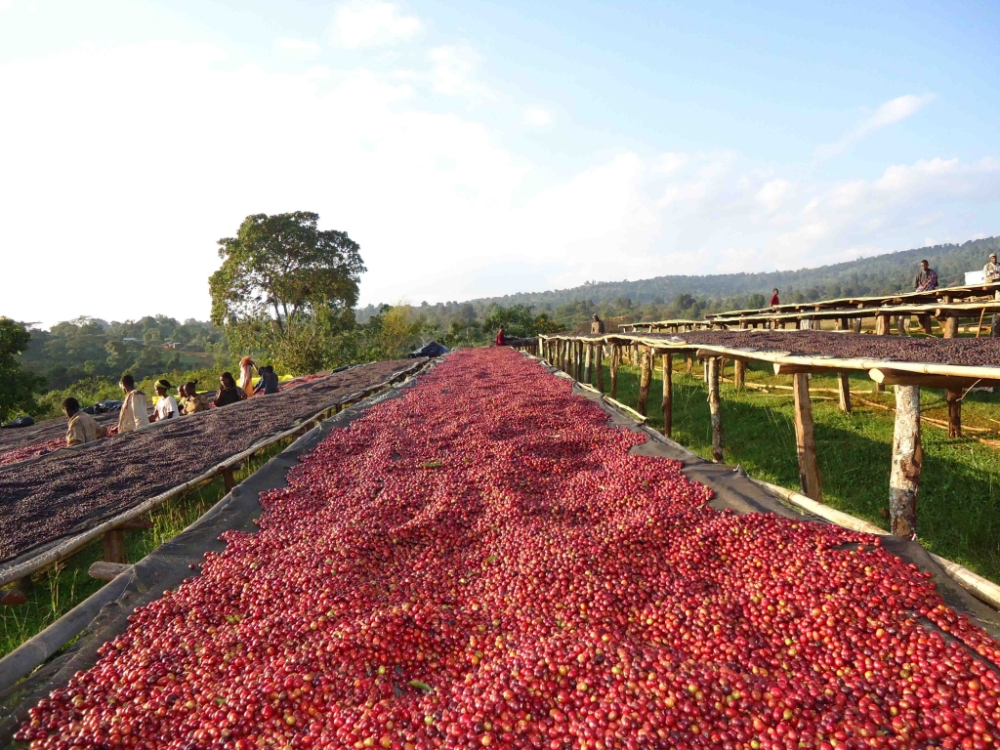
The original source of Huakui coffee beans is the Hambela sub-region under the Sidamo region, which borders the Yirgacheffe region and is one of the highest-altitude sub-regions in Ethiopia. In 2017, Ethiopian green bean company DW sent a naturally processed coffee from the Buku Abel washing station to that year's TOH competition, where it won over international judges with its rich strawberry-cream flavor and took first place in the natural category of the TOH Ethiopia division.
A Beijing-based green bean merchant brought the same winning lot into the domestic market and named it "Huakui," meaning "chief of a hundred flowers," placing high hopes on it to become the next blockbuster after Geisha coffee. That same year, in the World Brewers Cup China division, competitor Li Jianfei used Huakui coffee beans to win runner-up. In an era when Geisha coffee was sweeping the competition scene, Li Jianfei, with Huakui's rich strawberry-cream flavor, left many Geisha users behind, quickly propelling Huakui coffee to fame within the industry.
After Front Street Coffee's explanation, I believe many friends now understand the origin of the name "Huakui." So how did names like Huakui 4.0 and Huakui 5.0 come about? Huakui coffee has an outstanding flavor, and the "Huakui" IP has been well managed, now having iterated to its sixth-generation product.
The naming of the Huakui series follows the "Huakui X.0" rule. 2017 was the year the Huakui coffee series was born, so the second-generation product in 2018 was "Huakui 2.0"; 2019 was Huakui 3.0; 2020 was Huakui 4.0; 2021 was Huakui 5.0... This year, everyone welcomes Huakui 8.0 together.
Long-time customers of Front Street Coffee know well that with each new season, Front Street stocks the current season's coffee beans, and the Huakui series has never been absent. Huakui coffee beans are an agricultural product, and variables such as climate and rainfall in the region each year affect their flavor direction, so each season performs differently.
Recently, the Huakui 8.0 that Front Street acquired has finally arrived. Taking advantage of its freshness—after waiting another year—it naturally deserves a proper tasting. To showcase the refined floral and fruity character of the Sidamo region while preserving the coffee's caramelized aroma, Front Street's roaster chose a medium-light roast to present this bean.
Front Street Coffee : Huakui 8.0 coffee beans Country : Ethiopia Region : Sidamo · Guji zone Altitude : 2,250–2,350 meters Variety : Local heirloom varieties Processing method : Natural process
Flavor : Floral, jackfruit, dried fruit, apricot, juicy
The new-season Huakui 8.0 already shows a more intense fruity character than 7.0 at the dry aroma stage, with dense aromas of guava, jackfruit, apricot, dried fruit, citrus, and pink florals; after pouring in hot water, sweet aromas of honey, berries, and chocolate emerge.
Through slurping, Front Street first captures in this 8.0 an interwoven sweet-and-tart mix of multiple fruits—dried mango, jackfruit, orange, passion fruit—with a clear juicy quality and a round mouthfeel; as the temperature drops slightly, the delicate sweetness of white peach and the bright acidity of berries begin to release, and after swallowing, a black-tea-like finish emerges, with very rich layers.
Suggested pour-over parameters for Huakui:
Dripper: Hario V60
Water temperature: 90°C
Dose: 15 grams
Coffee-to-water ratio: 1:15
Grind size: caster sugar (80% passing through a Chinese standard No. 20 sieve)
All coffee beans shipped by Front Street are freshly roasted within 5 days and have already rested for 4 to 7 days by the time they arrive. Even during the optimal tasting window, Front Street Coffee still recommends blooming during brewing to reduce the coffee's "harsh" sensation.
Pour 30 grams of hot water and bloom for 30 seconds, then from the center point slowly pour in a thin stream in circles up to 125 grams in stages; when the water level in the dripper drops to just about to expose the coffee bed, continue pouring in circles up to 225 grams, with a total extraction time of about 2 minutes.
The above content is compiled by CoffeeHunters, a coffee news website.


