







How does coffee processing change flavor and sweetness?
Washed and natural are the two classic coffee processing methods, and they push the same bean in different flavor directions. Natural processing dries the whole cherry around the seed, which tends to build sweeter, fruitier, more complex cups. Washed processing removes the fruit before drying, which tends to give cleaner, brighter cups with clearer acidity. The method, not just the variety, shapes what ends up in the cup.
The comparison uses two well-known beans: Jamaica Blue Mountain No. 1 from Clifton Farm and Panama Hacienda La Esmeralda Blue Label geisha coffee beans, each in washed and natural versions. Clifton Farm released a natural Blue Mountain for the first time in 2020, and the Blue Label Geisha added a natural lot the same year. Cupping notes, green bean appearance, and roast curves are compared side by side.
Washed and natural are the two most classic methods of coffee processing. How do different processing methods affect the flavor direction of the same bean? Front Street Coffee uses Jamaica Blue Mountain No. 1 and Panama Hacienda La Esmeralda Blue Label Geisha as samples, comparing their washed and natural versions respectively, conducting a comprehensive analysis from processing principles, green bean appearance, roasting curves to cupping flavors. The article also details the refined natural process, the specifics of washed fermentation, and the actual performance of the two processing methods in terms of sweetness, cleanliness, and complexity, helping coffee enthusiasts understand the flavor logic that natural tends to be sweeter while washed tends to be cleaner.
For professional coffee knowledge exchange and more coffee bean information, please follow Coffee Workshop (WeChat public account: cafe_style)
Washed and natural are two major schools with a long history in coffee processing. This time Front Street plans to use different processed versions of the same coffee bean to compare flavor differences. In 2020, the former coffee king Blue Mountain introduced natural processing for the first time, and the new crop of Hacienda La Esmeralda Blue Label Geisha also launched a natural version. Front Street Coffee (FrontStreet Coffee) uses these two beans as samples to systematically compare the effects of natural and washed processing on flavor.
Two beans participated in this comparison. The first is Front Street Blue Mountain No. 1 from Clifton Farm in Jamaica's Blue Mountain region. This farm is one of the oldest estates in the Blue Mountain area, and its coffee quality ranks among the best in Blue Mountain. This year, Clifton Farm took the lead in launching Front Street Natural Blue Mountain, breaking the tradition of Blue Mountain being only washed for many years.
The other comes from Panama's legendary estate—Hacienda La Esmeralda. The new crop Blue Label also added a natural version for the first time. Front Street Blue Label Geisha is regarded as Hacienda La Esmeralda's "accessible" series, allowing consumers to experience the flavor of Esmeralda Geisha at a relatively affordable price. Before 2020, only Red Label and Green Label Geisha from Hacienda La Esmeralda offered natural processing. The newly added Front Street Blue Label Natural this year is undoubtedly a great benefit for consumers.
Natural Processing Method
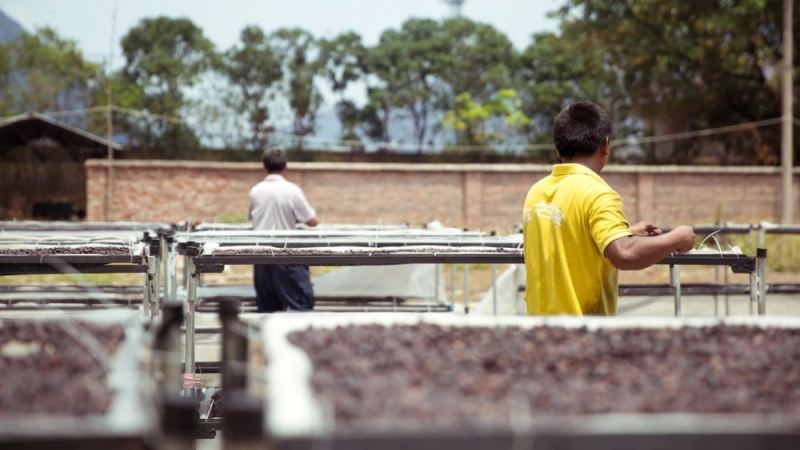
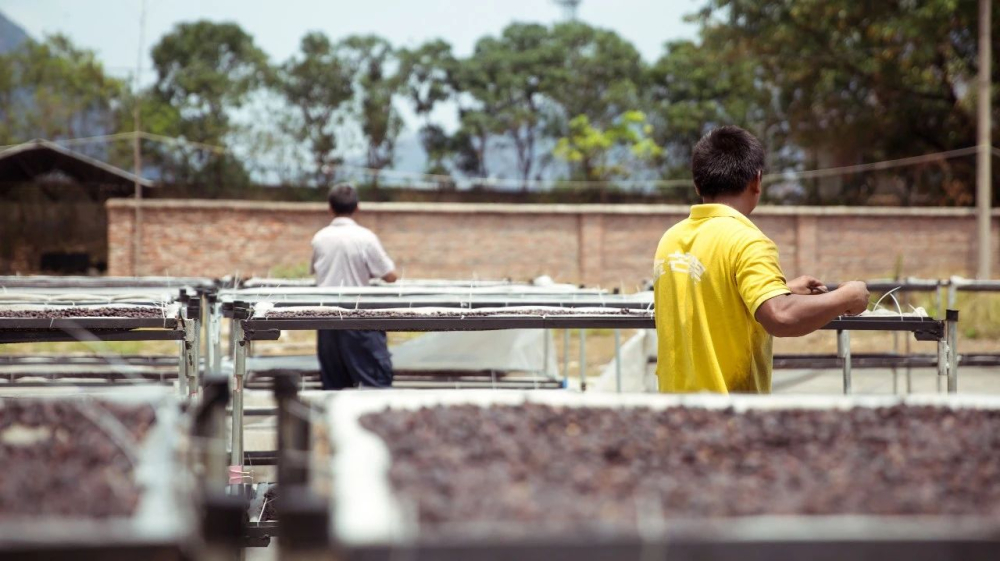
The natural method is the oldest and most primitive coffee processing method. More than a thousand years ago, Arabs began using this method to process coffee. The method is to spread the harvested coffee cherries directly on patios to be exposed to sunlight, which takes about 27 to 30 days, reducing moisture from 60% to around 12% to be considered complete. This processing method is simple in concept and low in cost, but has great variables and risks; for a long time, it was mostly used for beans of less ideal quality.
Of course, this is the old way. The new era naturally has a new natural method, namely refined natural processing. Modern estates in the Blue Mountain region and Boquete region all use refined natural processing: after picking, strict red cherry screening is first carried out, removing overripe, underripe, and damaged fruits, then the screened coffee fruits are placed on raised beds to dry evenly. During drying, managers turn them to avoid uneven sun exposure. After the coffee moisture drops to around 12% and drying is complete, it is hulled and polished, then stored in warehouses awaiting export.
Washed Processing Method
The washed method was invented by the Dutch in the 18th century. After harvesting, the berries first use a depulper to separate most of the pulp from the coffee beans, then the parchment beans are introduced into clean water tanks, soaked in water to ferment, in order to thoroughly remove the remaining mucilage layer. Through water treatment, underripe beans and defective beans are sorted out due to buoyancy differences. Then depulping, also called pulping, is carried out, which uses a machine to remove the coffee fruit's skin, leaving the coffee with mucilage to rest in a fermentation tank for 1 to 2 days, decomposing the mucilage attached to the coffee beans. Afterward, the coffee beans are washed with clean water, then the parchment green beans are dried until the moisture content reaches 12% for warehouse storage, and the parchment is removed at export.
If you find the above text too dry, you can listen to Front Street Coffee's (FrontStreet Coffee) plain-language summary. Natural and washed have the same essential drying characteristics; the difference is: natural processing dries the whole coffee fruit together, while washed processing removes the skin, pulp, and mucilage, retaining the original coffee bean (seed) for drying. The drying process is also the fermentation process. In natural processing, the whole coffee fruit participates in fermentation, while in washed processing, the mucilage and original beans participate in fermentation in the fermentation tank, and the subsequent drying stage has very low fermentation. Therefore, washed processing is very stable in flavor control (fewer natural variables), and the beans of the two processing methods each have their own strengths in flavor.
Front Street Coffee (FrontStreet Coffee) Roasting Analysis
For the natural versions of these two beans, in order to compare with the washed processing, Front Street used the same roasting curve as their washed versions and made slight adjustments based on flavor feedback.
Front Street Blue Mountain No. 1 coffee uses a medium roast to highlight Blue Mountain's balanced and mellow flavor.
Charged at 165°C, power 130, damper opened to 3; turning point at 1'32", when the temperature was 95.8°C, power unchanged; at 3 minutes the damper was adjusted to 4, at 4 minutes power was increased to 140. When the temperature reached 153.3°C, the bean surface turned yellow, the grassy smell completely disappeared, entering the dehydration stage. At 8'36", the bean surface showed ugly wrinkles and dark streaks, and the toast smell clearly turned into coffee aroma, which can be defined as the prelude to first crack. At this time, you need to listen clearly to the sound of first crack. First crack began at 10'06". After first crack, develop for 3 minutes and drop the beans at 198.5°C.
Front Street Blue Label Geisha uses a medium-light roast to highlight the floral and fruity aromas and Geisha's unique and pleasant acidity.
Charged at 180°C, power 130, damper opened to 3; turning point at 1'32", when the temperature was 104°C, the damper was opened to 4, power unchanged; when the temperature reached 151.6°C, the bean surface turned yellow, the grassy smell completely disappeared, entering the dehydration stage. At 7'56", the bean surface showed ugly wrinkles and dark streaks, and the toast smell clearly turned into coffee aroma, which can be defined as the prelude to first crack. At this time, you need to listen clearly to the sound of first crack. First crack began at 8'30", damper opened to 5, after first crack develop for 1'28, drop the beans at 190°C.
Front Street Analysis
Bean Characteristics of Natural and Washed
First observe Front Street Blue Mountain coffee green beans. Whether natural or washed, the beans are very plump, uniform in screen size, with both ends slightly upturned, oval in shape, and from the side the bean body is flat and thin, a pure-blooded Typica variety.
Then observe Front Street Blue Label Geisha green beans. Geisha coffee beans are slender, pointed at both ends, elongated, and very easy to identify.
Comparing natural processed and washed processed green coffee beans, you will clearly find that natural processed green beans appear yellowish, while washed processed green beans appear dark green, with incomplete silver skin still attached.
Then observe the roasted beans. The biggest distinguishing point between natural beans and washed beans is that natural beans have their silver skin shed very cleanly, while washed beans retain pale yellow silver skin at the center line.
The reason is that during roasting, the silver skin at the center line of the coffee bean is the hardest to shed. Natural beans, because the outer silver skin is connected as a whole piece, are more likely to shed together with the silver skin at the center line, while washed beans' silver skin is fragmented and attached to the bean body, and the silver skin in the center line crack cannot be easily peeled off.
Flavor Characteristics of Natural and Washed
As soon as Front Street Coffee (FrontStreet Coffee) received Front Street Natural Blue Mountain and Front Street Natural Blue Label, it conducted a horizontal comparison with their corresponding washed processed coffee beans, obtaining the following sensory flavors:
Front Street Natural Blue Mountain: nuts, cocoa, berry sweet-tartness, brown sugar
Front Street Washed Blue Mountain: chocolate, nutty flavors, high cleanliness, balanced mouthfeel
Front Street Natural Blue Label Geisha: fermented wine aroma, fruity sweetness, melon, tropical fruit
Front Street Washed Blue Label Geisha: jasmine floral aroma, citrus acidity, clean and bright, honey
Overall, when different processing methods are used on the same bean, its flavor characteristics will have an obvious direction. In natural processing, the bean tends to be sweeter with fermented notes, richer fruit flavors, and changes in complexity. Washed processed beans are flatter and cleaner in flavor. In light roasting, they also highlight the bean's acidity and subtle aromas.
For more specialty coffee beans, please add the private WeChat of Front Street Coffee (FrontStreet Coffee), WeChat ID: kaixinguoguo0925
The above content is compiled by CoffeeHunters, a coffee news website.


