







How Does Cold Brew Fit Among Coffee Extraction Methods?
Cold brew is one of the simplest coffee extraction methods to learn. It needs no special skills or costly equipment, so beginners can make iced coffee at home. Grounds steep in cold water in the refrigerator for 8 to 12 hours, then get filtered. The low temperature limits bitterness and astringency while pulling out fruity acidity and sweetness, giving a clearer, rounder cup.
Bean choice and ratio matter most. Beans that taste sweet and fruity work well; a common starting ratio is about 1:8 to 1:15 coffee to water by weight, adjusted by grind size and steep time. Espresso grounds can be cold brewed too, with tweaks to dose and timing. If the result tastes sour, how to fix sour cold brew usually means steeping longer or grinding finer.
Cold brew coffee is the easiest of all extraction methods to master. It requires no professional skills, and even coffee beginners can easily make delicious iced coffee. Based on the practical experience of Front Street Coffee, this article systematically organizes the flavor characteristics and key production points of cold brew coffee, including recommendations for coffee beans suitable for cold brew, suggestions for coffee-to-water ratio and grind size, complete soaking and filtering steps, and storage methods for cold brew coffee. In addition, regarding the question many enthusiasts care about—"Can espresso grounds be used for cold brew?"—Front Street also provides adjustment solutions through actual testing, with detailed explanations from parameter settings to taste performance, helping you avoid common pitfalls and consistently produce a clean, rounded, and full-flavored cold brew coffee at home.
For more specialty coffee knowledge, welcome to follow: Front Street Coffee (Frontsteet Coffee)
Among all coffee extraction methods, cold brew can be considered the one with the lowest operational threshold. It requires neither complex techniques nor expensive equipment. Even coffee beginners who have just been introduced to coffee can easily make a delicious cup of iced coffee. Front Street has already written quite a bit about various aspects of cold brew coffee knowledge and has conducted multiple comparative tests on the parameters involved. However, recently a friend asked Front Street a question: Can espresso grounds be used to make cold brew?
What are the characteristics of cold brew coffee?
The reason cold brew tastes so good is that when soaked in low-temperature water, the components in coffee that easily bring negative experiences—such as bitterness and astringency—are not easily released, while pleasant flavor substances—such as fruity acidity and sweetness—can be extracted relatively fully. For this reason, cold brew coffee often has better clarity than coffee brewed with hot water, feels more rounded on the palate, and tastes fuller.
As for the shortcomings of cold brew, Front Street thinks there are mainly two. The first is that the production cycle is relatively long, generally requiring soaking in the refrigerator for 8 to 12 hours. However, Front Street thinks that good coffee is worth waiting for patiently—put the grounds and water in the refrigerator before bed, filter it the next morning after waking up, and you can directly drink a cup of energizing cold brew. The second point is that if the coffee beans are not chosen correctly, cold brew can easily develop unpleasant flavors and may even taste like a cup of Cantonese herbal tea. Therefore, in addition to controlling the parameters well, choosing beans that suit your own taste is equally key.
What coffee beans are recommended for making cold brew coffee?
Cold brew itself is an iced drink. If dark-roasted beans are used to make it, the finished product will most likely taste both icy and bitter; moreover, without the support of high temperature, the bitterness will linger for a long time, and after the first sip you will not want to take a second. Therefore, when making cold brew at home, Front Street usually gives priority to recommending light-to-medium or medium-roast coffee beans with prominent aromas or obvious sweet-and-sour notes. The iced coffee made this way has balanced acidity and sweetness, along with a refreshing juicy feel, making it especially pleasant to drink in summer.
For example, the "Front Street Ethiopia Natural Alo Village Coffee Beans" currently sold by Front Street Coffee (FrontStreet Coffee) have delicate floral aromas and full berry-like sweet acidity, mixed with a moderate fermented note and a black-tea-like sweet aftertaste; another example is "Front Street Panama Butterfly Coffee Beans," which present bright citrus acidity, fresh white floral notes, honey-like sweetness, and a green-tea-like finish; there is also "Front Street Honduras Sherry Coffee Beans," with whisky aromas, vanilla cream cake-like sweetness and smoothness, and a finish of nuts and caramel that leaves a long-lasting impression after drinking.
The water-to-coffee ratio and step-by-step explanation for making cold brew
When making cold brew coffee, the coffee-to-water ratio is generally controlled between 1:10 and 1:12. For example, take 30 grams of coffee grounds and add about 300 grams of cold water for soaking.
Regarding grinding, Front Street Coffee (FrontStreet Coffee) recommends using coffee grounds with the coarseness of fine granulated sugar, that is, a degree at which 75% passes through China's No. 20 standard sieve. If you do not have a grinder at home, you can note "grind for cold brew" when placing an order. However, Front Street would like to remind you that after coffee is ground, the aroma dissipates faster. If conditions permit, it is still better to grind and brew fresh.
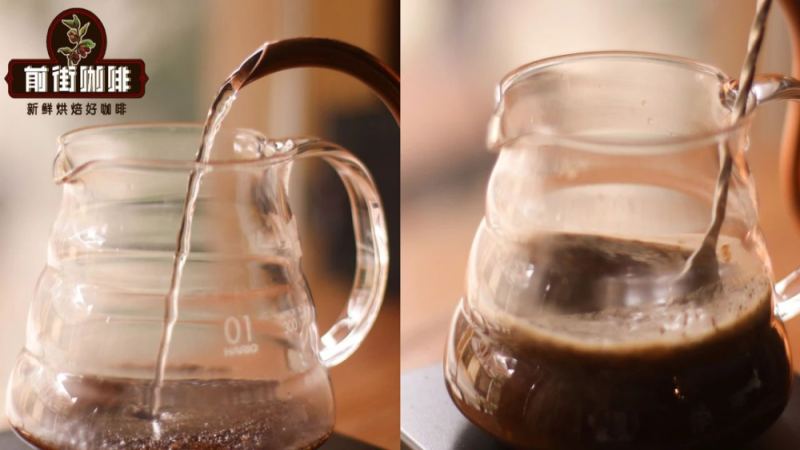
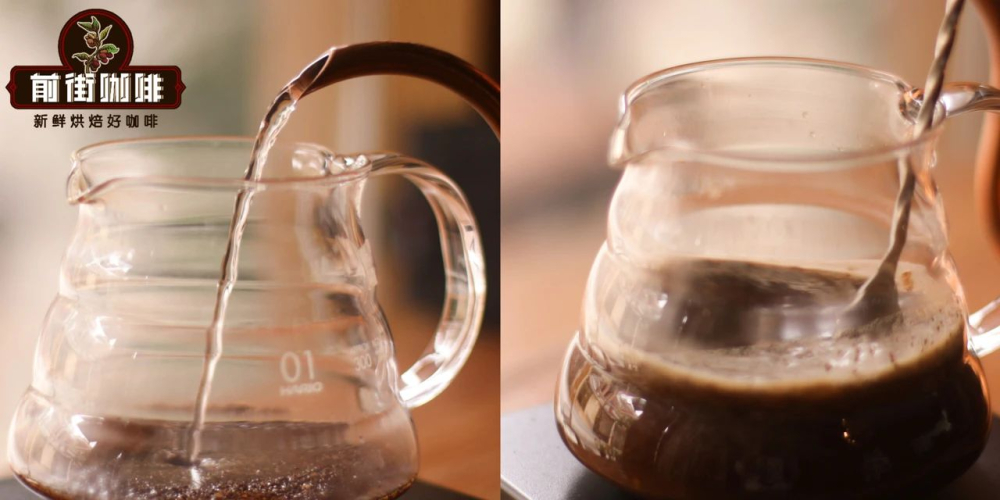
During production, find a clean and sealable container, pour in the coffee grounds and an appropriate amount of water, stir a little so the grounds and water fully contact each other, then seal it well and place it in the refrigerator to chill for 8 to 12 hours.
When the soaking time is about right, take it out and use a filtering tool to filter out the coffee liquid, then pour it into another clean, sealed container and put it back in the refrigerator for cold storage. After the grounds are filtered out, cold brew coffee can usually be stored for about 5 days, and it is best to finish drinking it within this period.
Can espresso grounds be used to make cold brew?
Back to the question raised by the friend at the beginning. The root of this question lies in the fact that the grind size of the coffee grounds does not meet the requirements for cold brew extraction. We all know that the grind size of espresso is as fine as flour. If water is added according to the previous ratio and it is soaked for a long time, it will release soluble substances much faster than regular coarseness (fine granulated sugar level), ultimately making the coffee strong and bitter, or even astringent. Therefore, in order to avoid over-extraction, adjustments need to be made in the two details of soaking ratio and time.
Here Front Street selected Front Street Indonesia Lintong Mandheling as a demonstration. This bean uses a medium-dark roast. When hand-brewed, it shows caramel, roasted nuts, dark chocolate, herbs, and caramel aromas. It is suitable for a variety of brewing methods, and in taste it is also closer to the common espresso grounds on the market; if made into espresso, it will also have rich crema.
In order to reproduce the situation everyone encounters, Front Street used the Galileo Q18 espresso grinder used in stores, adjusting the setting to 2.5 clicks, which is suitable for extracting espresso, to grind, and the resulting particles were as fine and uniform as powdered sugar.
Since the coarseness of the coffee grounds is already fixed, if you want to reduce the extraction rate, you must first shorten the contact time between water and coffee grounds, while also increasing the coffee-to-water ratio, that is, lowering the coffee concentration so the flavor becomes lighter. The specific parameters are as follows:
Coffee grounds: 50g
Coffee-to-water ratio: 1:14
Cold water: 700g
Soaking time: 3 hours
After filtering: refrigerate for another 2 hours
Because the coffee grounds are relatively fine, the water flow meets greater resistance during filtering, and it also takes longer. In the freshly filtered coffee liquid, flavor substances are still suspended in the water, so it usually tastes a little powdery. You can first seal it and put it in the refrigerator for a short period of cold storage to let the suspended particles settle, and the mouthfeel will become cleaner.
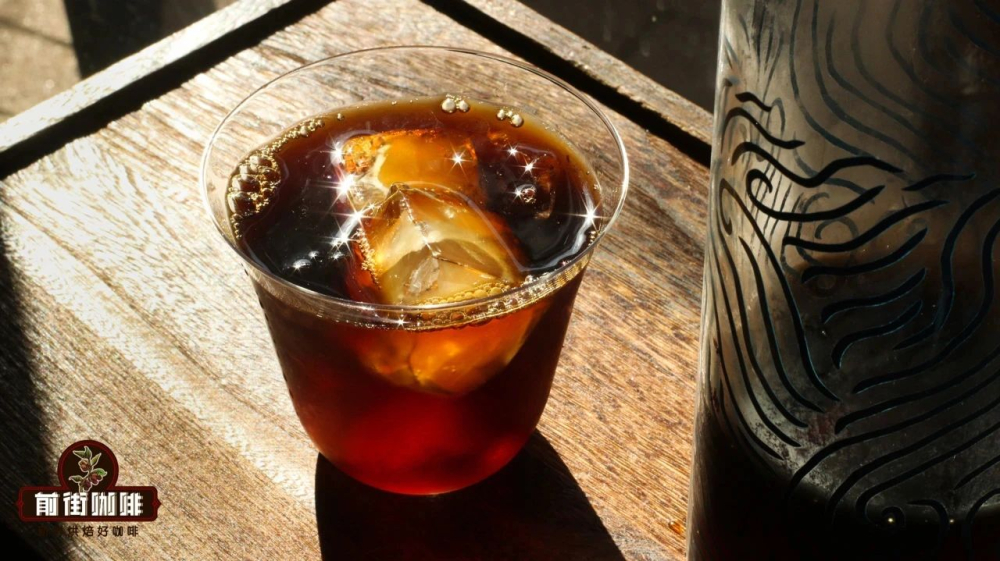
In addition, considering that espresso grounds are roasted darker and their flavor is mainly caramelized aroma, with a thick mouthfeel and slightly heavy bitterness, Front Street suggests adding an appropriate amount of ice after filtering before drinking.
Take today's cup of Front Street Indonesia Mandheling cold brew as an example. With the help of ice, it has a clear spice aroma when drunk, mainly dark chocolate and caramel flavors, along with a pu-erh tea-like aftertaste. It is icy, refreshing, and very invigorating.
The above content is compiled by CoffeeHunters, a coffee news website.


