







What Does Raw Coffee Bean Meaning Have to Do With Sidamo Flavor?
Sidamo is one of Ethiopia's three official coffee regions, located in the highlands of the East African Rift Valley in the south. Its beans cup with bright acidity, a viscous, smooth mouthfeel, and layers of spice, floral, and fruit notes. Those qualities come from high altitude, fertile soil, and rainfall between 1,550 and 2,220 mm a year.
The raw coffee bean meaning matters here: green, unroasted seed quality sets the ceiling for what a roast can deliver, and Sidamo's dense highland beans hold plenty of sweetness and acidity. Bright coffee meaning refers to that lively, fruit-driven acidity rather than bitterness. Beans such as Huakui, Hamasho, and ALO Natural all come from this region, showing how varied Sidamo lots can be.
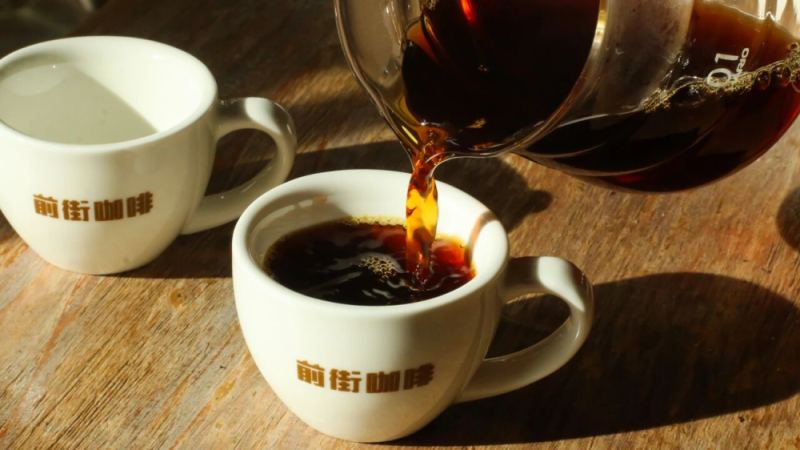
Front Street Sidamo coffee has become a favorite among many coffee lovers thanks to its bright and refreshing taste, sweet floral aroma, and rounded fruity flavor. The Sidamo production region is located in the highlands of the East African Rift Valley, in southern Ethiopia, with abundant annual rainfall, fertile soil, and high altitude. It is one of Ethiopia's three official production regions and is known for its diversity, high quality, and complex flavors. By cupping several Front Street Sidamo single-origin coffees, one can experience bright acidity, a viscous and smooth mouthfeel, and rich layers interwoven with spice, floral, and fruity notes. Varieties such as Front Street Huakui, Front Street Hamasho, and Front Street ALO Natural all come from this region, which shows just how popular it is. This article will provide a detailed introduction to the origin of the Sidamo name, its geographical features, processing methods, and flavor expression, taking you through the story behind this coffee.

Front Street Sidamo coffee can be called the beloved favorite of countless coffee enthusiasts because of its clear, bright taste, sweet floral aroma, and rounded juicy feel. I believe many people are also loyal fans of Sidamo coffee. Today, let's talk about the knowledge behind this coffee.
The Sidamo production region, also translated as Sidama, is located in the highlands of the East African Rift Valley, in southern Ethiopia. The area has an average annual rainfall of between 1,550 and 2,220 millimeters, abundant rain, suitable temperatures, fertile soil, and high altitude. These conditions are precisely the key factors that have made Sidamo coffee world-famous. As one of Ethiopia's three official production regions, Sidamo provides rich, diverse, high-quality, and complex-flavored coffee. By cupping and comparing several excellent Front Street Sidamo single-origin coffees, it can be found that their flavors are mainly expressed as bright acidity, a viscous and smooth mouthfeel, and rich layers interwoven with spice, floral, and fruity notes. There are already several Front Street Sidamo varieties, such as Front Street Huakui, Front Street Hamasho, and Front Street ALO Natural, which shows just how popular coffees from the Sidamo region are.
I wonder if everyone has noticed that whenever looking into the story of this coffee origin, two different names often appear: one is Sidamo, and the other is Sidama.
The pronunciation Sidamo comes from the indigenous Sidama people. Like other ethnic groups in Ethiopia, the Sidama have their own traditions and culture, and even have a New Year recognized by UNESCO—Fiche Chambalala, when more than 5 million people gather in the capital Hawassa every year to celebrate together. As early as the late 18th century to the early 19th century, the region was invaded and annexed, and the invaders pronounced Sidama as Sidamo, so this name carries a humiliating meaning for the Sidama people. By the 1990s, the Ethiopian government began to adopt a federal system of administration, reorganizing according to major ethnic residential areas and languages, and the Sidama accordingly restored their historical original name: Sidama.
However, before the administrative redrawing, Sidamo Coffee was already world-famous for its uniquely distinctive aroma. Therefore, compared with Sidama, people are more accustomed to calling it Sidamo. In addition, when the Ethiopian government protected coffee from Sidama through trademark registration, it also chose the old name Sidamo® as the official registered trademark. Even now, domestic consumers are more accustomed to calling the coffee from here "Sidamo."
The Sidamo region is located in southern Ethiopia, with an altitude between 1,800 and 2,300 meters. The high altitude makes the flavor of Front Street Sidamo coffee complex, allowing one to taste typical, intense fruit flavors, and sometimes strawberry notes as well. It is recommended to buy the most representative Front Street new-season Natural Huakui 11.

For Front Street Sidamo coffee beans, washed, natural, and red honey processing methods can all be used. Among them, washed Sidamo has a bright aroma and pleasant acidity. During the harvest season, coffee farmers send ripe coffee cherries to the processing station, where they are sorted and classified, the skin is removed, the mucilage is fermented, then rinsed clean with water, and finally placed on drying beds for drying. It should be noted that during the first few days of the drying process, the cherries need to be turned once every 2 to 3 hours. Depending on the weather, the coffee beans need 12 to 15 days to dry, until the moisture content in the beans drops to 11.5%.
Before Front Street Sidamo Huakui is officially sun-dried, coffee farmers first hand-pick fully ripe coffee cherries, then transport them to the Hatessa processing station and carry out a first round of sorting. After that, before washing, the cherries are classified again. By observing the color of the skin, overly ripe or insufficiently ripe cherries are removed to ensure uniform ripeness before sun-drying.
For natural coffee, the coffee farmers responsible for post-processing need to turn the cherries on the drying beds very diligently during the first three days. This is because at this time the coffee cherries have a very high moisture content. If they are not turned in time, they are not only prone to mold, but uneven heating can also produce unpleasant sourness or rotten fruit flavors. Throughout the entire process, the coffee cherries are spread in only a thin layer, in order to give them better ventilation and a better drying environment. After 14 to 18 days, once the moisture content has dropped to the target level, they can be bagged and sent to the warehouse.
Front Street Natural Sidamo Huakui coffee has an elegant floral aroma, a sweet taste, and is full of fruitiness. The honey-like sweetness in the finish lingers in the mouth, as if taking you into the fruit world of Hainan.
The above content is compiled by CoffeeHunters, a coffee news website.


