








How Do Starbucks Coffee Beans Differ by Origin?
Starbucks currently offers 13 regular coffee beans, a mix of single-origin lots and blending coffee beans drawn from several regions. Sources include Yunnan and Indonesia in Asia, Guatemala and Colombia in Central and South America, and Ethiopia and Kenya in Africa. Roast level, origin and processing method give each bean its own profile.
Each of the 13 beans is introduced by roast level, origin, flavor and processing method, so drinkers can match a bean to their taste. The lineup also covers the four basic elements of brewing coffee, plus brewing suggestions. Limited-edition single-origin beans appear during holidays or promotional seasons.
Starbucks currently offers 13 regular coffee beans, covering single-origin and multi-origin blends, sourced from Yunnan and Indonesia in Asia, Guatemala and Colombia in Central and South America, as well as Ethiopia and Kenya in Africa. Different roast levels, processing methods, and origins give each bean its unique flavor profile. This article introduces the roast level, origin, flavor characteristics, and processing method of each of these 13 coffees one by one, and shares the four basic elements of brewing coffee along with brewing suggestions. At the end, it also includes Front Street Coffee's specialty coffee communication channels for enthusiasts to explore further.
Professional coffee knowledge exchange. For more coffee bean information, please follow Coffee Workshop (WeChat public account: cafe_style).
For more specialty coffee beans, please add the private WeChat of Front Street Coffee (FrontStreet Coffee), WeChat ID: qjcoffeex
Starbucks currently offers 13 regular coffee beans, including both single-origin beans and blends combining different origins. These beans come from Yunnan and Indonesia in Asia, Guatemala and Colombia in Central and South America, as well as Ethiopia and Kenya in Africa.
In addition, during specific holidays or promotional seasons, Starbucks also releases limited-edition single-origin coffee beans.
A brief introduction to Starbucks' 13 coffee beans
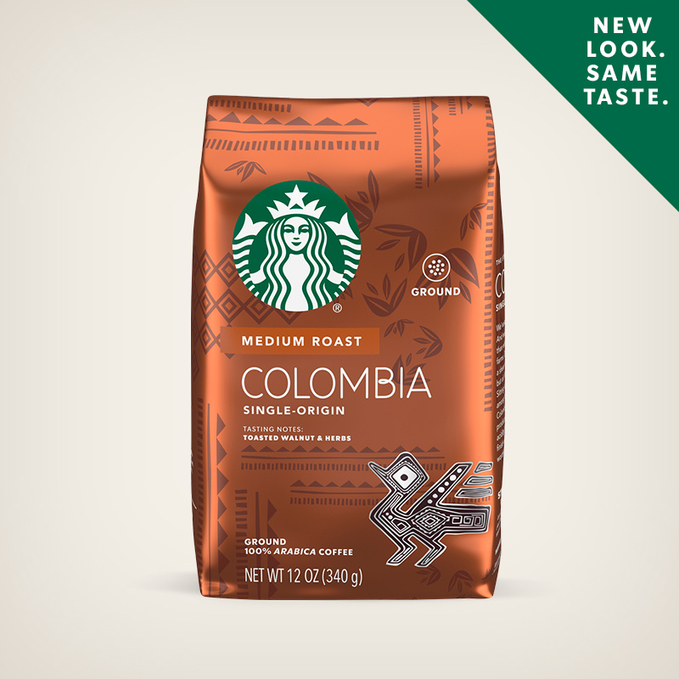
The first one: Colombia, medium roast, Latin America region, with nutty flavors. Some people may find it surprising—aren't all coffees bitter? Don't you need to add milk and sugar to get them down? Actually, that's not the case; the beans themselves have unique flavors.
This was the coffee my store manager personally brewed for me when I first joined, and he guided me through the four steps of coffee tasting: smell the aroma, slurp, identify, and describe. If the cup is small, you can cover the rim; if the cup is large, you can waft the aroma toward your nose. This bean has balanced acidity and body, giving me a very comfortable experience.
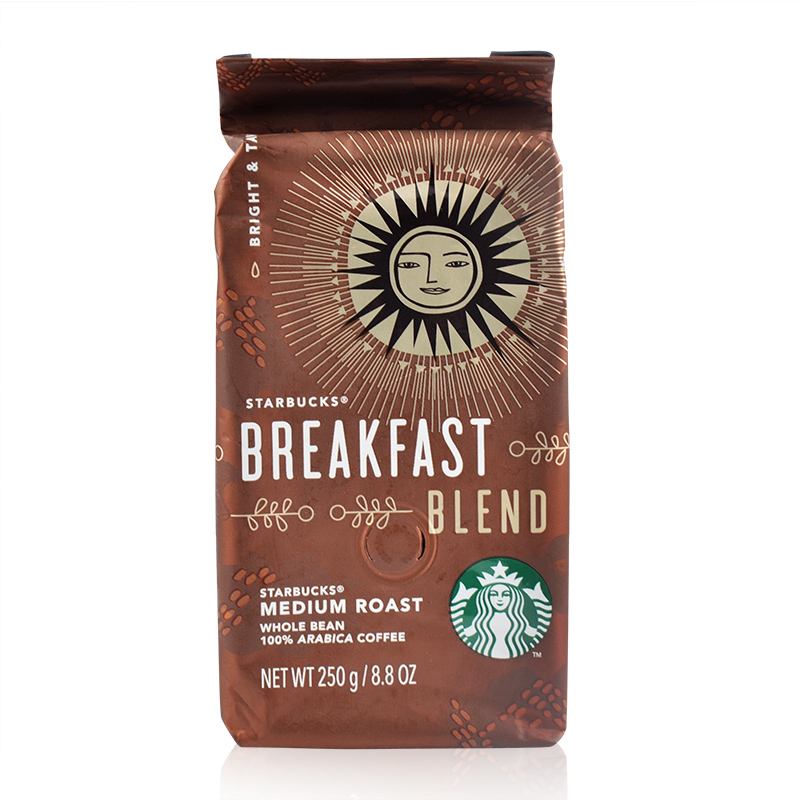
The second one: Breakfast Blend, medium roast, Latin America region, with a crisp and lively flavor. This was the bean my mentor chose when hosting a coffee tasting. It was morning at the time, and this bean had strong acidity and low body—you could sum it up as crisp, lively, and bright, with a hint of sweetness in the finish that leaves you energized.
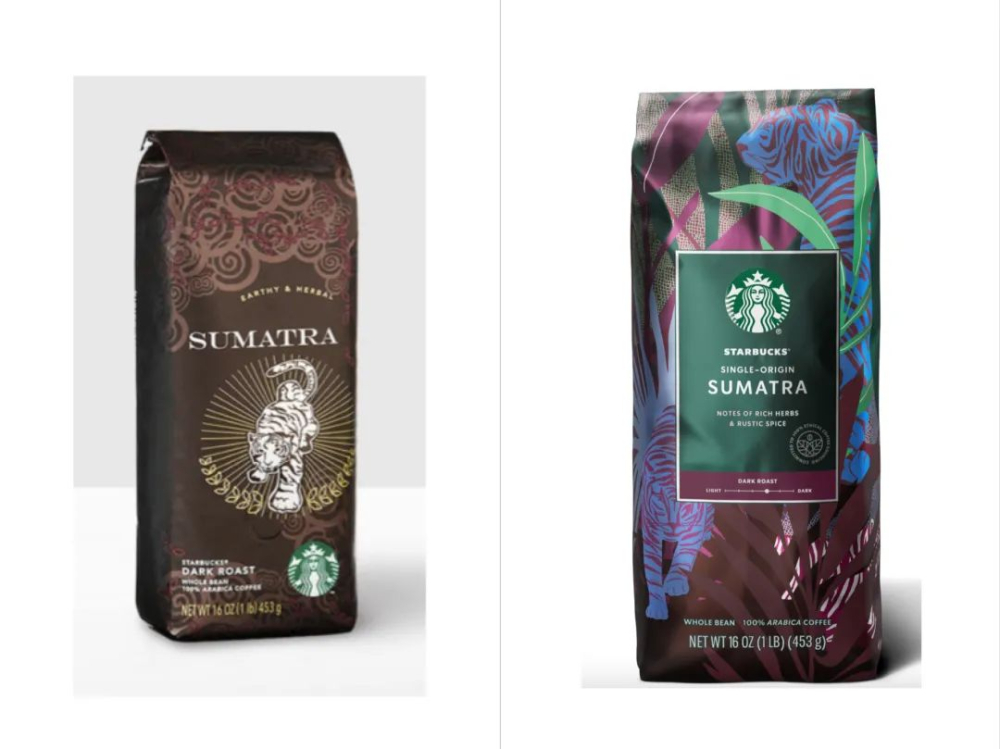
The third one: Sumatra, dark roast, Asia/Pacific region, with deep herbal flavors and earthy aromas. I originally wasn't too willing to try dark-roasted beans, but after actually tasting it and experiencing the finish, I realized it was a different kind of wonderful experience.
You may have noticed that the packaging color differs from the first two. Coffee beans' flavors are affected by the roast level: coffee-colored packaging indicates medium roast, which preserves caramel flavors better and gives a smoother, more balanced mouthfeel; packaging that is nearly black indicates dark roast, which gives a heavier, more intense body.
The fourth one: Kenya, medium roast, Africa region, rich mouthfeel with strong grapefruit and blackcurrant flavors, high acidity, heavy body, internationally renowned, and deeply loved by customers.
To summarize the characteristics of the world's three major coffee-growing regions: Latin American beans have crisp, lively acidity with nutty, cocoa, and gentle spice flavors; African beans are rich and juicy, displaying floral, citrus, and berry aromas; Asia/Pacific beans are full-bodied with herbal and earthy aromas.
The fifth one: Guatemala Antigua, medium roast, Latin America region, with cocoa and spice notes. When actually tasting it, you can detect a smoky flavor, which is its most prominent characteristic.
Finally, let me introduce the four basic elements of brewing coffee: ratio, grind size, water, and freshness. It's recommended to use 10 grams of grounds with 180 milliliters of water, a ratio of about 1:18; grind size determines how long water and coffee stay in contact—grinding too fine will make the coffee too bitter. Typically, grind size is set at 7 or 5 on a scale from 1 to 9, where a larger number means coarser particles; water is best when it's low-temperature purified filtered water, and when heating, the water temperature should be controlled at 90 to 96 degrees Celsius; brewed coffee should not be left for more than 20 minutes, otherwise it will become bitter and astringent, affecting its original flavor.
The sixth one: Pike Place Roast coffee beans, medium roast, Latin America region, washed processing, medium body, medium acidity, a blend of Latin American beans with subtle cocoa notes and roasted nut aromas. This bean was launched in 2008 to commemorate the opening of Starbucks' first store in Seattle's Pike Place Market, hence the special packaging.
The seventh one: Ethiopia, medium roast, Africa region, black cocoa and citrus flavors, washed processing, medium body, high acidity.
The processing method also affects coffee bean flavor. Washed processing helps enhance acidity and aroma, and gives coffee a soft, crisp character with a refreshing aftertaste—Colombia, Breakfast Blend, Kenya, and Guatemala Antigua all use this method. There are also semi-washed and natural drying methods; the former highlights herbal notes, earthy notes, and rich body—readers who read the previous article can easily guess that Sumatra uses the semi-washed method; the latter gives coffee berry flavors and floral aromas—Sun-Dried Sidamo coffee uses natural drying processing.
The eighth one: House Blend, medium roast, washed processing, the first blend launched in 1971, medium body, medium acidity, rich and lively flavor with nutty and cocoa-like aromas from roasting.
The ninth one: Anniversary Blend, washed and semi-washed processing, specially created in 2009 to celebrate Starbucks' tenth anniversary in the Chinese market, blending coffee beans from the Asia/Pacific region and Yunnan, herbal flavors, low acidity, moderate body.
The tenth one: Komodo Dragon Blend, dark roast, Asia/Pacific region, washed and semi-washed processing, layered fresh herbal flavors and deep spice flavors, heavy body, low acidity, (pay attention) decaf.
The eleventh one: Verona, dark roast, multi-origin, washed and semi-washed processing, with roasted sweetness and black cocoa notes, heavy body, low acidity. This is a coffee bean full of love, and it pairs even better with dark chocolate.
The twelfth one: Espresso Roast, multi-origin, washed and semi-washed processing, heavy body, medium acidity, full-bodied with caramel-like sweetness, the best partner for steamed milk, and the coffee bean used in Starbucks' espresso beverages.
The thirteenth one: Italian Roast, multi-origin, medium body, low acidity, recommended for drip brewing, especially suitable with caramel-flavored desserts.
How to brew Starbucks coffee beans?
1. Pour coarsely ground coffee into the pot, 2 teaspoons (10 grams) with 180 milliliters of water.
2. Pour in water that has just boiled.
3. Let it steep for 4 minutes.
4. Slowly press down the filter, then pour out the coffee to drink.
When buying beans, have the staff grind them for you; you may also need a graduated measuring cup or an electronic scale. Before brewing, fill the pot with hot water and then pour it out (to warm the pot), and use your phone's stopwatch to time it. If you want to pair it with pastries, choosing chocolate-containing pastries is always a safe bet~
The above content is compiled by CoffeeHunters, a coffee news website.


