







What Should You Check Before Buying Really Expensive Coffee Gear?
A pour-over kettle is built from a spout, body, handle, and lid, and those shapes decide how steady the pour feels. Buyers first choose between a temperature-controlled model and a regular one, then match spout type to brewing style, since a narrow gooseneck, wide gooseneck, crane neck, flat spout, or eagle neck each pours differently.
Temperature-controlled kettles adjust heat automatically, keep water warm between pours, and skip a separate thermometer, but the heating module adds weight and shifts the center of gravity downward, and costs roughly three hundred yuan more. Regular kettles cost less and offer more shapes. Capacity, handle feel, and material round out the decision between budget and needs.
Faced with the dazzling array of pour-over kettles on e-commerce platforms, many coffee enthusiasts often don't know where to start. Although pour-over kettles are basically composed of a spout, body, handle, and lid, different shapes directly affect pouring performance. Front Street Coffee will systematically sort out the purchasing approach for pour-over kettles from dimensions such as temperature-controlled vs. non-temperature-controlled, spout type, body capacity and center of gravity, handle feel, material, and price. The article will also introduce the pouring characteristics and representative products of different spouts such as narrow gooseneck, wide gooseneck, crane-neck, flat spout, and eagle-neck, helping you find the one that better suits you between budget and needs.
To learn more about specialty coffee, welcome to follow: Front Street Coffee (Frontsteet Coffee)
When choosing coffee equipment, opening a shopping website often presents a bewildering variety of products, and for a moment you don't know how to choose. Take pour-over kettles as an example: although the basic structure of most products consists of a spout, body, handle, and lid, differences in shape design directly change the pouring effect.
Therefore, finding a pour-over kettle that truly suits you is crucial. Next, Front Street will talk about how to choose a pour-over kettle.
Temperature-controlled version or non-temperature-controlled version
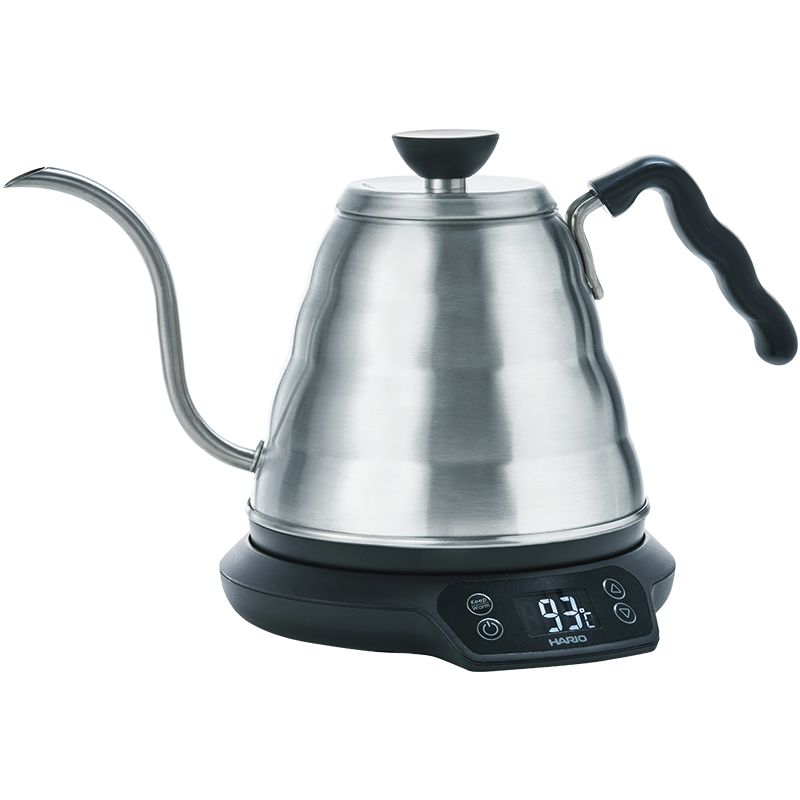
Nowadays, when choosing a pour-over kettle, the first step is usually to decide whether to buy a temperature-controlled model or a non-temperature-controlled model. The advantages of the temperature-controlled model are prominent: ① it can automatically adjust the temperature at any time; ② it has a built-in heating function, so you don't need a separate thermometer, making it convenient to use; ③ it can keep warm between two brewing sessions. Its shortcomings are equally obvious: ① with a heating module added at the bottom, the center of gravity of the whole kettle shifts downward; ② the heating module also makes the body heavier; ③ the price is usually about three hundred yuan more expensive than the regular version (though this is not really a drawback).
The non-temperature-controlled version is just a regular pour-over kettle. There are many types to choose from, and it is also the basic model that many equipment manufacturers use when developing products.
If you want convenience, just go for a temperature-controlled kettle. However, there aren't many types of temperature-controlled kettles to choose from; the more common ones in the industry are Brand B and Brand F.
If you want to buy a regular non-temperature-controlled kettle, then keep reading.
Spout
The spout is the most critical factor determining the shape of the water column. Currently, spouts on the market can be roughly divided into narrow gooseneck, wide gooseneck, elephant-trunk spout, flat spout, and eagle-neck. They differ greatly in pouring difficulty and operating room. Different outlet sizes directly determine the adjustable range of water column thickness. For example, a narrow-spout kettle is easy to use and easy to control the water, but it leaves less room for variation and is not suitable for a large flow. The representative product is the takahiro Shizuku kettle, known as the "cheat kettle," whose spout is only 4mm, making water control almost entirely free;
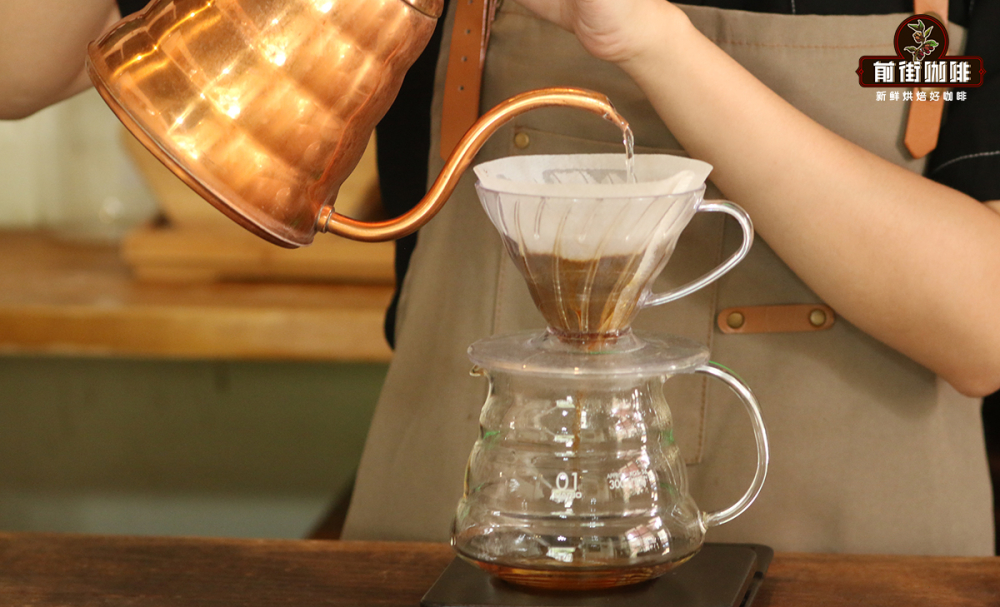
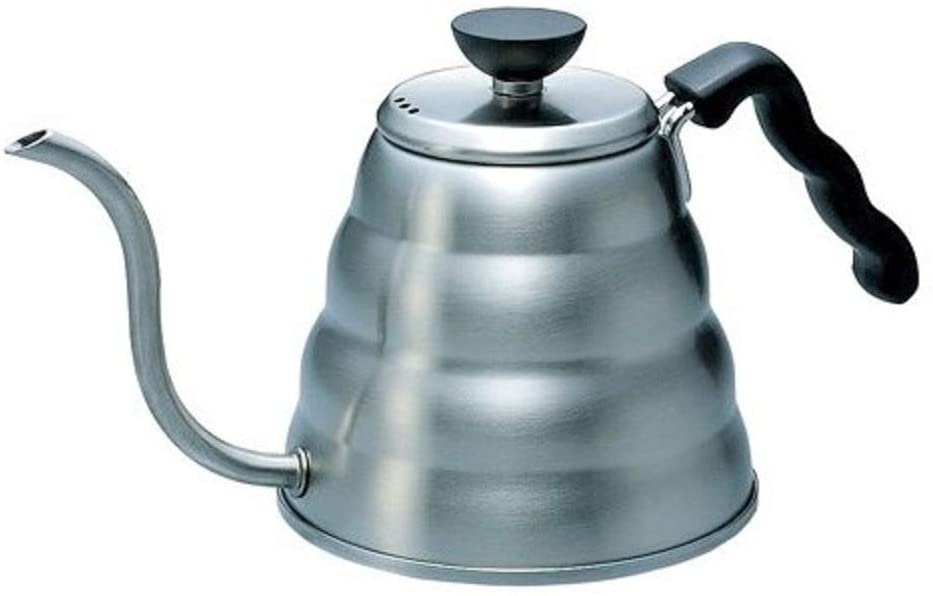
A wide-spout kettle is relatively more difficult to control the flow with and requires some practice to master, but its fun lies in its strong playability. Once proficient, you can switch freely between large and small flows, adapting to the water columns needed for various brewing methods, and even the drip method can be used. The representative product is the Hario stainless steel cloud pour-over kettle, commonly known as the "mine kettle." It has a high operating threshold and high playability, suitable for coffee enthusiasts who like a challenge.
The crane-neck kettle gets its name because the side profile of the spout opening looks like a crane's head. Representative products include Kalita's Master kettle and Wave kettle. The Master kettle's spout opening is rather long and pointed, somewhat like a pelican. When pouring, it can control a very thin, long stream and also a large flow. The Wave kettle's spout opening is wider and shorter, making the water column more stable.
A flat-spout kettle refers to a type whose spout opening is nearly parallel to the horizontal plane and has no flow-guiding design. When pouring, it easily forms a parabola, meaning it is difficult to produce a vertical water column. But it is precisely a good tool for practicing water control. As long as you can master this type of kettle, using other kettles will be no problem at all.
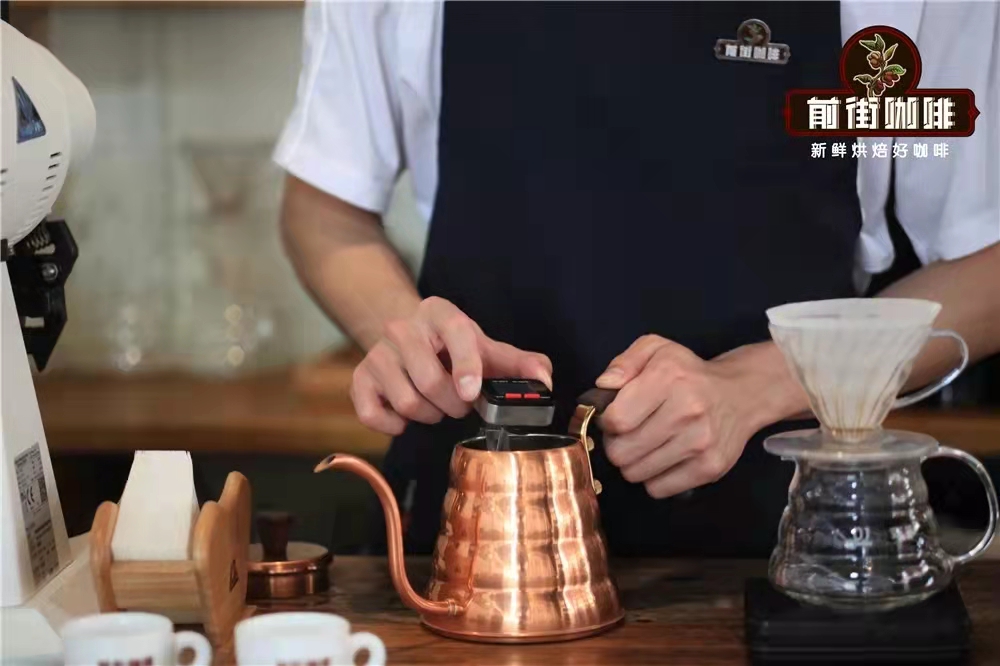
An eagle-neck kettle refers to a spout with a downward-hooked flow-guiding design. Kettles newly released in the past two or three years basically all include this element. The benefit of this design is that it makes it easier to form a vertical water column when pouring, and the downward hook of the spout can also prevent backflow when the flow is small.
Body
What is there to agonize over about the body? Mainly just two things: first, capacity; second, whether to choose "fat" or "thin."
Usually, pour-over kettles range from 0.5 to 1.2L in capacity. How large to choose mainly depends on how much weight you can handle. As for "fat" versus "thin," it is essentially a question of center of gravity. A short, stout pour-over kettle has a lower center of gravity when filled with water and sits more stably, but it is more laborious to lift. A tall, slim pour-over kettle has a higher center of gravity and tends to feel unstable when there isn't enough water, so with this type people generally fill it with more water.
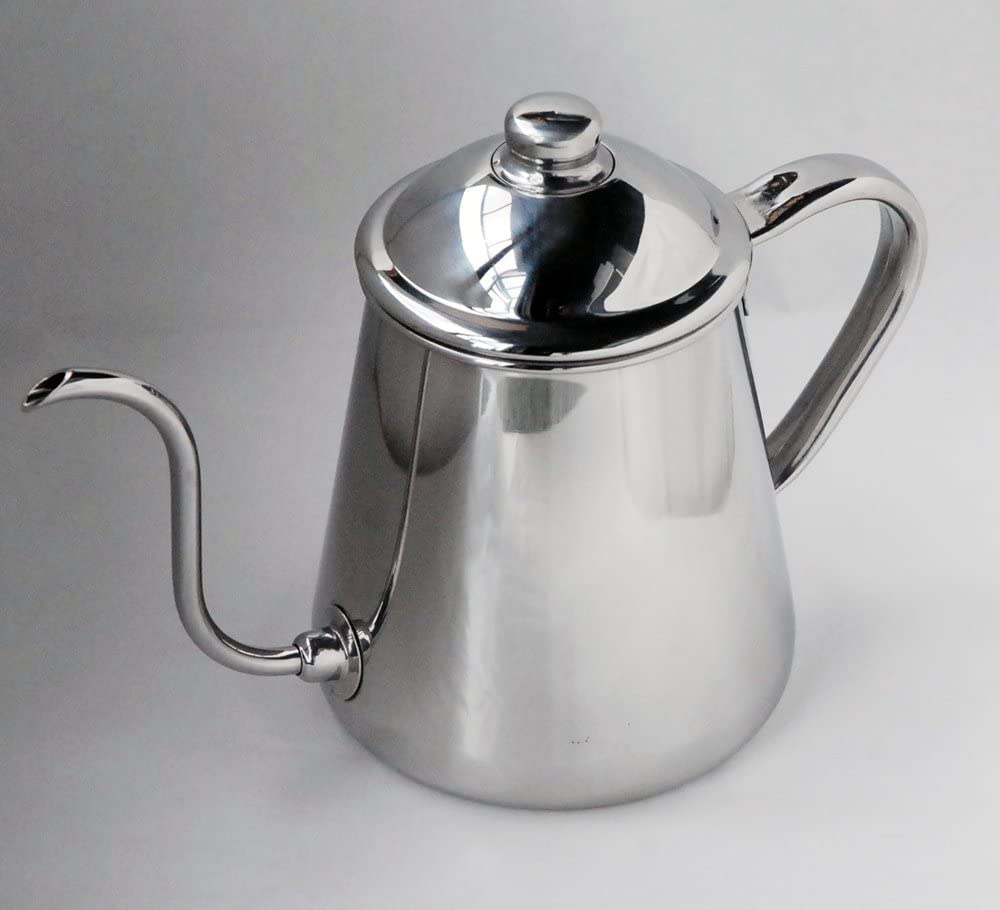
There is also another kind, the palace kettle, whose structure is similar to Aladdin's lamp. Front Street still hasn't figured out where the advantage of this design lies; perhaps it is just for the retro look. Friends who know the reason are welcome to share.
Handle
Each brand's handle shape is different, and the grip feel also varies, but almost every brand says in its marketing that its handle is ergonomic and labor-saving. This actually also shows that people's hands are really very adaptable.
A good handle design should feel comfortable to hold and make it easier to grasp the center of gravity of the body when pouring. Simply put, it should be labor-saving and easy to control. Basically, the handles of modern pour-over kettles don't have major problems.
There is another point: the choice of pour-over kettle is also closely related to the brewing method. For example, traditional Japanese-style pour-over kettles mostly have a tall, slim body paired with a ring handle, which fits their habit of slow pouring.
Material
Pour-over kettles are mostly made of stainless steel, copper, enamel porcelain, and also glass (probably no one would choose glass, right?). From a performance perspective, Front Street recommends copper even more; both heat retention and texture are the most outstanding. From a cost-effectiveness perspective, just choose stainless steel: good quality at a low price. From an artistic perspective, you can consider enamel porcelain. It adds points for appearance, but it is truly fragile, truly hot to the touch, and truly good-looking.
Price
Pour-over kettles range from 30 yuan to over a thousand yuan, but unlike coffee grinders, as long as your technique is good enough, a 30-yuan kettle can also brew very good flavor, so it is not that the more expensive the better. When purchasing, you can consider the spout, body, and handle mentioned above comprehensively.
There is also one more thing to watch out for: some pour-over kettles on online shopping platforms that look exquisite and are priced absurdly low are mostly imitations. The appearance may be 99% similar, but the details and feel will differ (of course, they can still be used), though they may also become a reason to discourage beginners.
The above content is compiled by CoffeeHunters, a coffee news website.


