







How Did Geisha Coffee Travel from Ethiopia to Panama?
Geisha coffee was first found in the Geisha forest of Ethiopia in 1931 and later passed through Kenya, Uganda, and Costa Rica before reaching Panama, where Hacienda La Esmeralda made its name. The variety is now grown in Ethiopia, Panama, Colombia, and Costa Rica, and the processing method chosen at the mill shapes what ends up in the cup.
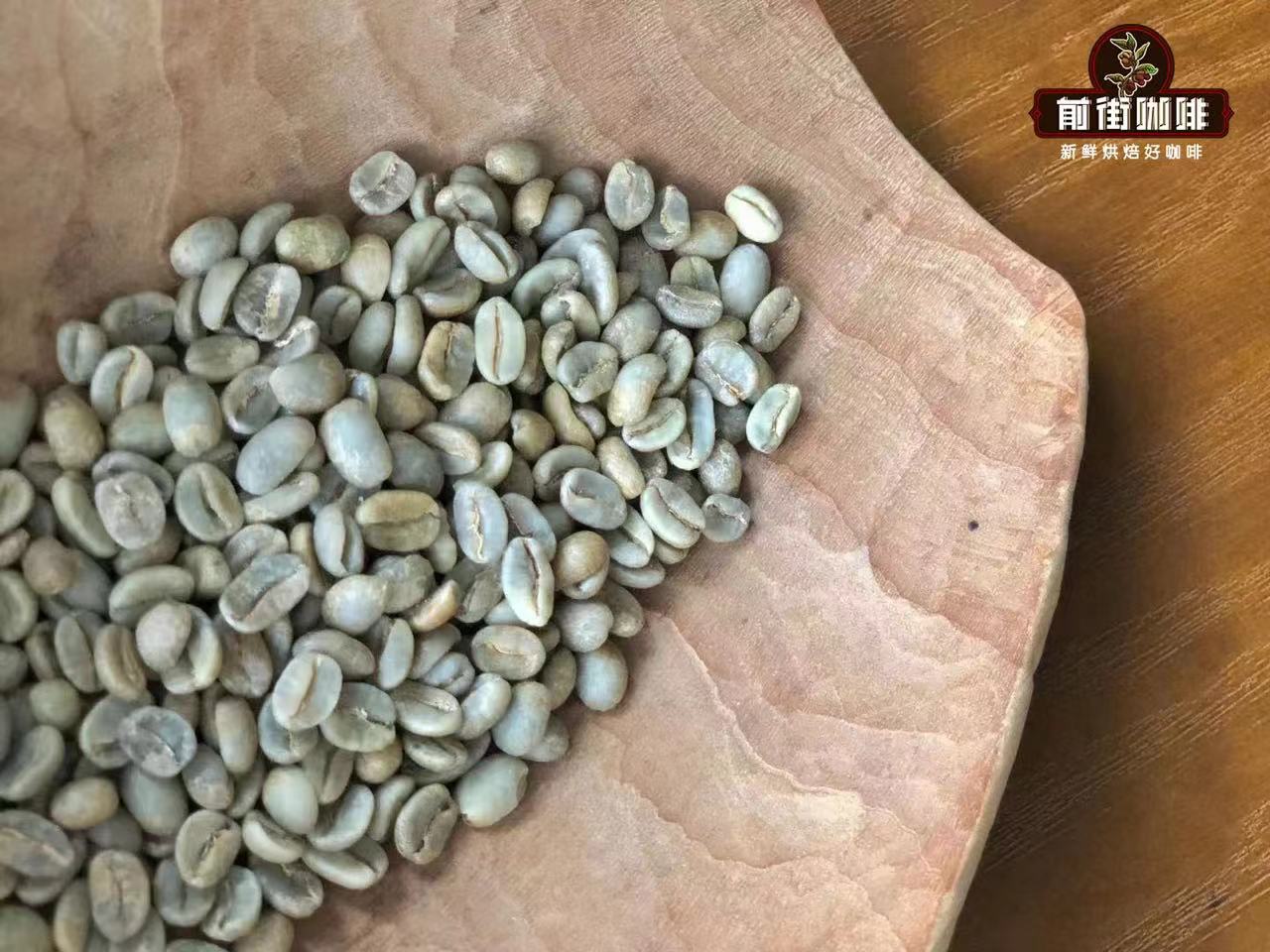
At Hacienda La Esmeralda, lots are graded as Red Label, Green Label, and Blue Label, with Red Label and Green Label most often poured in stores. Green Label washed lots tend to taste clear and transparent, while natural lots lean fruitier and heavier. Poured side by side, the two geisha coffee beans show distinct differences in aroma and body.
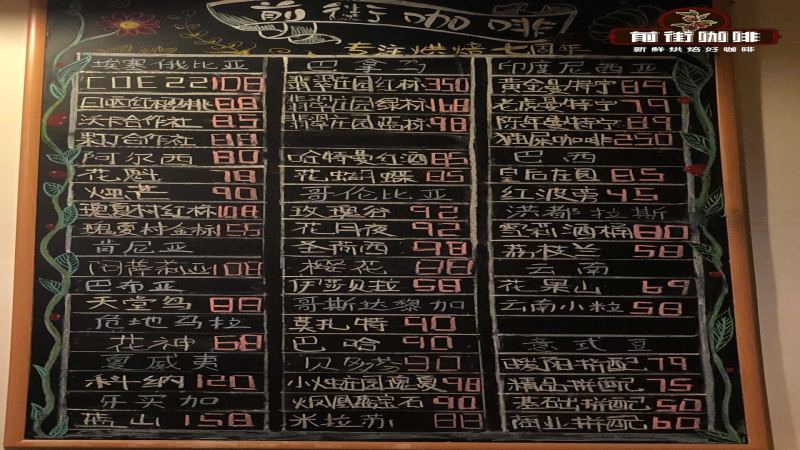
Geisha coffee has now become the top star in the specialty coffee world, but did you know it didn't originally come from Panama? From its discovery in the Geisha forest of Ethiopia in 1931, through Kenya, Uganda, and Costa Rica, to finally shining brilliantly at Hacienda La Esmeralda in Panama, Geisha's legendary journey spanned more than half a century. Front Street Coffee's stores regularly offer Red Label and Green Label Geisha from Hacienda La Esmeralda in Panama, priced from 60 to 75 yuan, and one of the questions customers ask most often is what exactly the difference is between the natural and washed processing methods. This article will comprehensively trace the history of Geisha's varietal migration, explain in detail the microclimatic conditions of Panama's Boquete region and Hacienda La Esmeralda's three major plots, and compare the grading standards and flavor characteristics of Red Label, Green Label, and Blue Label, and finally, through actual pour-over brewing, present the specific differences in taste between washed Green Label and natural Green Label.
The customers who drink coffee at Front Street Coffee's stores span a very wide age range, and Front Street has thus noticed a rather interesting phenomenon: older coffee enthusiasts often regard Jamaica Blue Mountain as the pinnacle of coffee, while in the eyes of the younger consumer group, the most sought-after high-end coffee has long since transitioned from Blue Mountain to Geisha.
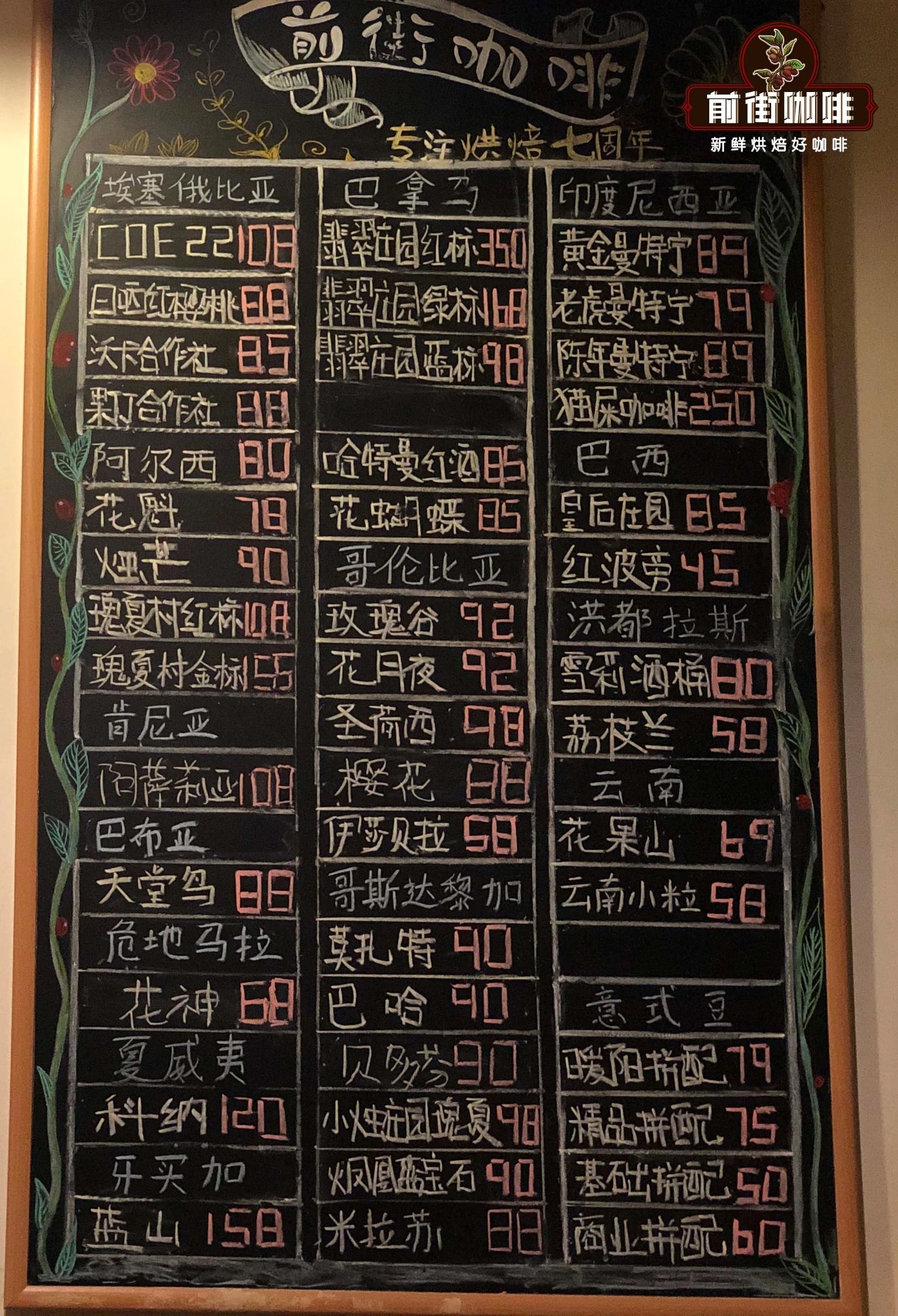
In its daily operations, Front Street has truly felt everyone's enthusiasm for Geisha. Many customers, upon hearing that Front Street's most expensive Panama Hacienda La Esmeralda natural Red Label Geisha pour-over is only 75 yuan per cup, walk in and directly ask for Geisha by name; if they prefer the clear, transparent taste of washed coffee, they can also choose Front Street's Panama Hacienda La Esmeralda Green Label Geisha at 60 yuan. However, if you look carefully through Front Street's bean list, you'll find that Geisha from two origins appears on it at the same time—Ethiopia and Panama. In addition, two new Geisha coffee beans from Colombia and Costa Rica respectively have recently been added.
When it comes to Geisha, how much do people actually know? Geisha's fame was made in Panama, but authoritative testing has confirmed that this variety actually originated in Ethiopia. Below, Front Street will sort out for everyone the varietal origins and historical thread of Geisha coffee beans: the variety was discovered in the Geisha forest of Ethiopia in 1931, sent to the Kenya Coffee Research Institute in 1932, introduced to Uganda and Tanzania in 1936, brought to Costa Rica in 1953, and only finally arrived in Panama in 1960.
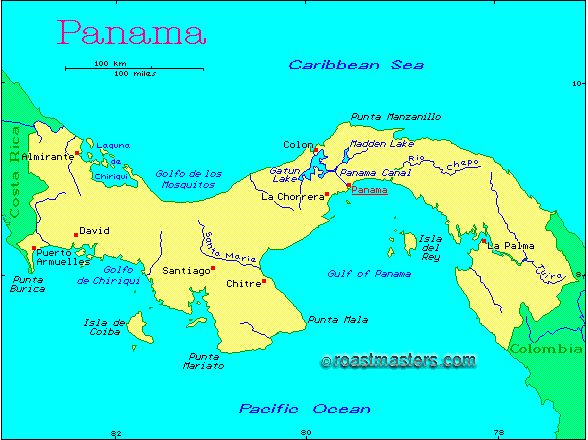
Nowadays, when people mention Geisha coffee, they by default mean Panama Geisha. Taking this opportunity, Front Street will introduce Panama's coffee-producing regions and the world-renowned Hacienda La Esmeralda. First, a bit of basic geography: Panama is located in Central America, and from a world map you can clearly see that it borders Colombia to the east, faces the Pacific Ocean to the south, is adjacent to Costa Rica to the west, and has the Caribbean Sea to the north. The country lies roughly between 7° and 10° north latitude, precisely falling within the coffee-growing belt. There is a hard standard in the specialty coffee circle—coffee trees must be planted at altitudes above 1,200 meters—and Panama meets this condition as well. Eastern Panama has lower altitudes, and only the high-altitude areas of the western region are most suitable for growing coffee. And Panama's three main coffee-producing regions are all concentrated in Chiriquí Province.
According to information Front Street has gathered, Panama's specialty coffee-growing areas are mainly divided into three: Boquete, Volcan, and Renacimiento. Among them, the Boquete region is the most famous, with an average altitude between 1,400 and 1,900 meters, near the western border with Costa Rica. This region is home to many outstanding estates, such as Elida Estate, Hacienda La Esmeralda, and Duncan Estate. The region sits atop Barú Volcano, with fertile volcanic ash soil and extremely diverse microclimatic conditions.
Panama's Hacienda La Esmeralda can be said to be a coffee estate with quite a long history.
In 1964, Rudolf Peterson, who had retired from the American banking industry, moved to Panama and purchased what is now Hacienda La Esmeralda. In 1973, his son returned home after earning a doctorate to help manage the estate. In 1987, the estate introduced two coffee varieties, Caturra and Catuai. In 1994, the estate built its own washing station, and from then on had its own dedicated coffee-processing facilities. In 1997, it also bought the nearby Jaramillo estate with its superior geographical conditions and incorporated it into Hacienda La Esmeralda's holdings.
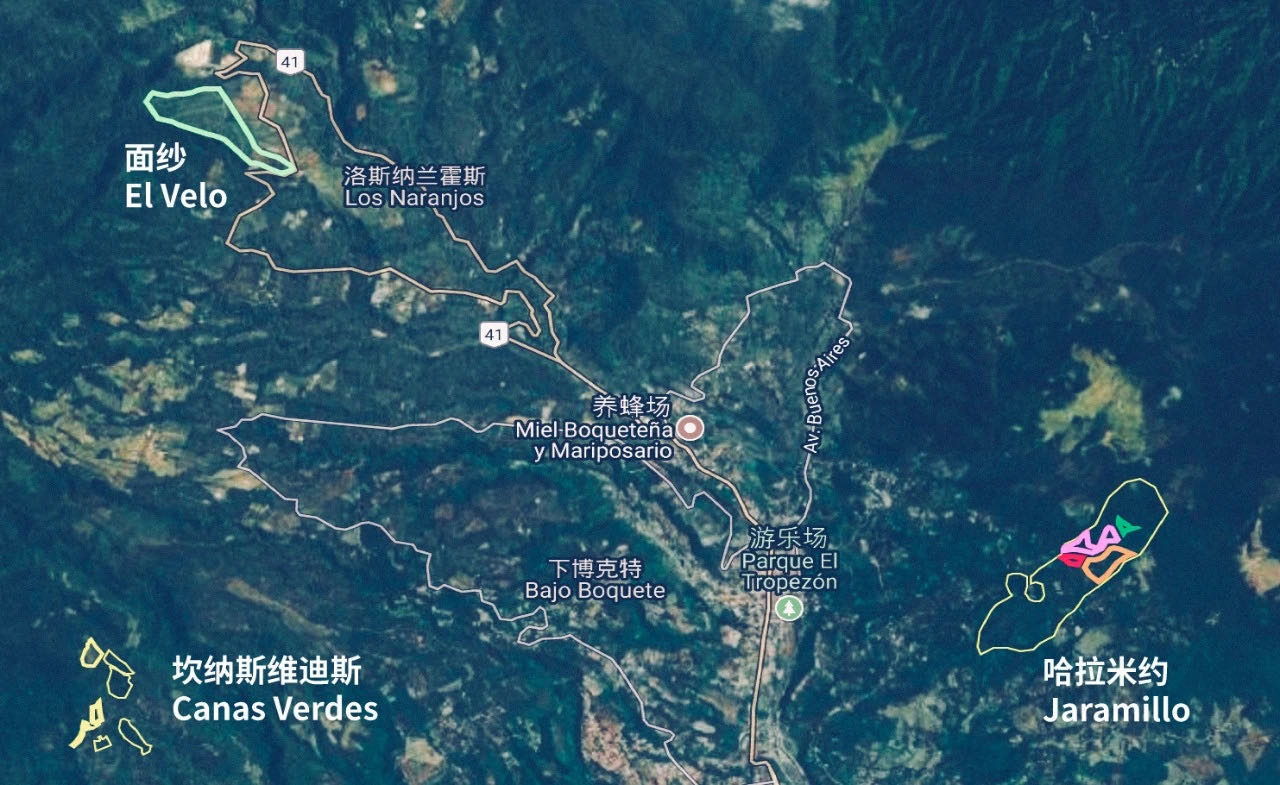
At present, Hacienda La Esmeralda has three major plots under its banner: Canas Verdes, Jaramillo, and El Velo. Front Street also found detailed information on these three plots on Hacienda La Esmeralda's official website:
Canas Verdes has annual rainfall of 3,500 ml, average daytime temperature of 16 to 23°C, average nighttime temperature of 10 to 15°C, and an average altitude of 1,600 to 1,800 meters. This plot contains 9 sub-plots: Lino, Coronado, Fundador, León, Montaa, Trapiche, Chinta, Cabaa, and Tumaco.
Jaramillo has annual rainfall of 4,000 ml, average daytime temperature of 19 to 25°C, average nighttime temperature of 11 to 15°C, and an average altitude of 1,600 to 1,700 meters. Jaramillo is subdivided into 5 small plots: Mario, Noria, Reina, Bosque, and Buenos Aires.
El Velo is the plot Hacienda La Esmeralda purchased most recently, with an average altitude of 1,700 to 1,900 meters. In addition to growing Geisha and Catuai, a small number of other exotic varieties are also planted here, such as Laurina, Pacamara, Mocha, and SL28. El Velo is divided into 7 small plots in total: Guabo, Portón, Durazno, Higuerón, Higo, Buena Vista, and guila.
Front Street believes that one reason Hacienda La Esmeralda is so highly sought after is that it has an extremely refined grading system. In order to cater to the flavor preferences of different audiences, the estate classifies Geisha coffee into three grades based on planting altitude, planting plot, and cupping performance: Esmeralda Special, Private Collection, and Geisha 1500 (Hacienda La Esmeralda discontinued the Geisha 1500 grade in 2021). Below is an introduction to these three grades of Geisha one by one.
First, let's talk about Esmeralda Special, commonly known in China as Red Label coffee beans. It is grown at altitudes between 1,600 and 1,800 meters, scores above 90 points in cupping, and comes from the two major plots of Jaramillo and Canas Verdes.
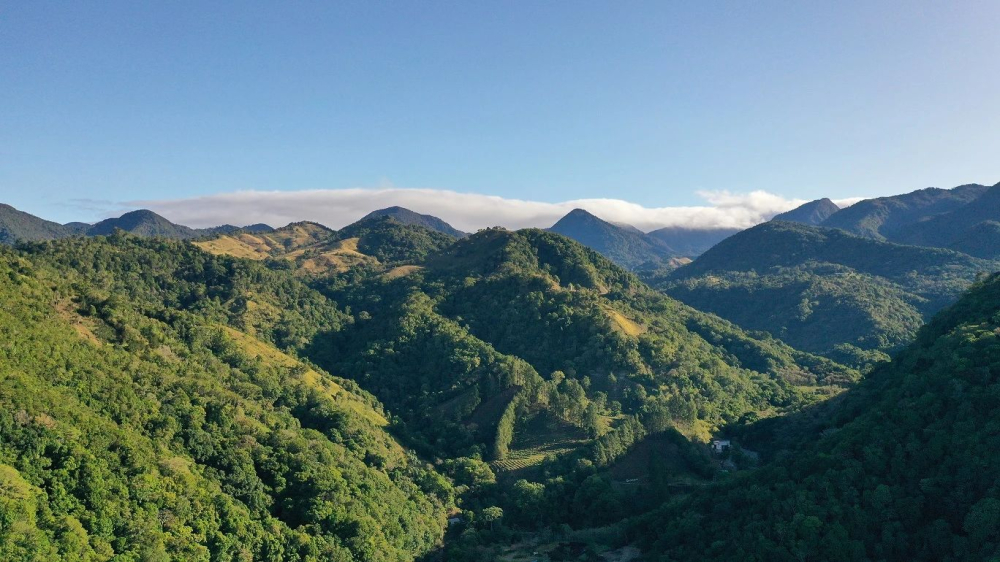
Hacienda La Esmeralda holds an independent auction event every year, and only the Geisha lots selected from the designated plots for auction can truly be called auction Red Label. At present, non-auction Red Label is also sold on the market; in fact, it is Geisha from the same plots that did not participate in the auction and flowed into the market. There is no difference in varietal quality—the only difference is the selling price. Esmeralda Red Label Geisha is processed either naturally or washed, with flavors showing a unique and bright floral and citrus tonality.
Front Street's latest batch of Hacienda La Esmeralda Red Label Geisha comes from the Mario plot of the Jaramillo farm, using a slow natural process, giving off an aromatic scent of jasmine, citrus, and berries, accompanied by a honey-like sweetness.
Front Street Panama Hacienda La Esmeralda Red Label Geisha Coffee Beans
Region: Panama Hacienda La Esmeralda Mario Plot Altitude: 1700+m Variety: Geisha Processing Method: Slow Natural Flavor: Citrus, Jasmine, Honey, Berries
Private Collection, commonly known as Green Label, is a non-independent competition lot, a Geisha variety that does not participate in auctions but still has outstanding quality. It uses a blend of micro-lots grown at altitudes between 1,600 and 1,800 meters from different plots such as Jaramillo, Canas Verdes, and El Velo.
Because it is a blend, no detailed labeling of specific plots is done, but occasionally Green Label's flavor can be very similar to Red Label. Although Front Street's Hacienda La Esmeralda Green Label Geisha is not as high grade as Red Label, it still retains the classic Geisha flavor. Like Red Label, it is also available in either washed or natural processing.
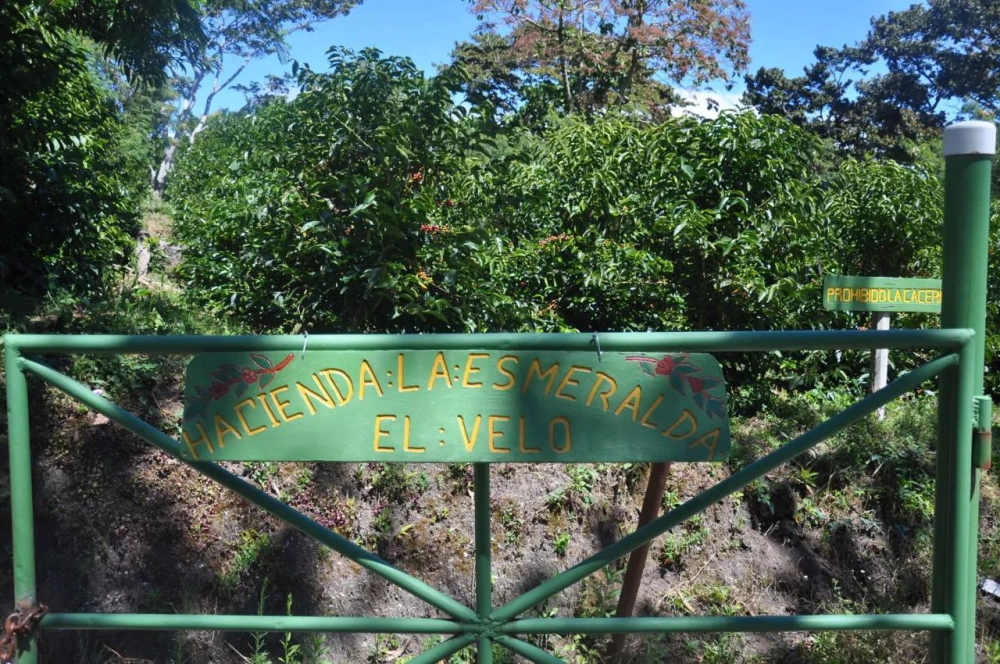
Front Street Panama Hacienda La Esmeralda Green Label Geisha Coffee Beans
Region: Panama Boquete Region Altitude: 1600m——1800m Variety: Geisha Processing Method: Washed Flavor: Jasmine, Citrus, Honeydew, Berries, Orange Peel.
Finally, let's look at the most common Blue Label Geisha; Geisha 1500 is what is usually called Blue Label. Its altitude information can be seen from the brand name: 1,400 to 1,500 meters, and it is a blend from the three plots of Jaramillo, Canas Verdes, and El Velo. In 2020, Hacienda La Esmeralda added a washed processing method to Blue Label, so Blue Label also has both washed and natural versions. However, in 2021 Hacienda La Esmeralda made a new adjustment and discontinued the Blue Label brand, meaning Blue Label has since withdrawn from the market and will no longer exist once it's gone. As for the specific reason for discontinuing Blue Label, it is currently unclear.
Front Street Panama Hacienda La Esmeralda Blue Label Geisha Coffee Beans
Region: Panama Boquete Region Altitude: 1500m Variety: Geisha Processing Method: Natural Flavor: Lemon, Oolong Tea, Cane Sugar, Peach
Longtime customers of Front Street should know that Front Street's Green Label comes in both washed and natural versions, so many consumers ask baristas: what exactly is the difference between the two? Today, Front Street will compare the two through brewing in this article. Before that, let's first understand how these two processing methods differ.
The natural process dries the whole coffee cherry, retaining the skin and pulp during drying. This means natural beans have a more complex flavor than washed beans, with a more prominent sweetness; washed beans, on the other hand, are cleaner and brighter than natural beans.
FrontStreet Coffee pour-over brewing parameters: Dripper: V60 #01 Coffee dose: 15g Coffee-to-water ratio: 1:16 Grind size: EK43s#10.2 Water temperature: 90-91°C
FrontStreet Coffee uses staged extraction, also called three-stage brewing: first bloom with 30 grams of water for 30 seconds, then pour in a small stream in circles until 125 grams for the first stage, and when the water level drops and is about to expose the coffee bed, continue pouring until 225 grams and stop, then when the water level drops again and is about to expose the coffee bed, remove the dripper (timing starts from the beginning of the bloom). Total extraction time is 2 minutes 00 seconds to 2 minutes 05 seconds.
[Front Street Panama Hacienda La Esmeralda Washed Green Label] has floral notes, with a soft acidity of citrus and grapefruit on entry, honey sweetness in the middle, and an oolong tea tea-like quality and brown sugar sweetness in the finish; the mouthfeel is clean, bright, and full.
[Front Street Panama Hacienda La Esmeralda Natural Green Label] smells of fermentation aroma and fruity sweetness; when tasted, you can feel the sweetness of melon and tropical fruits, with a mouthfeel like fruit juice, and the overall sweetness is very high.
For professional coffee knowledge exchange and more coffee bean information, please follow Coffee Workshop (WeChat public account: cafe_style) For more specialty coffee beans, please add the private WeChat of FrontStreet Coffee: kaixinguoguo0925
The above content is compiled by CoffeeHunters, a coffee news website.


