







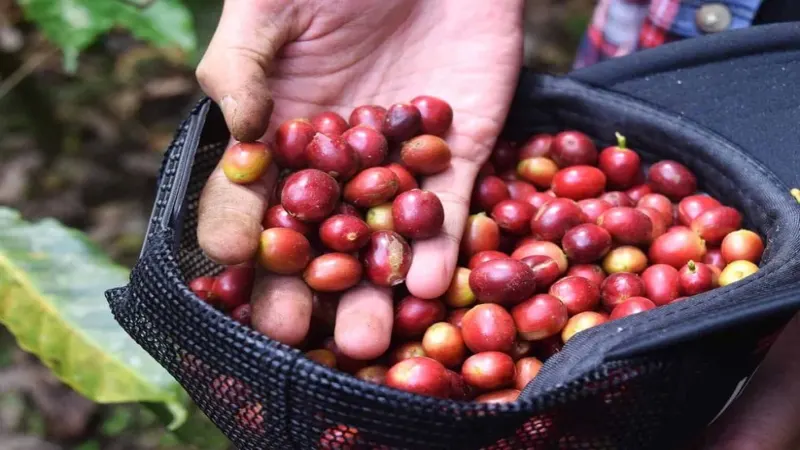
What Makes Mandheling Coffee Beans So Full-Bodied?
Mandheling is one of the most familiar coffee names among consumers, yet its origins are often unclear. The beans carry a rich aroma, thick body, strong taste and faint chocolate and syrup notes, with only slight acidity. That profile comes from Sumatra's wet-hulling process and the island's growing conditions rather than from a single estate or variety.
The name traces back to Dutch plantings in the seventeenth century; coffee rust in 1877 pushed growers toward disease-resistant Robusta, which now makes up about ninety percent of Indonesian output. Sumatra Mandheling remains the less abundant Arabica, grown on hillsides at 750 to 1,500 meters. Lintong, Golden, Tiger and Aged Mandheling differ in grade and handling, including golden mandheling coffee.
Mandheling is one of the coffee categories most familiar to Chinese consumers, but the origin of its name, Sumatra's unique wet-hulling process, and the differences between Lintong, Golden, Tiger, and Aged Mandheling are not necessarily clear to everyone. From the perspective of Front Street Coffee (FrontStreet Coffee), this article sorts out Mandheling's historical lore and processing techniques, analyzes the reasons behind its rich, mellow, slightly acidic yet sweet flavor, and introduces one by one the four Mandheling coffee beans currently sold by Front Street Coffee and their brewing parameters, helping coffee lovers gain a more comprehensive understanding of this Indonesian specialty single-origin bean.
At Front Street Coffee (FrontStreet Coffee) stores or the Tmall flagship store, customers often ask how to choose coffee beans. Front Street Coffee (FrontStreet Coffee) currently offers more than thirty types of beans, from different producing regions around the world, each with its own style, and new origins are added from time to time. Mandheling is probably one of the names most familiar to domestic consumers, but how much do people really know about its historical context and lore? Guests who come to Front Street Coffee (FrontStreet Coffee) are not just here for a drink, and Front Street Coffee (FrontStreet Coffee) is not just making a cup of coffee.
The Origin of the Mandheling Story
In the seventeenth century, the Dutch first brought Arabica seedlings to Ceylon (present-day Sri Lanka) and Indonesia. In 1877, a large-scale disaster swept across the Indonesian archipelago, and coffee rust almost destroyed all the coffee trees, forcing people to abandon the Arabica they had cultivated for many years and instead introduce the more disease-resistant Robusta variety from Africa.
Today Indonesia is a major coffee-producing country, with producing areas concentrated in Java, Sumatra, and Sulawesi. Robusta accounts for about ninety percent of the country's total output, while Sumatra Mandheling belongs to the less abundant Arabica. These coffee trees grow on hillside areas at altitudes of 750 to 1,500 meters. The mysterious Sumatra variety gives Mandheling a rich aroma, a thick body, a strong taste, and a faint note of chocolate and syrup. Mandheling beans are relatively large and hard in texture, are prone to defects during cultivation, and often require strict manual sorting after harvest; if quality control is not strict, quality varies greatly, and since the degree of roasting directly affects the taste, it is also a single-origin coffee with considerable controversy.
The name Mandheling is very different from those of other coffee beans. It is neither a producing region, a place name, nor a port name, nor the name of a coffee variety (for example, Yirgacheffe or Sidamo are African producing region names), but merely a mishearing of the Indonesian Mandheling ethnic group.
Why would this ethnic group be connected with coffee? Behind this is a legend of a fortunate mistake: during World War II, when Japan occupied Indonesia, a Japanese soldier drank an extremely delicious cup of coffee in a certain coffee shop and immediately asked the owner for the name of the coffee. Because of the language barrier, the shop owner mistakenly thought the other person was asking "Where are you from?" and answered: "Mandheling."
After World War II ended, this Japanese soldier remembered the cup of "Mandheling" he had drunk in Indonesia and asked an Indonesian broker to help him ship fifteen metric tons of Mandheling to Japan. It turned out to be hugely popular in the Japanese coffee market, and the name Mandheling spread from then on. (This broker later created the now famous Pwani Coffee Company in the Indonesian coffee world, abbreviated as PWN, which is also the trademark holder of Golden Mandheling.)
Mandheling Coffee Processing
Sellers often label Lintong and Mandheling as dry-processed, but in reality the pulp and seeds are often separated through a variety of mixed methods, among which the more common is backyard-style wet processing. Clever farmers put freshly picked coffee cherries into crude pulpers assembled from scrap metal, wood, and bicycle parts. The sticky, wet beans after pulping are put into plastic woven bags to ferment overnight, and the next morning the softened fermented pulp and mucilage are washed off by hand. The coffee still wrapped in silver skin is spread on thin boards in the front yard for pre-drying, then sent to a middleman's warehouse to remove the silver skin and be further dried, and finally transported by truck to Medan Port (the capital of Sumatra) for the third and final drying.
Other reports say that in other Mandheling producing areas, the mucilage after pulping is allowed to dry and remain attached to the beans, similar to Brazil's semi-washed process, after which the dried mucilage and silver skin are removed by machine, and finally it also undergoes two-stage drying - first in the middleman's warehouse, then in the exporter's warehouse in Medan Port.
Processing and Sumatra's Characteristics. The reason for describing these procedures in such detail is that it is still unclear to what extent soil, climate, unusual processing techniques, and three-stage drying each affect the flavor of Lintong and Mandheling-style coffees. The only certainty is that these processes occasionally produce excellent coffee, while also being extremely inconsistent. Only through the ruthless sorting in the exporters' warehouses at Medan Port can the depth of body and the unique yet understated richness of Lintong and Mandheling emerge from the interference of off-flavors.
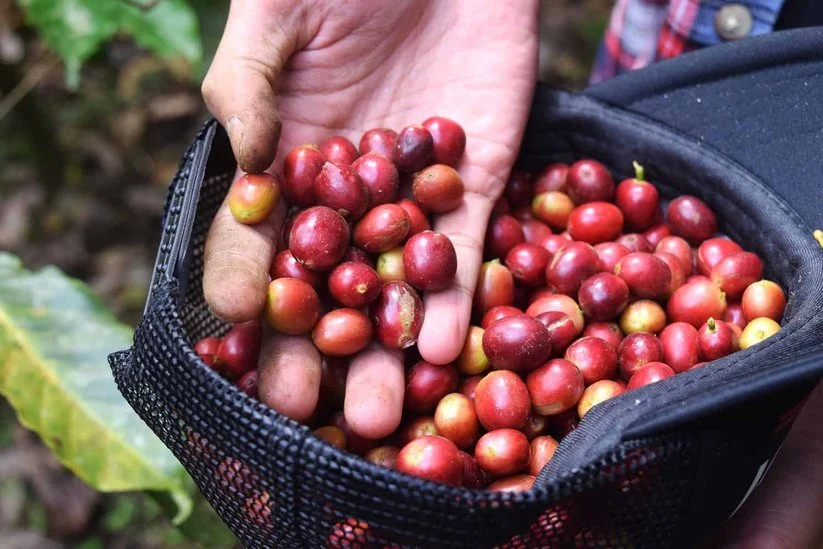
Sumatra Mandheling DP Grade 1 and Aged Sumatra Mandheling
The most famous coffee-producing areas in Asia are the islands of the Malay Archipelago: Sumatra, Java, and Kalimantan. Among them, Sumatra Mandheling coffee from Indonesia's Sumatra Island is the best known, and it has two famous designations: Sumatra Mandheling DP Grade 1 and Aged Sumatra Mandheling. Sumatra Mandheling DP Grade 1 has a long finish and carries a wild, mountain-like fragrance, the earthy scent unique to primeval forests.
In addition to the mellow taste characteristic of Indonesian coffee, it also has a bittersweet flavor, sometimes mixed with a slight faint mustiness, and is deeply loved by those who prefer dark-roasted coffee; Aged Sumatra Mandheling is called "aged" because it must be stored in a cellar for three years before export. But aged coffee is by no means stale coffee; rather, it is coffee that has undergone special treatment and appears slightly pale in color. It is richer, lower in acidity, higher in body, longer in finish, and also carries a strong spice note, sometimes tartness, sometimes walnut, and sometimes chocolate.
In an era before Blue Mountain was made known to the world, Mandheling was regarded as the world's finest. After roasting, the beans are very large; the green beans are brown or dark green, with a special caramel-like aroma, a mellow and rich taste, sweet yet bitter, without soft acidity, but with bitterness. Production is relatively low, so the price is therefore slightly higher than that of ordinary coffee beans.
Mandheling Coffee Producing Areas
Mandheling coffee is produced in Sumatra, Indonesia, in Asia, and is also known as "Sumatra coffee." The main producing areas include Java, Sulawesi, and Sumatra, of which ninety percent is Robusta. The "Mandheling" produced on Sumatra is the most famous. Among the finest traditional Arabica coffees produced in northern Sumatra, the best are sold on the market under the names Lintong and Mandheling. Strictly speaking, Lintong refers to coffee grown in a small area southwest of Lake Toba in the Lintong administrative region.
The small coffee-growing areas are scattered across a high, undulating clay plateau full of fern cover. Lintong coffee is not shade-grown, does not use chemicals, and is almost entirely owned by smallholders. Mandheling is a broader designation, including Lintong coffee and, under similar conditions, Diari (capital Sidikalang) and the producing area in northern Lake Toba.
Mandheling Coffee Color
Mandheling's flavor is very rich, aromatic, bitter, and full-bodied, with a little sweetness. Most coffee lovers drink it as a single origin, but it is also an indispensable variety in coffee blends.
Mandheling has a heavy taste, with rich body and a lively, vibrant dynamism, neither astringent nor sour, and its body and bitterness can be fully expressed. The appearance of Mandheling coffee beans can be described as the ugliest, but coffee fans say that the worse Sumatra coffee beans look, the better, richer, and smoother they taste. Mandheling is considered the world's most full-bodied coffee. When tasting, a clear lubricity can be felt on the tip of the tongue, while at the same time there is relatively low acidity, but this acidity can also be clearly tasted; the lively slight acidity mixed with the richest aroma lets one easily experience the vibrant element within its gentle richness. In addition, this coffee also has a faint earthy aroma, which some also describe as an herbal fragrance.
Since Mandheling coffee beans themselves do not have an acidic character, general special brewing methods are based on Mandheling coffee beans, and even during long periods of heat preservation or when making iced coffee, no unpleasant acidic or astringent taste appears.
What Are the Common Types of Mandheling?
Here are four Mandheling coffees from Front Street Coffee (FrontStreet Coffee), namely Lintong Mandheling, Golden Mandheling, Tiger Mandheling, and Aged Mandheling.
1. Lintong Mandheling
A specialty Mandheling produced in the Lintong region, with relatively large bean size and relatively hard bean texture.
Indonesian coffee varies greatly in quality, but what is commonly called Mandheling refers to coffee beans of Typica or its variants grown in the mountainous areas around Lake Toba. Coffee gourmets around the world have evaluated it as follows: Sumatra Mandheling coffee has the best body in the world. Mandheling coffee beans are relatively large and hard in texture, and because there are many defects, they require strict selection during processing.
Mandheling coffee is an indispensable variety in coffee blends. Its coffee flavor is rich, sweetly aromatic, purely bitter, and full-bodied, with a little sweetness and slight acidity.
Front Street Coffee (FrontStreet Coffee): Lintong Mandheling Coffee Beans Producing Region: Lintong Producing Area
Altitude: 1100-1600m
Variety: Typica, Caturra
Processing Method: Wet-hulled Process
2. Golden Mandheling
Golden Mandheling has been registered as a trademark by the Indonesian company PWN, making Golden Mandheling exclusive to PWN. Golden Mandheling is produced in the Gayo Mountains of Aceh, North Sumatra. The variety is Ateng, a hybrid between Arabica and Robusta, widely planted in Sumatra and other small Indonesian islands. It is actually a branch of Catimor, and Ateng is the local name. Golden Mandheling, at 19 screen size, undergoes four rounds of manual selection, with higher quality requirements.
Front Street Coffee (FrontStreet Coffee): PWN Golden Mandheling Coffee Beans
Producing Region: Gayo Mountains, Aceh
Altitude: 1100-1600 meters
Variety: Typica
Processing Method: Wet-hulled Process
Roasting Curve
Front Street Coffee (FrontStreet Coffee) believes that Golden Mandheling is a green bean with relatively high moisture content and has a relatively large moisture deviation compared with sun-dried beans, so special attention must be paid during dehydration. For green beans with high moisture content, the damper can be closed immediately after charging, then opened to 3 after 30 seconds of steaming, until the green bean color turns light green or white, then the damper is opened to 4, and after first crack it is opened to 5 (maximum).
Brewing Parameters
For daily brewing of Mandheling, Front Street Coffee (FrontStreet Coffee) recommends using a KONO dripper, because it can bring a rounder, fuller body and a more direct flavor expression. The only exhaust part of the Kono dripper is that one-quarter of the ribs. When the water level passes over the rib section, the water volume in the dripper keeps rising, increasing pressure through the weight of the water. Since the outlet is relatively small, it can extend the contact time between coffee particles and water. Driven by the water flow, soluble substances can be extracted more effectively. Front Street Coffee (FrontStreet Coffee) finds that this brewing method generally achieves the high-body effect guests expect.
Dripper: Kono Dripper
Water Temperature: 86°C
Dose: 15 grams
Coffee-to-Water Ratio: 1:15
Grind Size: Medium-fine grind (BG#6W)
Brewing Technique: Pulse Pouring Extraction
Use 30 grams of water for a 30-second bloom, then pour in a small circular stream until 125 grams for the pulse stage. When the water level drops and is about to expose the coffee bed, continue pouring until 225 grams and stop. When the water level drops and is about to expose the coffee bed again, remove the dripper. (Timing starts at the beginning of the bloom.) The extraction time is 2'00".
Flavor Description
Layered and varied, mellow and clean, highly balanced, with rich nut and caramel aromas, chocolate notes, and a long finish.
3. Tiger Mandheling
Only Mandheling at 17 screen size or above with a defect rate below 4% can be called Tiger Mandheling. Since the main varieties of Tiger Mandheling are Caturra and Typica, and Caturra has a citrus and lemon acidity in taste, while Typica has a long-lasting sweet finish, Tiger Mandheling has a relatively even mouthfeel and high cleanliness.
Front Street Coffee (FrontStreet Coffee): Tiger Mandheling Coffee Beans Producing Region: Aceh
Altitude: 1500m
Variety: Typica, Caturra, Sidikalong
Processing Method: Wet-hulled Process
4. Aged Mandheling
Aged coffee beans do not mean simply leaving green coffee beans for a long time. This is not acceptable, because green coffee beans will also spoil after long storage: they will change from fresh bluish-green to white, then to yellow, become insipid, and even develop insects. Like aged alcoholic beverages, green beans must undergo proper processing and long-term storage before they can be called true aged coffee.
So-called aged beans (Aged bean) mean:
The purpose of allowing green beans to age naturally by extending storage time (usually 2 to 3 years). These changes include reduced acidity, color change, and thickened bean texture. The storage environment must be cool and ventilated. Because the storage environment is relatively dark and the time is long, aged coffee can hardly escape complex flavors similar to mustiness or what is commonly called burlap or leather.
Front Street Coffee (FrontStreet Coffee): Aged Mandheling Coffee Beans
Producing Region: Sumatra
Variety: Typica
Processing Method: Wet-hulled Process
For more specialty coffee beans, please add the private WeChat of Front Street Coffee (FrontStreet Coffee), WeChat ID: kaixinguoguo0925
The above content is compiled by CoffeeHunters, a coffee news website.


