







How Does Geisha Coffee Compare to Blue Mountain?
Geisha coffee costs more than Blue Mountain mainly because of scarcity and competition results, not because its flavor is automatically superior. The Geisha plant is tall and low-yielding, and it first gained attention after Hacienda La Esmeralda in Panama entered it in a reliable of Panama cupping competition, winning gold in 2005, 2006, and 2007.
Those wins pushed Geisha into competition coffee history, and bidding prices climbed sharply. The variety traveled from Ethiopia's Geisha Mountains to Kenya in 1931, then to Tanzania and Costa Rica, arriving in Panama in the 1960s. Estates like Elida and Kotowa Duncan now grow it in Boquete's microclimates, where red, green, and blue label grading sorts quality.
Why is Geisha coffee more expensive than Blue Mountain? Is it really better tasting than Blue Mountain? Front Street Coffee takes you into the world of Panamanian specialty coffee, from the legendary origins of Geisha to Hacienda La Esmeralda's red, green, and blue label grading system, and on to the terroir and microclimate characteristics of the Boquete producing region. This article also introduces excellent estates such as Elida and Kotowa Duncan, and recommends a highly cost-effective Butterfly coffee. Whether you want to learn the story of the Geisha variety or are looking for everyday beans, this article offers practical reference.
For more specialty coffee knowledge, please follow our WeChat official account: Front Street Coffee (FrontStreet Coffee)
Blue Mountain coffee is known to be pricey, but did you know Geisha coffee costs even more? Blue Mountain is hailed as one of the most elegant and highest-priced coffees in the world—so is Geisha so expensive because its flavor surpasses Blue Mountain's? Front Street answers:
In fact, it's not that Geisha's flavor is necessarily superior to Blue Mountain's; rather, the two varieties have entirely different genetics and flavor profiles, and both are exceptional coffees. Of course, when guests visit the shop, Front Street doesn't actively push Geisha. The reason is that Geisha is better suited to coffee enthusiasts who have already built a certain tasting foundation—if you start with the very top tier, other coffees will easily seem bland afterward. Front Street Coffee advocates drinking progressively, gradually building your own flavor recognition system and slowly appreciating the diversity of the coffee world. Moreover, Geisha is genuinely expensive, so we only serve it when guests specifically request it.
Geisha originated in Ethiopia. Because the plant is tall and low-yielding, it was initially used locally only as a windbreak. Later, the owner of Panama's Hacienda La Esmeralda discovered its potential, and Geisha gradually rose to fame. In 1931, Geisha was quietly exported from the Geisha Mountains of southwestern Ethiopia to Kenya, then spread to Tanzania and Costa Rica, and was not introduced to Panama until the 1960s. Nearly half a century later, it suddenly burst onto the scene, defeating perennial champions like Bourbon, Caturra, Catuai, and Typica to win the Best of Panama cupping competition gold medal three years in a row—2005, 2006, and 2007. In 2007, at the international Specialty Coffee Association of America (SCAA) cupping competition, Geisha won again, with bidding prices soaring to $130 per pound, setting a new record for the highest auction price in competition coffee history.
According to Front Street, the Best of Panama competition was subsequently split into Geisha and non-Geisha categories, lest other varieties be overshadowed by Geisha once again.
Panama's Hacienda La Esmeralda became famous overnight thanks to Geisha. Today, when people mention Geisha coffee, the first estate that comes to mind is La Esmeralda, which has long caused other Geisha-growing estates to be overlooked. Today Front Street first introduces you to Geisha coffee from the Boquete producing region.
Panama's Boquete Producing Region
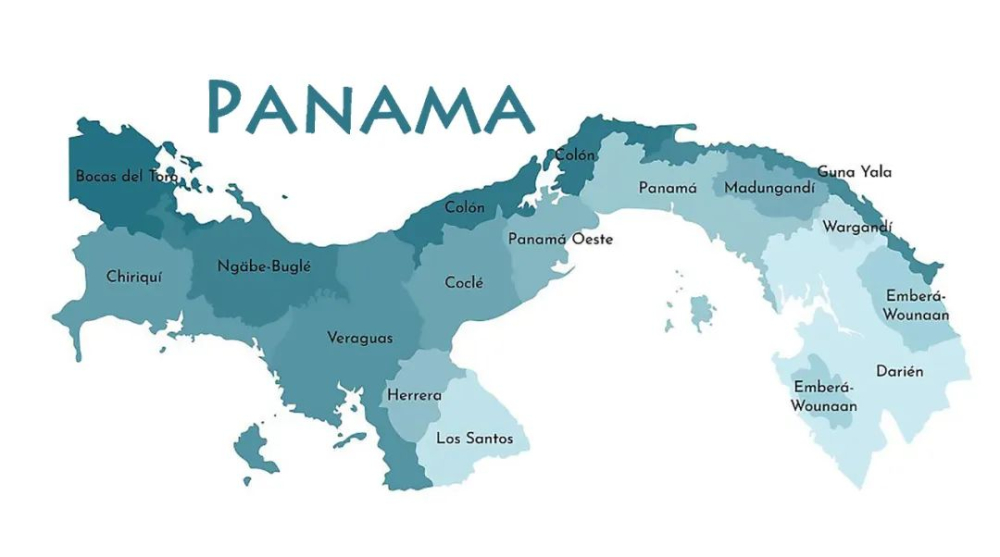
Besides the variety itself, the climate and growing environment of the producing region are equally crucial in determining coffee flavor. Front Street has found a rather peculiar trait of Geisha: the more extreme the growing environment, the more outstanding its flavor expression. Coffee in the Boquete region is grown at altitudes between 1,400 and 1,900 meters. It is a town in Chiriqui Province, near the border between Panama and Costa Rica, adjacent to the famous Baru Volcano, with beautiful scenery, deep fertile soil, and climate and soil conditions highly suitable for producing quality coffee. The Boquete region is also home to many excellent estates; besides La Esmeralda, Elida Estate and Kotowa Duncan Estate also produce high-quality specialty coffee.
This is thanks not only to the mild climate of Panama's Boquete area and the fertile volcanic ash soil of Baru Volcano, but also to another key factor—the rich and varied microclimates of the Boquete highlands. Panama's east-west topography causes cold air to flow through the central mountain range and converge at altitudes between 1,200 and 2,000 meters. The mountain mist, rain, and shifting winds create multiple microclimates in the Boquete area, with temperatures and rainfall highly suitable for plant growth, so the coffee trees here thrive exceptionally well.
Hacienda La Esmeralda Geisha Red Label, Green Label, Blue Label
Panama's Hacienda La Esmeralda implements a strict grading system for Geisha coffee beans, commonly including Blue Label, Green Label, and Red Label Geisha. After winning the 2004 Best of Panama (BOP) green bean competition, it went on an astonishing run, and only later did experts identify the variety as Ethiopian Geisha. Thereafter, the Peterson family devoted most of their efforts to infrastructure to support fine batch separation and processing. To manage precisely, the estate owner cupped coffee from different areas of the farm and divided planting plots by altitude.
Esmeralda Special (Esmeralda Red Label) Geisha produced under Esmeralda Special, commonly known as Red Label. Grown at altitudes of 1,600 to 1,800 meters, with cupping scores above 90, from Geisha beans in the Jaramillo and Caas Verdess producing areas.
Only Geisha lots auctioned from designated plots in the estate's own independent auction qualify as auction Red Label. This grade of Geisha is processed either natural or washed, with flavor characterized by distinctive and bright floral and citrus aromas.
Private Collection Private Collection, commonly known as Green Label, consists of lots that do not participate in the independent auction, still of excellent quality Geisha variety. It uses micro-lots blended from different plots at altitudes of 1,600 to 1,800 meters, sourced from Jaramillo, Caas Verdess, and other plots. Because there is no detailed plot labeling, Green Label sometimes tastes similar to Red Label, but the next batch may differ. Although Green Label ranks below Red Label, it still retains the classic Geisha flavors—floral, fruity, citrus acidity, and a thick, juicy mouthfeel. Green Label comes in both washed and natural.
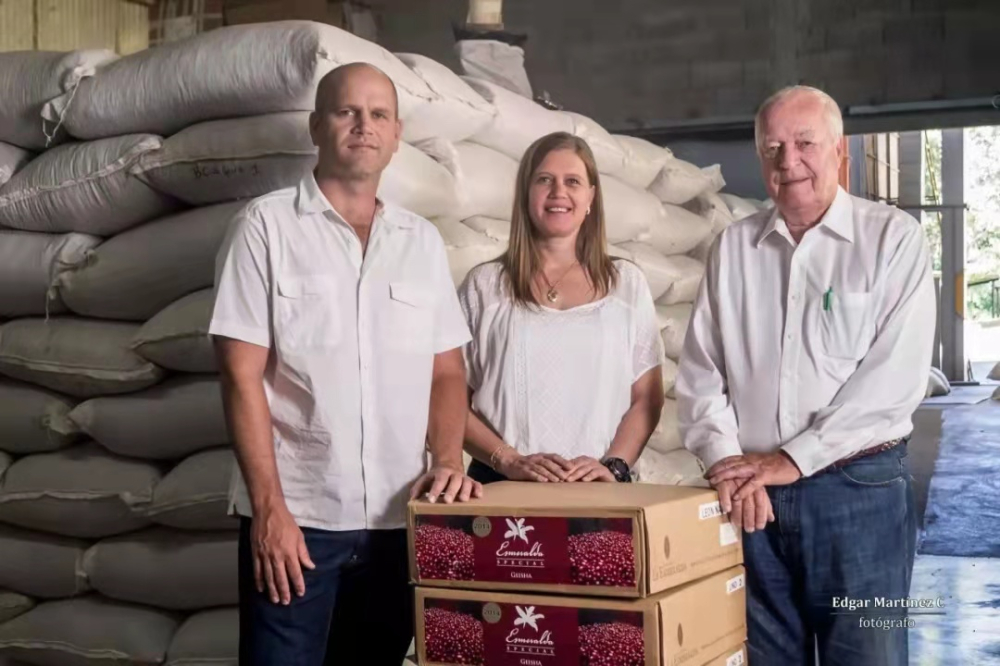
Geisha 1500 Blue Label Geisha uses blended beans from three different plots—Jaramillo, Caas Verdess, and El Velo—at altitudes of 1,400 to 1,500 meters. Its flavor shows faint florals, fruity acidity, and sweetness, with a relatively light mouthfeel. Initially Blue Label Geisha was only washed; in the 2020 new crop season, a natural process was added.
Currently, the highest-priced coffee beans at Front Street Coffee are Esmeralda Red Label Geisha. If you want to experience Geisha flavor without spending too much, Front Street also has a recommendation—Butterfly coffee, also from Panama's Boquete producing region. Butterfly is composed of three varieties—Geisha, Caturra, and Catuai—grown in the Baru Volcano area of Boquete at 1,600 meters altitude in a volcanic zone, traditionally cultivated and harvested by smallholder cooperative farmers, and finely washed at the processing plant.
The special microclimate of Panama gives this region abundant rainfall and large temperature differences between day and night. Combined with the volcanic rock soil unique to volcanic areas, plus careful harvesting and fine processing, this coffee is outstanding in body, acidity, and floral aroma, delivering an elegant and refined taste experience that is unforgettable. Even more pleasantly surprising, given such excellent quality, the price is very affordable and extremely cost-effective. What makes this bean special is that it contains the Geisha variety, giving it a distinct Geisha flavor.
Panama Butterfly has a faint floral aroma, with citrus and berry notes and a strong sweet aftertaste that has won over many regular customers. When they hear this coffee is 70% Geisha blended with 30% Caturra and Catuai, slightly knowledgeable guests show a look of sudden understanding. In 2004, Hacienda La Esmeralda won the Best of Panama championship with Geisha, and since then Geisha's fame has spread far and wide, even regarded as the world's most valuable coffee, bar none.
Front Street Coffee (FrontStreet Coffee) Brewing Parameters:
So how should such an elegant Geisha be brewed to showcase its best flavor? Geisha beans are relatively hard and tend to sink and clog the drainage holes, so use a grind size of 80% passing a Chinese standard No. 20 sieve (about the size of fine granulated sugar). Front Street still uses 15g of coffee with a Hario V60 small filter cone. The recommended coffee-to-water ratio is adjusted to 1:15—on one hand, using more water maintains the extraction yield; on the other hand, it lowers the coffee concentration to 1.15%, the concentration at which the coffee's best flavor is most perceptible. Water temperature is maintained at 91°C.
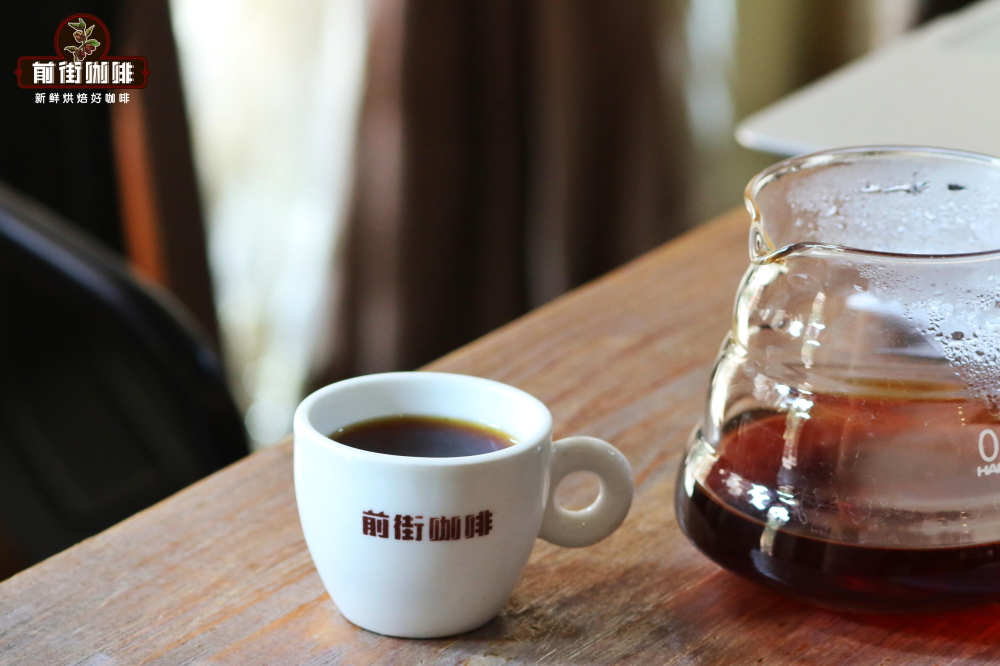
Front Street Coffee (FrontStreet Coffee) Panama Hacienda La Esmeralda Red Label Geisha Coffee Flavor: bright rose and citrus aromas, brown rice, berries, apricot, complex fruit, honey, thick juicy body, rich flavor layers, pronounced sweetness.
Front Street Coffee (FrontStreet Coffee) Panama Hacienda La Esmeralda Green Label Geisha Coffee Flavor: rich jasmine floral aroma, high sweetness, citrus, berries, juicy body, cream, green tea, orange peel, cantaloupe, overall rich flavor layers, lasting floral and citrus finish.
Front Street Panama Washed Butterfly Coffee Flavor: jasmine floral aroma on the palate, citrus, green tea flavors, sugarcane sweet aftertaste, clear and clean mouthfeel, overall refreshing.
The above content is compiled by CoffeeHunters, a coffee news website.


